
The recent news from here has been grim. The New York Times recently stated that a surge of new migrants struggling to get into the US on this border has reached its highest level ever. We have long been interested in libraries on or near contested borders. With the recent bad news, we wondered how libraries are functioning in an area that seemed to be in the midst of a battle between the US Border Patrol and desperate people fleeing their homeland for a variety of reason to make the arduous journey to the US.
Located on a major transportation corridor with Mexico, Laredo, TX has a population that is 95% Hispanic, one of the highest in the US. Its border crossing is one of the oldest and is the nation’s largest inland port of entry.

I kept humming the words to the song “The Streets of Laredo” as we walked the streets of Laredo. But down near the border in the old part of town, the streets became strangely deserted and I began to feel unsafe. Crime in Laredo is very low, but right across the border in the Mexican city of Nuevo Laredo, drug cartel activity is very intense, and we were warned not to cross over because of robberies and the high threat of carjacking. $16 million worth of drugs have been trafficked over the border into Laredo by the cartels. This type of activity fuels a sense of unease and even paranoia in this complicated community.
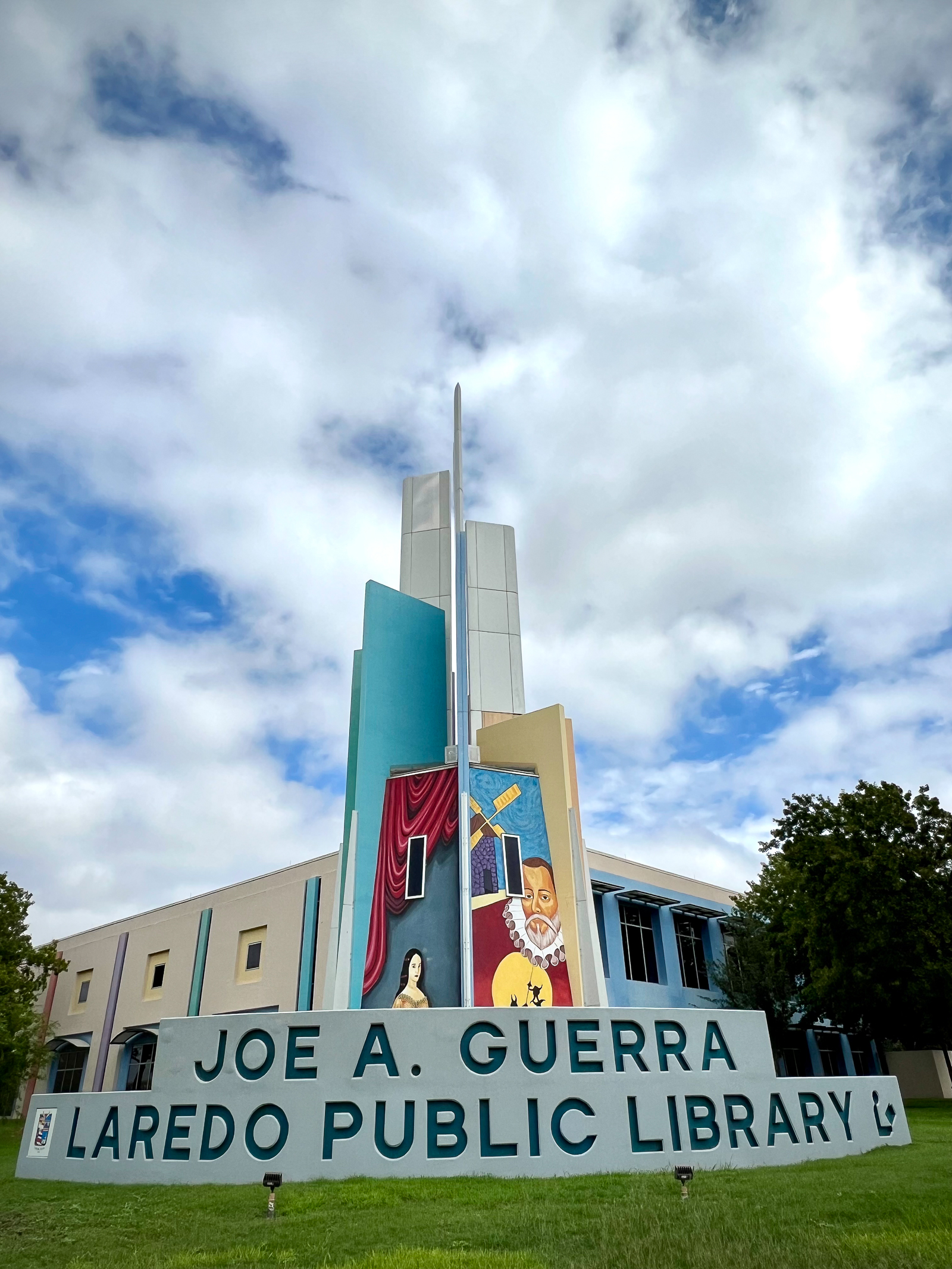
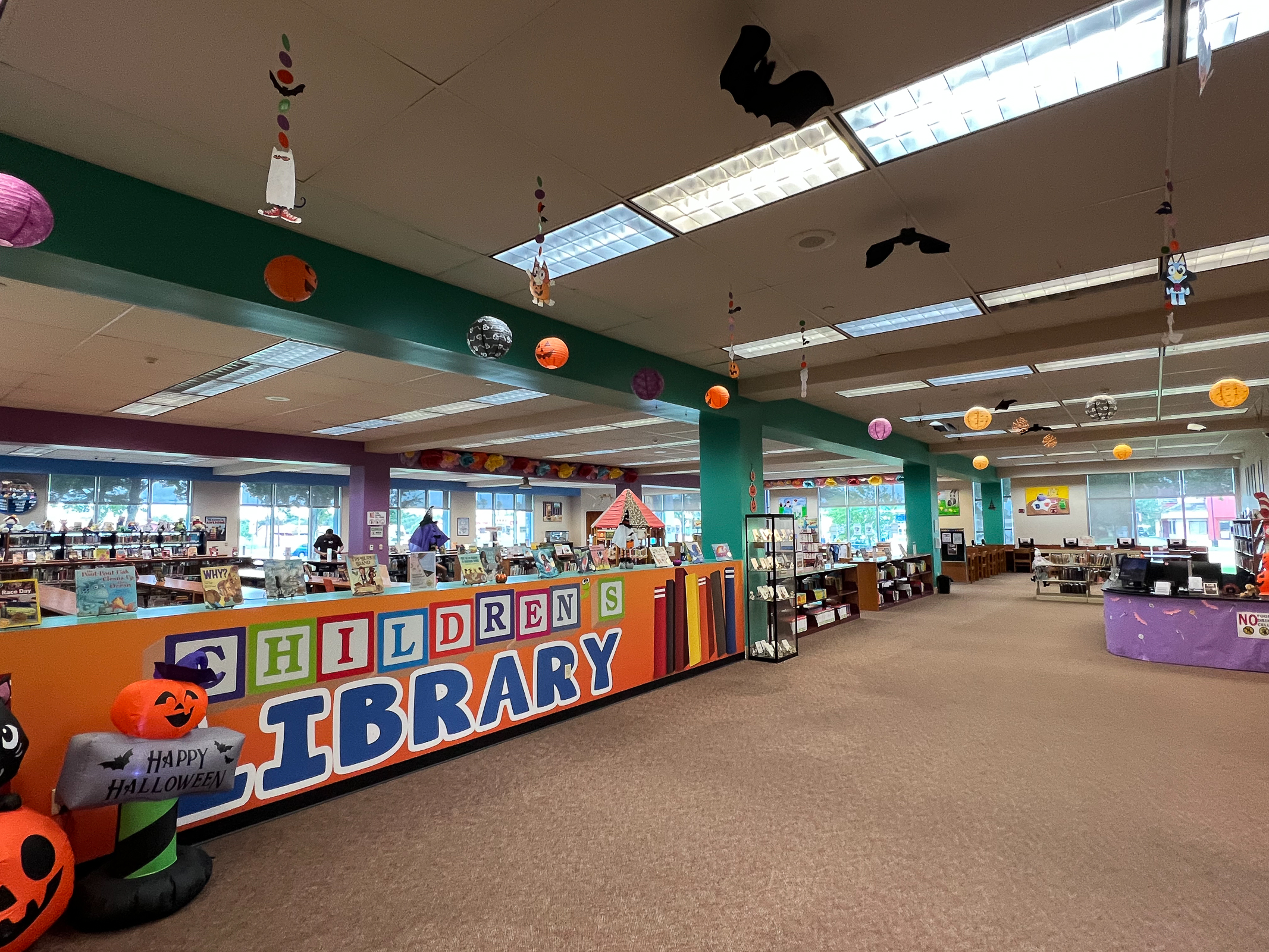
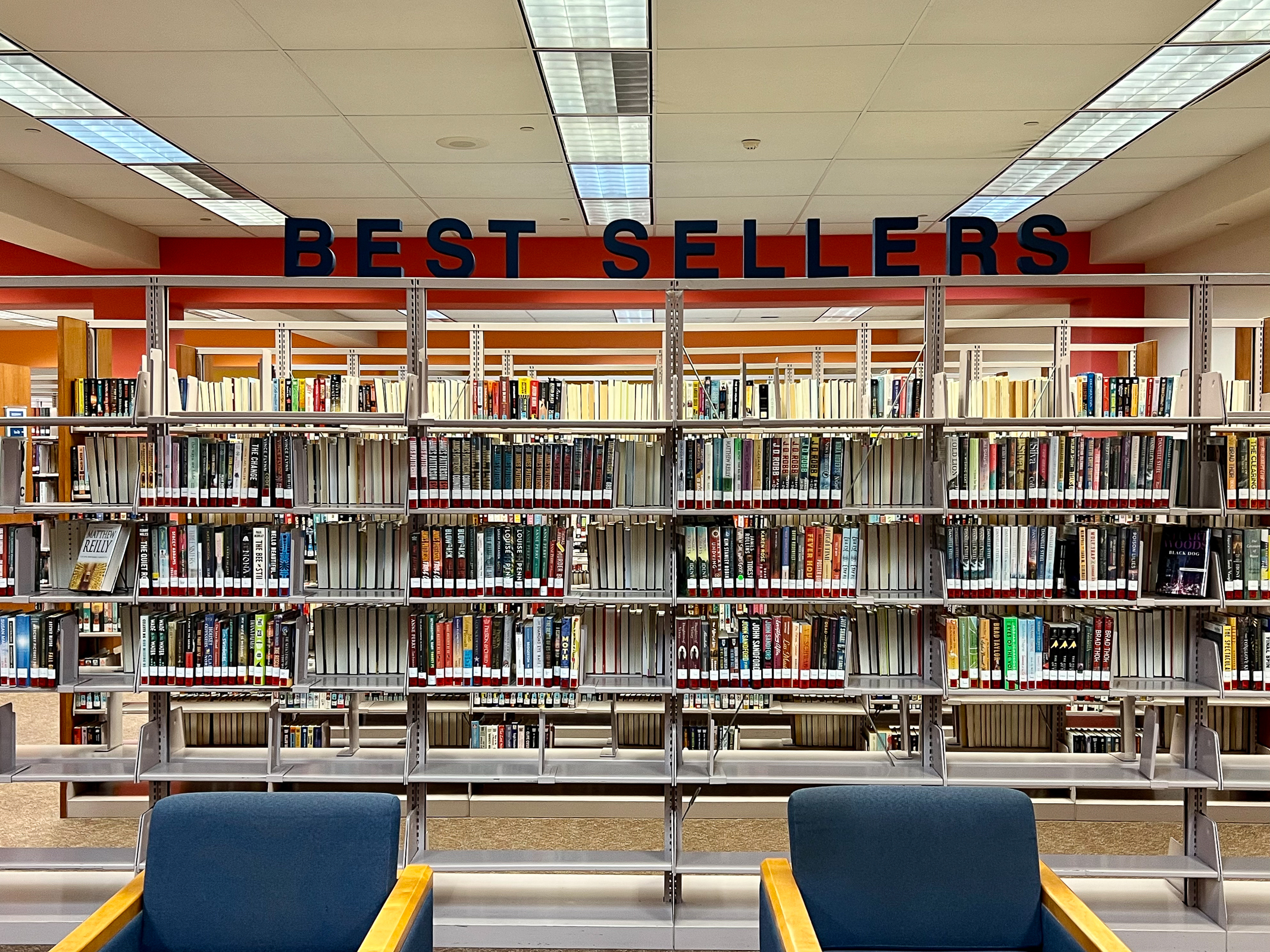
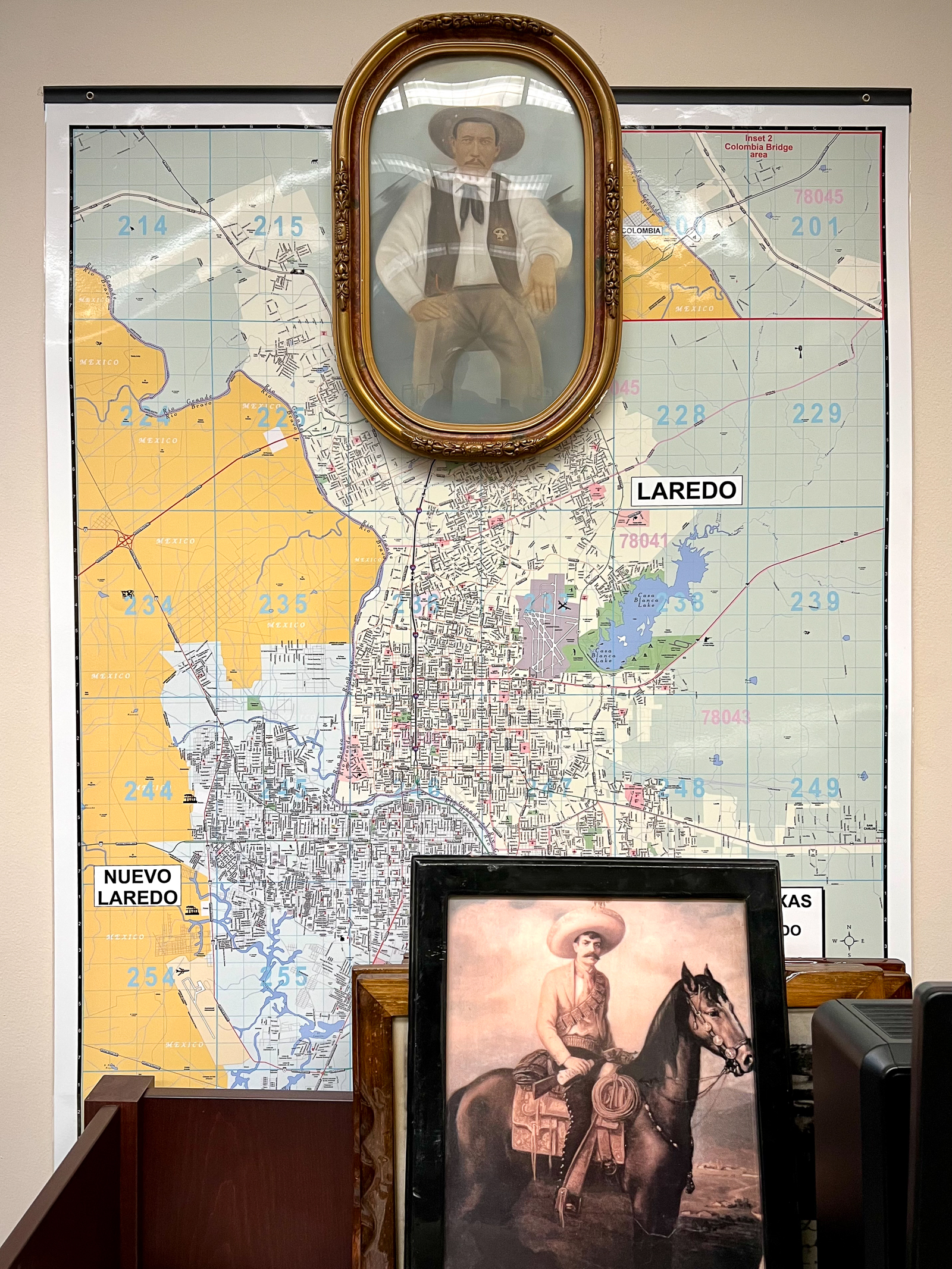
We were disappointed not to be able to photograph libraries in Nuevo Laredo but decided to look at the Main Library in Laredo. Libraries often reflect the character of the community that supports them. The Joe A. Guerra Laredo Public Library was in the urban sprawl north of the old town. Here the schools were good, and the much of the population had a long and deep connection with the community. The new library was enormous and beautiful. But the library staff felt distant to us, perhaps reflecting a mistrust and wariness of outsiders. However, the library’s Laredo History Center was welcoming and the librarian there was very helpful in sharing her community’s past.





Traveling along the border in Texas involves moving through a vast space that is almost incomprehensible, achingly beautiful, and difficult to describe. But each time we settled into a blissful state of marveling at the expansiveness of the big sky, we were quickly pulled back to the reality of the border by another Border Patrol road stop.

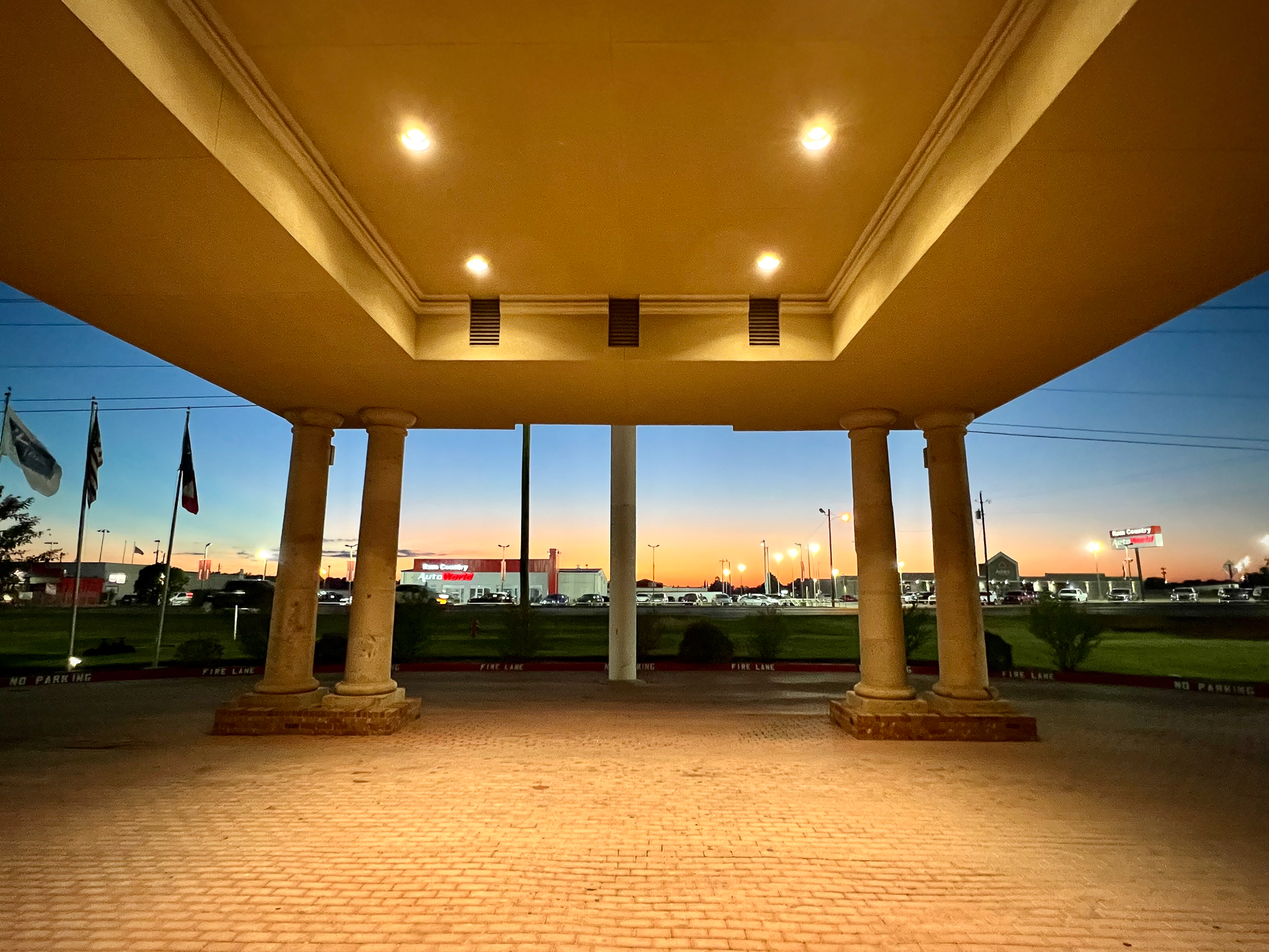
We arrived late in the next border town of Eagle Pass, TX. Our endless stays at chain hotels were all beginning to blend and after a time we forgot if we needed to exit from our room and turn left or right to go to the elevators. Our son Walker explained that we were now in the heart of the Tex-Mex Tejano hybrid border culture of this area and our meal that night was fascinating and the customers in the restaurant provided great people watching.


The New York Times podcast The Daily did a recent story on Eagle Pass called “A Texas Town Wanted Tougher Border Security. Now It’s Having Regrets.” We wanted to find out how the local public library was dealing with this crisis. When we reached the beautifully restored Eagle Pass Public Library, we talked with a delightful librarian named Paco. He explained that one of his relatives had ridden with Poncho Villa during his cross-border raids on the US before WWI. Paco explained that people had been going back and forth across the border for centuries and that the recent news stories were overblown. He really hadn’t seen much of an uptick in migrants using the library. The few that he had seen were surprised that everything in the library was free and they could even recharge their cell phones here.


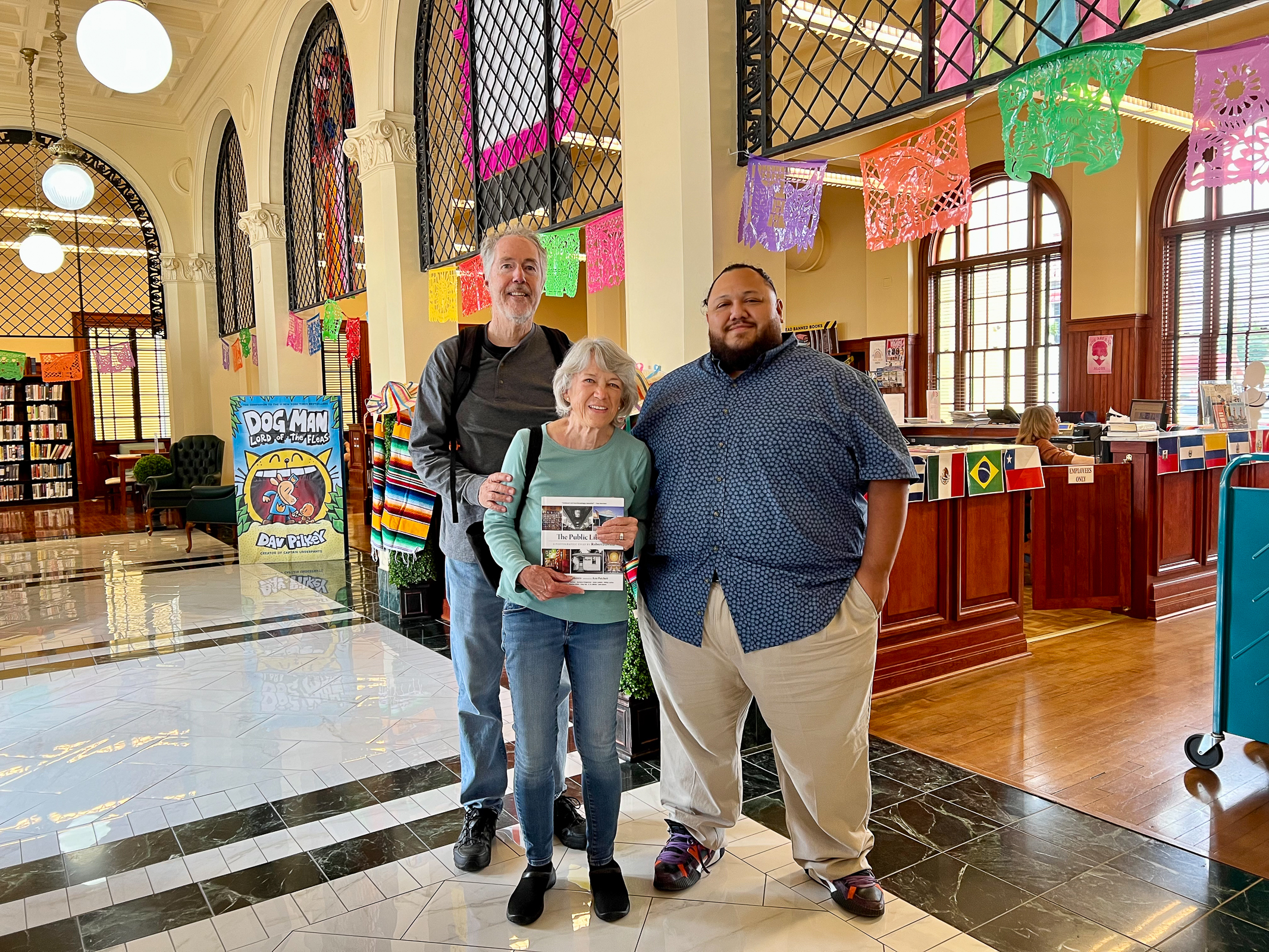
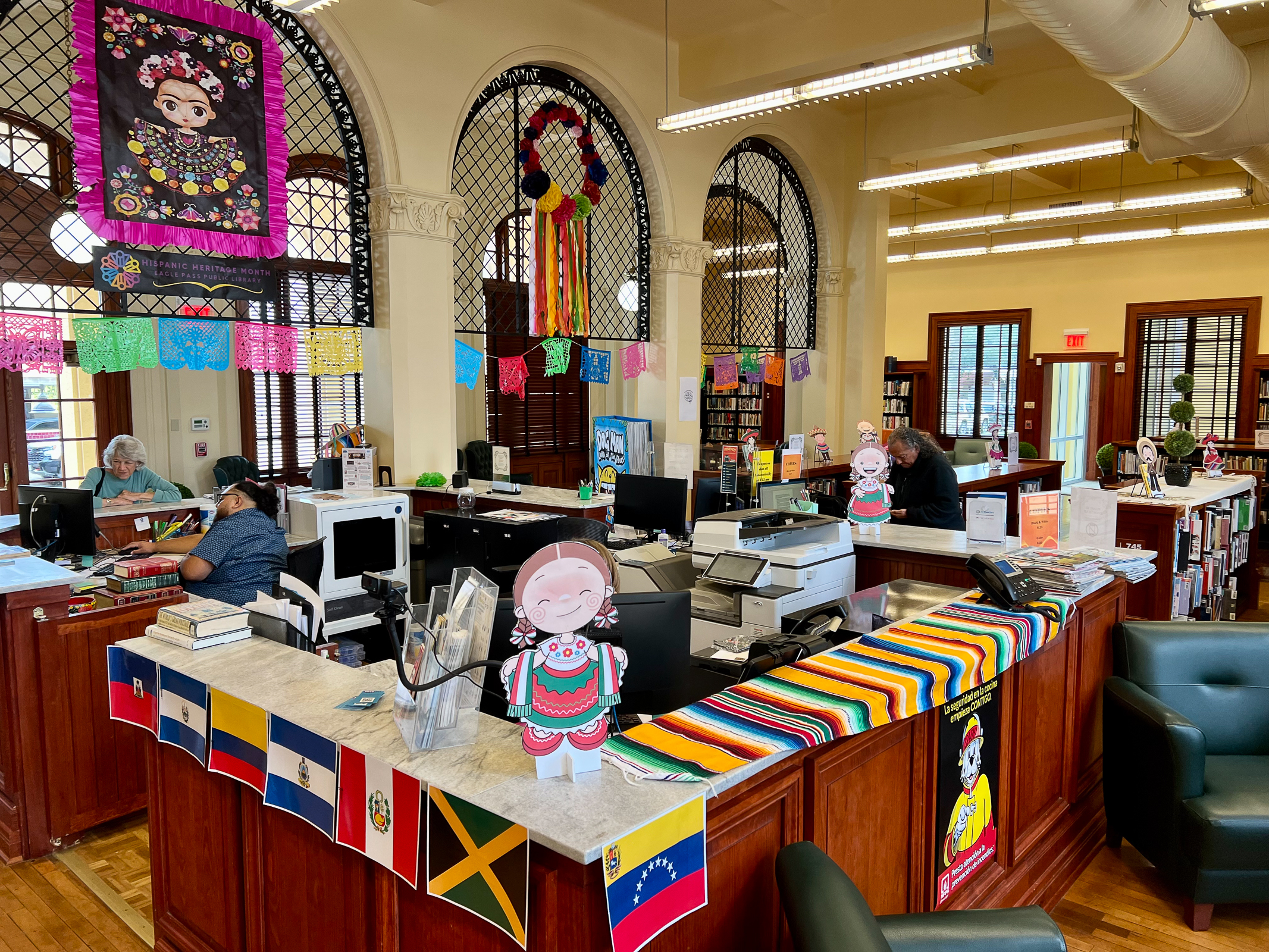
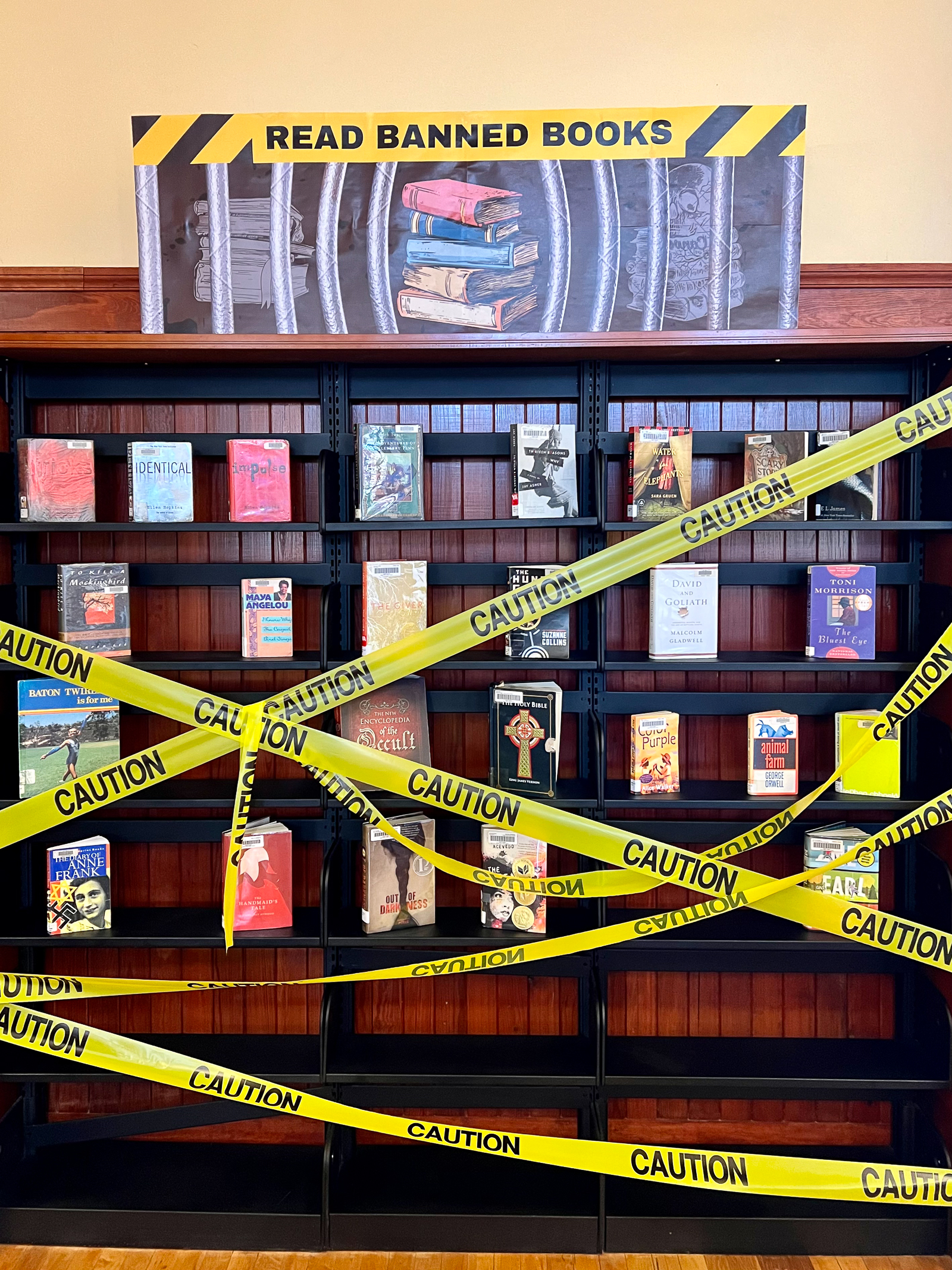
Paco’s statements about the “border crisis” seemed to contradict what we had been hearing and reading in the news. Here was a local who had lived in Eagle Pass all his life and didn’t seem to think there was much of a crisis. He worried that Republican politicians in Texas were ginning up the problem for their own political gain.
We decided to check out one more border library in Del Rio, TX to get a different point of view about the migrant issue. At the Val Verde Public Library, we met another wonderful librarian named Barbara. Her ancestors had founded the city of Laredo, TX but she hadn’t been there in years because she felt it was a violent and weird place. In 2021, approximately 30,000 Hattian migrants crossed the border at Del Rio. The Border Patrol set up a squalid camp for them that attracted widespread national attention. Barbara also felt that her library had not been affected by the surge of migrants because most of them did not want to settle in the border communities but, instead, were passing through to somewhere else. I was impressed that this library even had a copy of my Public Library book.


As we were leaving Del Rio we stopped and visited the Armistead National Recreation Area Visitor Center. Managed by the National Park Service, this area is the confluence of the Rio Grande, the Devils River, and the Pecos River. All are vital waterways in this arid environment. The international management of the water of this area speaks to the close cooperation and friendship between the local and federal governments in the US and Mexico and perhaps could serve as a model for other ways of working together.


As we left on Highway 90, I remembered the famous photograph by Robert Frank of his wife Mary in their 1950 used car called “U.S. 90 En Route to Del Rio, TX, 1955.” This image appeared in Frank’s famous book The Americans. To honor it, I made my own image of Ellen in our 2020 Prius titled “U.S. 90 En Route from Del Rio, TX, 2023.” We are continuing the tradition of the classic American road trip.
 Library Road Trip
Thank you so much for sharing your travels and visits to the libraries. We do the same thing wherever we travel. This summer we visited the new library in Oslo. Fantastic! Also another wonderful library just north of Trondheim. It included a large movie plex, concert halls, and even a large Lutheran church…all within the same building. Again, thanks. Arlene Hett