Tag Archives: history

LONDON, OXFORD AND HOME

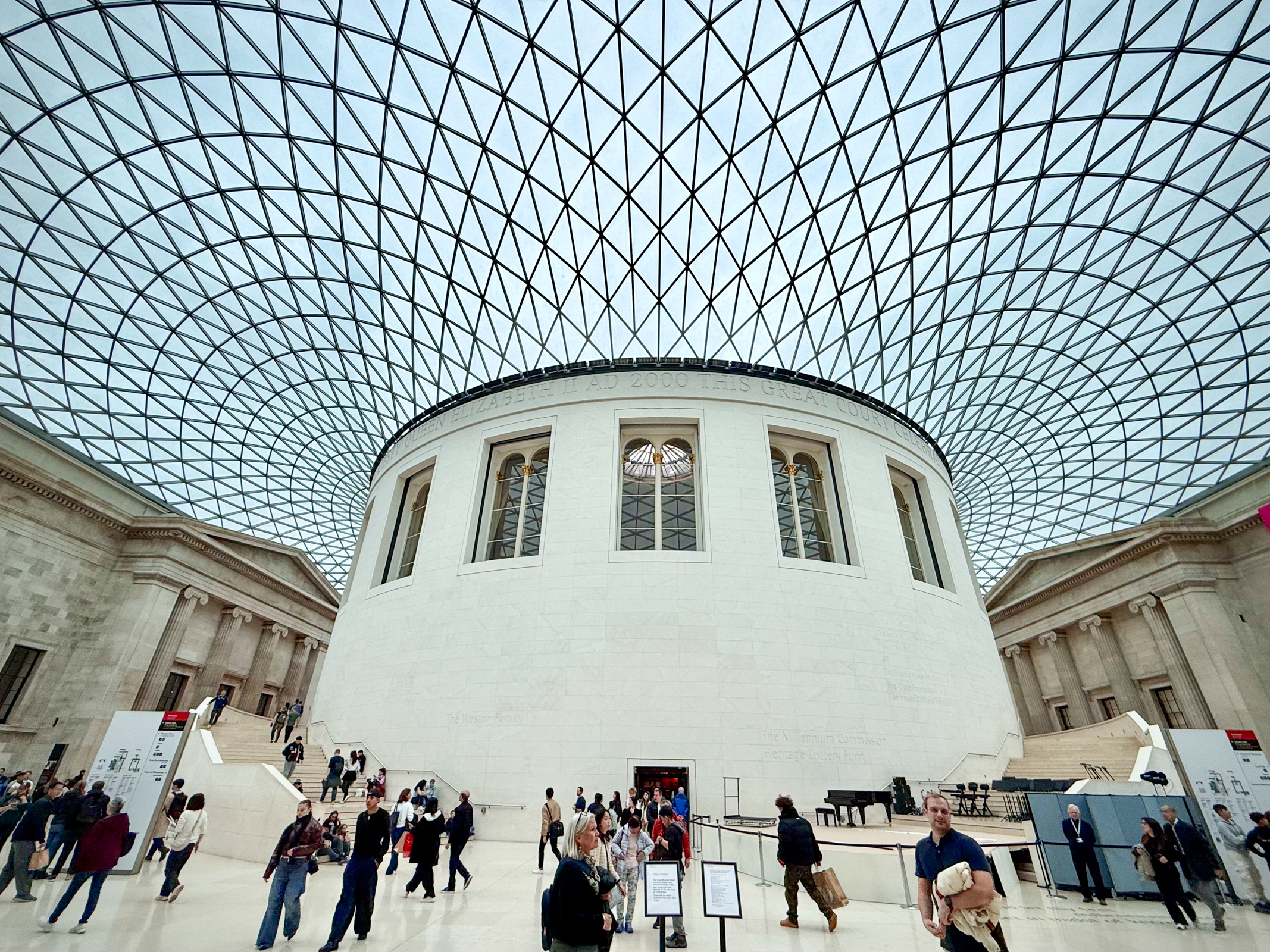
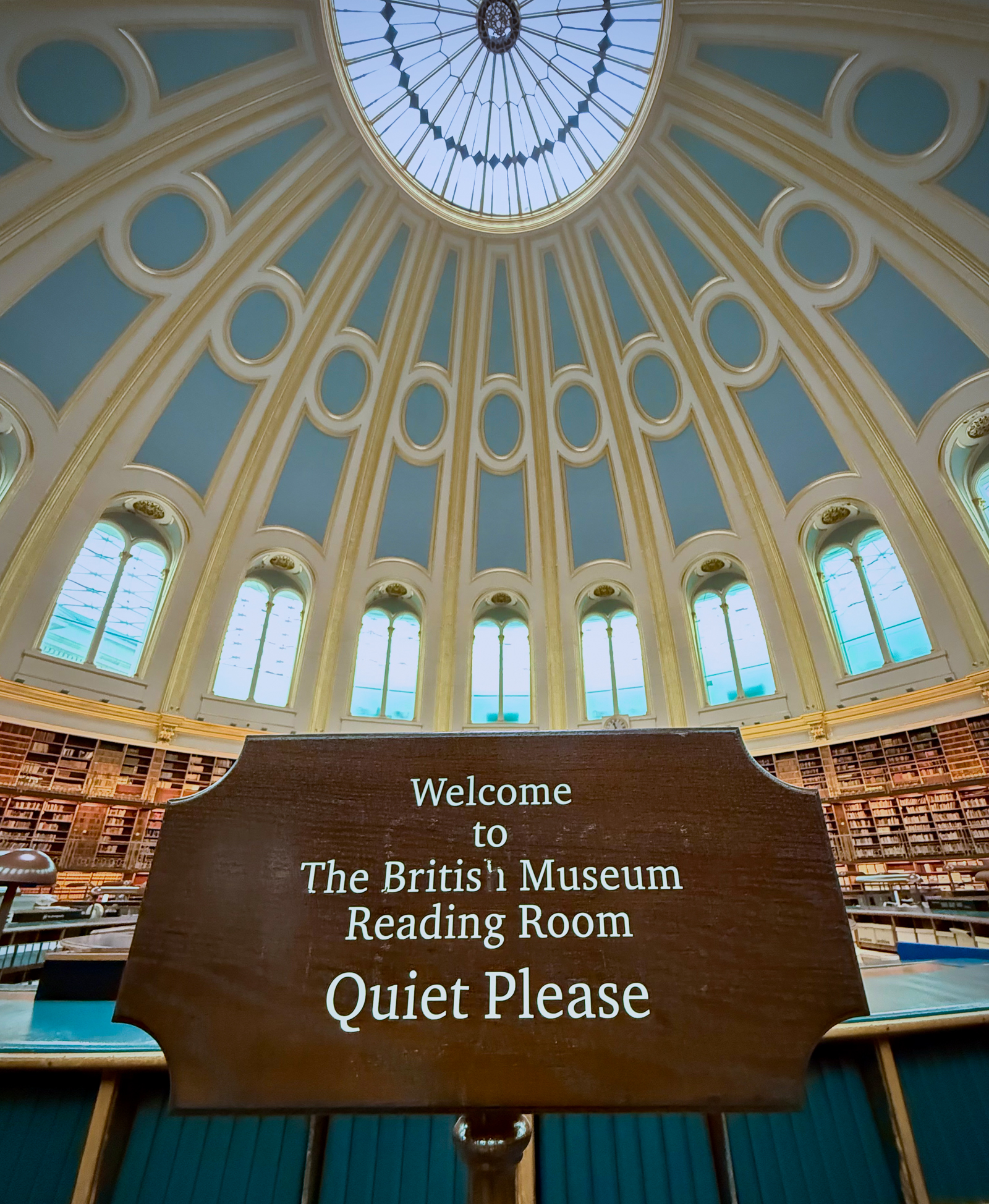
After our deeply emotional trip to Sarajevo, we returned to spend 2 ½ more weeks in London including a short trip to Oxford. Of course, on our first day back we headed straight to the British Museum. I have long fantasized about moving into the Museum and never running out of things to see. At the heart of the British Museum in the center of the largest covered public square in Europe called the Great Court is the original Reading Room. On opening day in 1857, more than 62,000 visitors came to sample the free ice cream and champaign and marvel at the new building. Among the many people who have used it since are Bram Stoker, Sir Arthur Conan Doyle, Beatrix Potter, George Orwell, Mark Twain, Virginia Woolf, H.G. Wells, Mahatma Gandhi, and Lenin. Karl Marx’s famous book Das Kapital was largely written in the Reading Room.
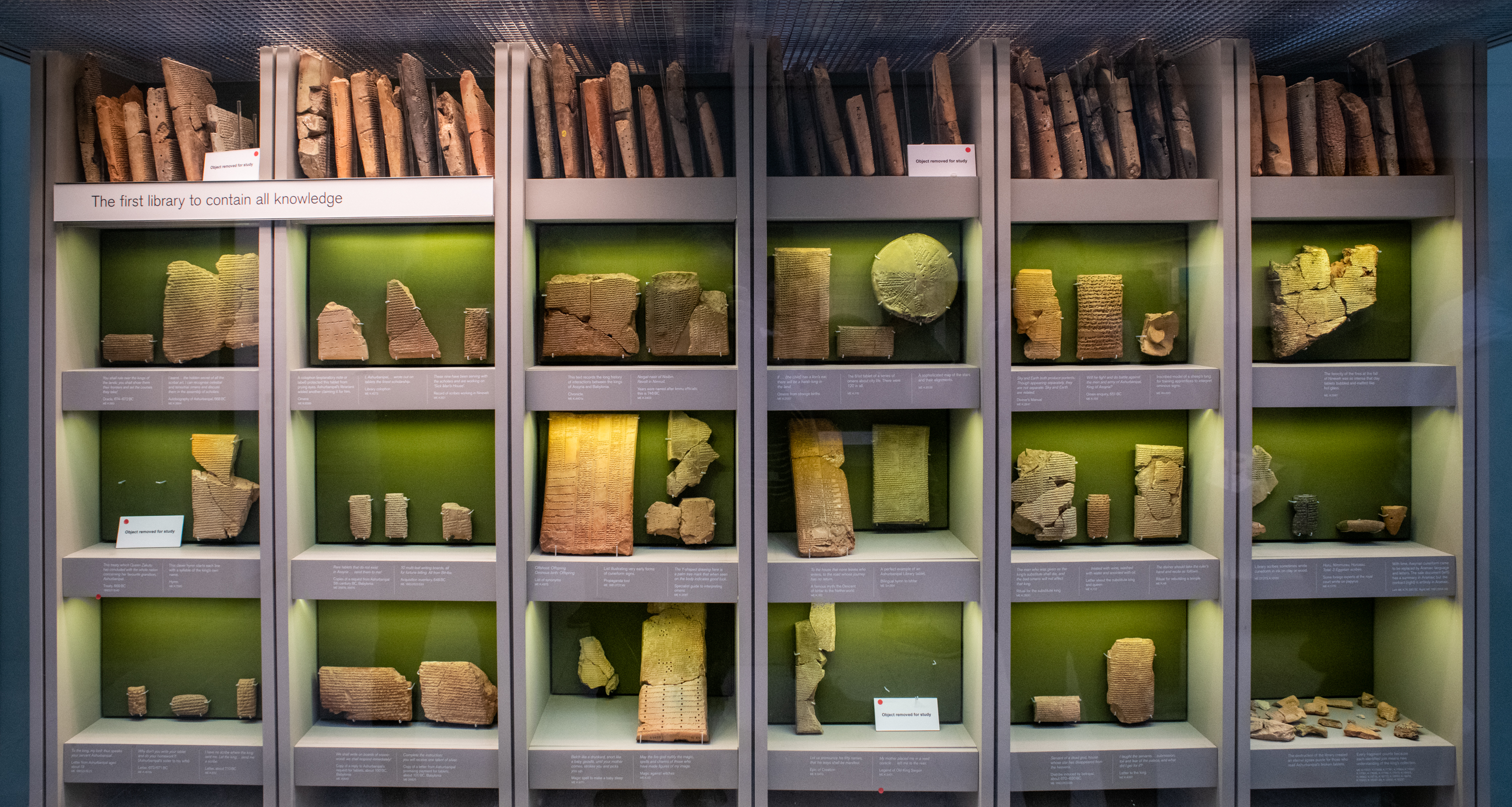
We also visited an exhibit on the Royal Library of Ashurbanipal, considered the first library in the ancient world. Discovered in what is now northern Iraq, the library is one of the most important archaeological discoveries ever made. Ancient Nineveh was consumed by fire around 612 BCE. While paper books are destroyed by fire, the clay tablets were baked harder, making them among the best-preserved documents from thousands of years of Mesopotamian history. I was almost speechless standing in front of this miraculously preserved first library.
We visited one of the other most famous artifacts in the British Museum, the Rosetta Stone. Originally discovered by Napoleon’s soldiers in Egypt in 1799, the ancient decree was written in three languages with the known Ancient Greek script providing the key to deciphering the previously unreadable Egyptian hieroglyphs. It was humbling to stand in front of this essential key to understanding ancient Egyptian writing and civilization.

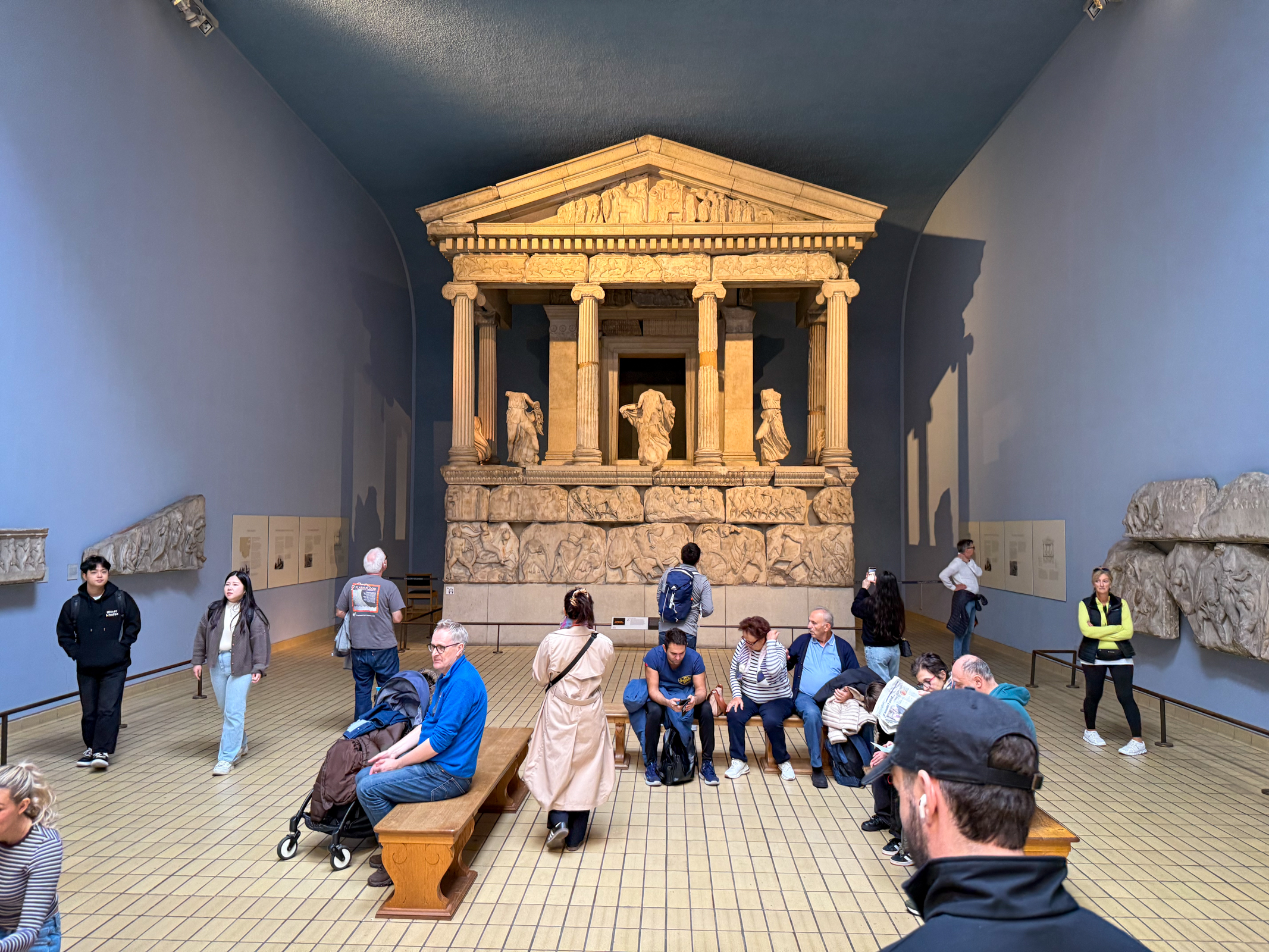
The British Museum is filled with the loot of British explorers and empire. The Elgin Marbles were on display but, curiously, I didn’t see any mention of the controversy over why Britian has not returned these stolen sculptures back to Greece. It seems that long simmering argument will take a little longer to resolve.
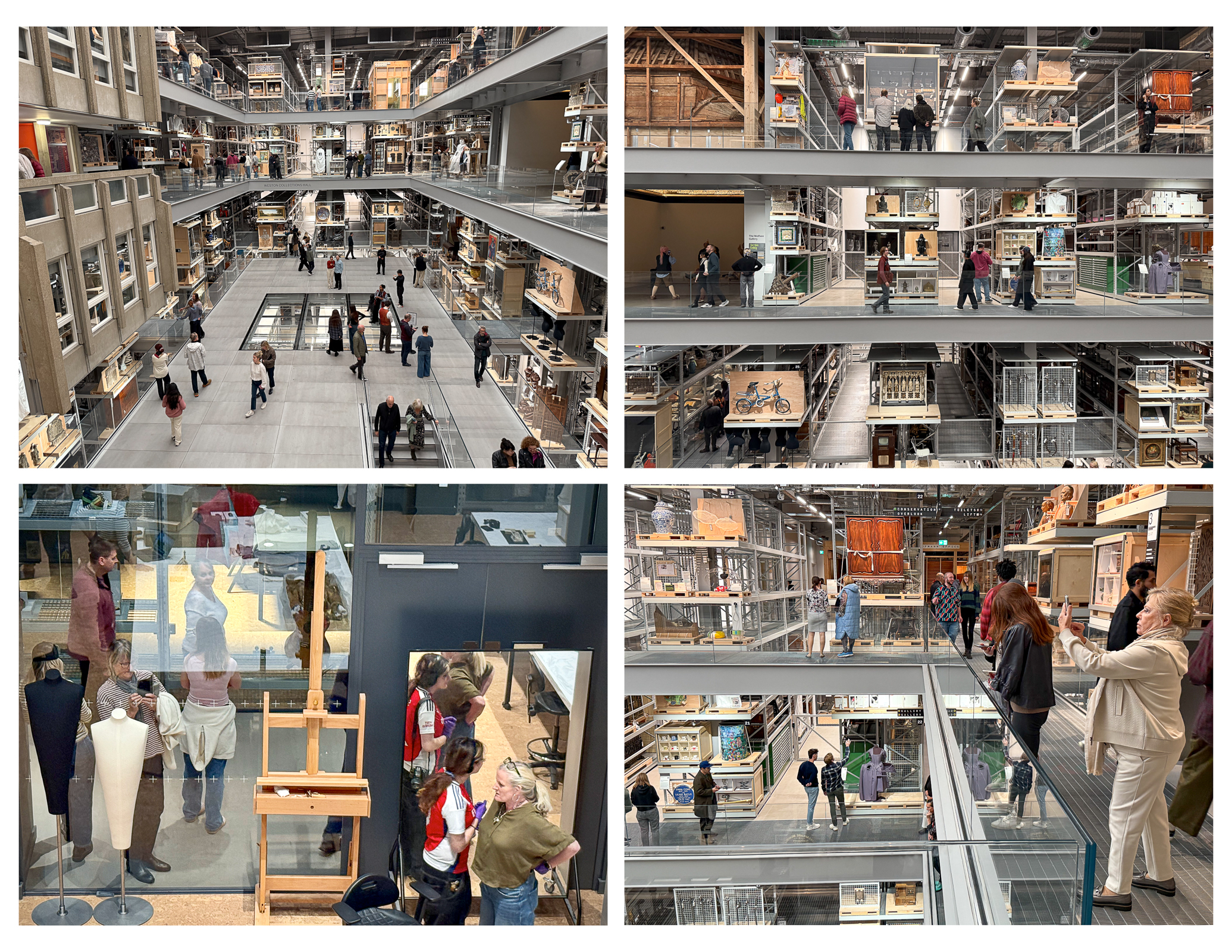
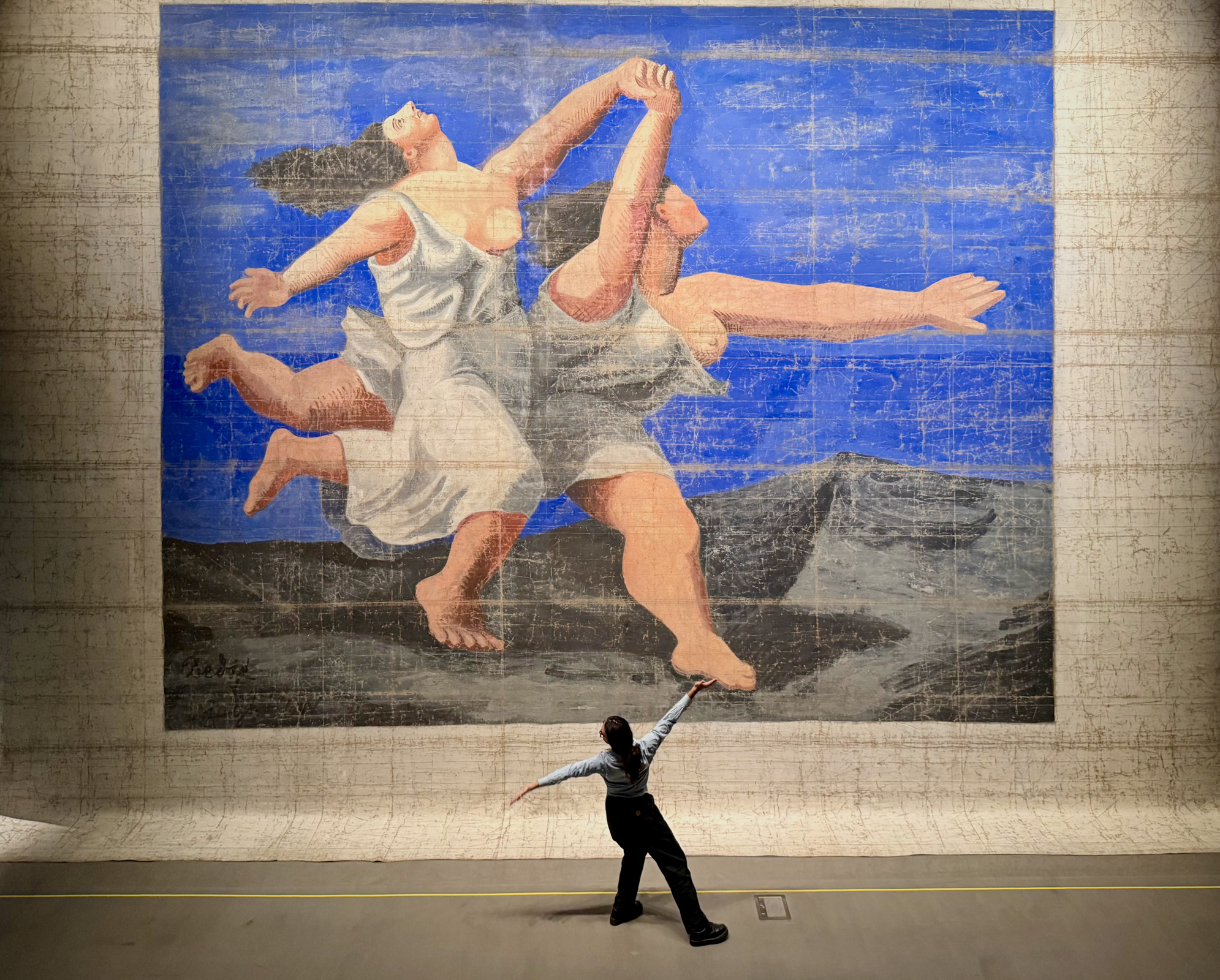
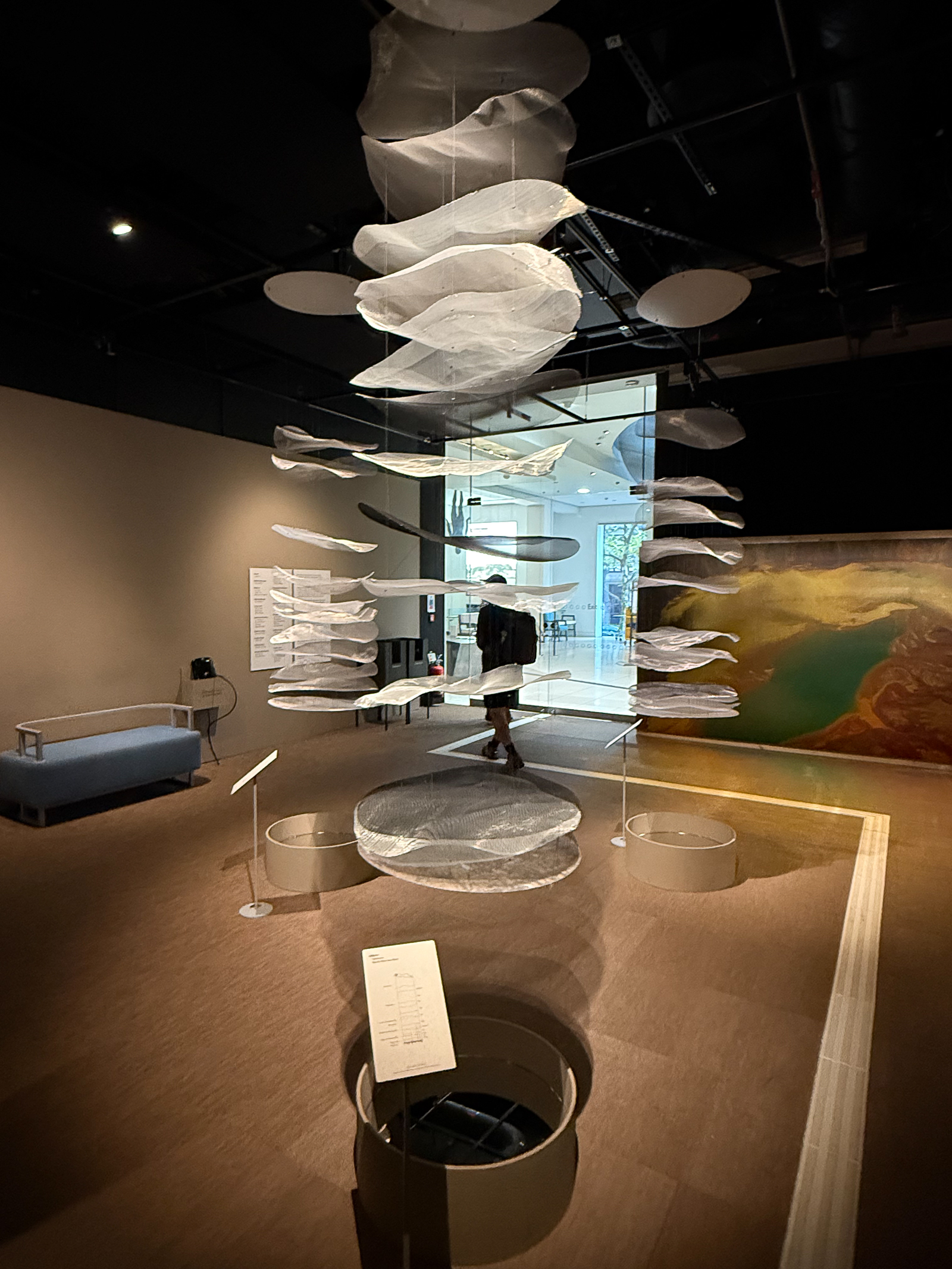
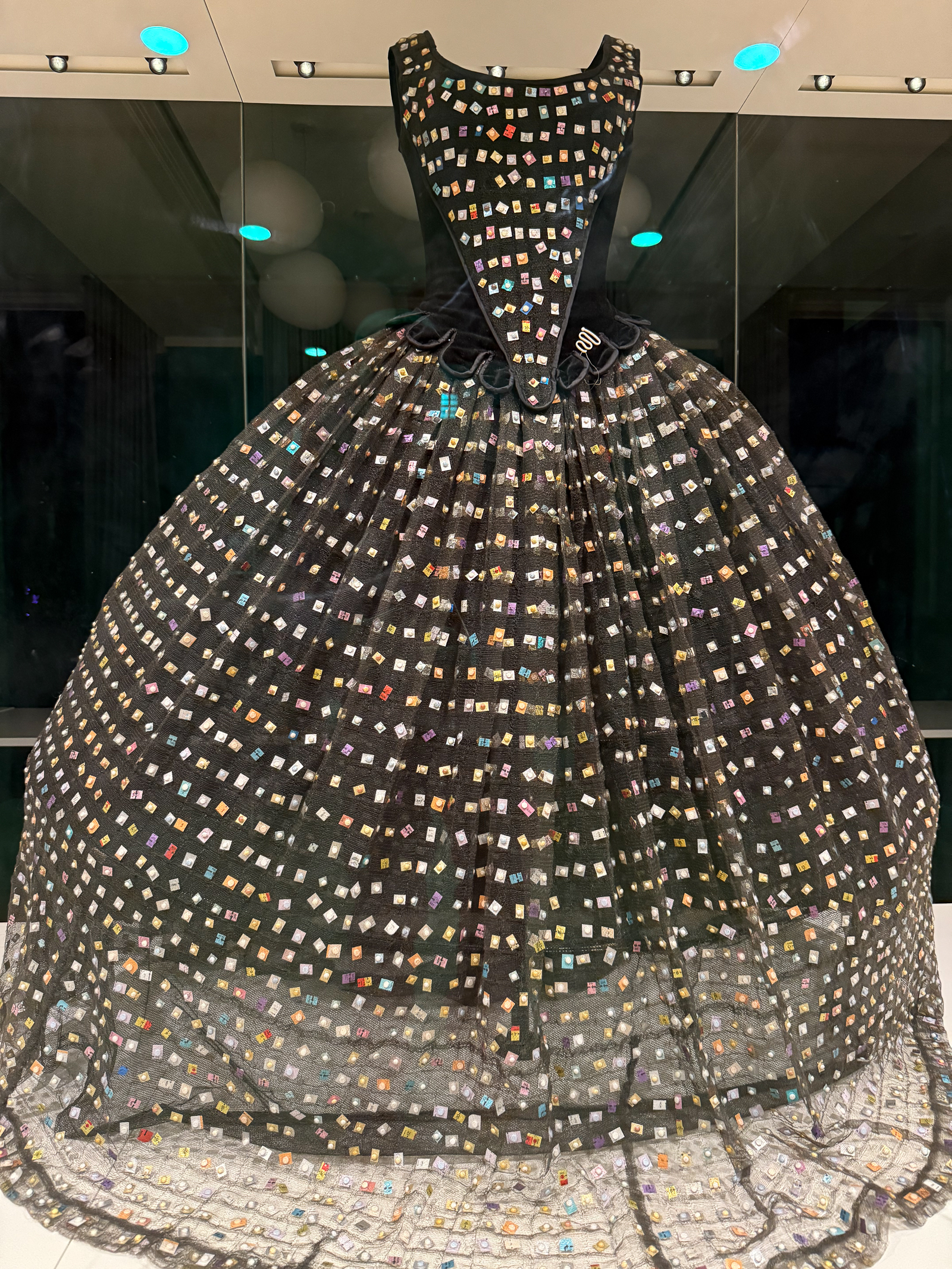
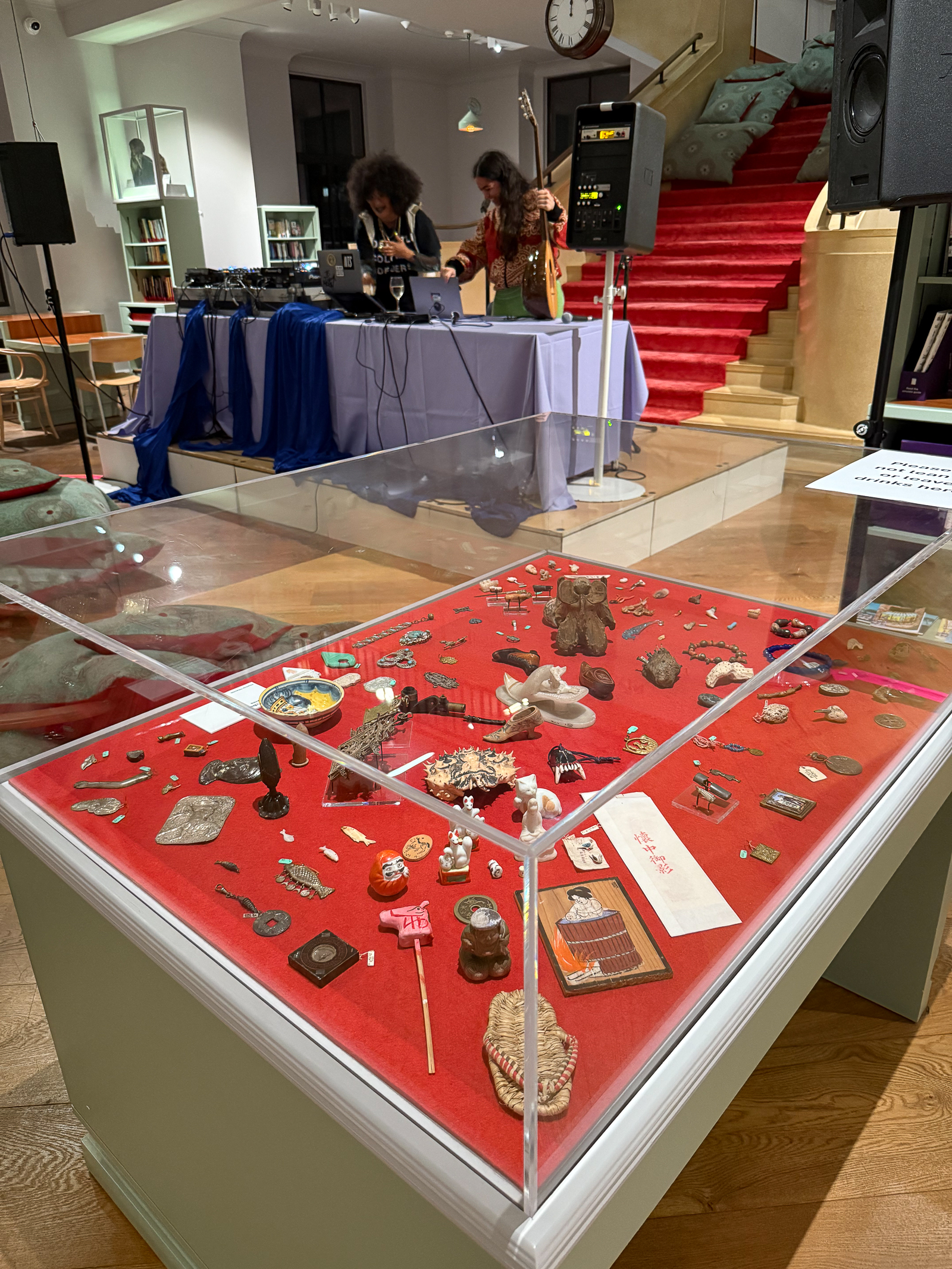
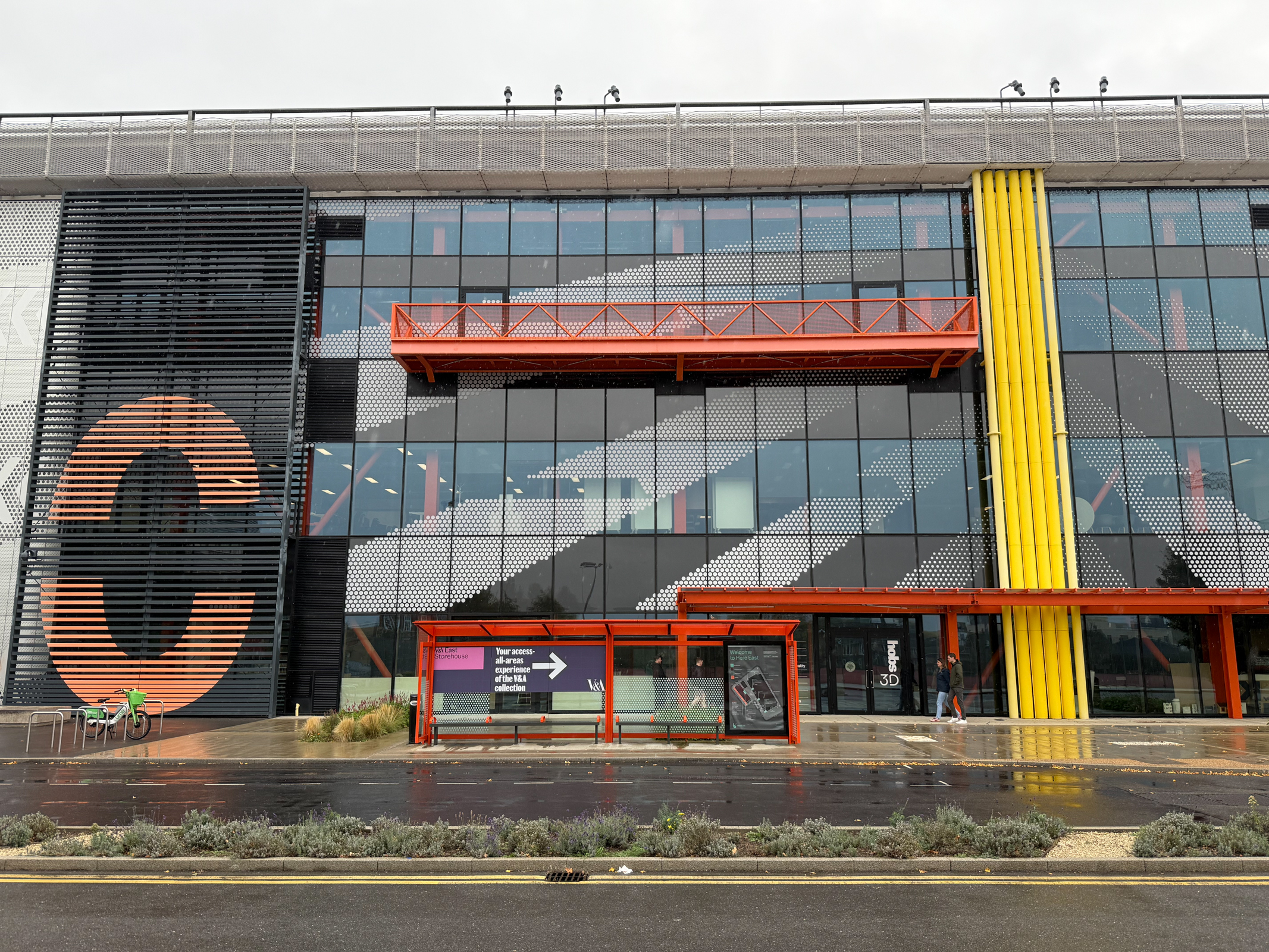
The V&A East Storehouse is a branch of the famous Victoria and Albert Museum. Spanning four levels, and bigger than 30 basketball courts, the V&A East Storehouse was a new kind of museum experience for us. It was overwhelming to be able to wander among half a million creative works, spanning every era, discipline, and corner of the globe and see the inner workings of one of the world’s leading museums. The juxtaposition of unrelated objects created a whole new dialog between art and technology, design and history.  It gave us a chance to see and interact with these objects in a whole new way. We staggered out of the Storehouse overwhelmed and inspired.  
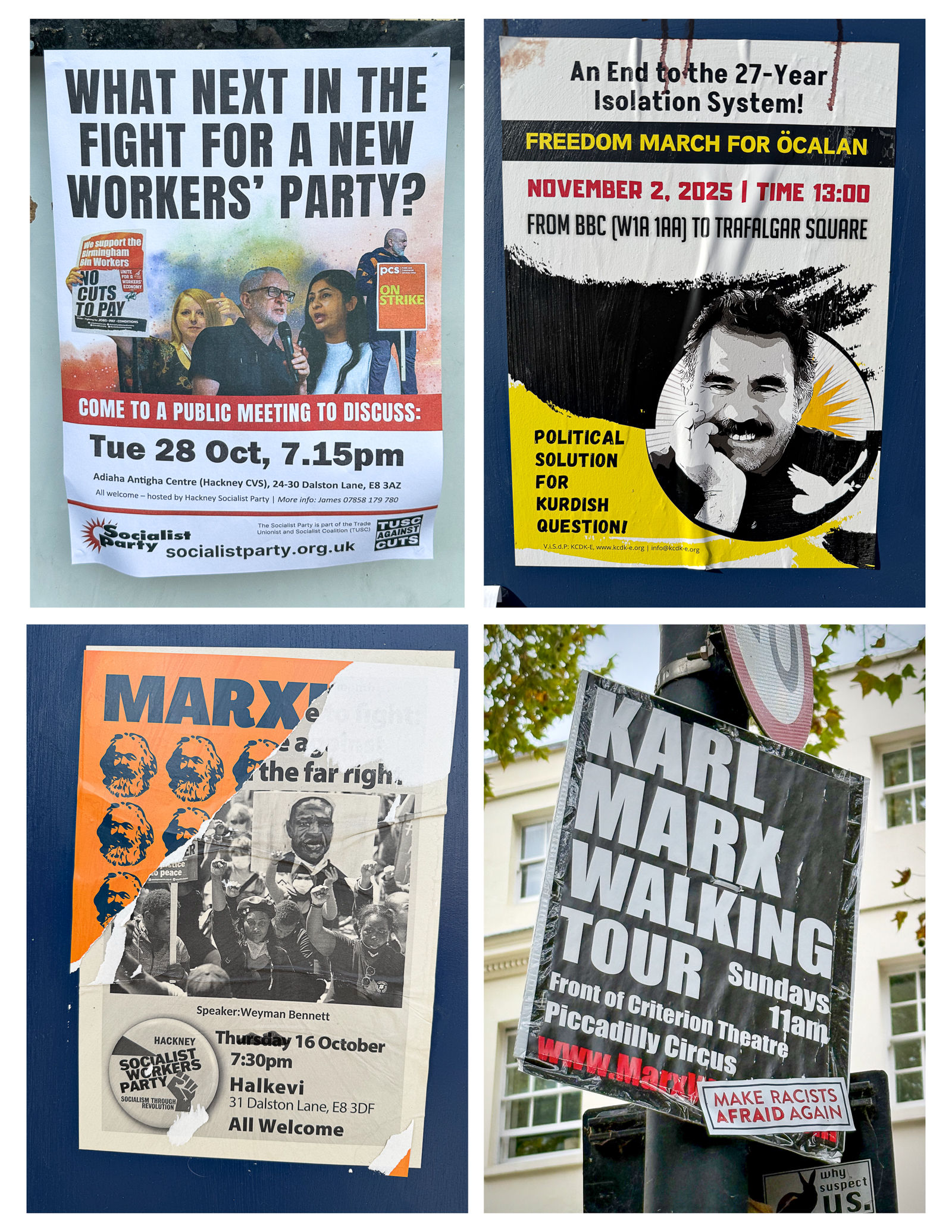
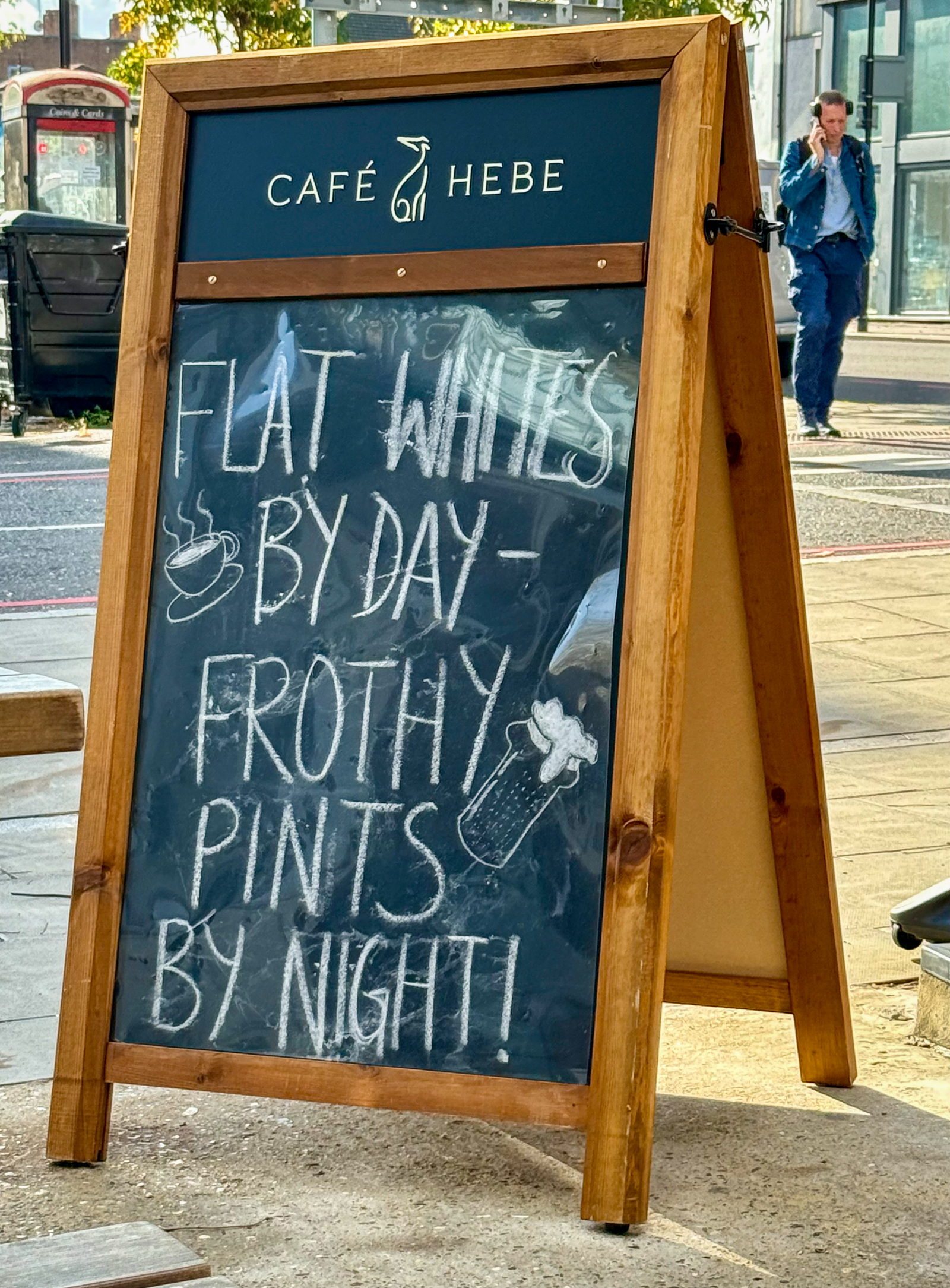
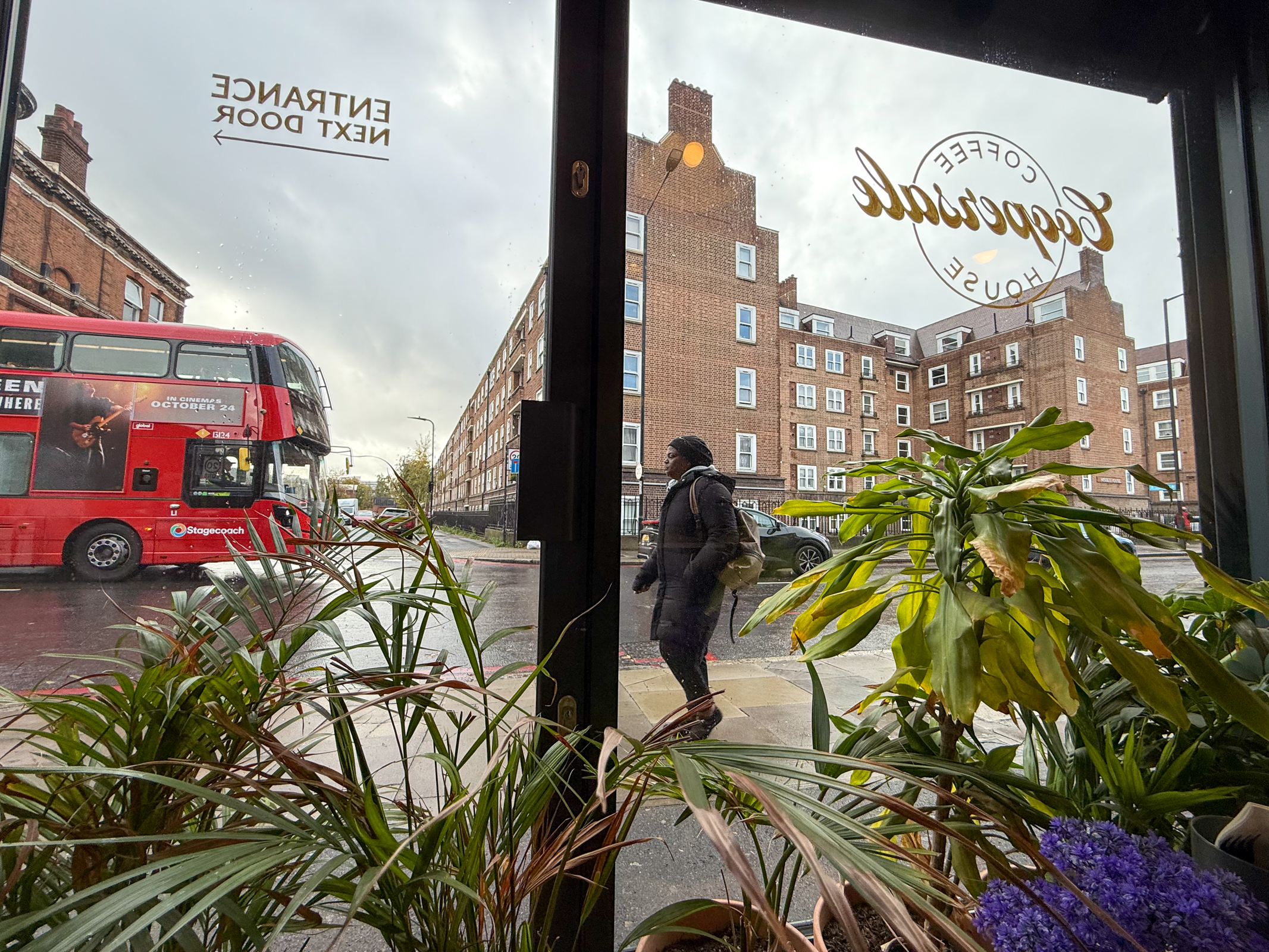
To keep the cost down on this trip, we decided to work with a group called Home Exchange to stay in people’s home for free using points from using our home in San Francisco as the exchange. We have used this system before with good results. As it turned out, we stayed in two different places during our time in London. Our first stay was in a neighborhood in East London called Hackney. At first, it seemed kind of rough and, indeed, more than 40% of children here live in poverty. This is one of the great ethnic and religious melting pots of London. As we walked the streets, it seemed that English was the last language that people spoke here. Close to central London, Hackney is the new face of East London with alternative nightlife, great ethnic restaurants, lively markets and vital independent shops. It is being gentrified but felt like the early stages of similar transitions to parts of Brooklyn or San Francisco’s Mission District, hopefully with better results for the migrants and low-income people. It was refreshing to see the diversity here as well as a healthy alternative political perspective. Hope it will last!
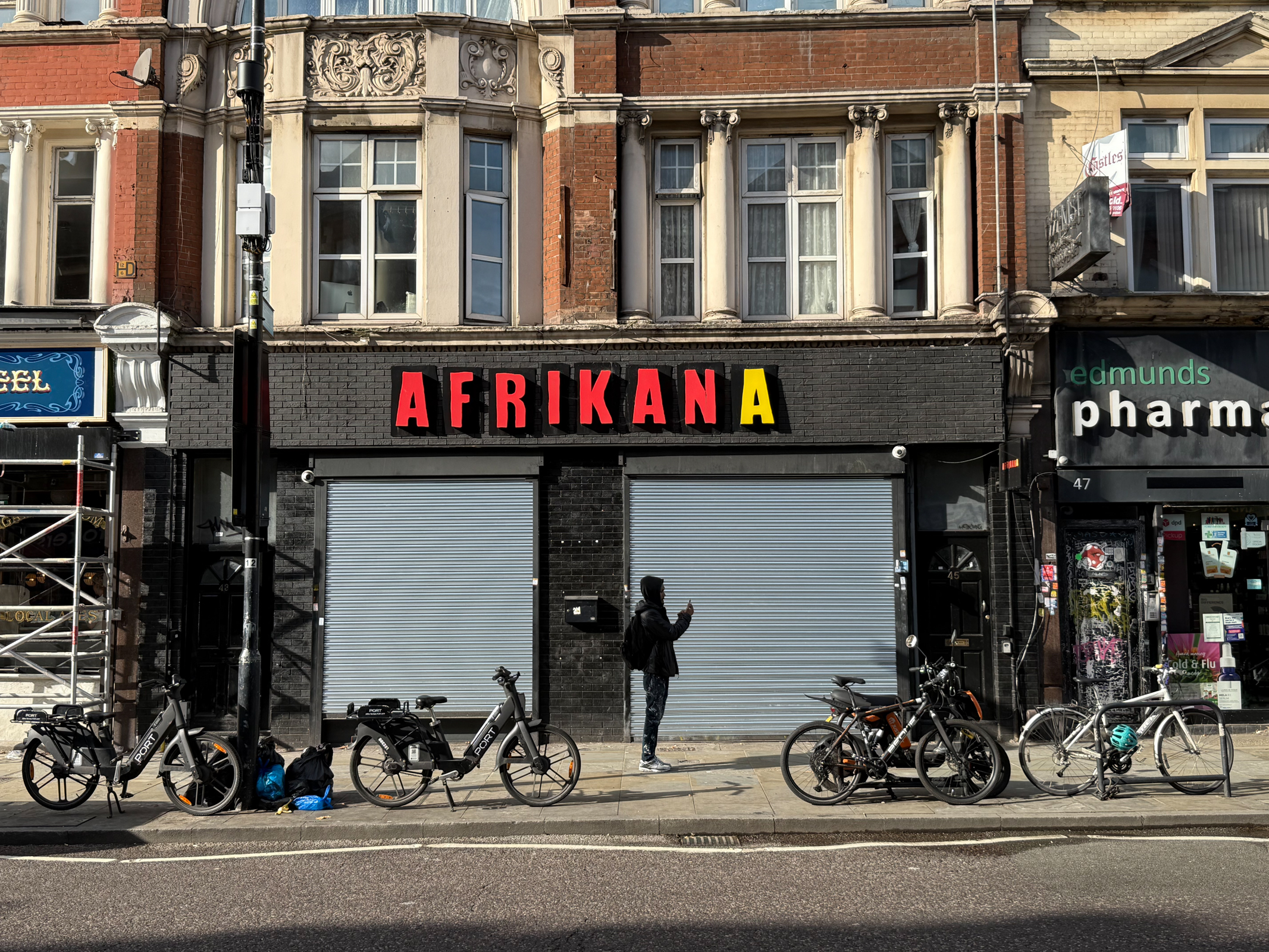
We were lucky to be joined on this part of our trip by our son Walker and our friends Julie and Dan from San Francisco. Having them along for much of our wanderings made the experience even better.

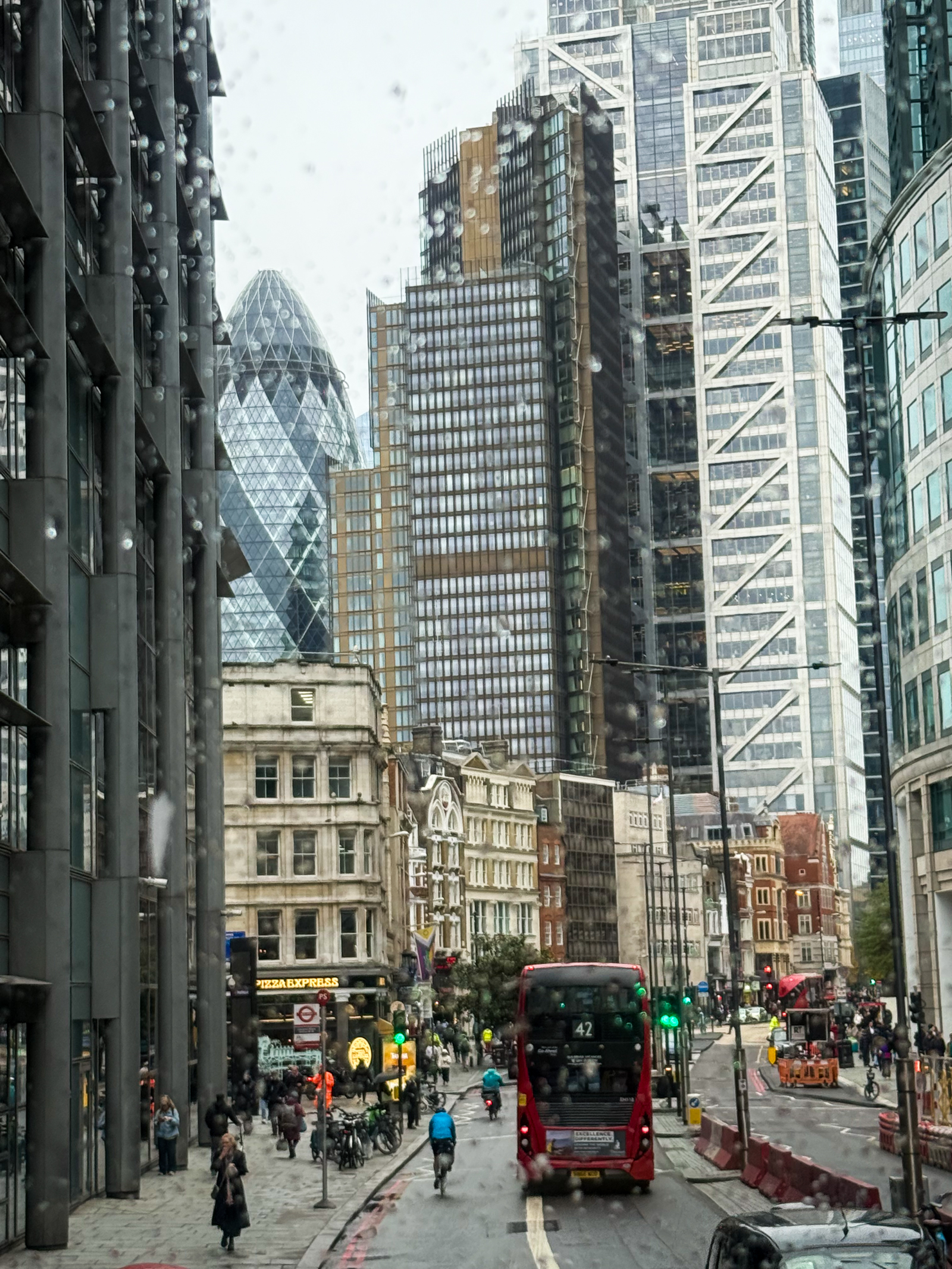
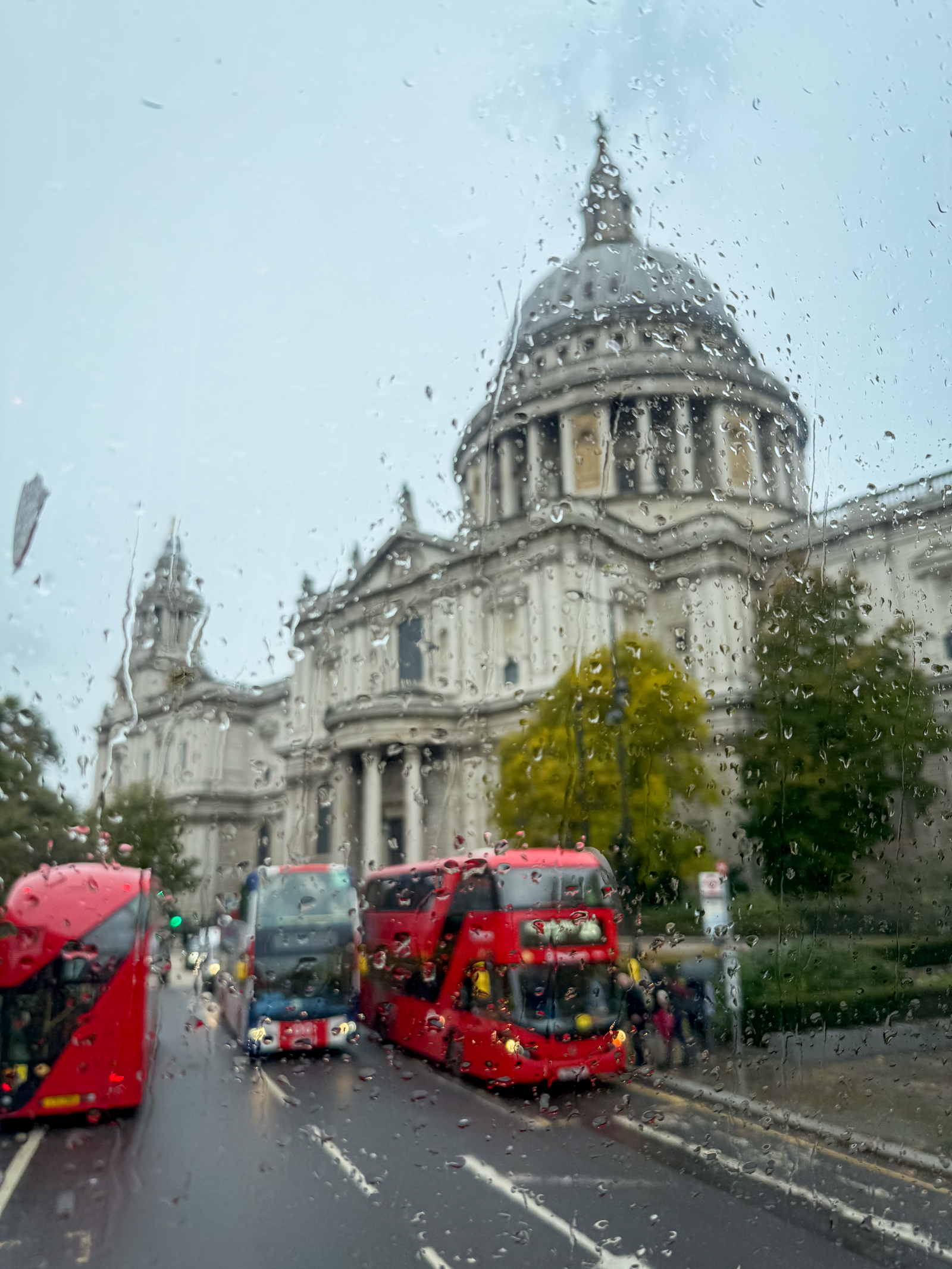
One of the great ways to see London is sitting at the front of the upper deck of a double decker bus cruising the streets. There is no better way of seeing this crazy but fascinating city, rain or shine.
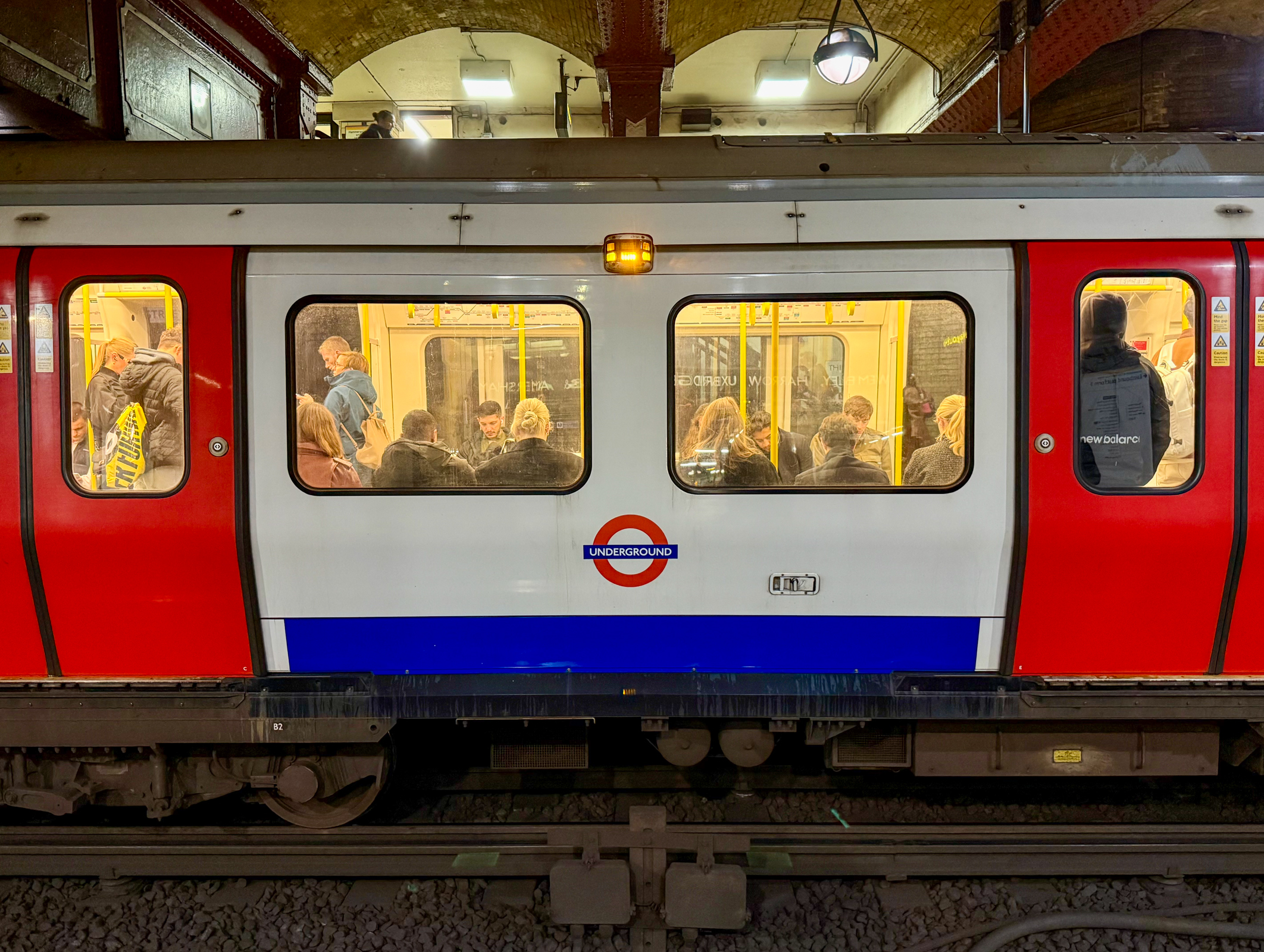
The London Underground is world’s oldest and still one of the best underground railway systems anywhere. It first opened in 1863 and has expanded to over 250 miles of track accommodating up to 5 million passengers a day. We visited one of the original stations at Baker Street on Marylebone Road. The people watching was worth the price of admission.
Another way we made our way around London was walking or taking a boat along the Thames River. This was a great way to see the contrast between London’s ultra-modern skyline and parts of the ancient waterfront.

The destination for our incessant scrambling around London was the huge and incredible variety of arts, history, culture and food. And most of the museums are free! The Victoria and Albert Museum fully lived up to its great reputation and we were blown away by its rich collection of great art and just about everything else.
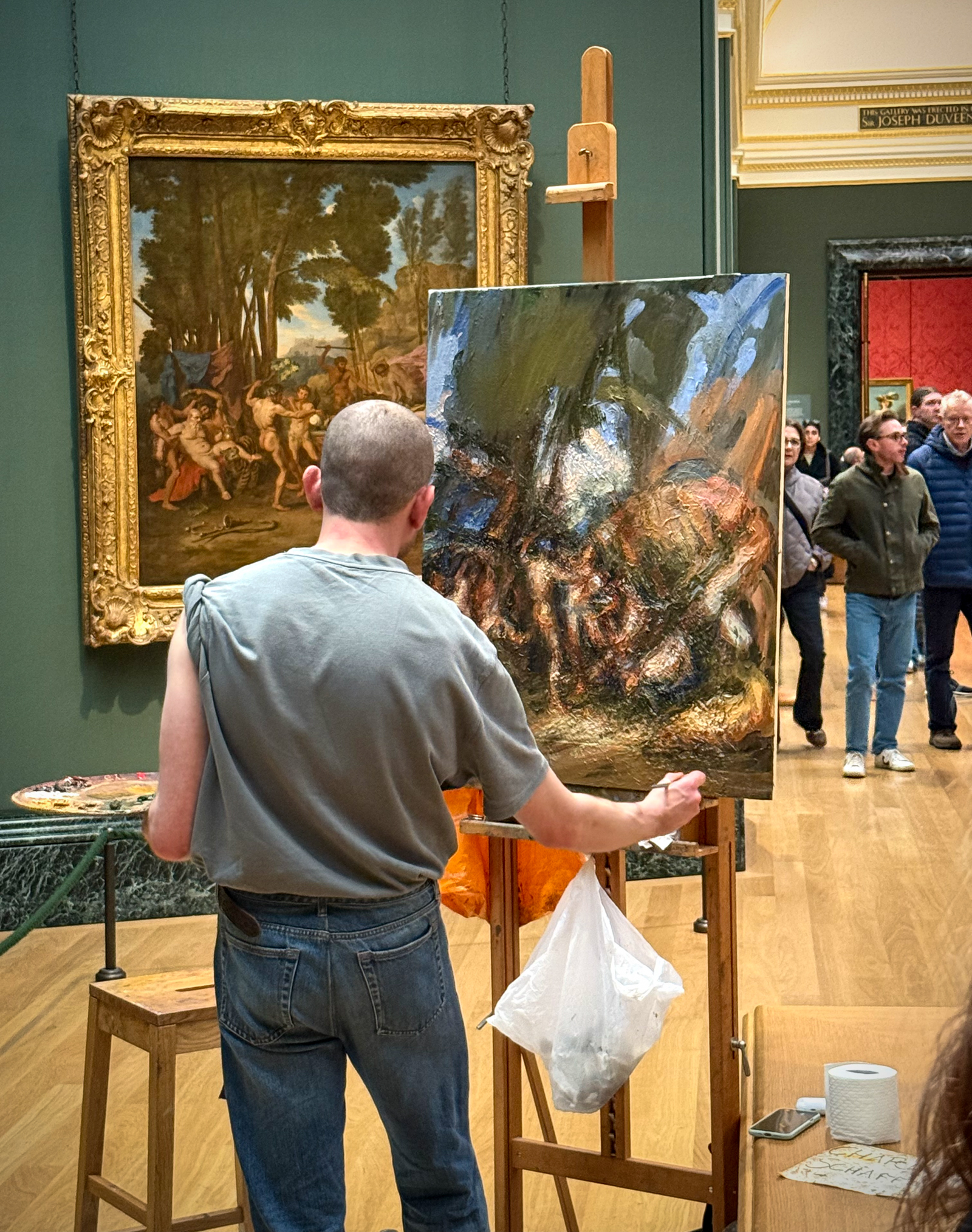
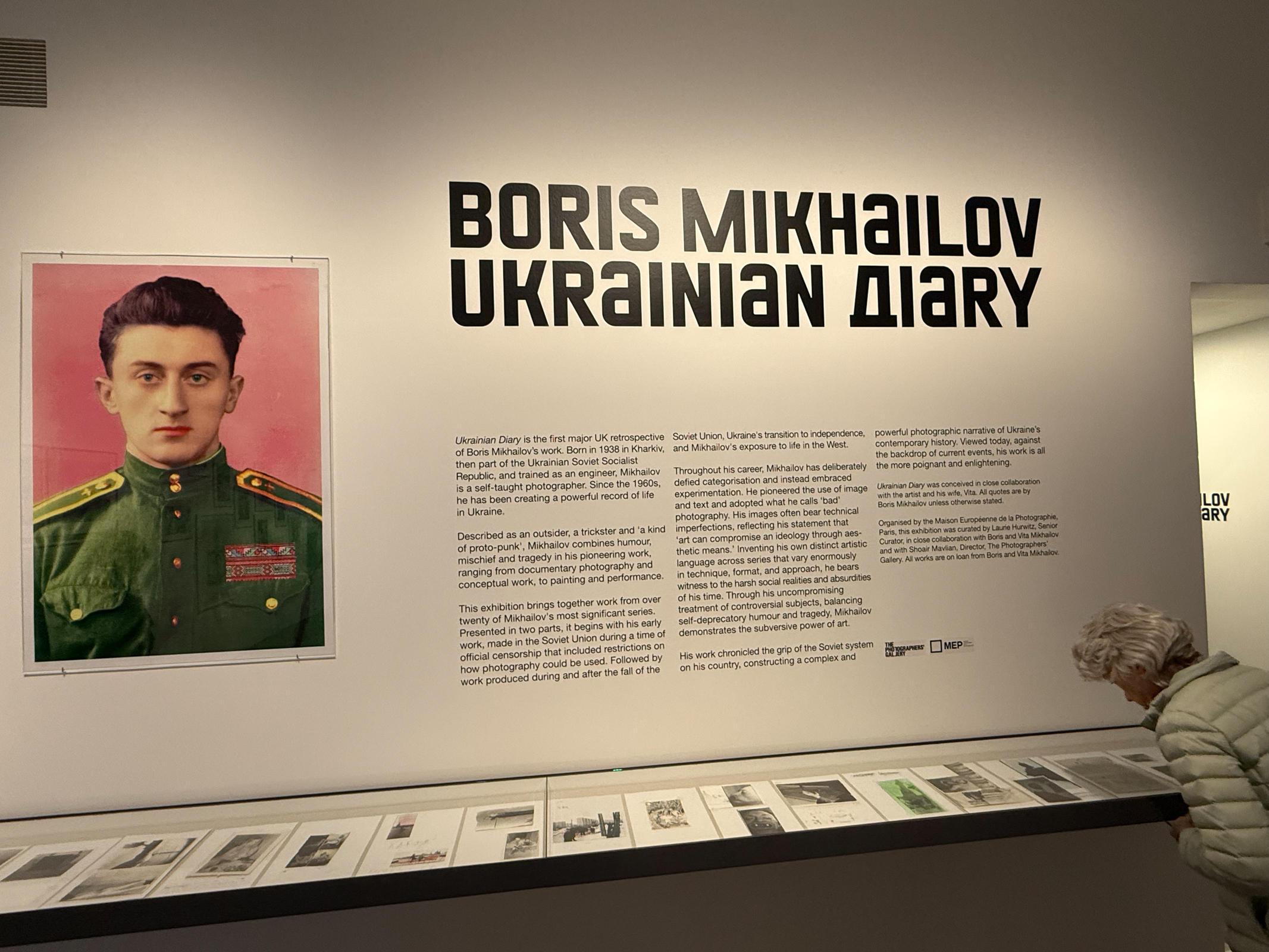
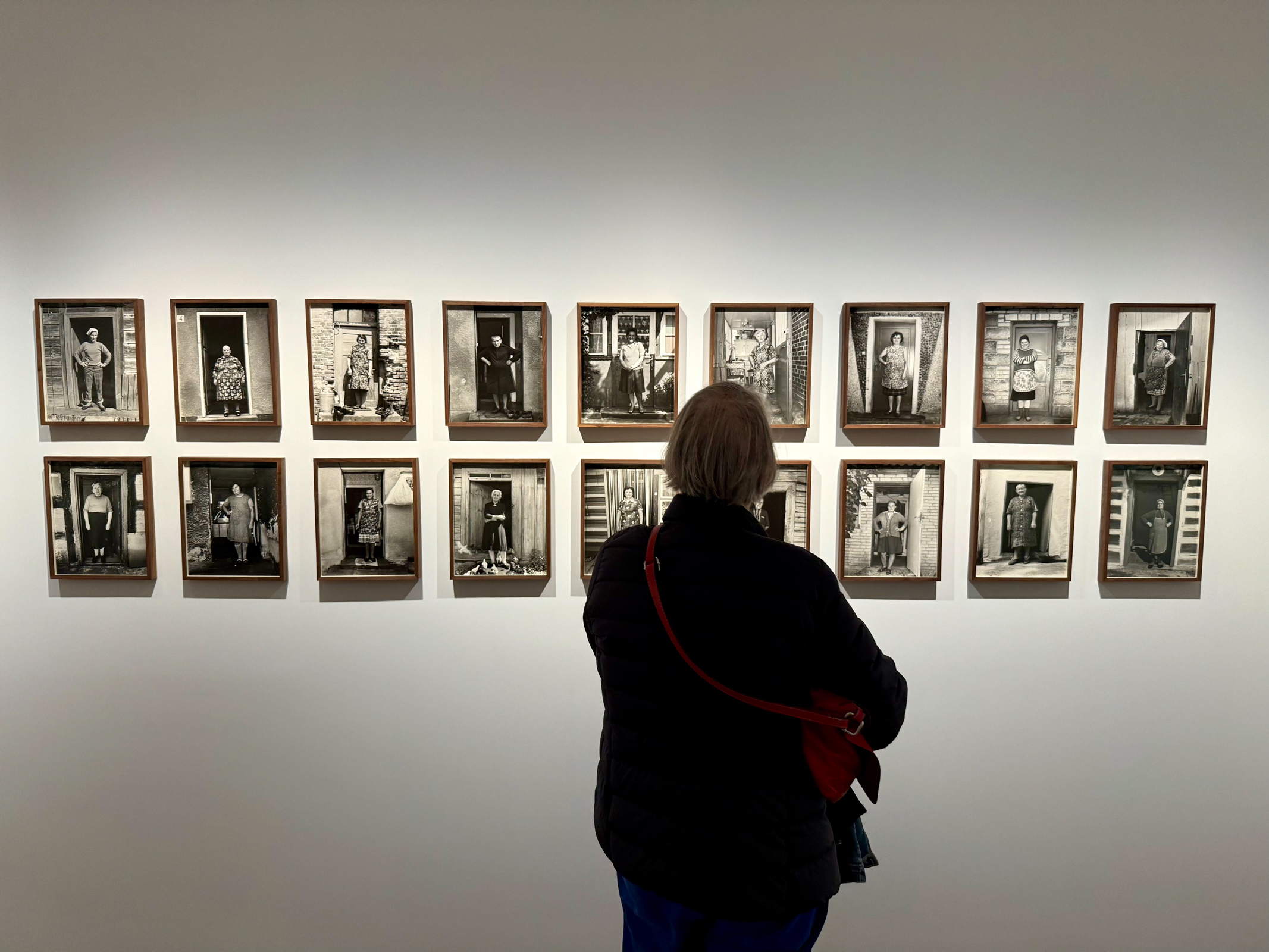
The Photographer’s Gallery was also a delight featuring work by a Ukrainian man named Boris Mikhailov and a Polish woman named Zofia Rydet. Both were names I hadn’t heard of and both of their work was astonishing.
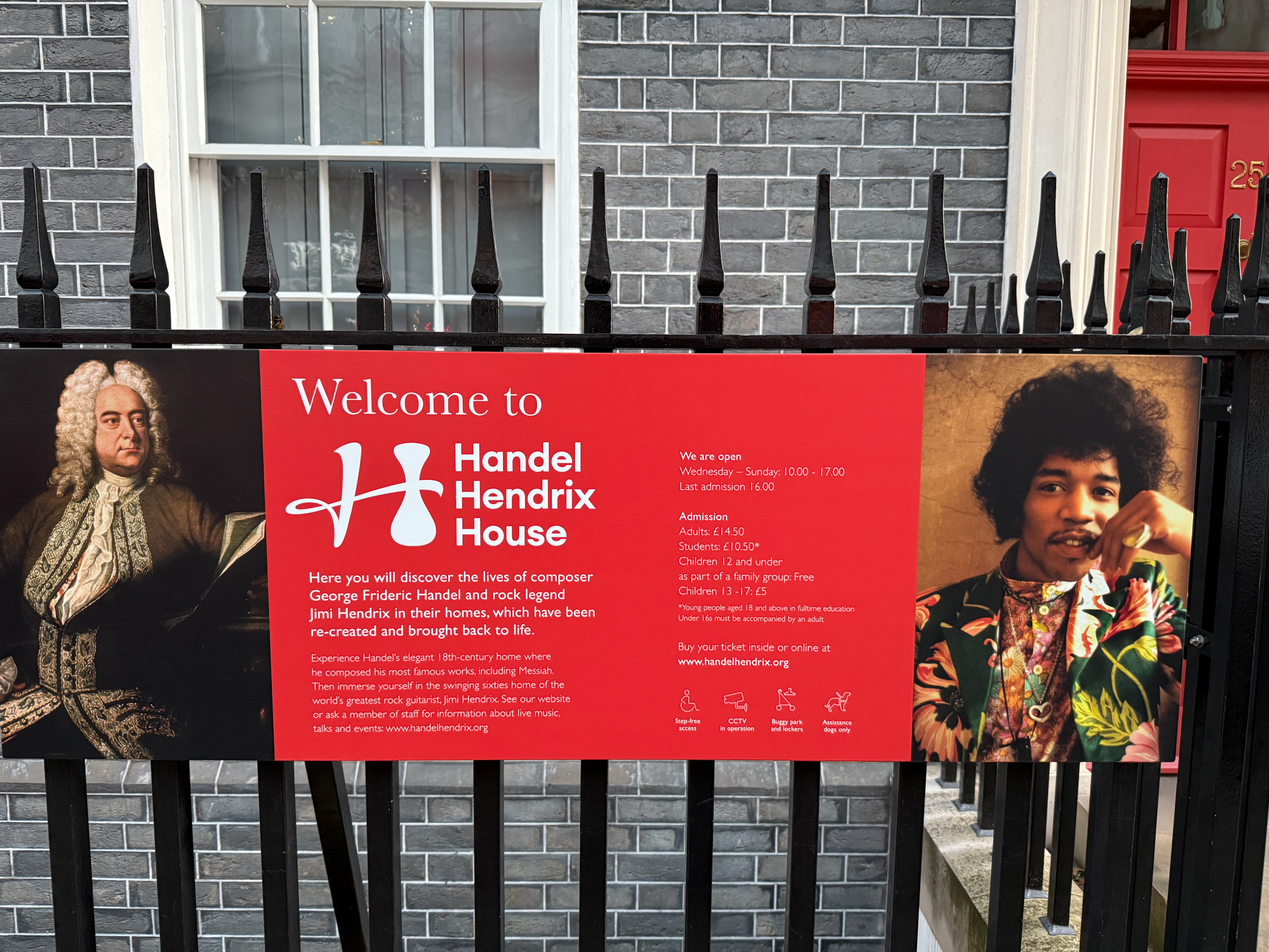
London was also full of small unsung galleries, museums and monuments. One was a heartfelt memorial to Animals in War which proclaimed, “They Had No Choice.” Another surprise was the Handel Hendrix House. Who would ever guess that George Frideric Handel and Jimmy Hendrix would live right next door to each other in London? Of course, they lived there in different times and in different worlds. But still…

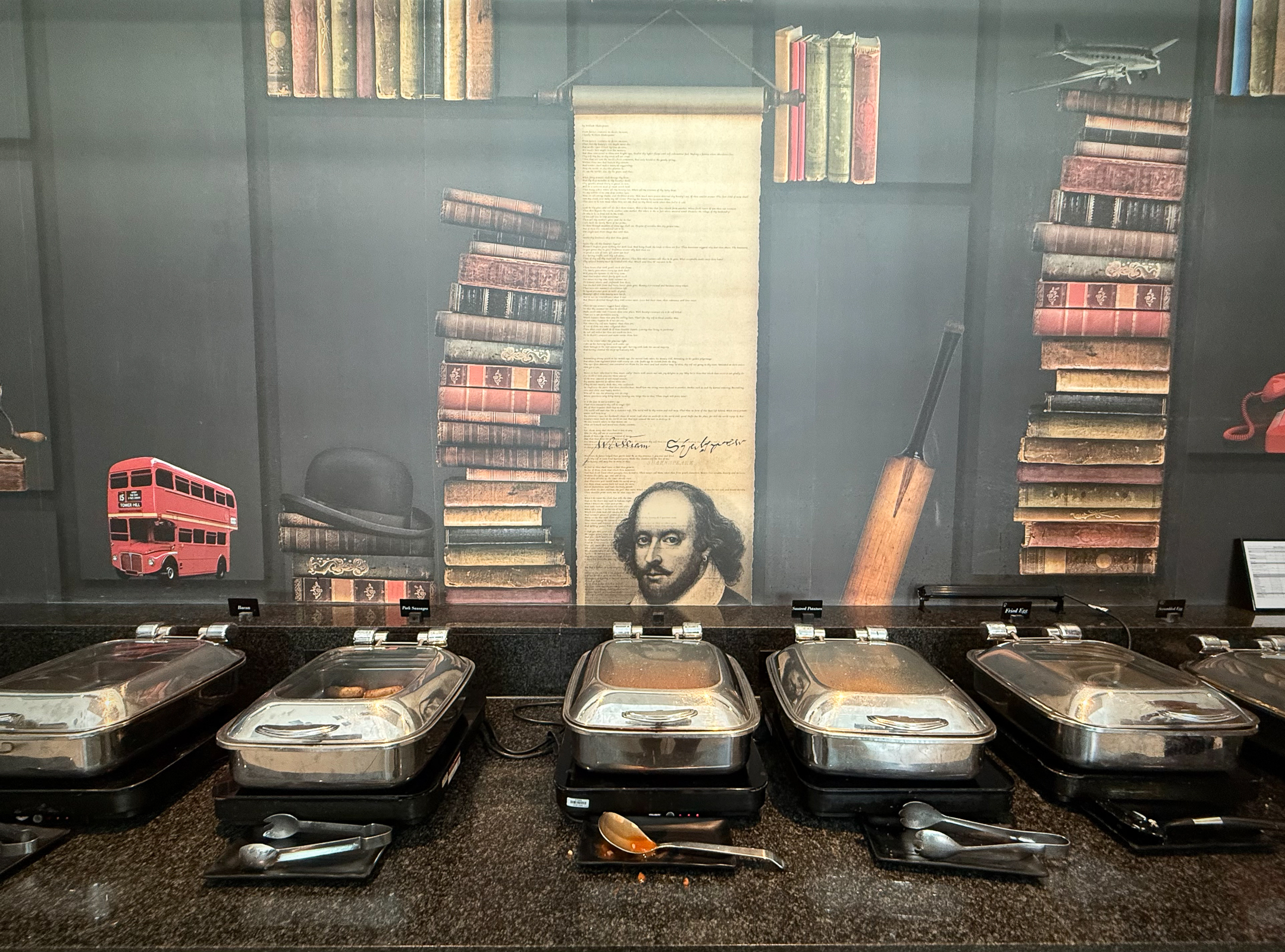
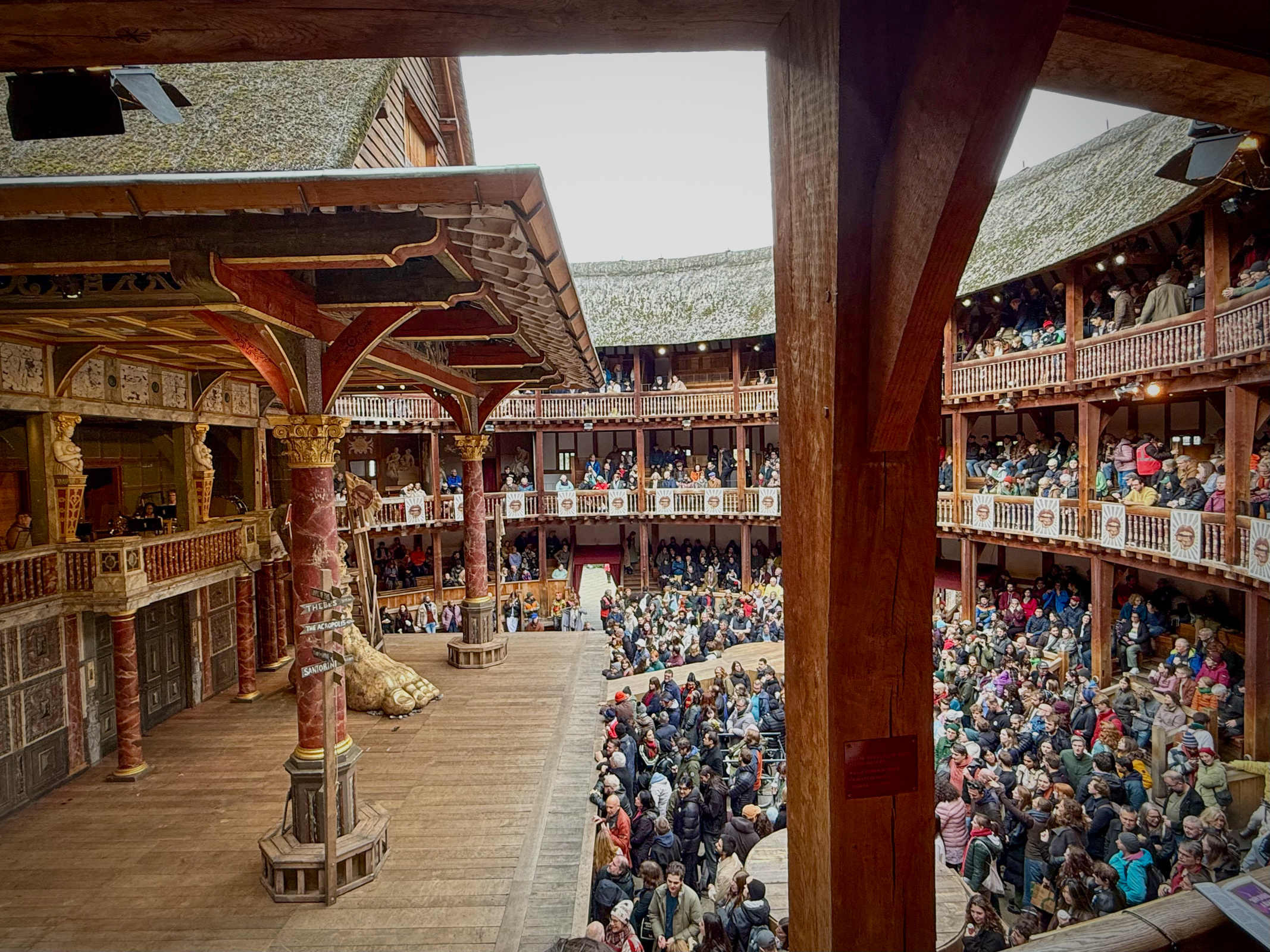
And, of course, a trip to London would not be complete without a visit to the re-creation of Shakespeare’s Globe Theater. Even better was to see a Shakespeare play while shivering in the open-air theater. As it turned out, we saw a very energetic three-hour performance of Troilus and Cressida which is frequently cited as one of the worst plays by one of the best writers in history.
The Tate Modern is considered by some the jewel in the crown of London’s modern art galleries. With almost 6 million visitors a year, it is one of the most visited museums and galleries in the world. The collection holds masterpieces of international and British modern art and our experience there was surprising and impressive.

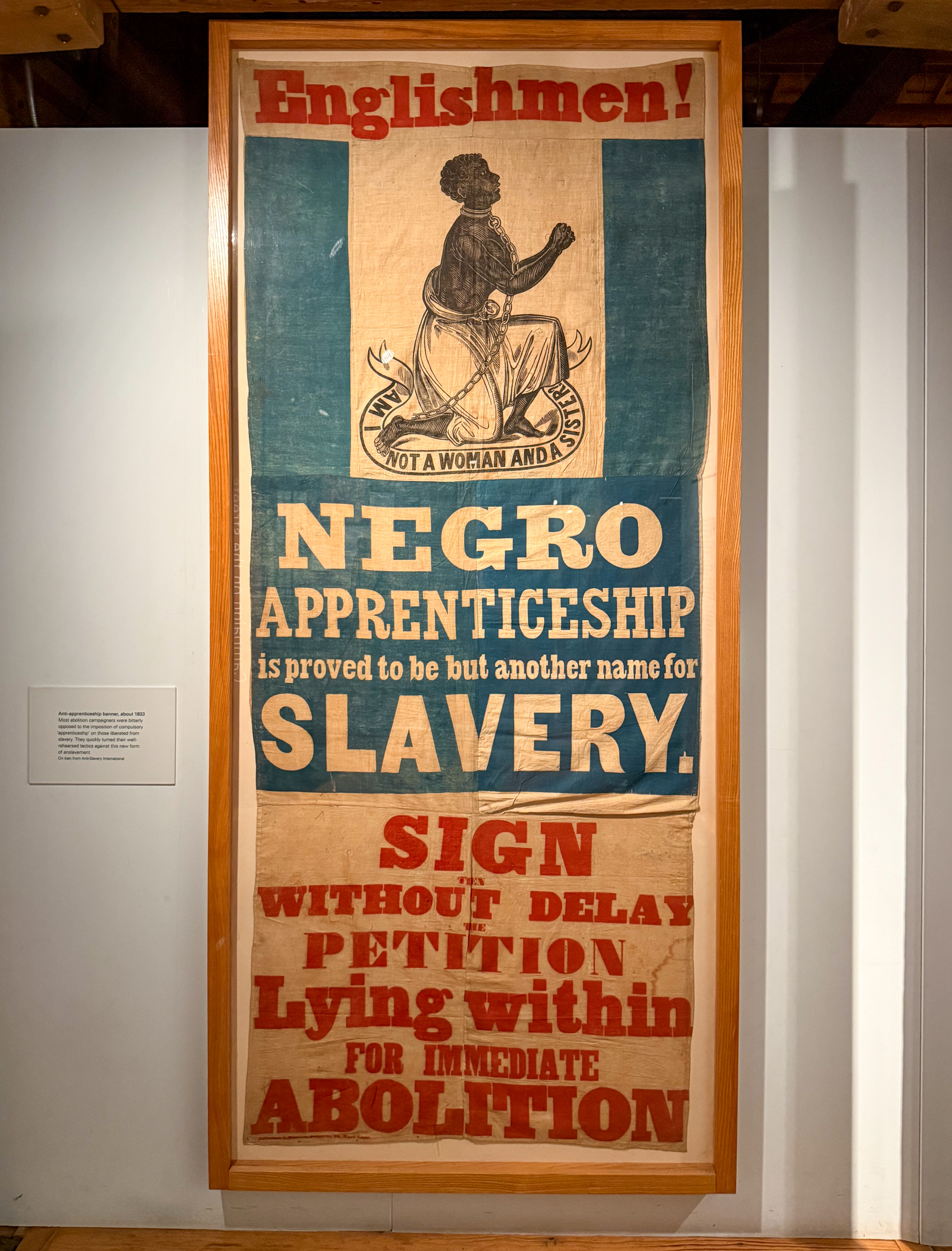
The London Museum Docklands explained the history of the River Thames, the growth of the Port of London and, most impressively, the docks historical link to the Atlantic slave trade. It also had a fascinating section on the docklands area when it was heavily bombed during WWII in the London Blitz.
We did a quick run-through of the National Maritime Museum including visiting the Royal Observatory (where Greenwich Mean Time began) and the famous ship called the Cutty Sark. This area is a UNESCO World Heritage Site.

A big surprise was how good traditional English food was on this trip. My memory of last visiting here in 1980 was how awful British food was and how lucky the UK was to have the influx of cuisine from the former colonies. Now, traditional English, Scottish and Welsh food and drink has impressed us throughout the UK. It may not be as healthy as the food we eat back in California, but English food is certainly underrated.

We had one last business trip to Oxford and decided to forego the pleasure of driving on the wrong side of the English roads again. We took the Tube to Paddington Station and found it to be much more than just the home of that lovely little bear. When we arrived a large group of people in big furry hats and greatcoats were performing band music in the station. When they started playing Bob Marley, all the kids and most everyone else started dancing and smiling at delightful scene. We thought of it as a great send off as we boarded our train to Oxford.

The University of Oxford started in 1096, making it the oldest university in the English-speaking world and the world’s second-oldest university in continuous operations. The iconic Radcliffe Camera houses the Radcliffe Science Library while our destination of the Old Bodleian Library was right next door.

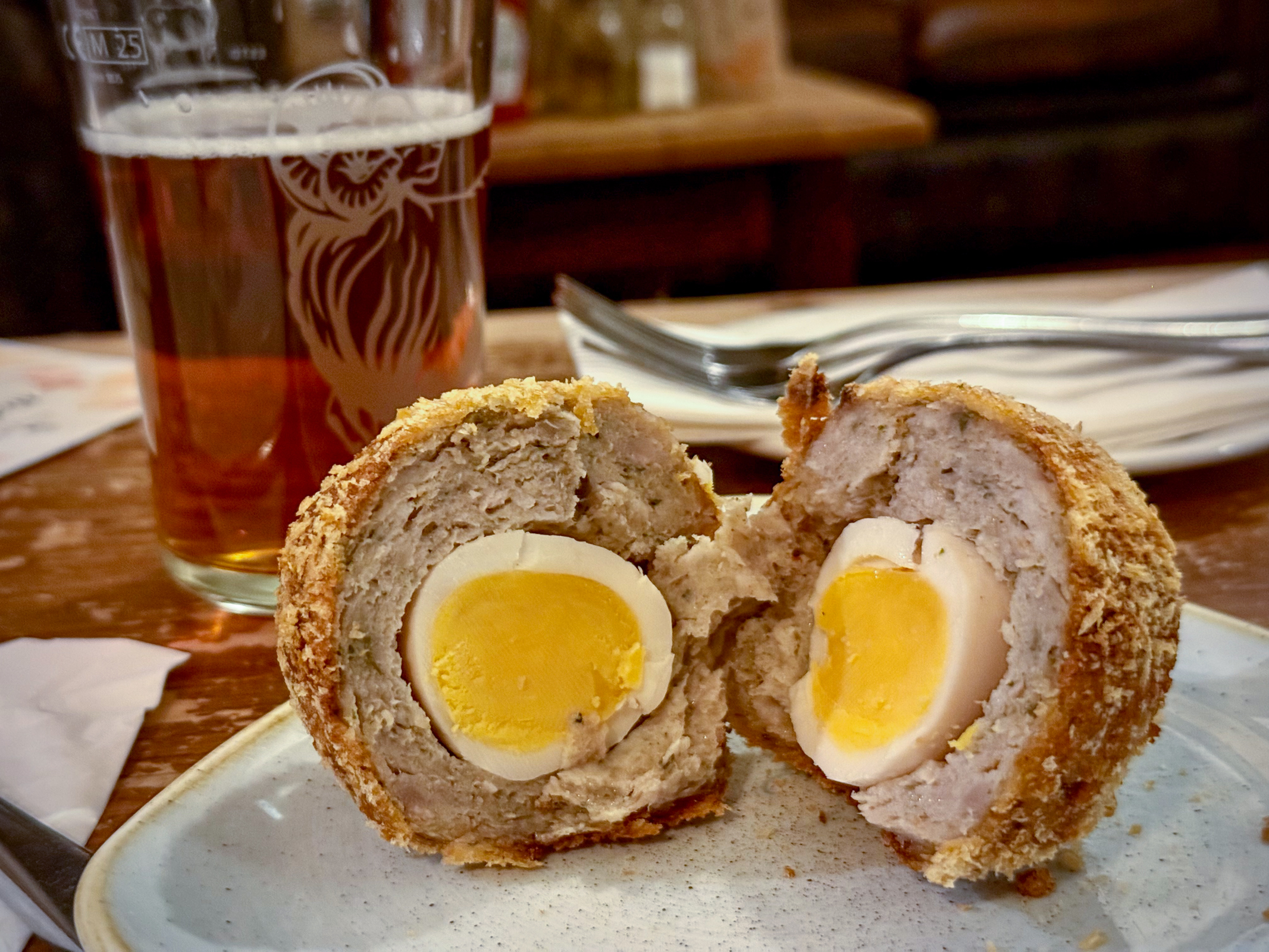
Our one-night stay in Oxford was delightful. It felt very comfortable to be in this college town. I was surprised to see a restaurant called Mission Burrito after our hometown’s famous dish. We had dinner at The Kings Arms, and I was finally able to have a Scot’s Egg dish. Delicious!

We also saw a remarkable exhibit from the collection of the Bodleian Library. The library was founded in 1602 with roots dating back even further and it is one of the oldest libraries in Europe. It is also the second largest library in Britian after the British Library in London.
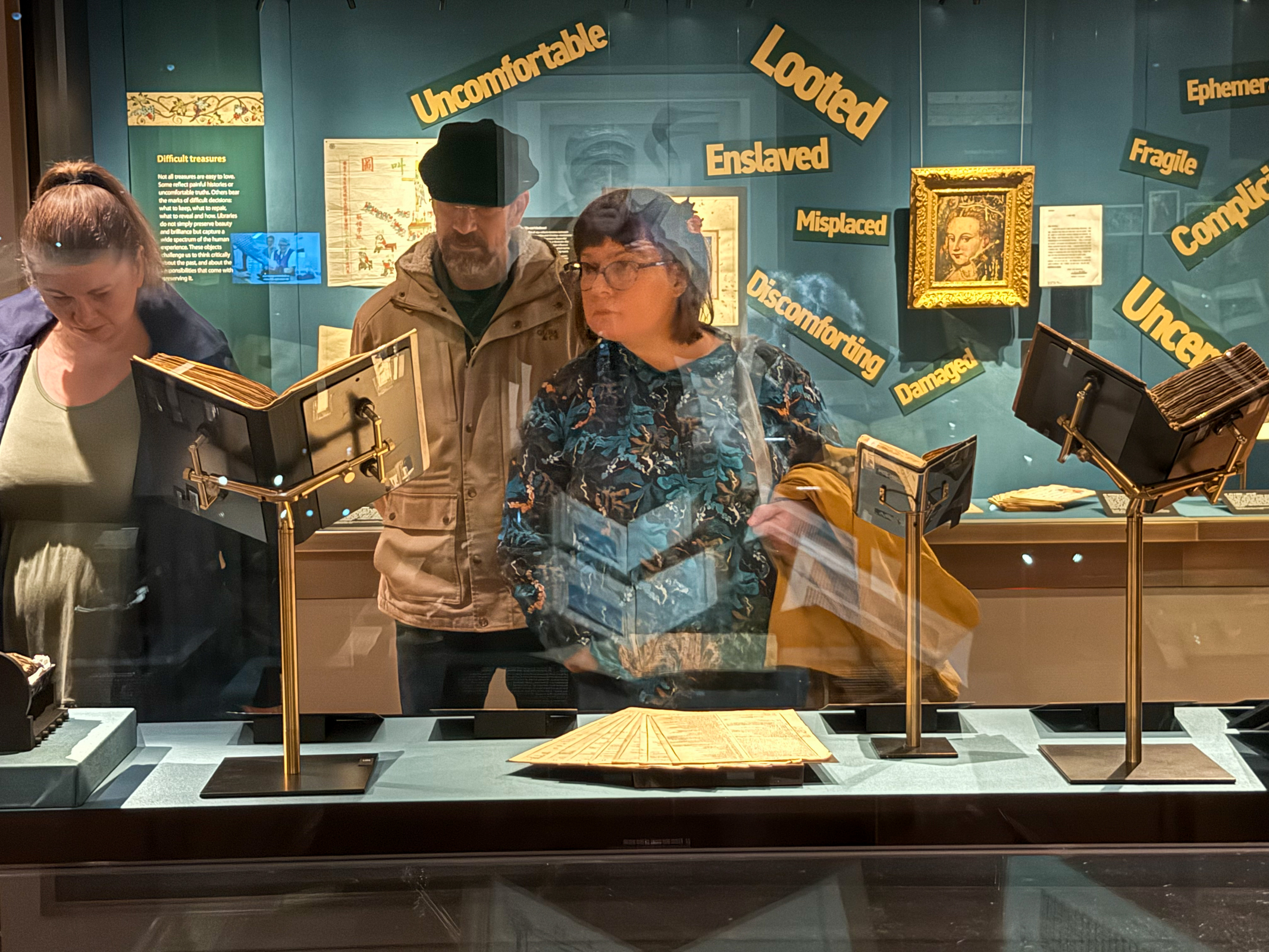
Our business was to meet with the Director of the Oxford University Libraries Richard Ovenden. He had written a book called Burning the Books and we were there to ask if he could contribute his writing to our upcoming book on our Global Library project. To our delight, he agreed! It reminded me when the well-known journalist Bill Moyers agreed to write the introduction to my book The Public Library A Photographic Essay. The generosity of these two men was astonishing and we left our meeting grateful to have met such a big-hearted person.

As we headed back to the train to London, I snapped a selfie of the two of us looking utterly exhilarated and totally exhausted. At this point, we had been on the road for almost ten weeks, and it shows in our happy but tired faces.

The second place we stayed was in the Finsbury Park neighborhood in London. Technically, it was still part of Hackney, but had a very different ethnic, economic and religious mix than our previous neighborhood. Plus, we were on the 11th floor of a high-rise apartment up in the clouds looking down on the birds.

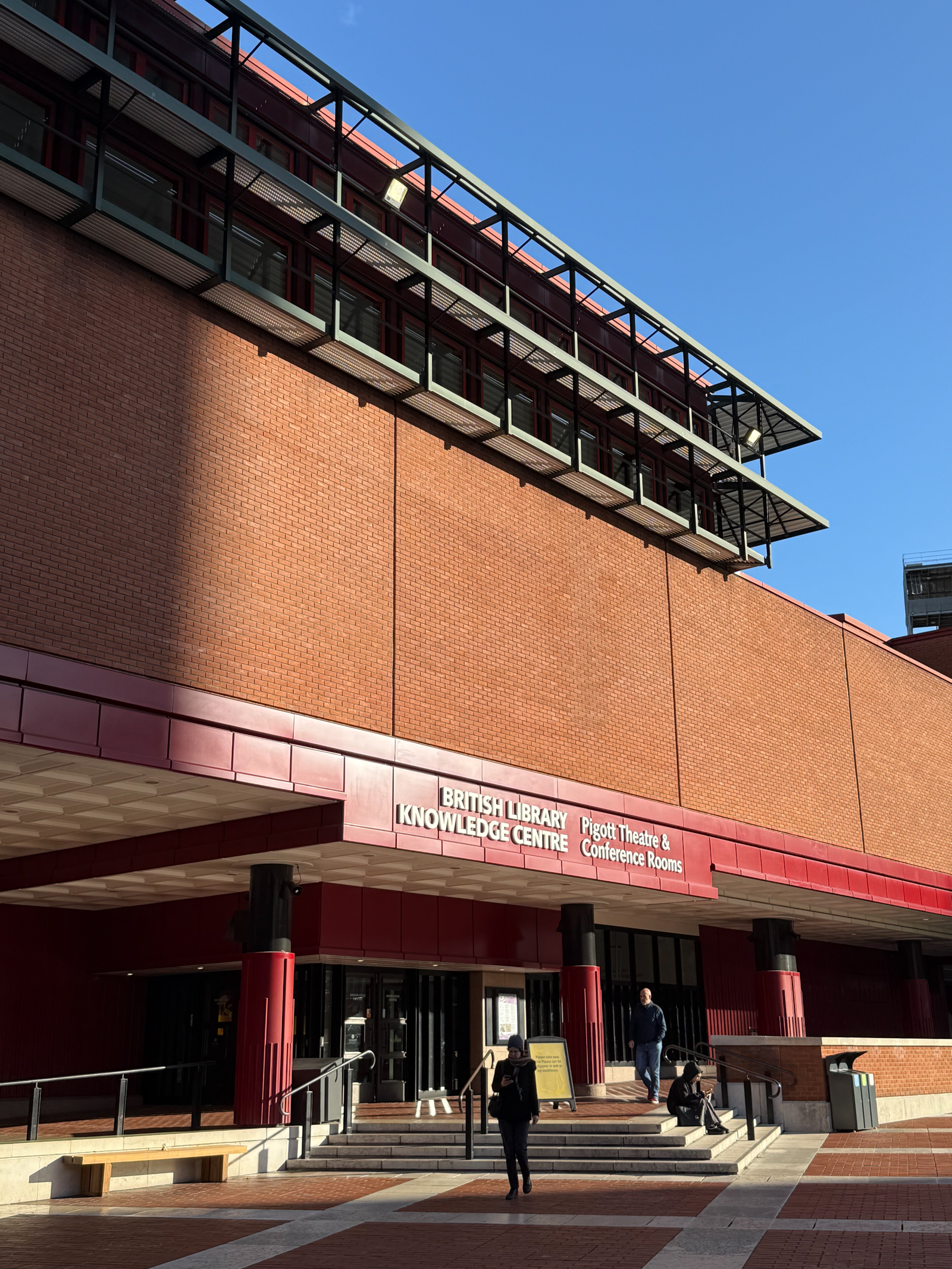
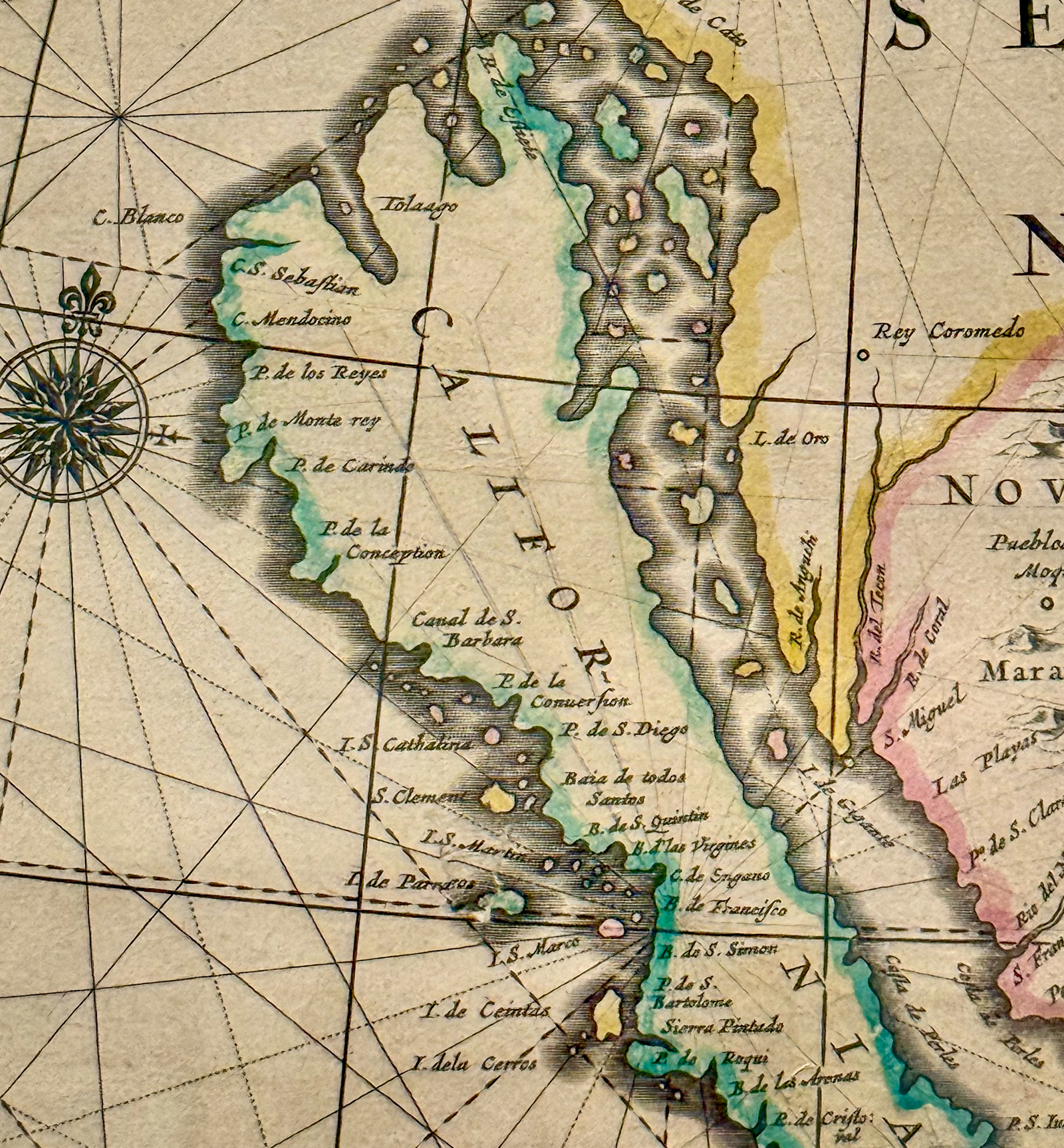
We returned to another great London institution, the British Library. This is one of the largest libraries in the world and we went to see a great exhibit on maps. We also saw the famous Lindisfarne Gospels, considered one of the first and greatest masterpieces of medieval European book painting. It was also great to see how popular this iconic cultural institution was, even on a Sunday afternoon.
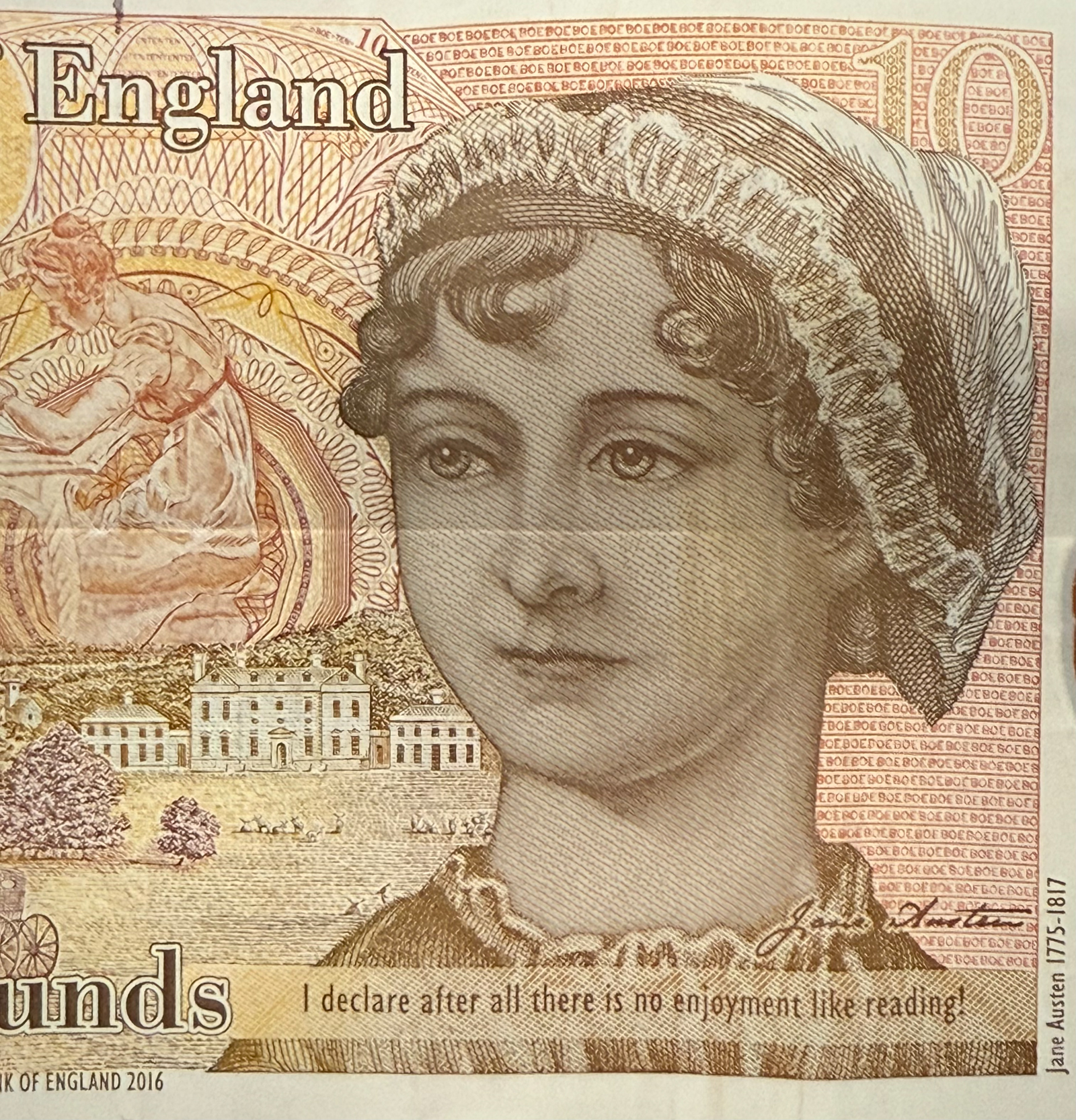
I even fell in love with the English money. On the 10-pound note there is an image of the writer Jane Austen declaring “…after all there is no enjoyment like reading!”
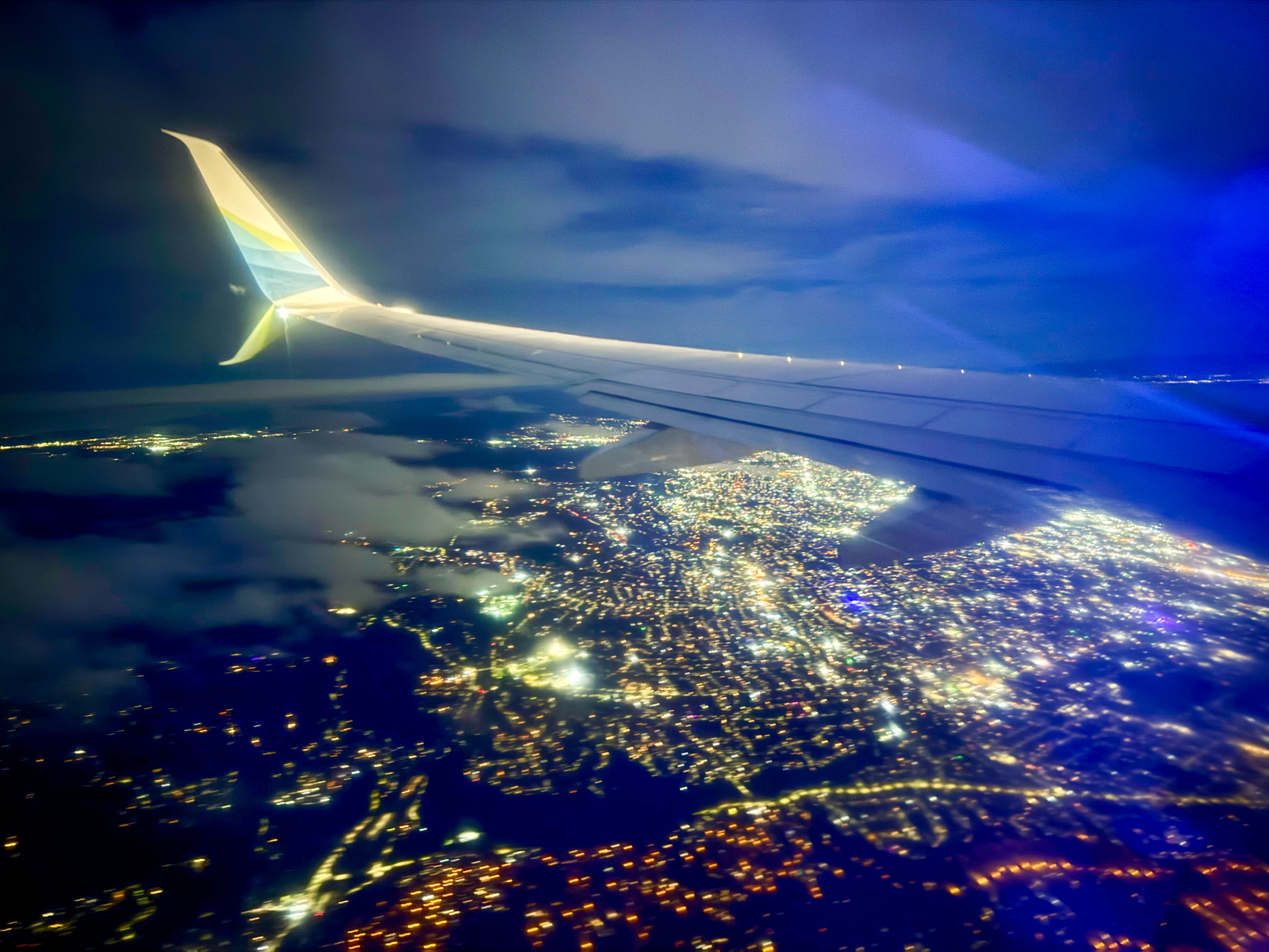
Flying back to the USA is usually a joyful event but this time was different. JFK airport in New York was a disaster. We joined an impossibly long line as we headed to the security check. It was like a scene from Dante’s Inferno. Homeland Security guards were screaming at everyone as we approached the screening gates. Homeland Security Director Kristi Noam’s face was on large screen monitors telling us that if we are standing in long lines, it is the Democrats fault. People around us were panicky and confused by the aggressively hostile chaos surrounding us. Welcome back to Trump’s America!


Hours later, we were so thankful to be back in our little bubble in San Francisco. Since we had left our apartment in London, we had been on the move for almost 30 hours straight. As we crashed into our bed, I kept saying there really is no place like home! Thanks for coming along on this Library Road Trip. See you soon…

1 Comment

Filed under Uncategorized

SARAJEVO

We were initially skeptical about flying on the low-cost British airline Ryanair from London to Sarajevo. But Europeans seemed to embrace these cheap flights within Europe, and so did we.  I spent the entire flight writing a blog with a pen on a ratty, coffee-stained notebook while glancing at my iPhone photos for reference. The young woman sitting next to us marveled at what I was doing. It must have seemed to her that I was like a medieval scribe hurtling through the air traveling to the Balkans in a jet airplane. We were happy when we safely landed and were amazed at where we had arrived.

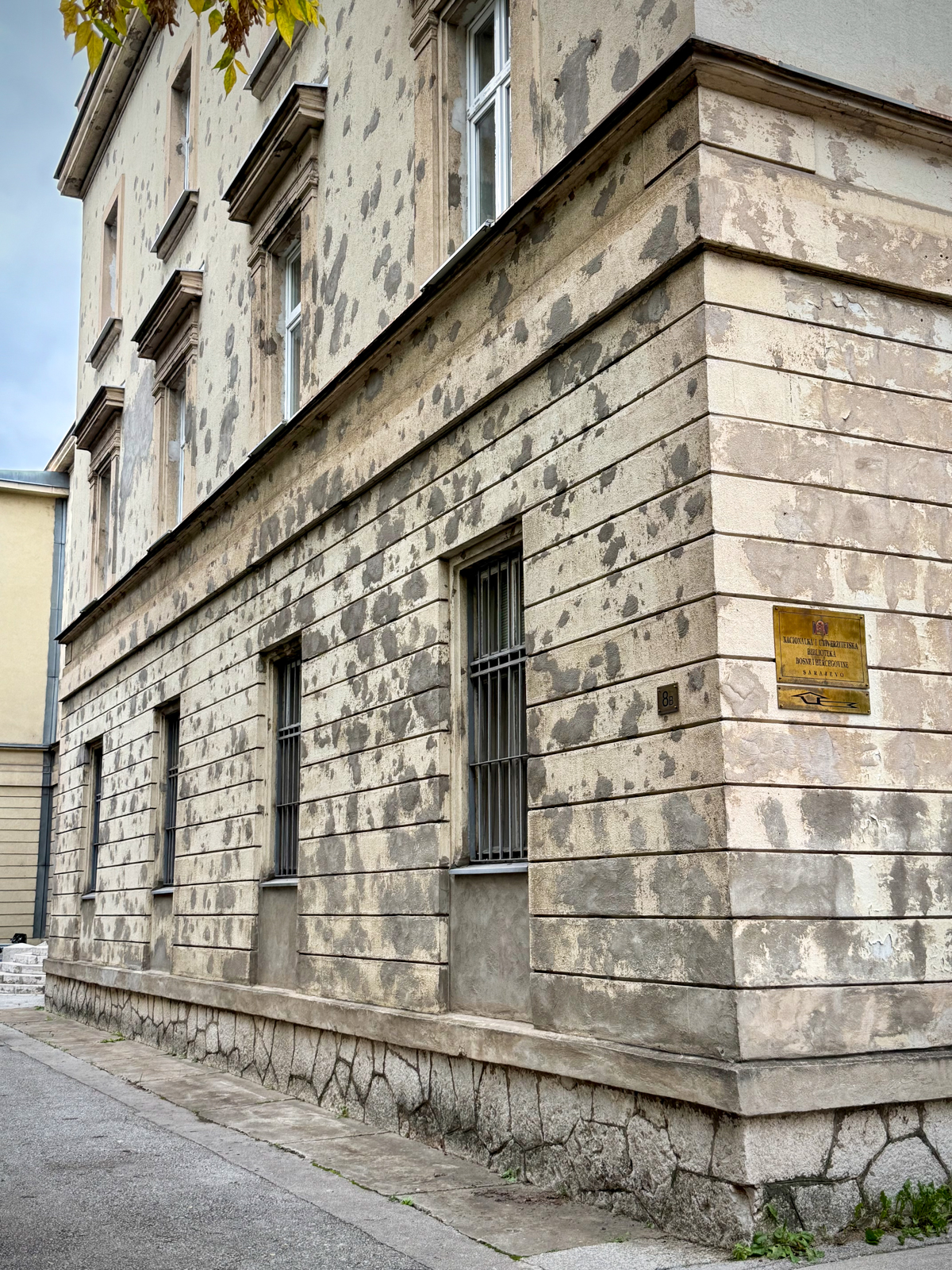
When I first started thinking about doing a Global Library project ten years ago, I wanted to build on the stories of libraries I learned about while photographing American public libraries. The stories of two libraries both startled and haunted me. The priceless archive of the Catholic University library in Leuven, Brussels was intentionally burned down by the German army in WWI and again in WWII. We photographed that twice burned and twice rebuilt library when we began the project in 2016. The other library that haunted me was the National and University Library of Bosnia and Herzegovina in Sarajevo. It too had been cruelly targeted and intentionally destroyed by the Serbian army during the Bosnian war in 1992. We are hoping to wrap up our project soon and I imagined these two libraries as bookends to our very long effort photographing libraries in areas of conflict in many parts of the world.

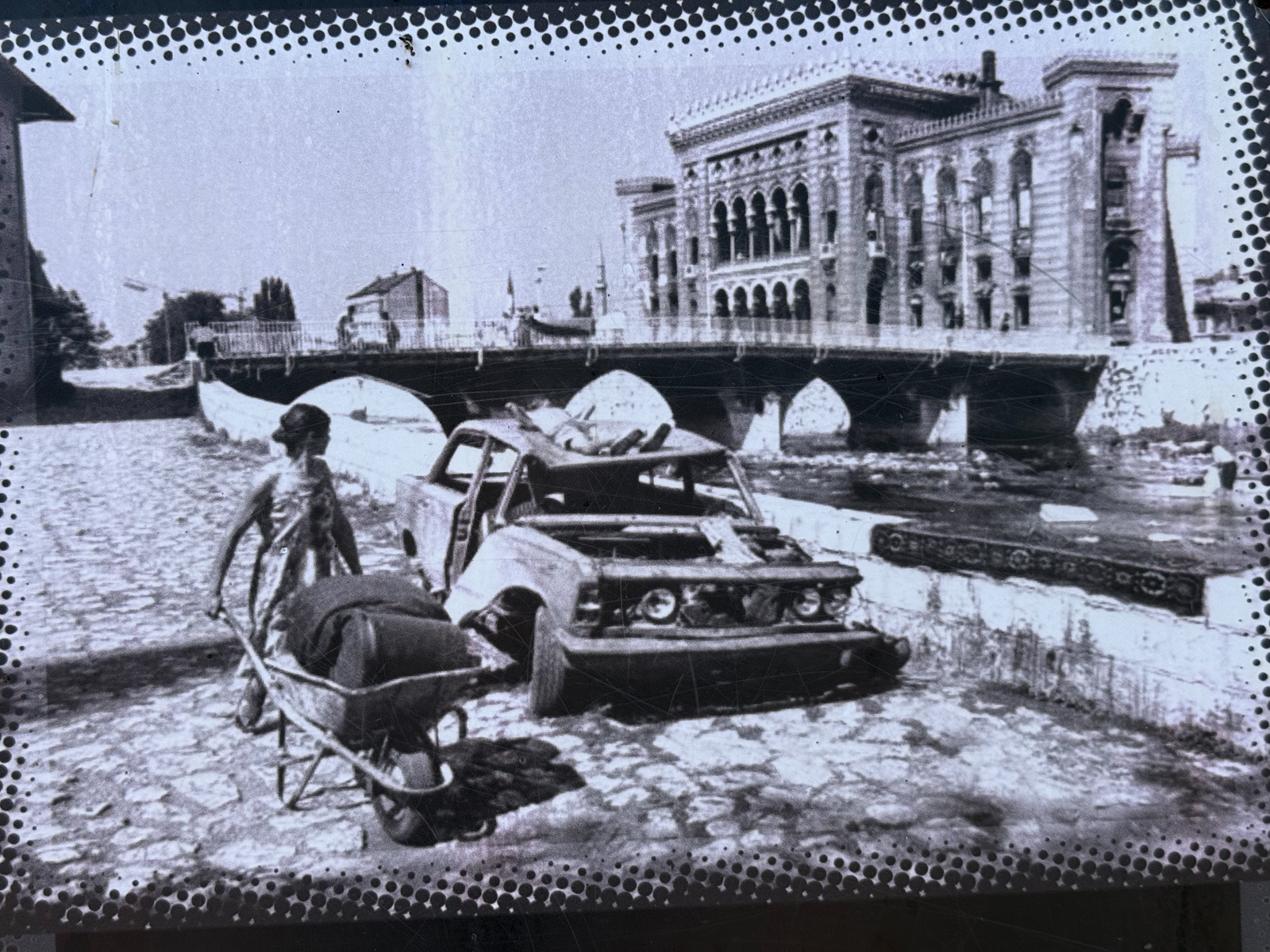
When the Serbian army destroyed the beautiful National Library, they also sought to destroy the memory of the Bosnian people. Their incendiary shells were designed to burn the books. Incredibly, after the fires started, the Serbian snipers and anti-aircraft cannons were used to kill the firefighters, librarians, and staff that tried to rescue the books. Only a few of the rare books were saved. No other buildings nearby were hit – the library was the only target. Almost all the Bosnian nation’s printed recollection of itself was lost. The fire burned for three days. The ash from the burnt volumes fell on the city for many days afterwards.

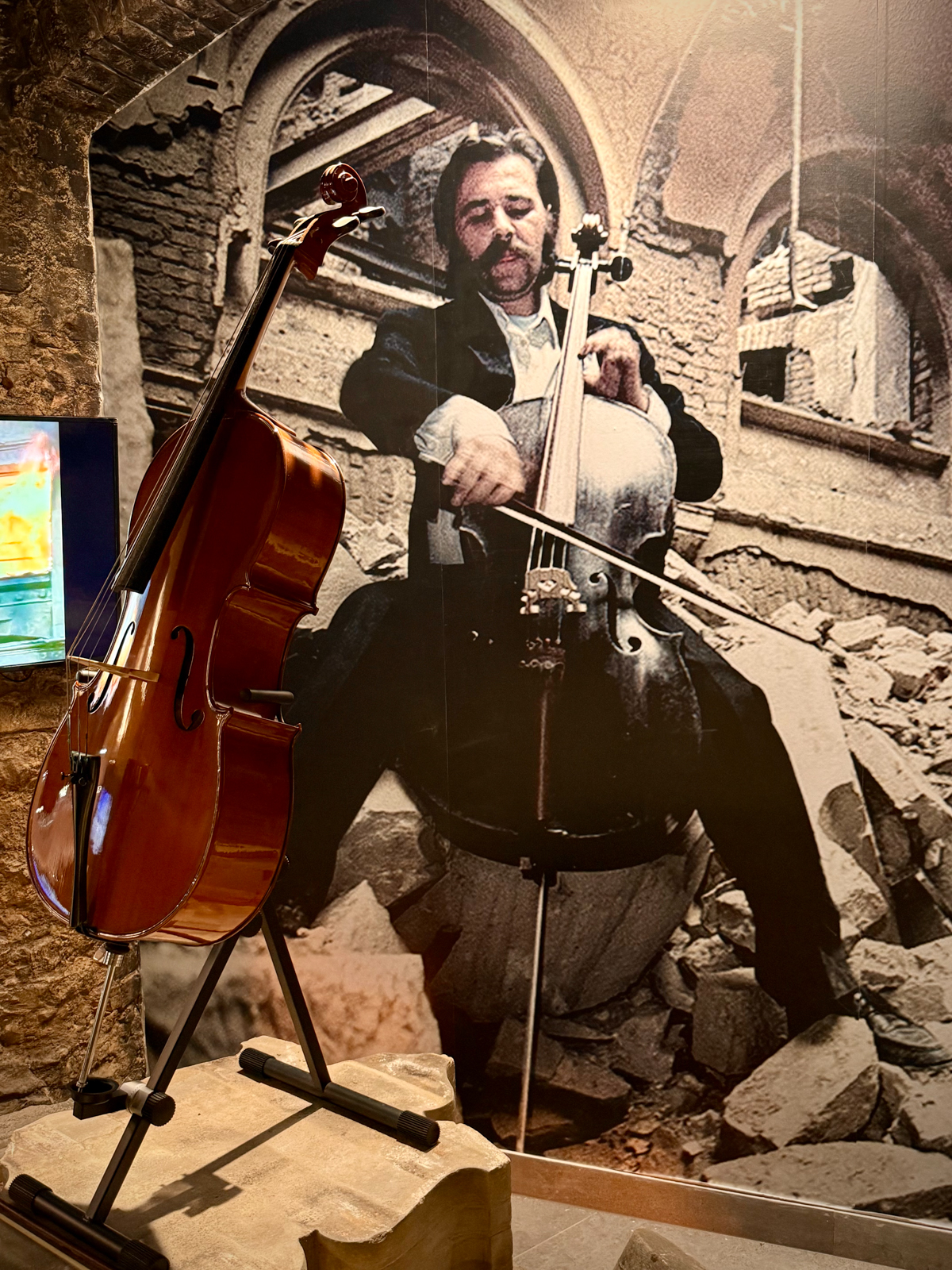
Sometimes there are certain images that haunt me as well. One is the famous photo of Vedran Smajlović, the “Cellist of Sarajevo,” who played in the ruins of the city, including the library. He played throughout the three-year siege of Sarajevo as a symbol of peace and defiance. His story inspired books, music, and became a global symbol of resilience during wartime. Fortunately, he was never hurt by snipers during his performances. We visited an exhibit of him and his cello in the reconstructed building that had housed the National and University Library. On display were bits and pieces of the original Library that evoked strong emotions in both of us.

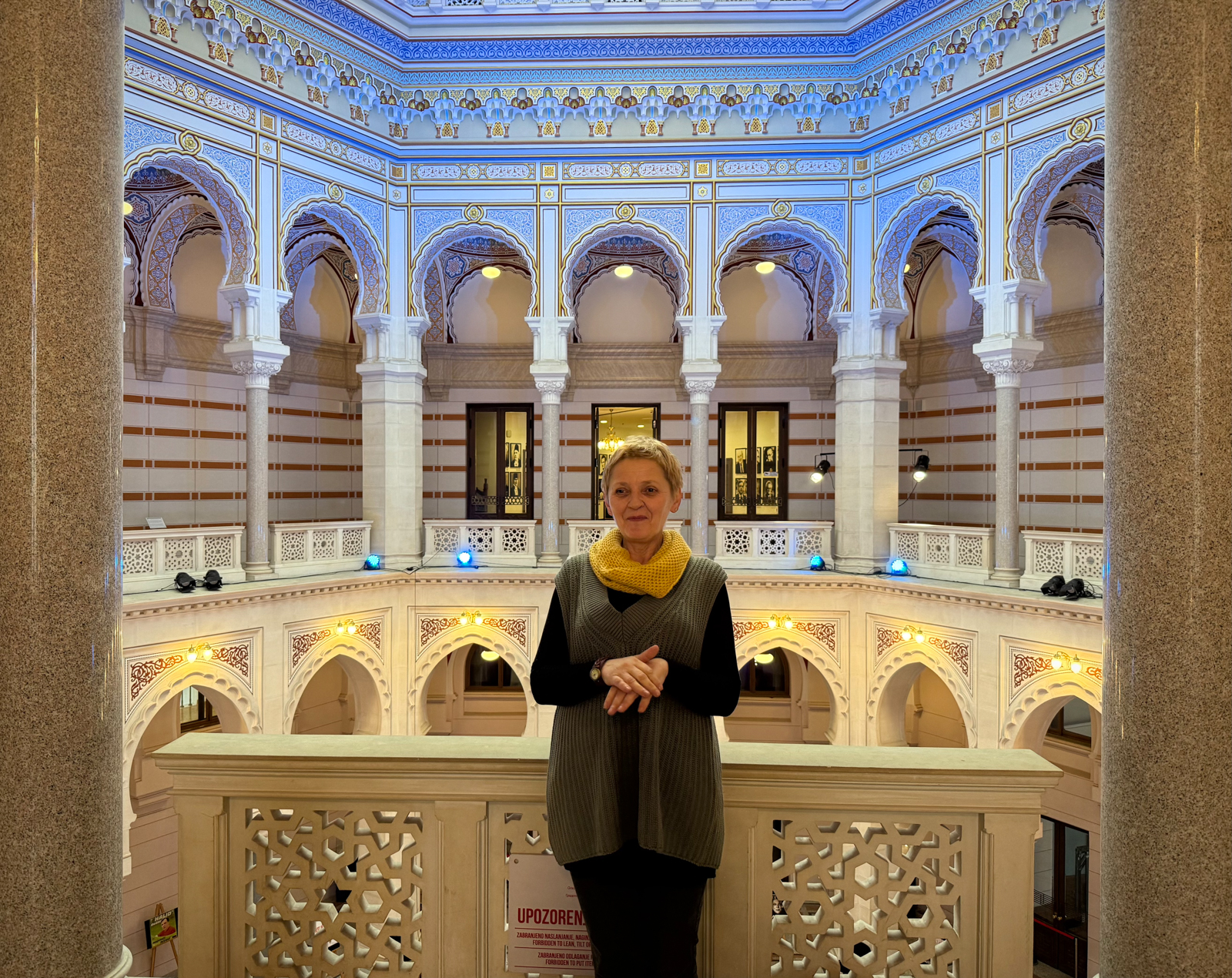
We were given a remarkable tour of the reconstructed building by a woman who worked for the National Library. She pointed out a plague that denounced the “Serbian criminals” who destroyed the library. She told us that it is very hard for her to bring her Serbian friends here. Although much of the printed memory of the Bosnian nation was destroyed, the painful memories of the war are still raw.

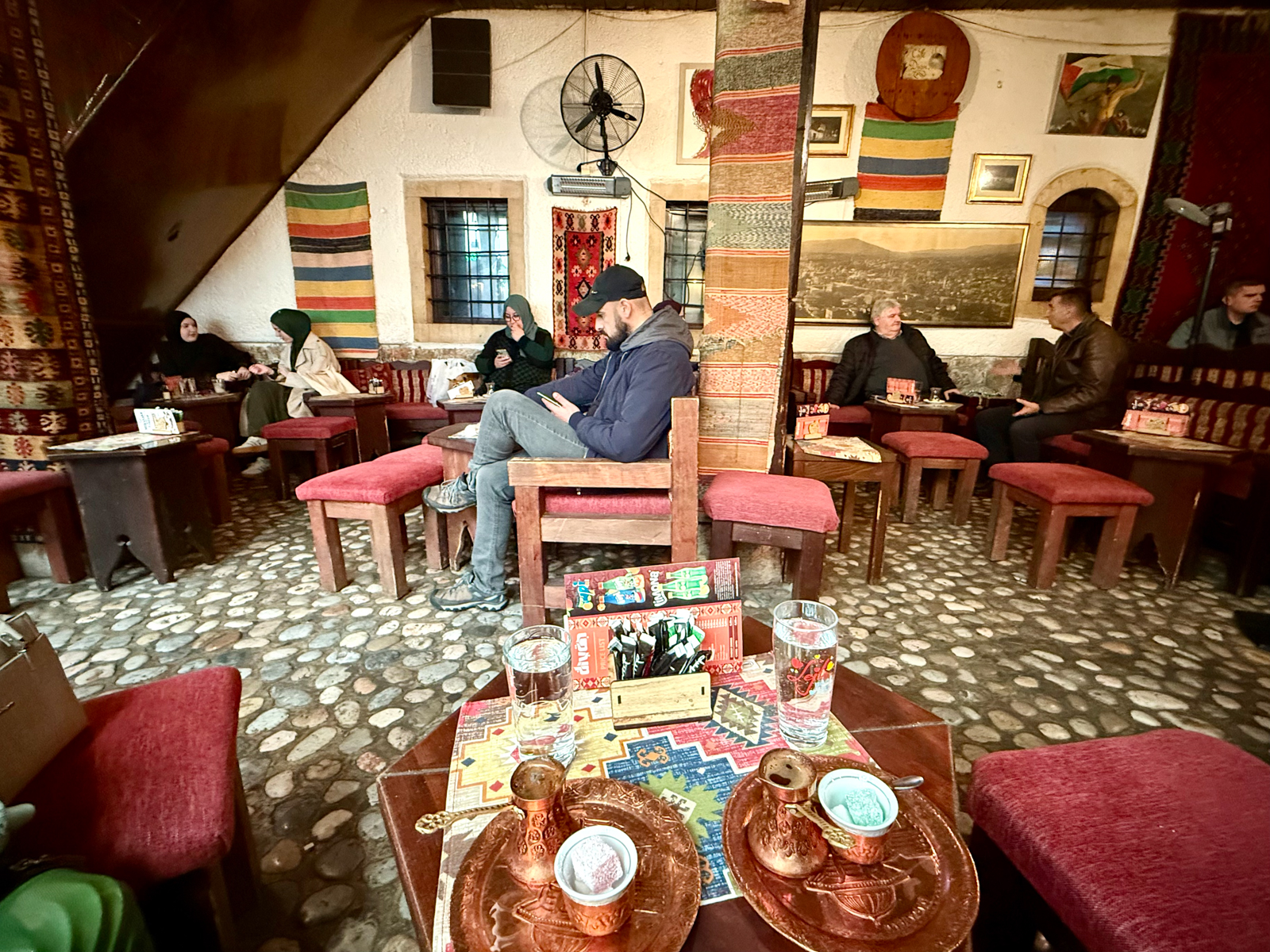
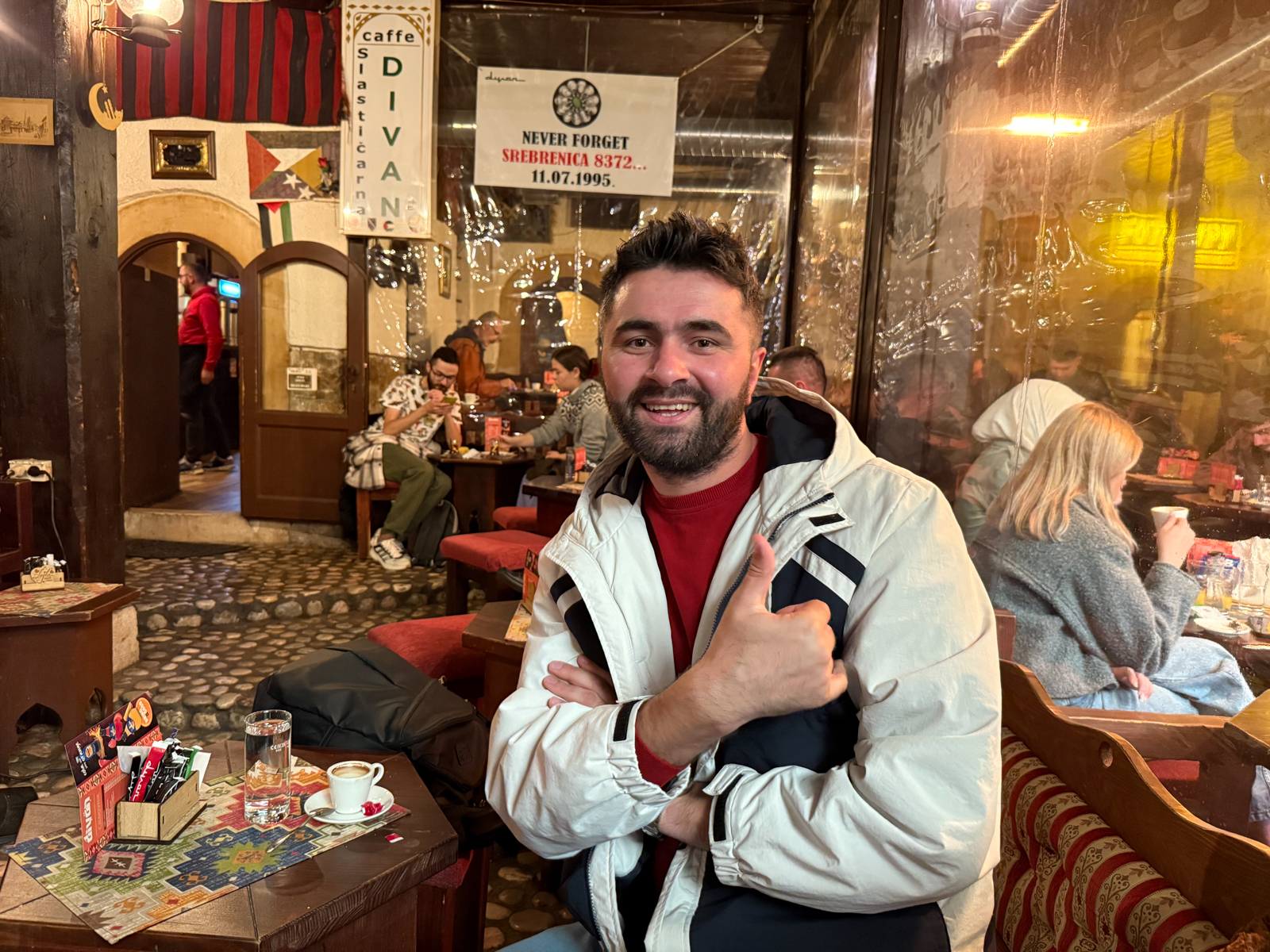
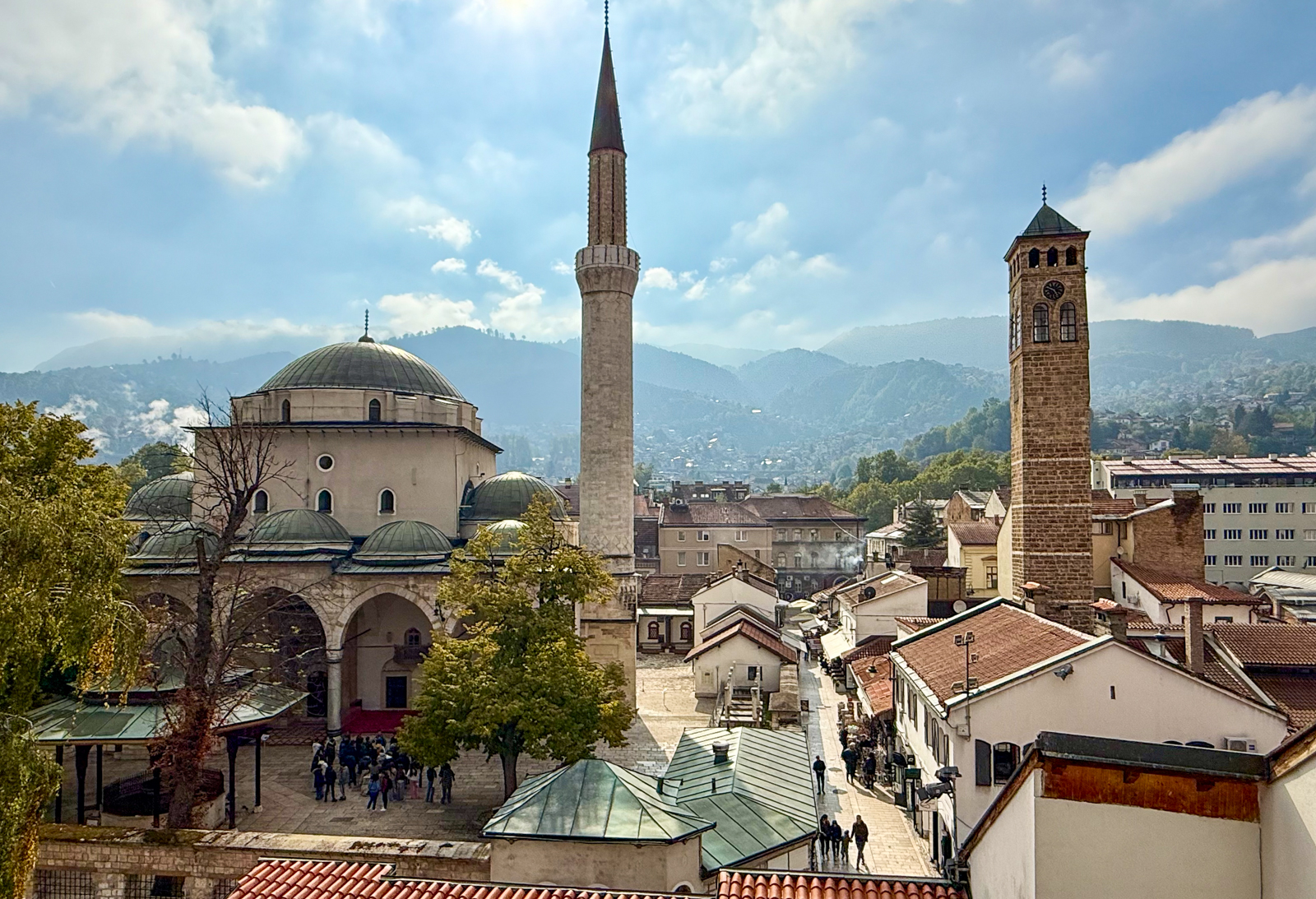
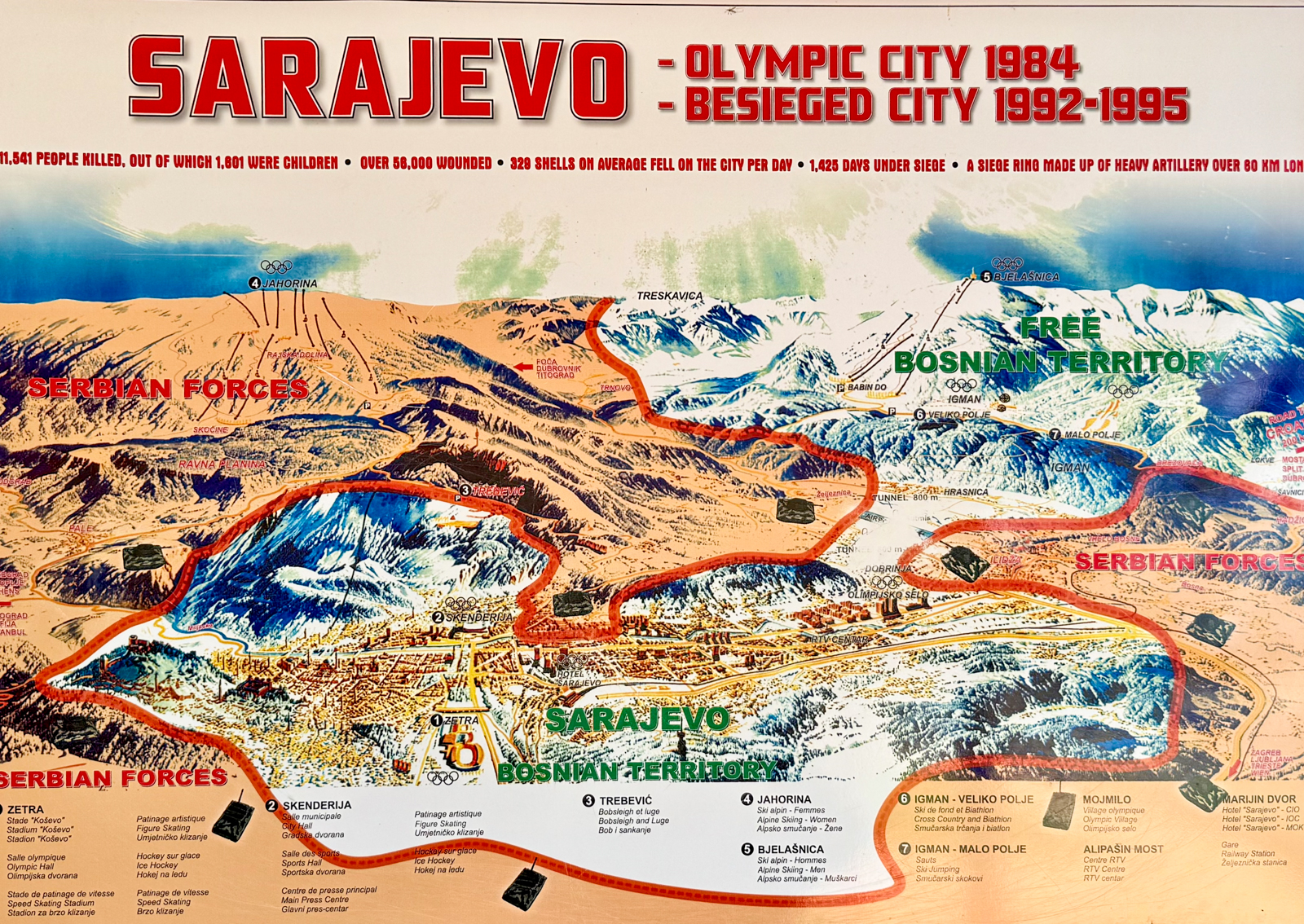
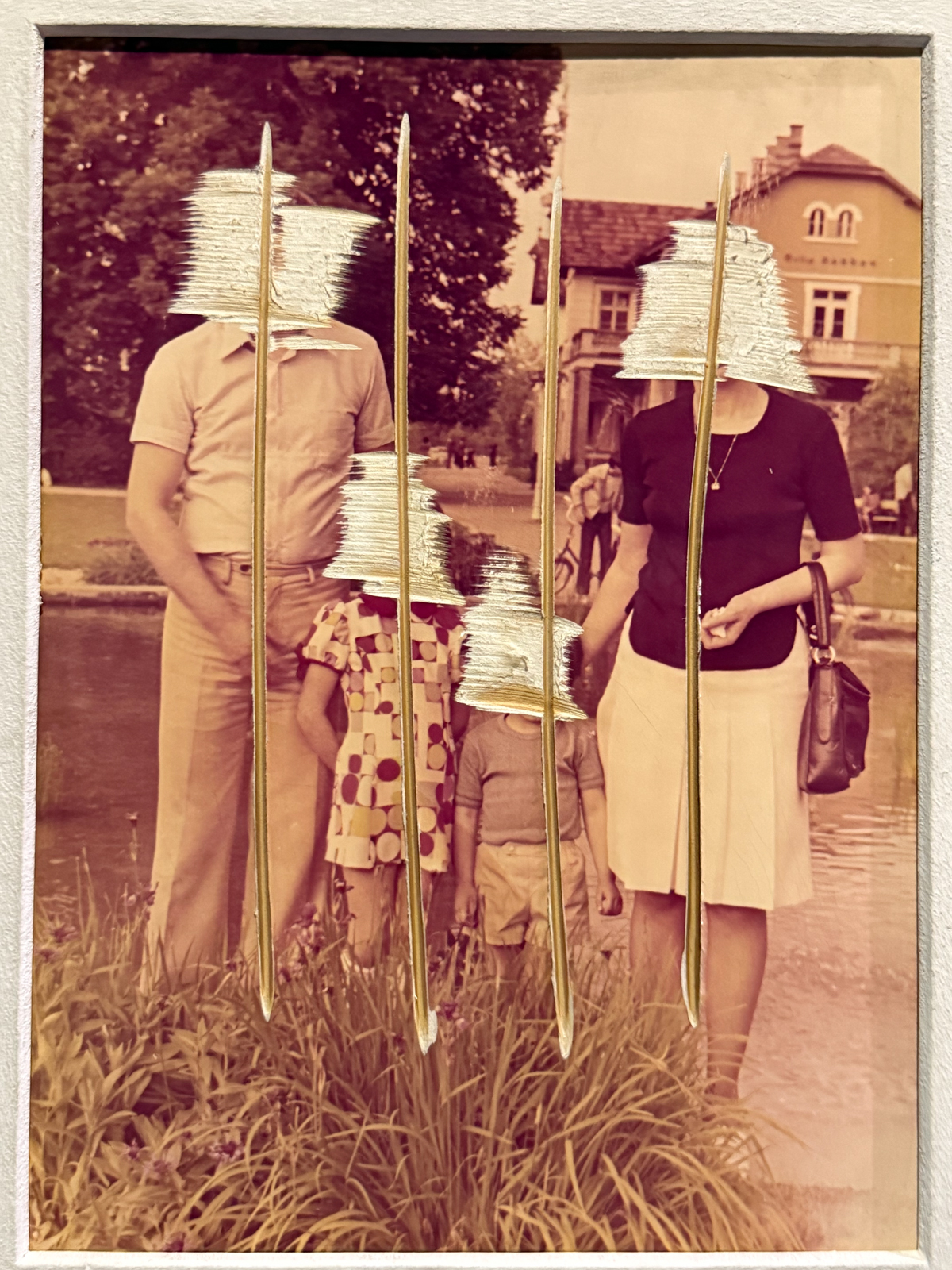
Of course, Sarajevo is famous for many things beside the war. In the 1980s, the Winter Olympics were held here. And the assassination of the Austro-Hungarian Archduke in Sarajevo started World War One. But we were especially interested in how people live here today. We stopped by for Bosnian coffee at the very Muslim Caffee Divan and met a remarkable young man who spoke great English and worked as a tour guide. I photographed him under a sign that said, “Never Forget Srebrenica.” It will be the young people like him that bear the burden of rebuilding Sarajevo.

We then visited the depressingly named Museum of Crimes Against Humanity and Genocide 1992 – 1995. It was really tough going seeing first-hand the awfulness of the Bosnian war. But this gut-wrenching experience also gave us a better understanding of how a once delightfully diverse region fell into tribal genocide. We stumbled out of the Museum vowing not to let our delightfully diverse United States fall into the same Nationalist homicidal trap.

We stayed in the old city of Sarajevo and wandered the streets for hours impressed by the richness of the cultural mix but still wondering how it all blew apart.

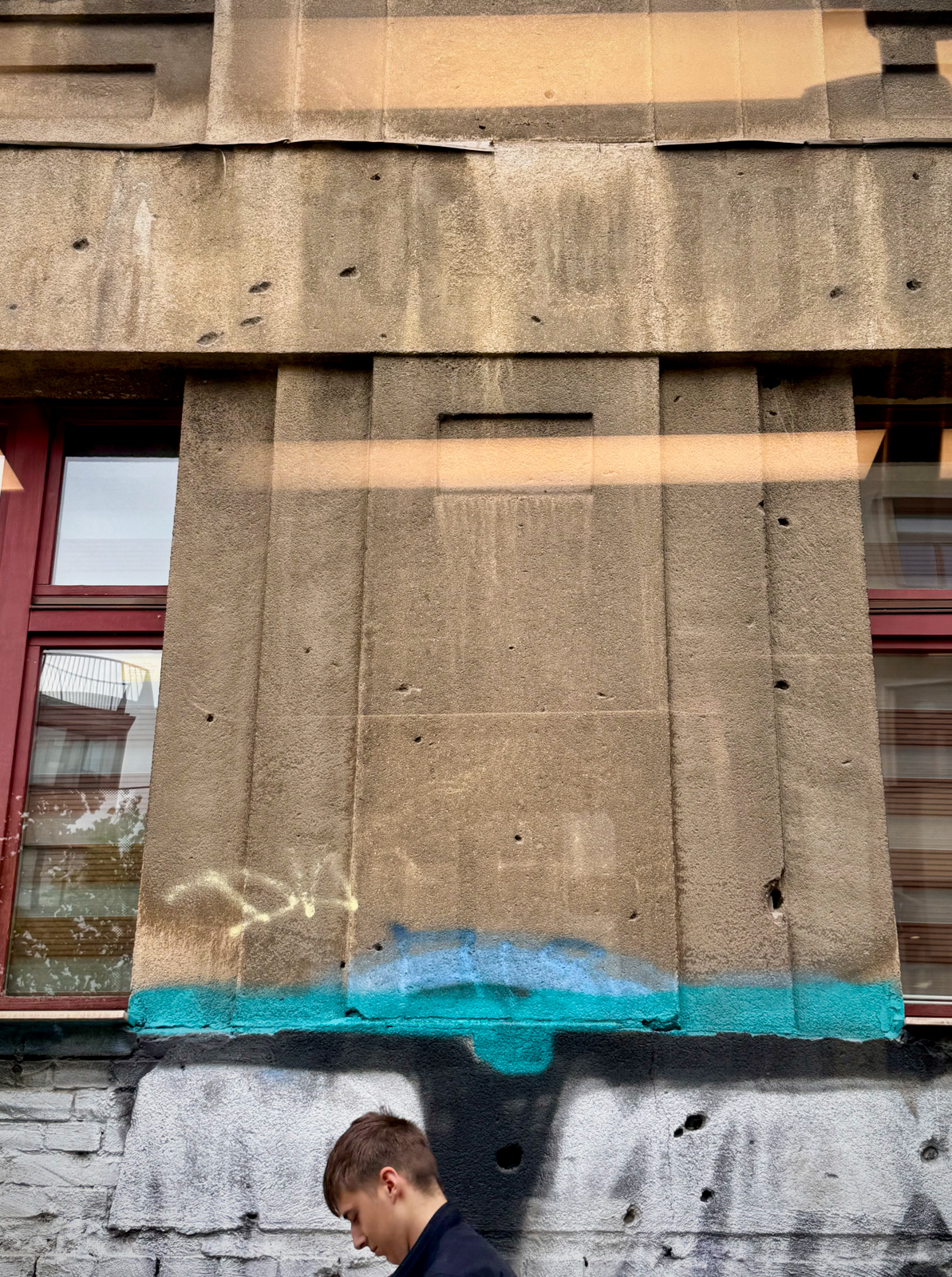
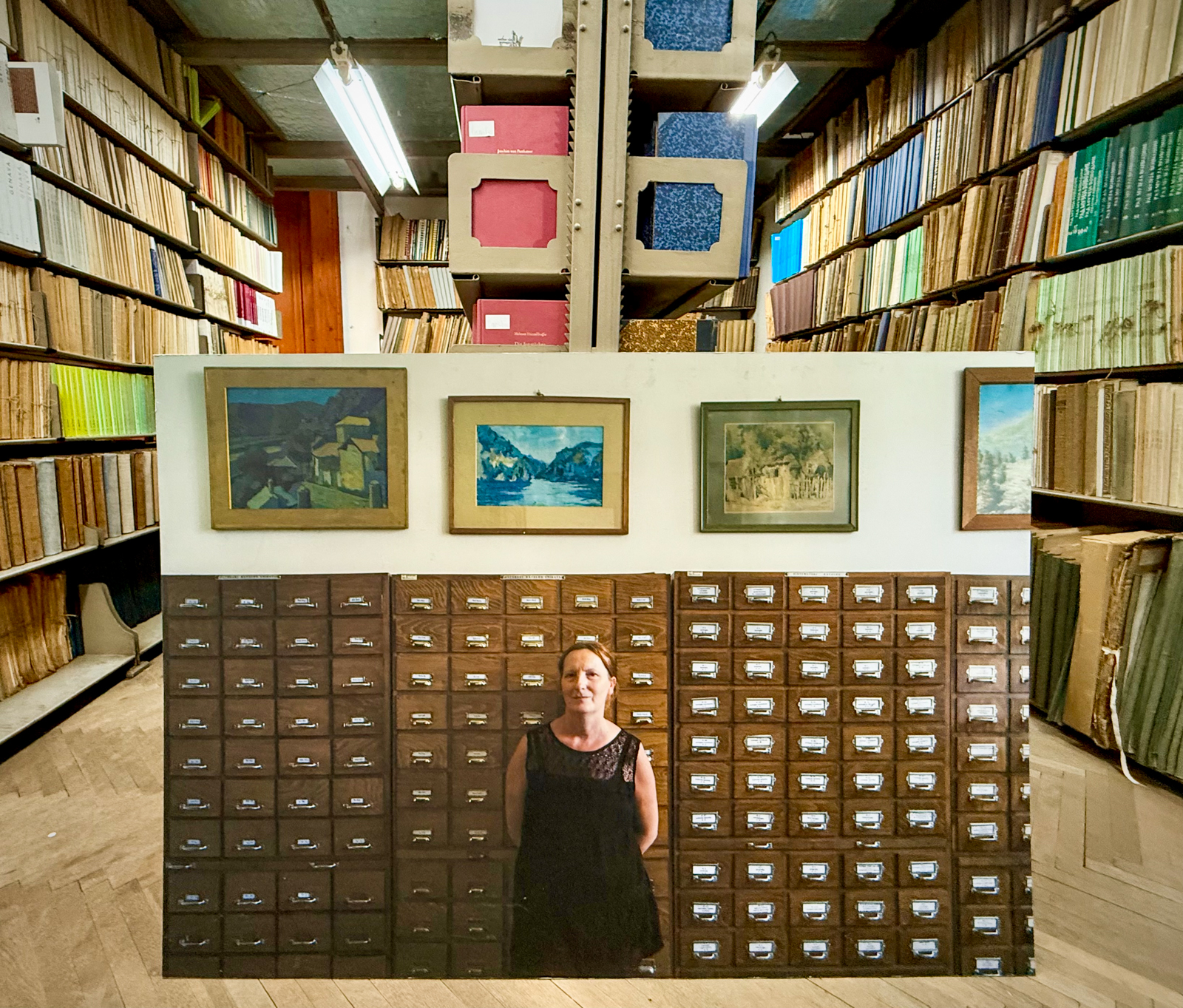
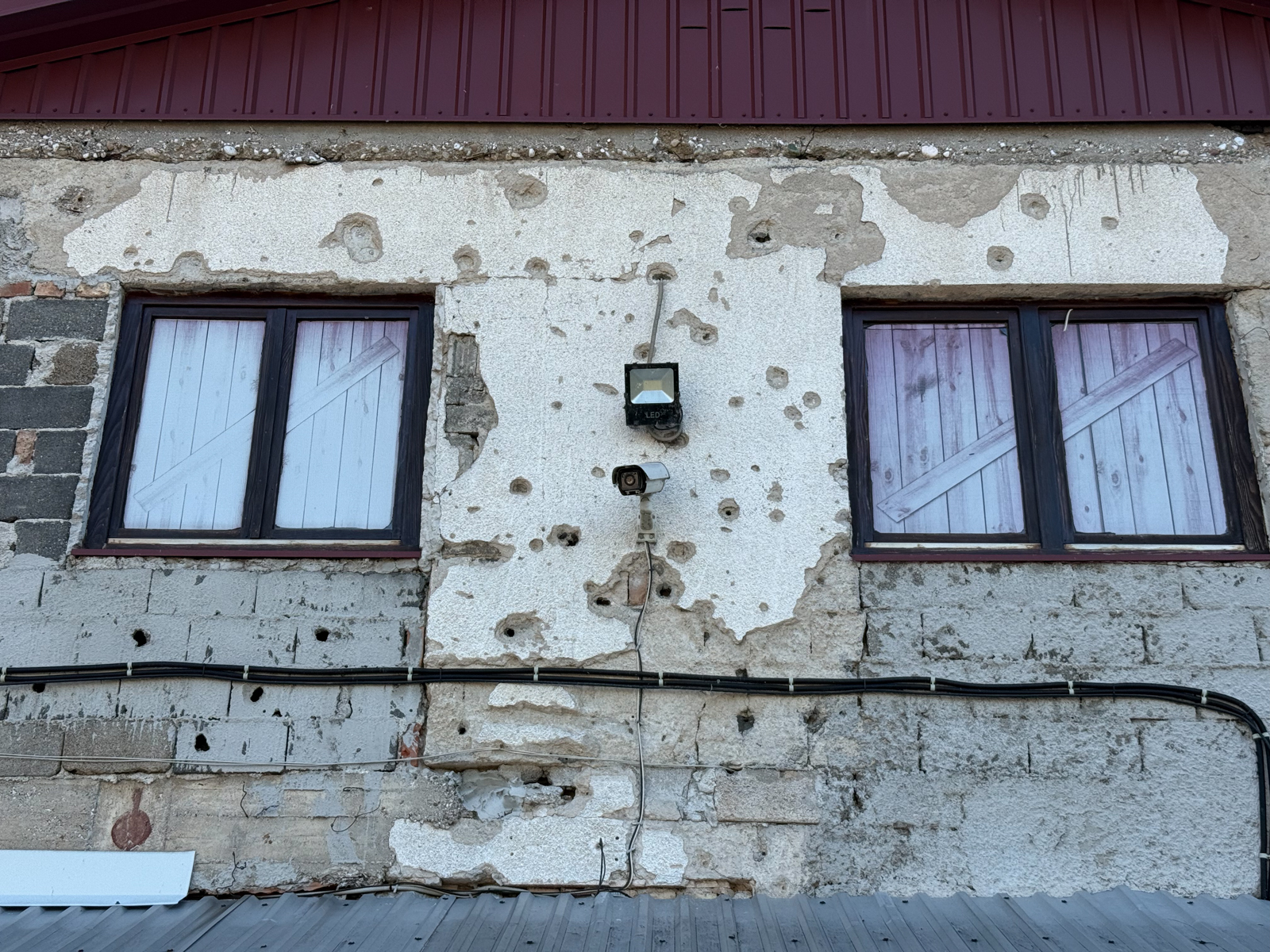
The next day we visited the Library of the National Museum of Bosnia and Herzegovina. Since its founding in 1888, the museum library had grown into a large collection and it preserved one of the region’s greatest artistic treasures, the Sarajevo Haggadah. It was also violently attacked during the war but was not destroyed like the National Library. The staff of the library rescued most of their 200,000-volume collection while dodging bullets and artillery that averaged over 400 shells a day. The Director of the library was killed by a grenade during this rescue effort. Bullet holes were still visible even 30 years later. I photographed a book with bullet still in it and a door that had a clean bullet hole all the way through it. Again, the burden of healing this city and nation rests in the generation of the two young librarians who gave us a wonderful tour around this battered institution.

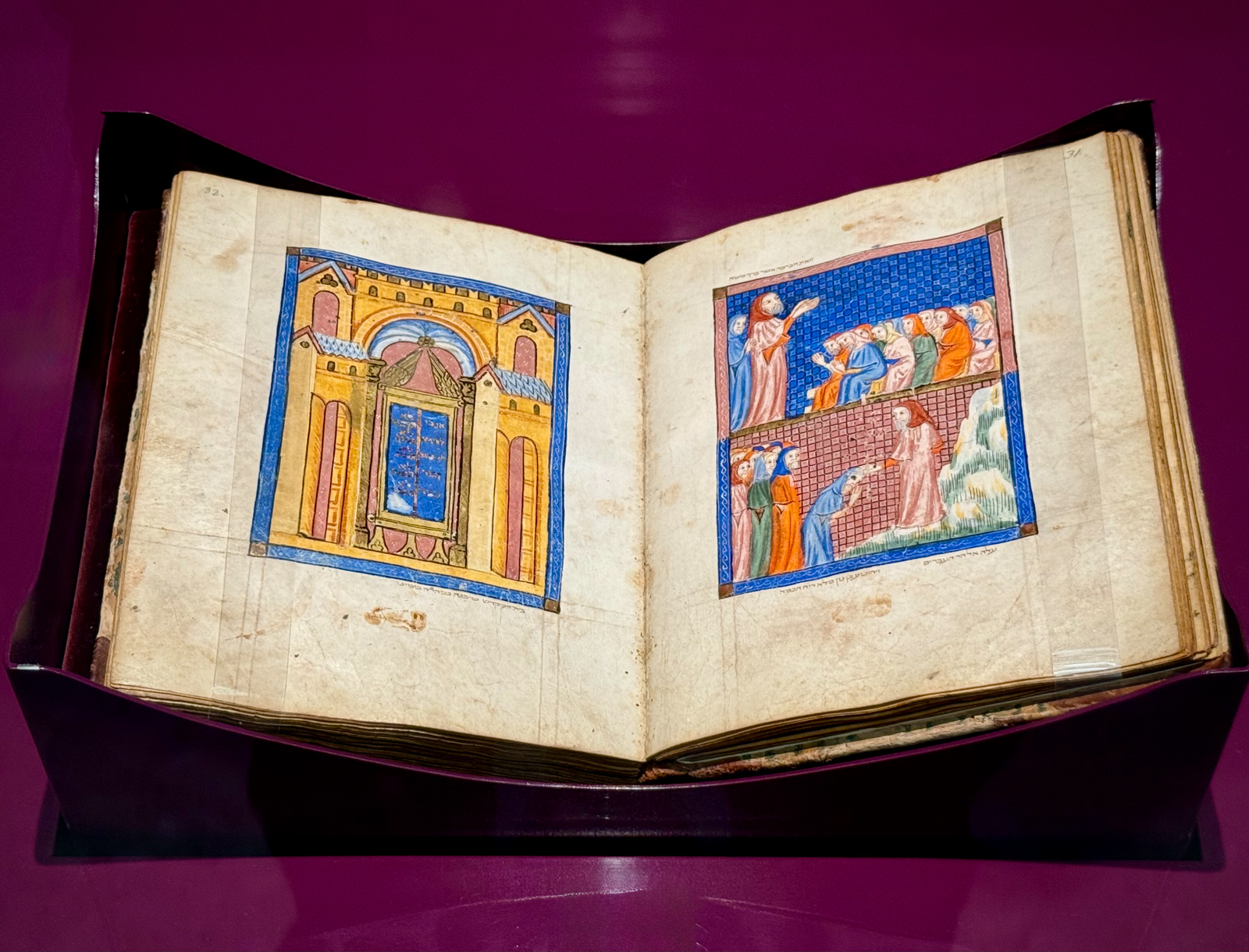
I first learned about the Sarajevo Haggadah while reading the historical novel People of the Book by Geraldine Brooks. The Sarajevo Haggadah is one of the oldest surviving Jewish illuminated texts and the real historical survival of the manuscript is nothing short of a miracle. It has become a symbol of the multicultural strength and resilience of the Sarajevo and the nation. It is now part of UNESCO’s Memory of the World Register. I was able to photograph the actual, priceless manuscript which our guide explained is only shown rarely and is usually replaced by a facsimile.

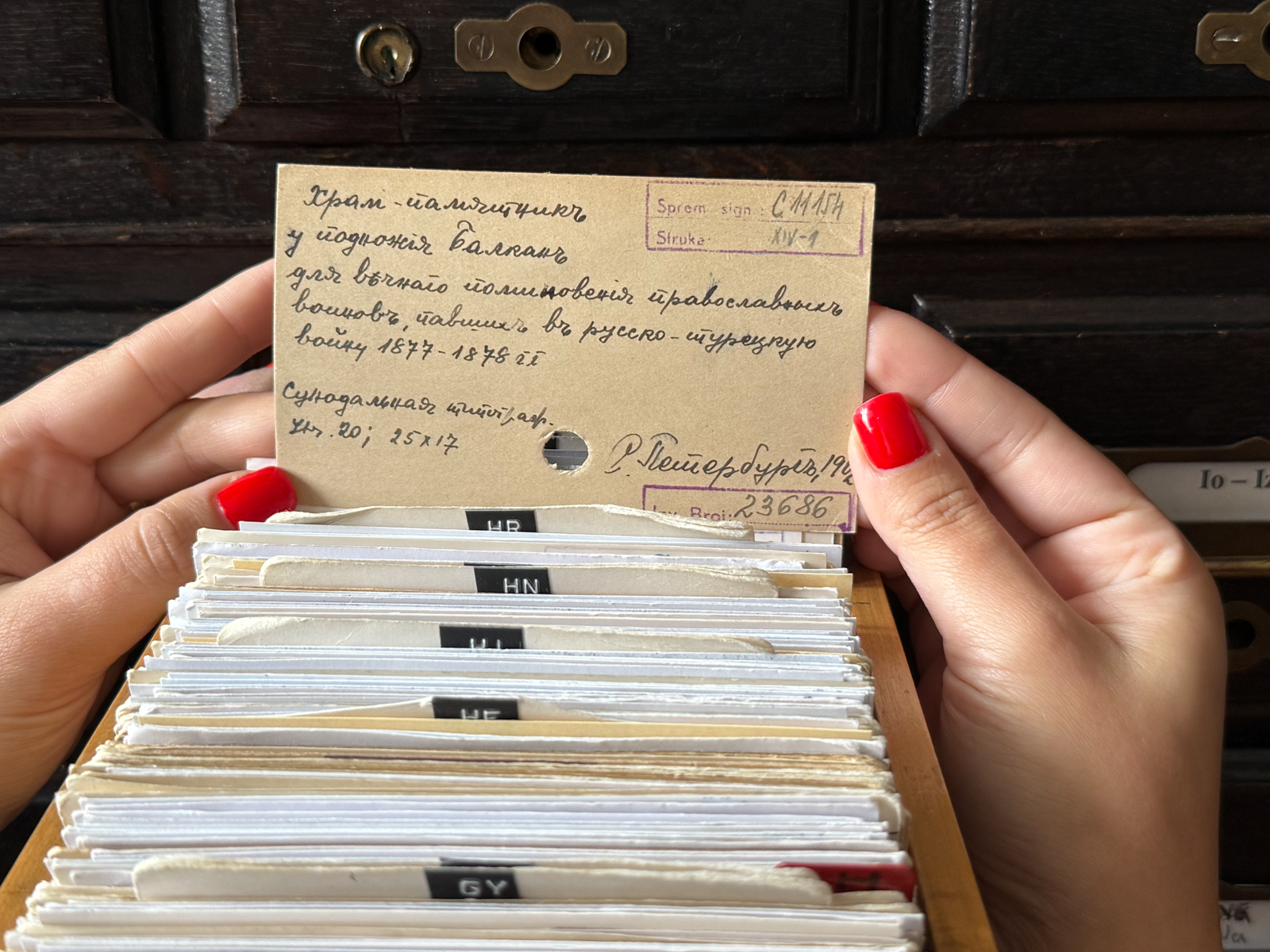
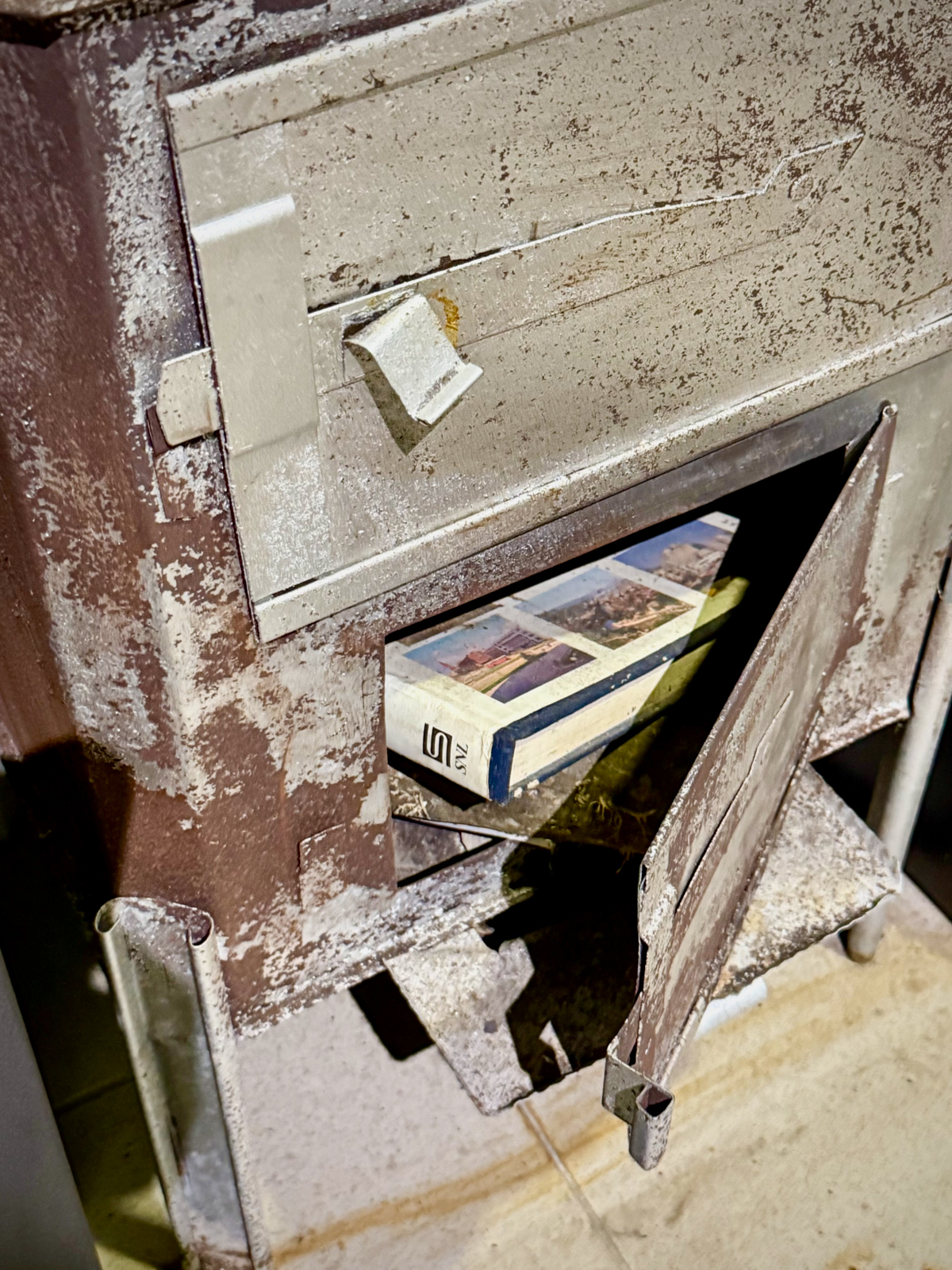
We walked across the street and went back to the bullet-riddled National and University Library of Bosnia and Herzegovina. At the Conservation and Special Collections department, we visited part of their crumbling storage area, and I photographed some of the war-damaged books in their collection. The proof of the unspeakable violence of this genocidal war was here in the burned and damaged buildings and books of the National and University Library.

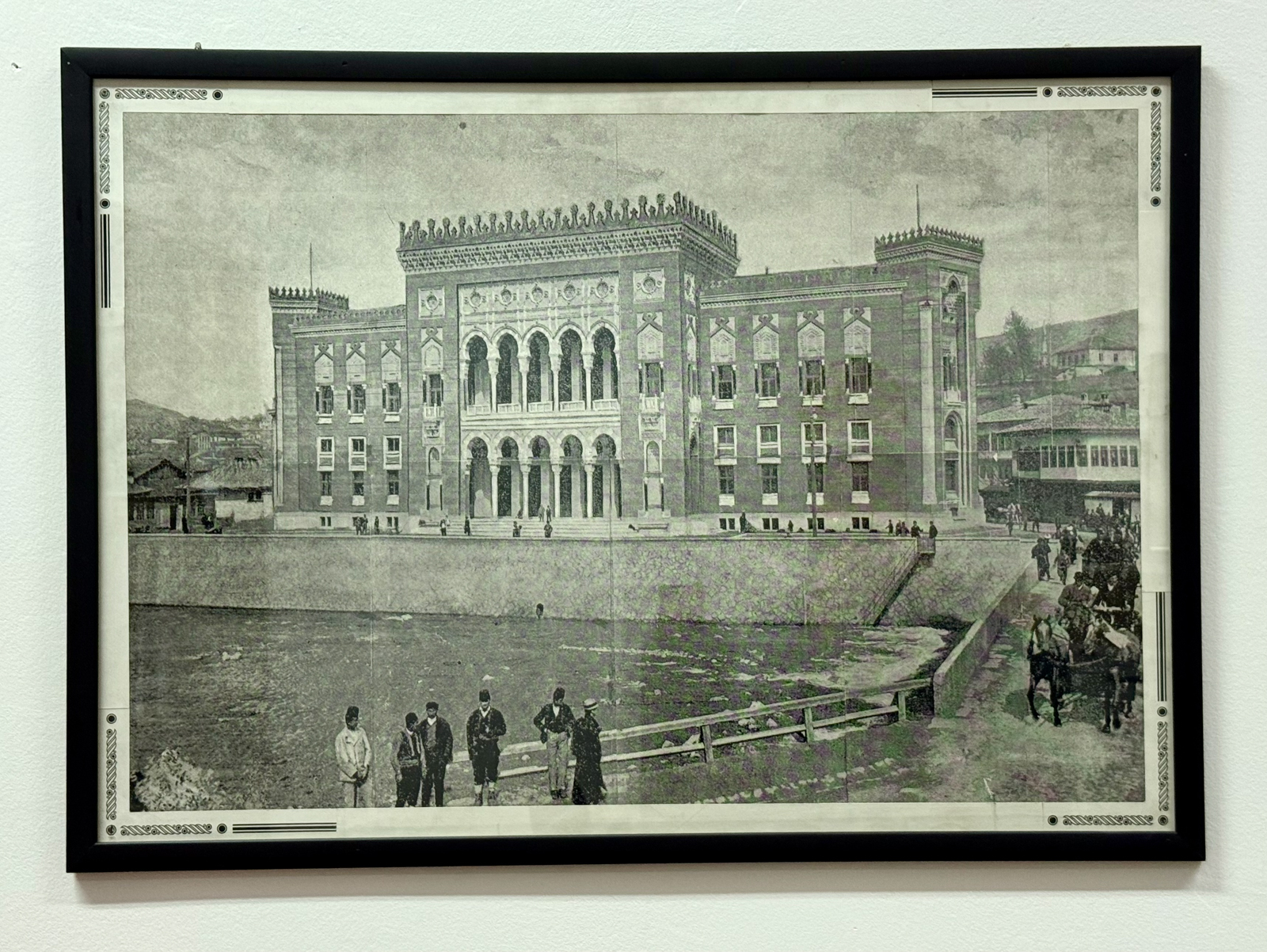
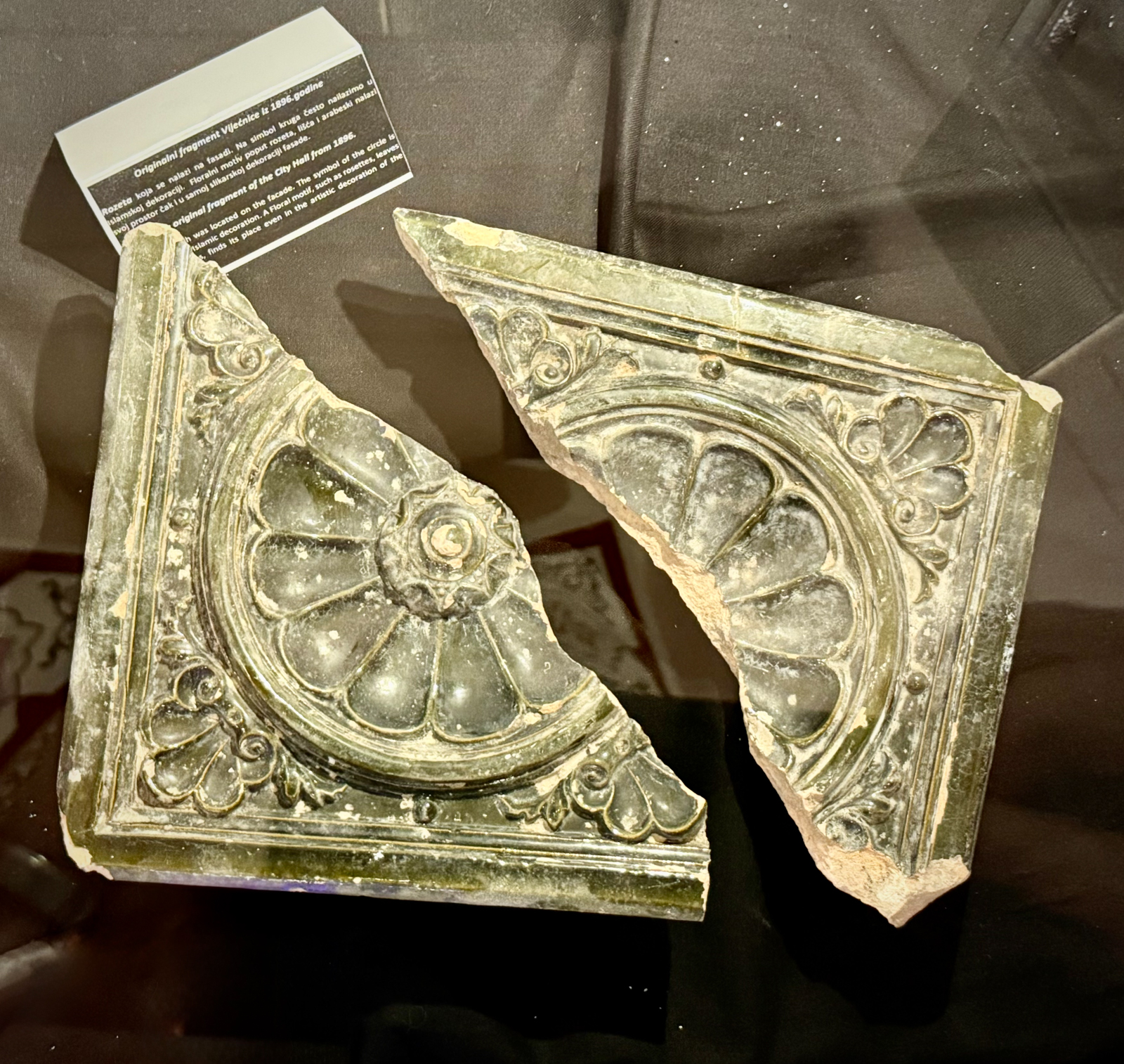
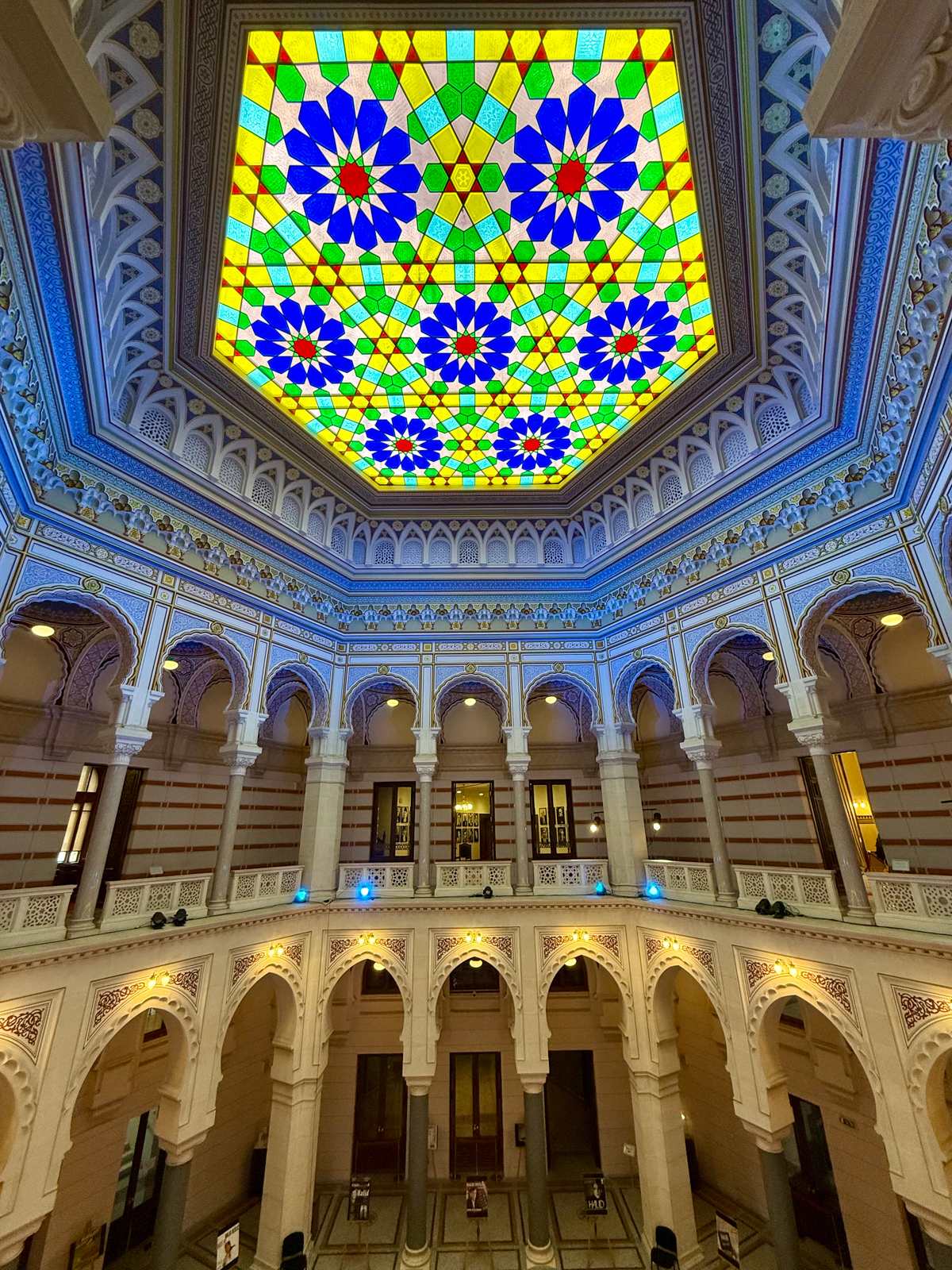
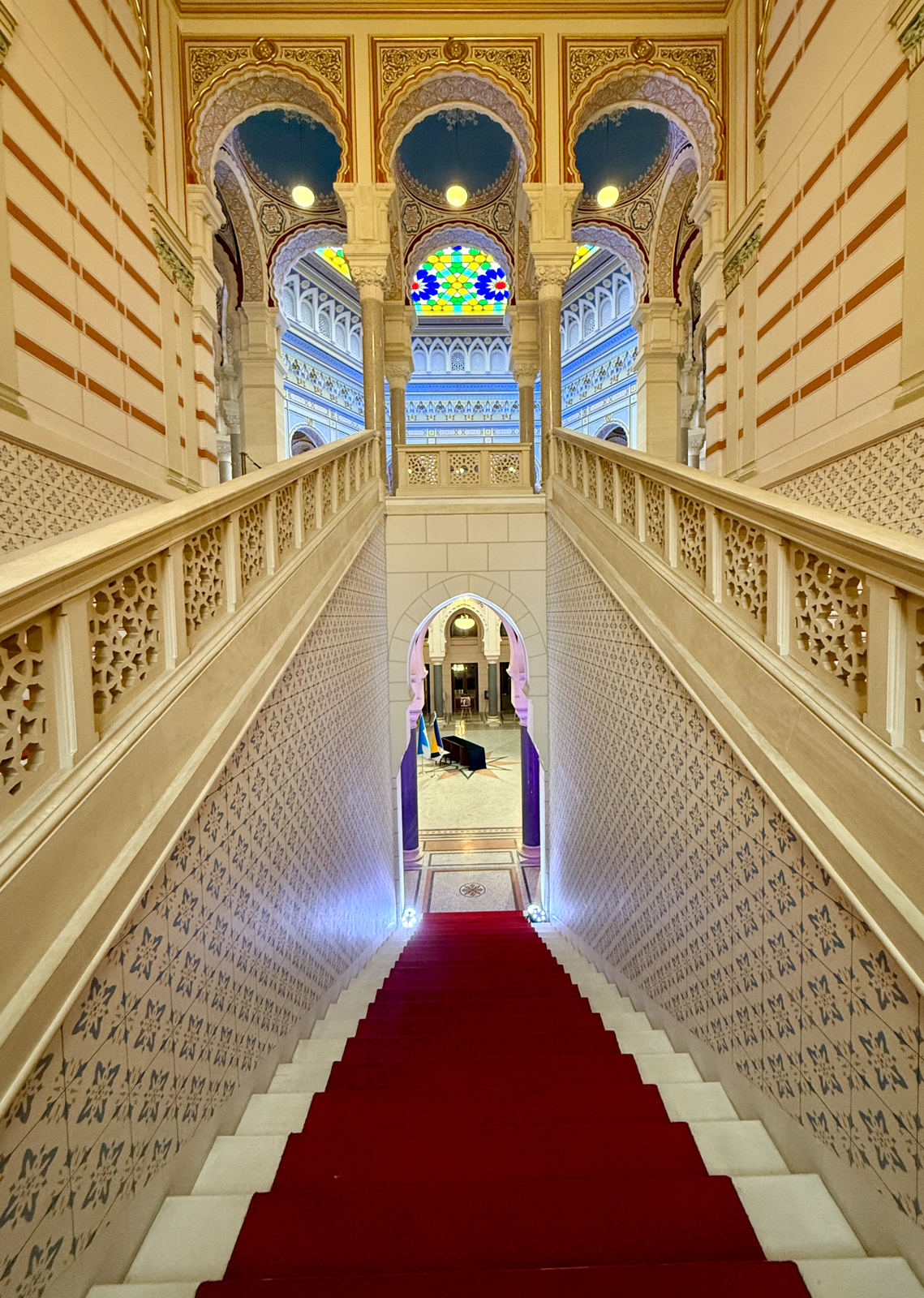
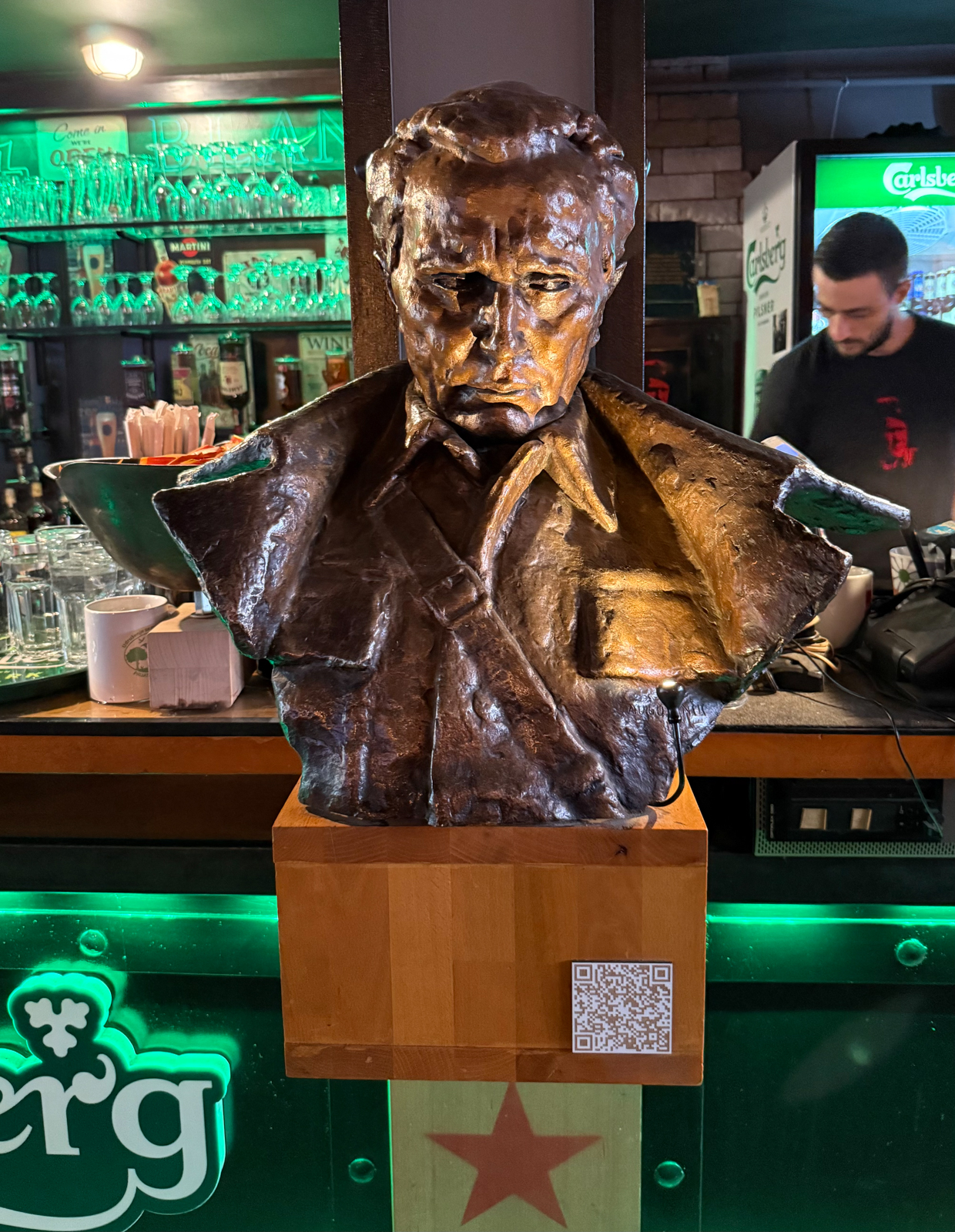
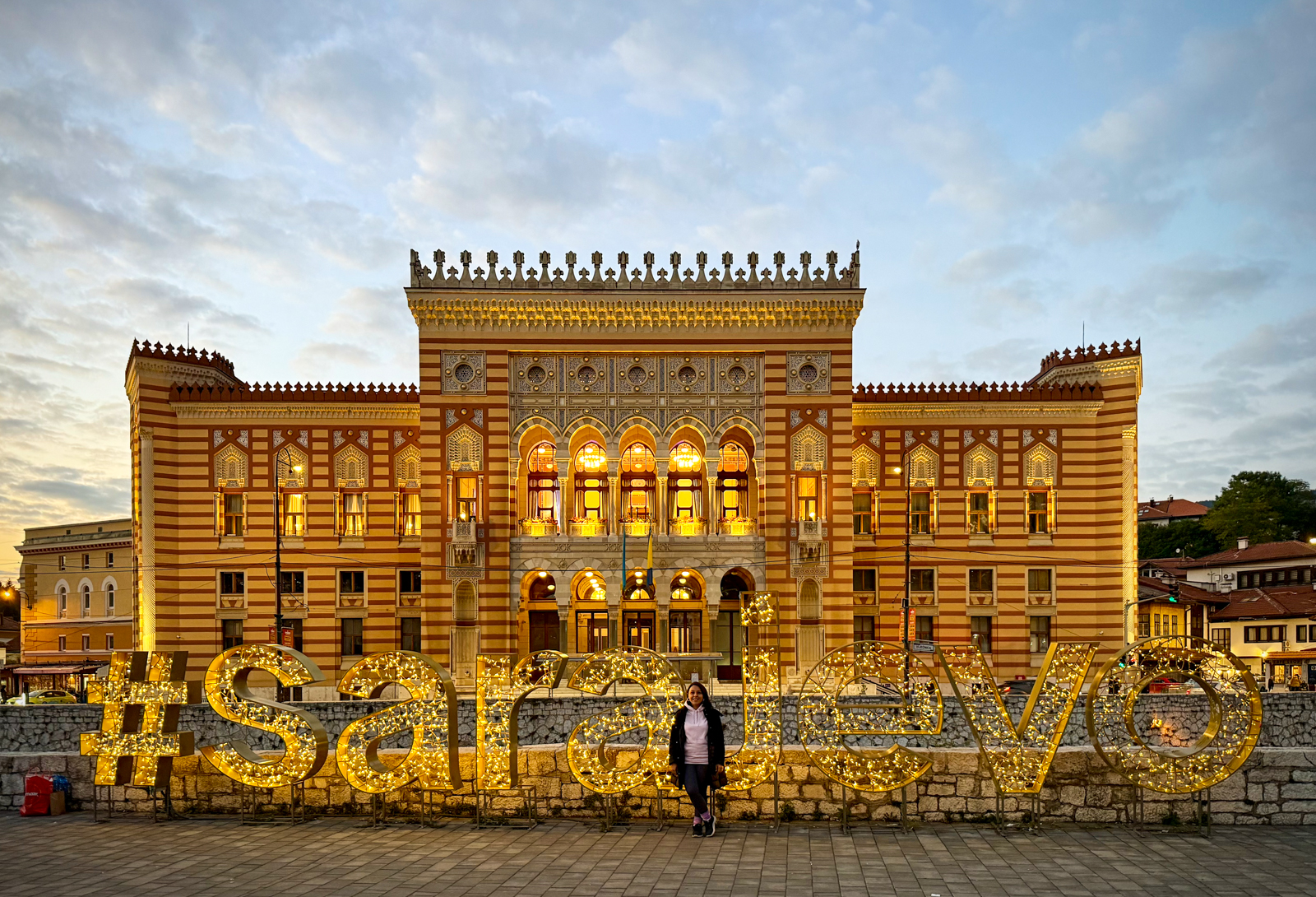
It was a relief to go back to wandering the mysterious streets of Sarajevo. We visited a Josip Tito themed bar that whimsically evoked the Yugoslav communist revolutionary and politician that was the leader of Yugoslavia for many years after WWII. Strange they would make this shrine into a hipster bar. The streets were magical, and we even returned to the old National and University Library at sunset to photograph the pseudo-Moorish architecture designed to reflect the 400-year-old cultural legacy of the city’s Ottoman past.

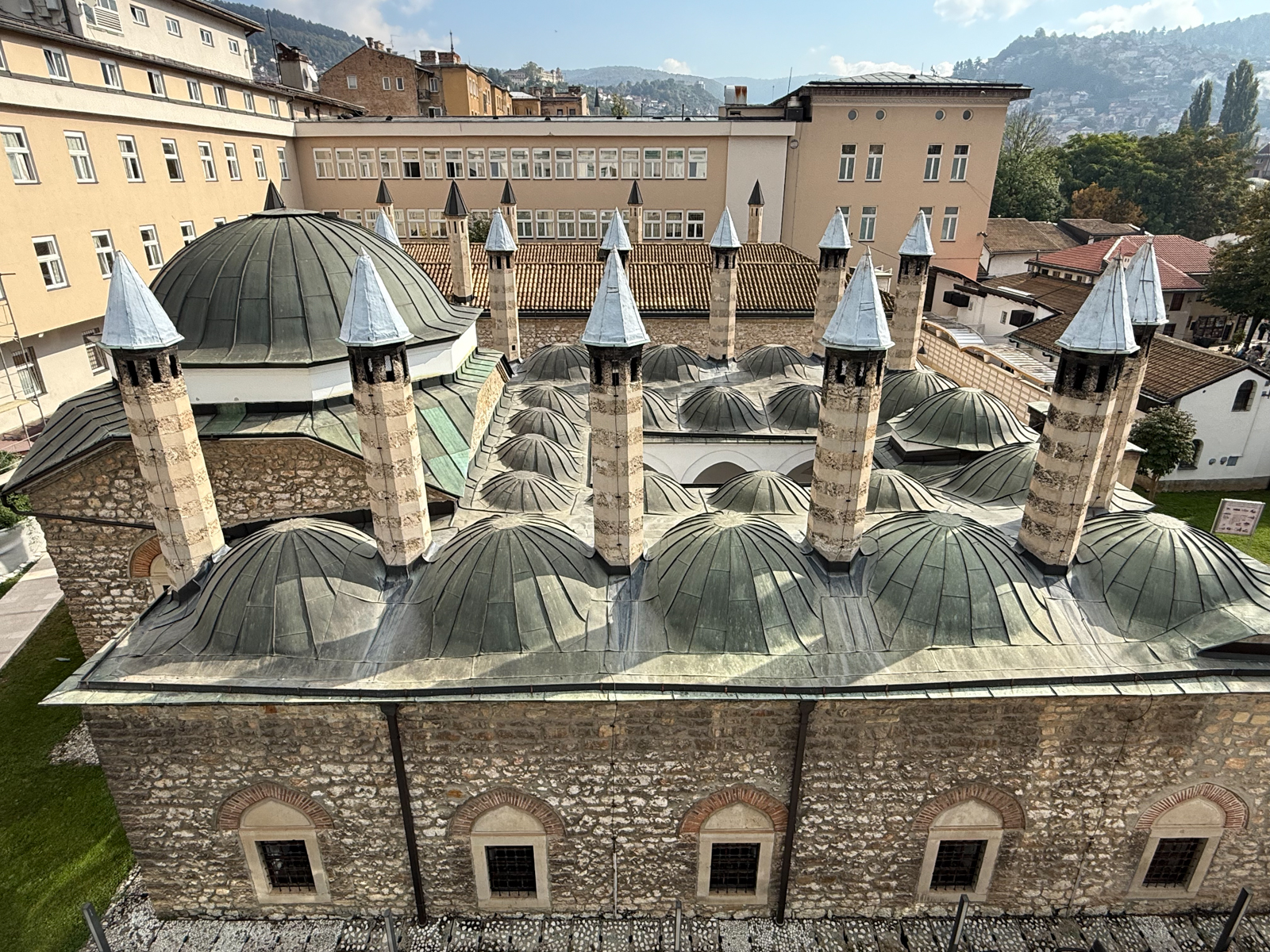
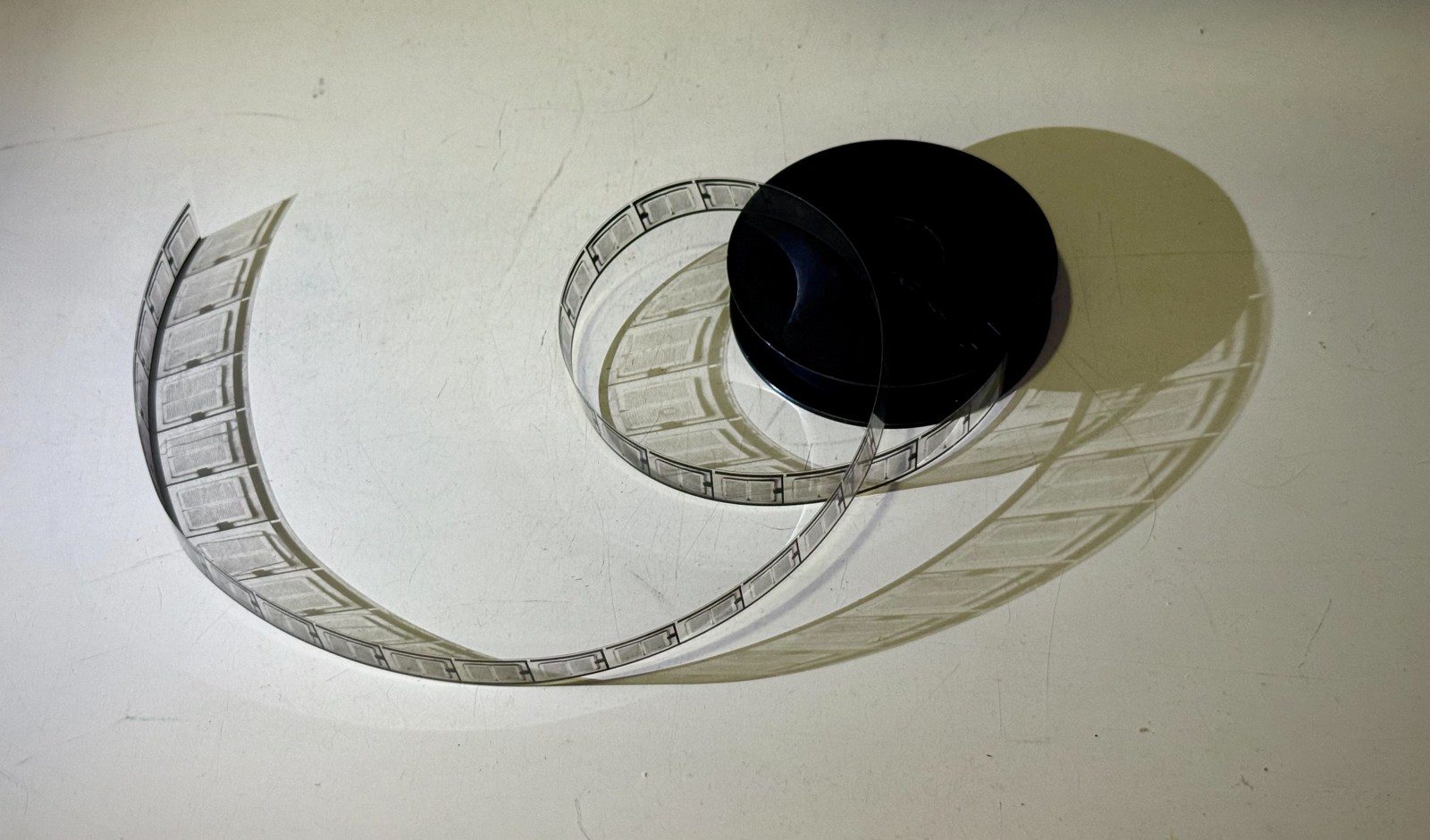
The Balkans had a strong book culture and Sarajevo was one of its hubs. The city had one of the finest collections of Arabic, Turkish and Persian books and manuscripts in the Gazi Husrev-beg Library that was established in the 16th century. It was one of the oldest continuously operating libraries in Europe. The heroic effort by a group of passionate book lovers to save their collection during the Bosnian war and the Siege of Sarajevo is wonderfully documented in the film “The Love of Books: A Sarajevo Story.” I first became aware of this very special place through this film. We were very lucky to be given an extensive tour of the newly built library (funded by Qatar) by a wonderful Muslim woman who spoke impeccable English. In addition to the wonderful books and objects in the collection, our guide showed the microfilm copies made of the archives while under fire with no running water or electricity. Go figure. This library was a positive expression of hope, reconciliation, and rejuvenation.

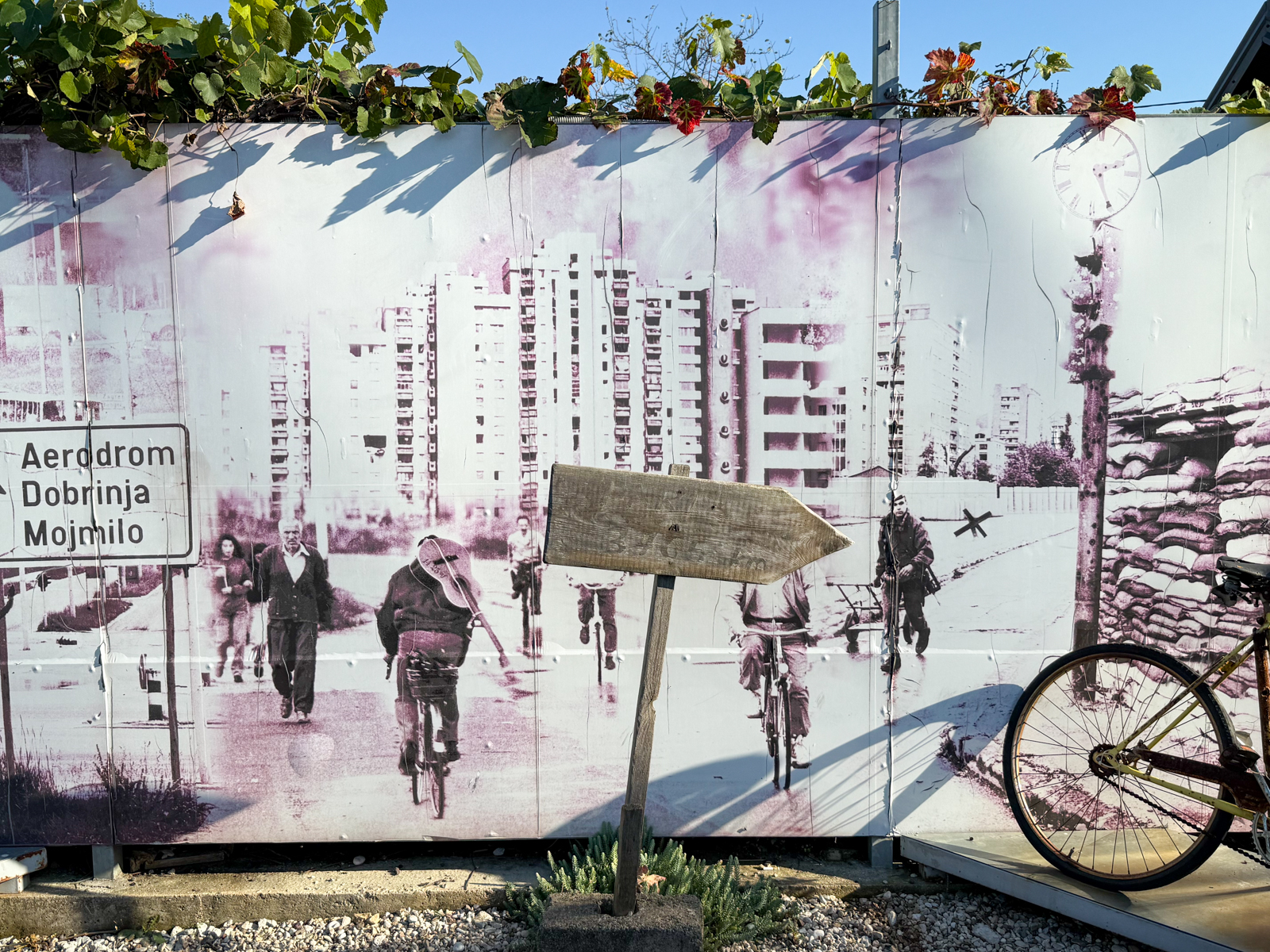
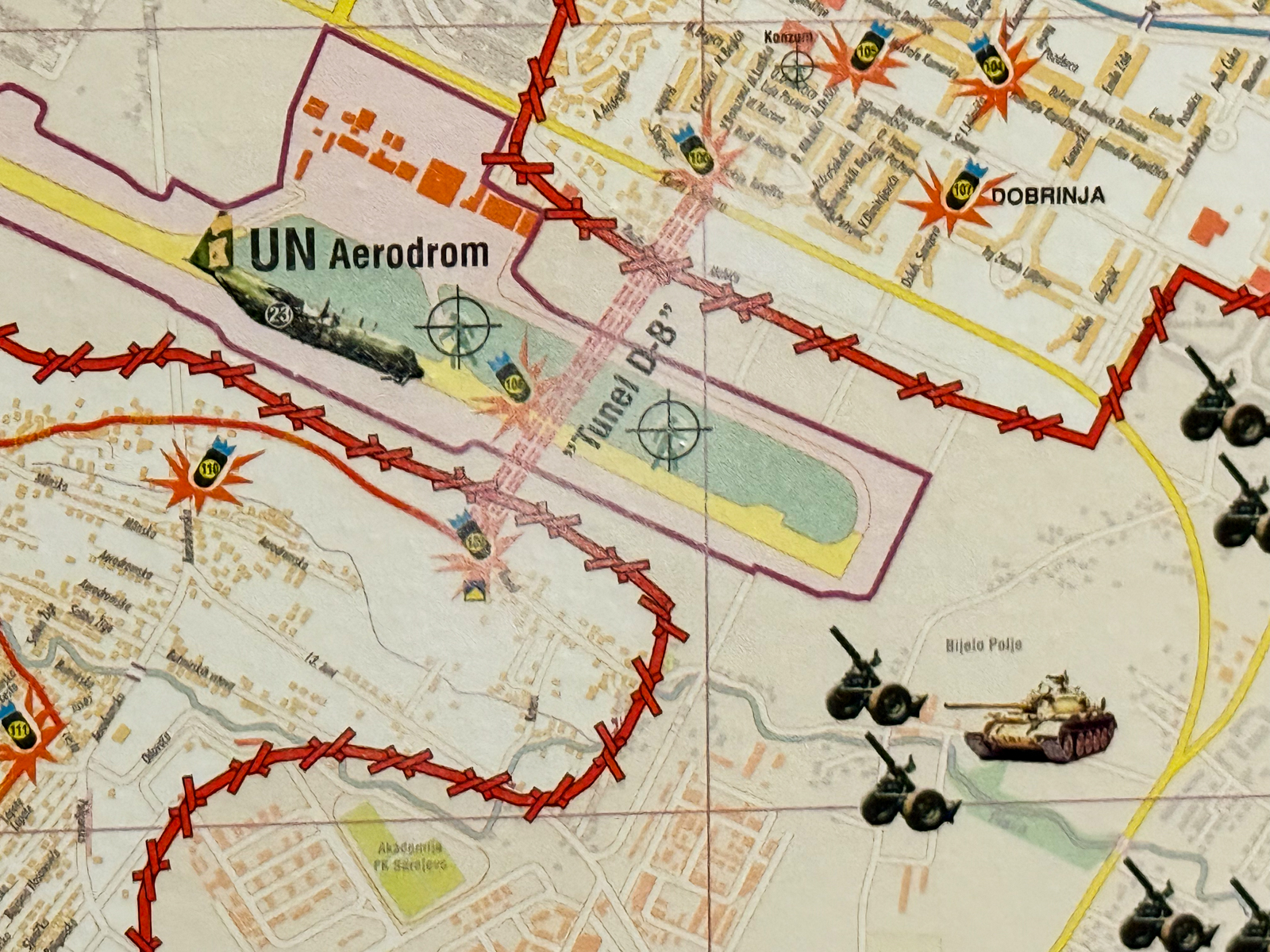
After lunch, we hailed a cab to the Tunnel of Hope Memorial Complex out near the airport. During the war, this secret tunnel was one of the few ways supplies could be carried into Sarajevo and the wounded and dead could be ferried out. It was another example of the resiliency of the people of Sarajevo during a very dark time.

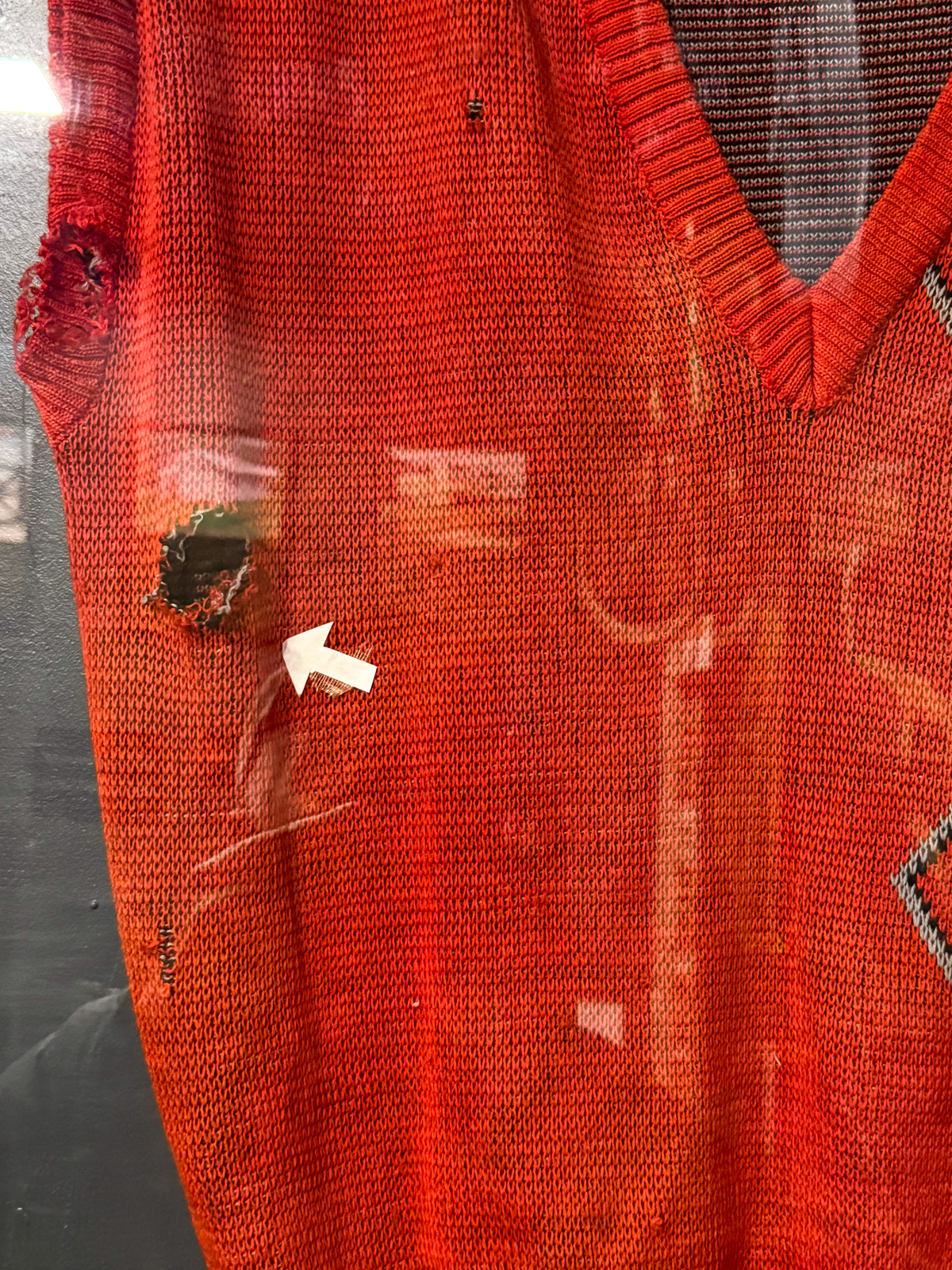
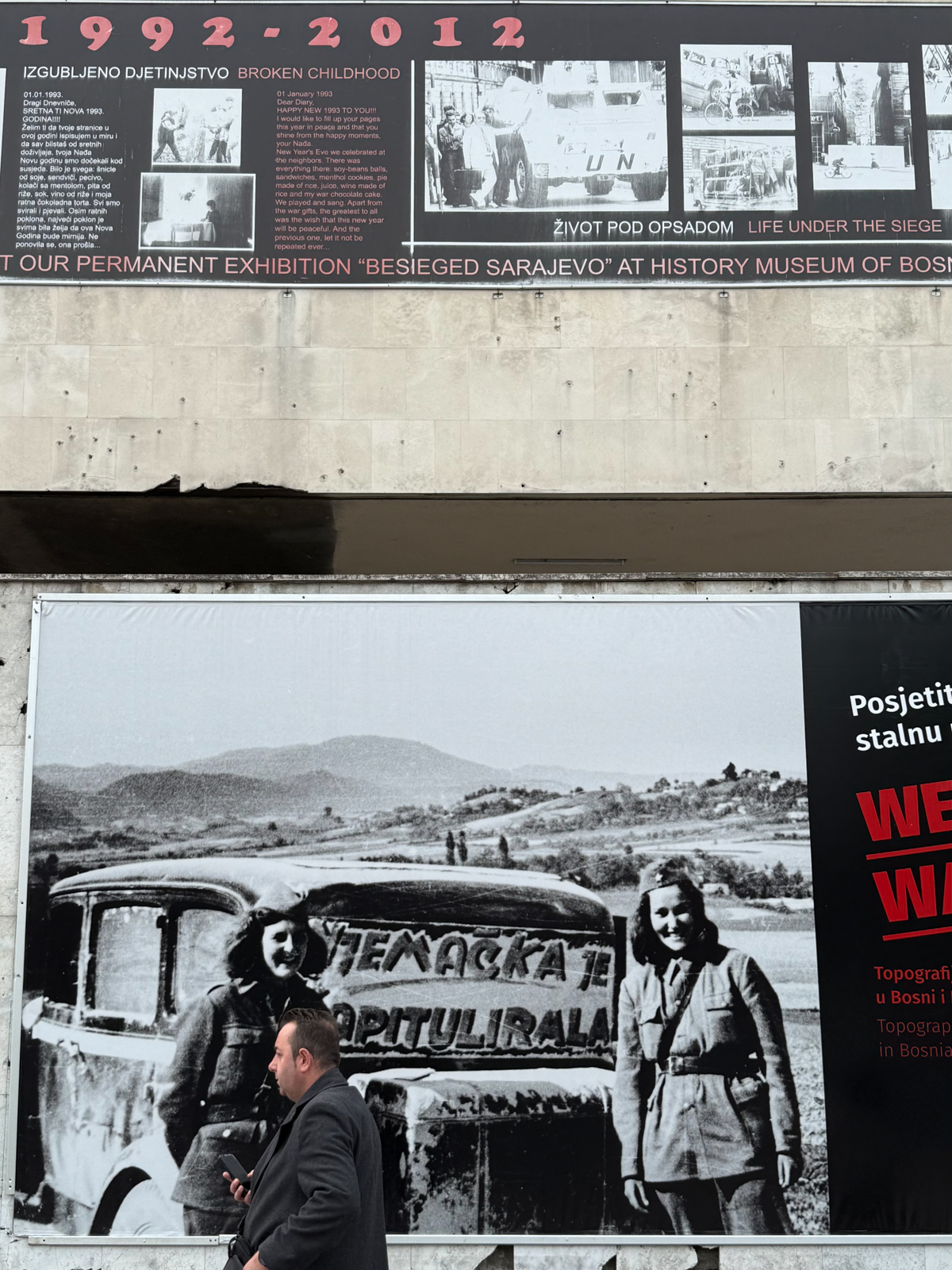
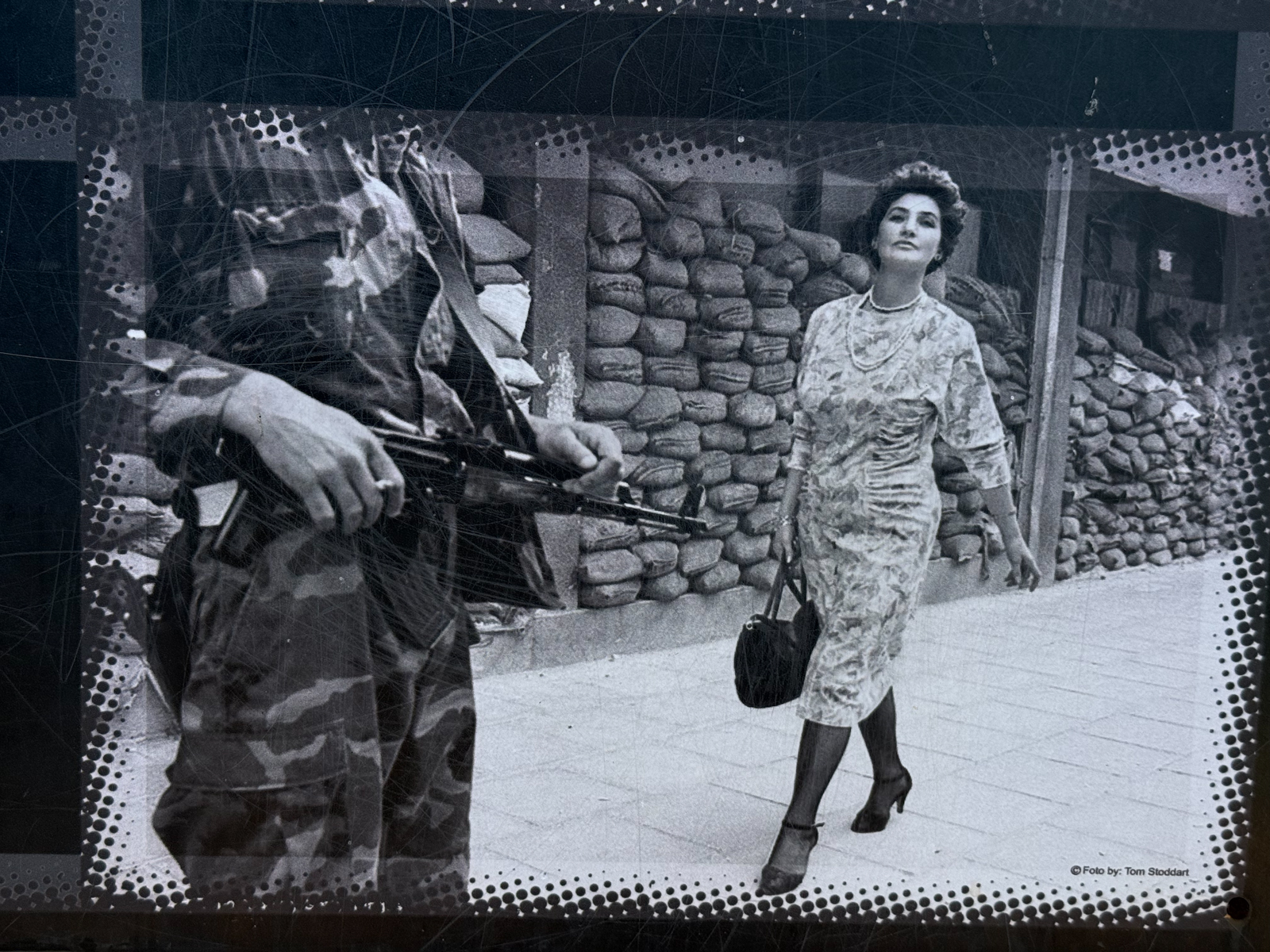
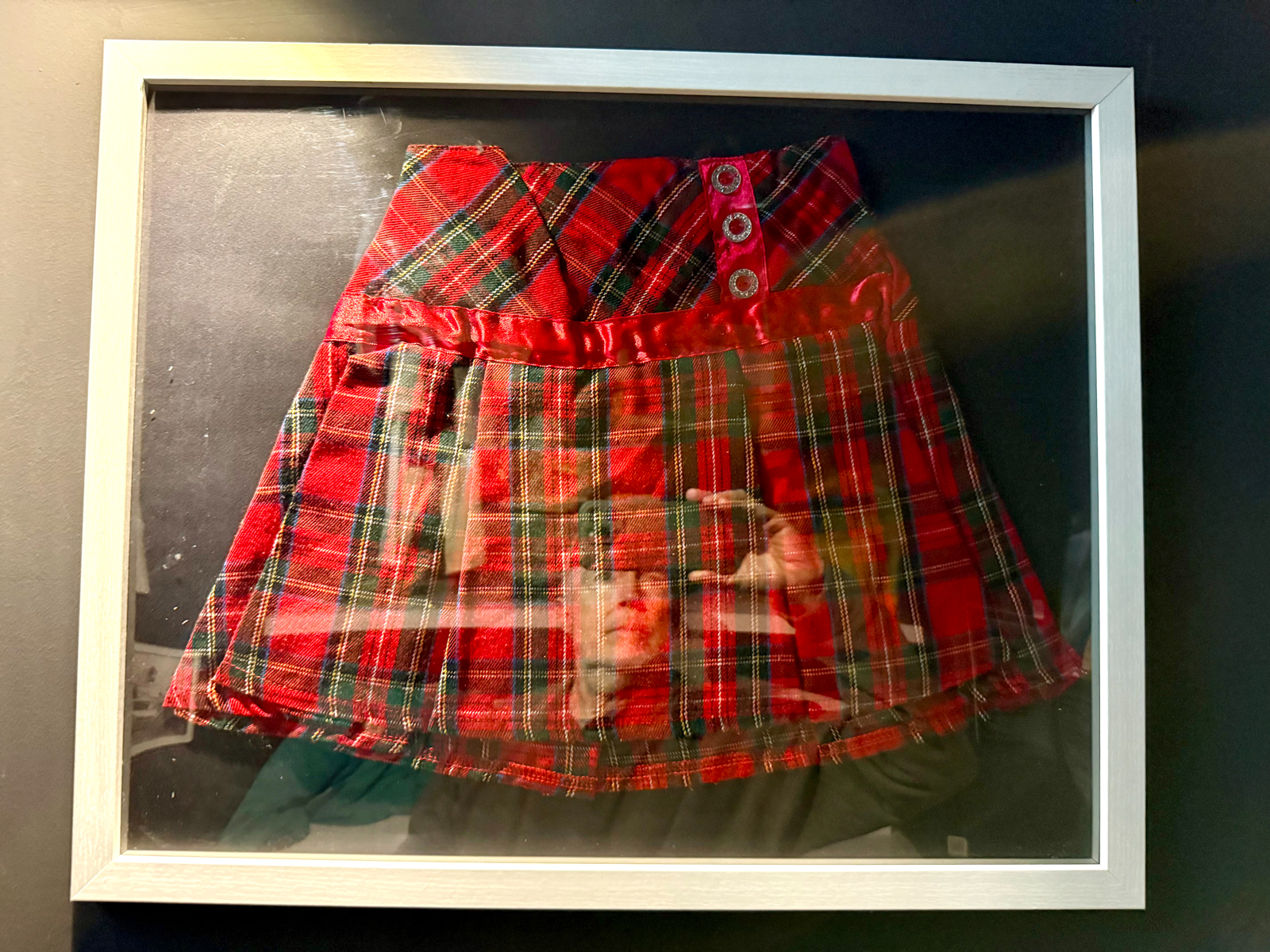
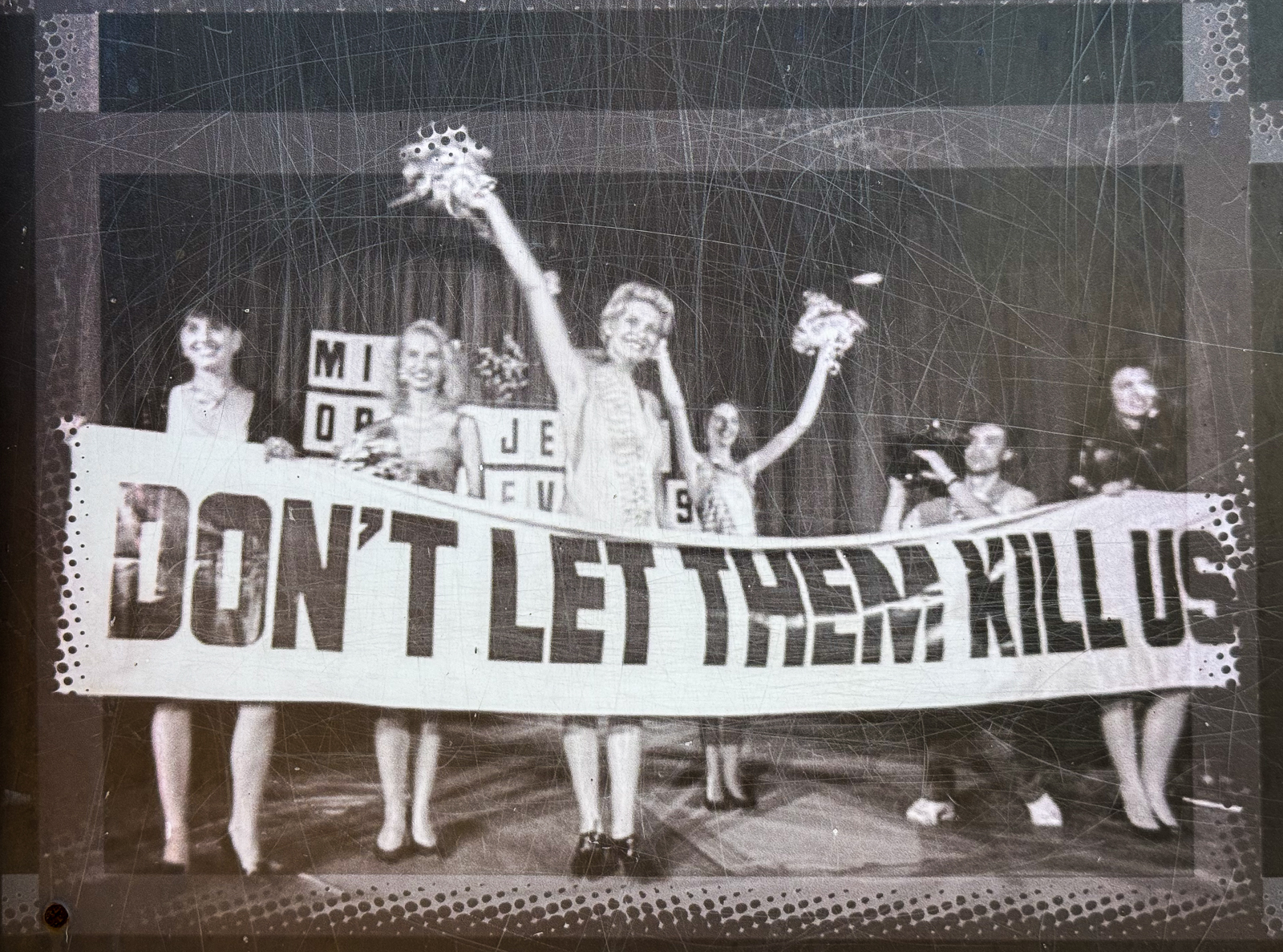
Our last stop was the Siege of Sarajevo Museum. During the three-year siege, I learned that it took one mother burning exactly 13 books to cook one pizza for her family. She hated to burn her books but didn’t want her family to starve. We also learned that during the siege there was even a “Miss Sarajevo” contest to bolster morale and provide some normalcy. The contestants stood under a banner that proclaimed, “Don’t Let Them Kill Us” and we saw the banner displayed in the museum.

The intensity of our experiences over the last three days is hard to describe. We saw much that showed the best and worst of humanity. Memories of the cruelty of the war fade very slowly. Although the country seems to be healing, the level of mistrust is still high after neighbors began killing neighbors during the conflict. The three libraries we visited were a positive force in moving this nation to a better place.

On our return flight to London, I continued my routine as a medieval scribe jotting down thoughts for my next blog. Somehow, doing that helped alleviate some of the crushing sadness we encountered in the beautiful but haunted city of Sarajevo.

Next stop: London and Oxford

5 Comments

Filed under Uncategorized

BATH AND BEYOND – Lacock Abbey and Stonehenge

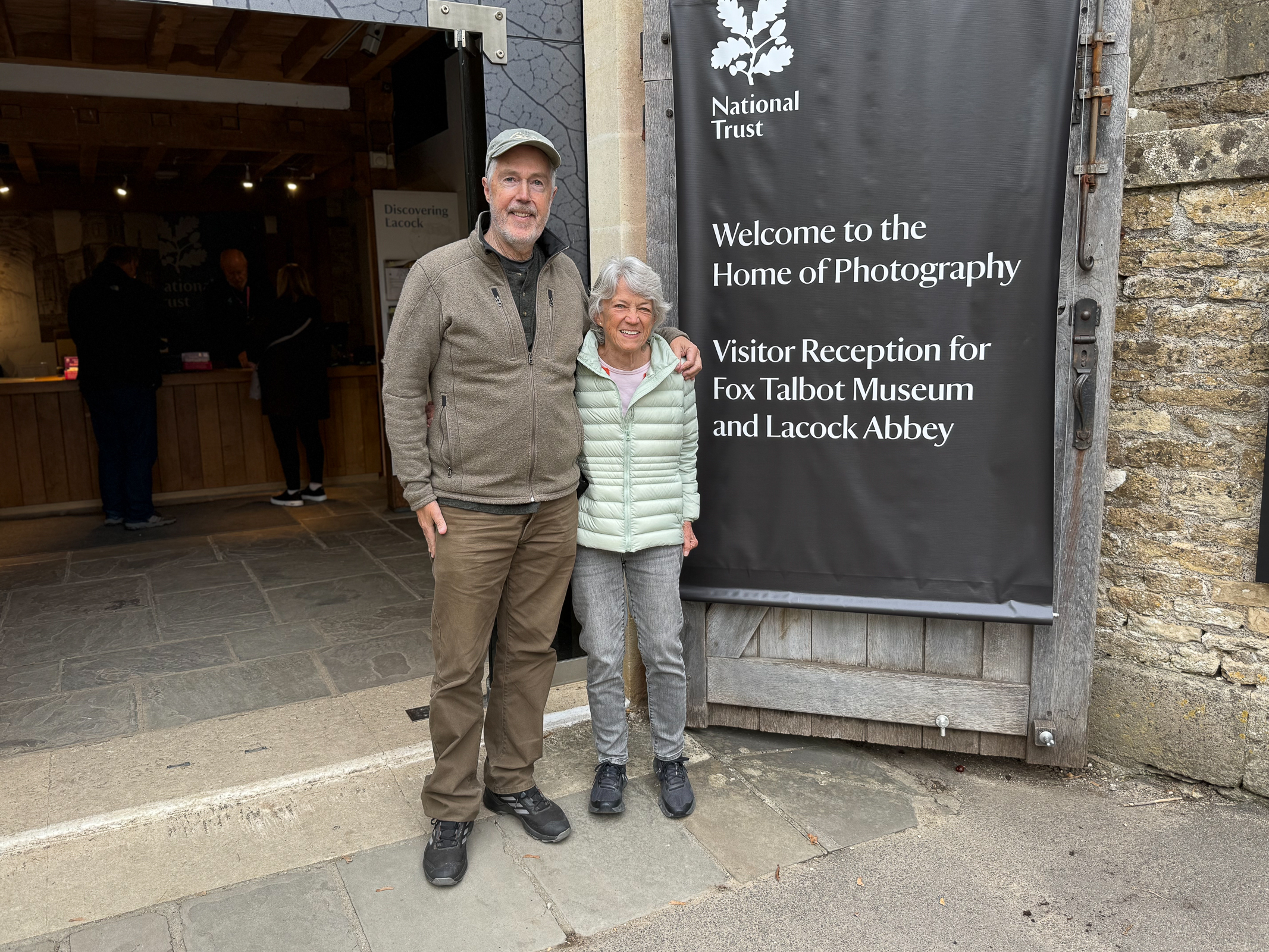
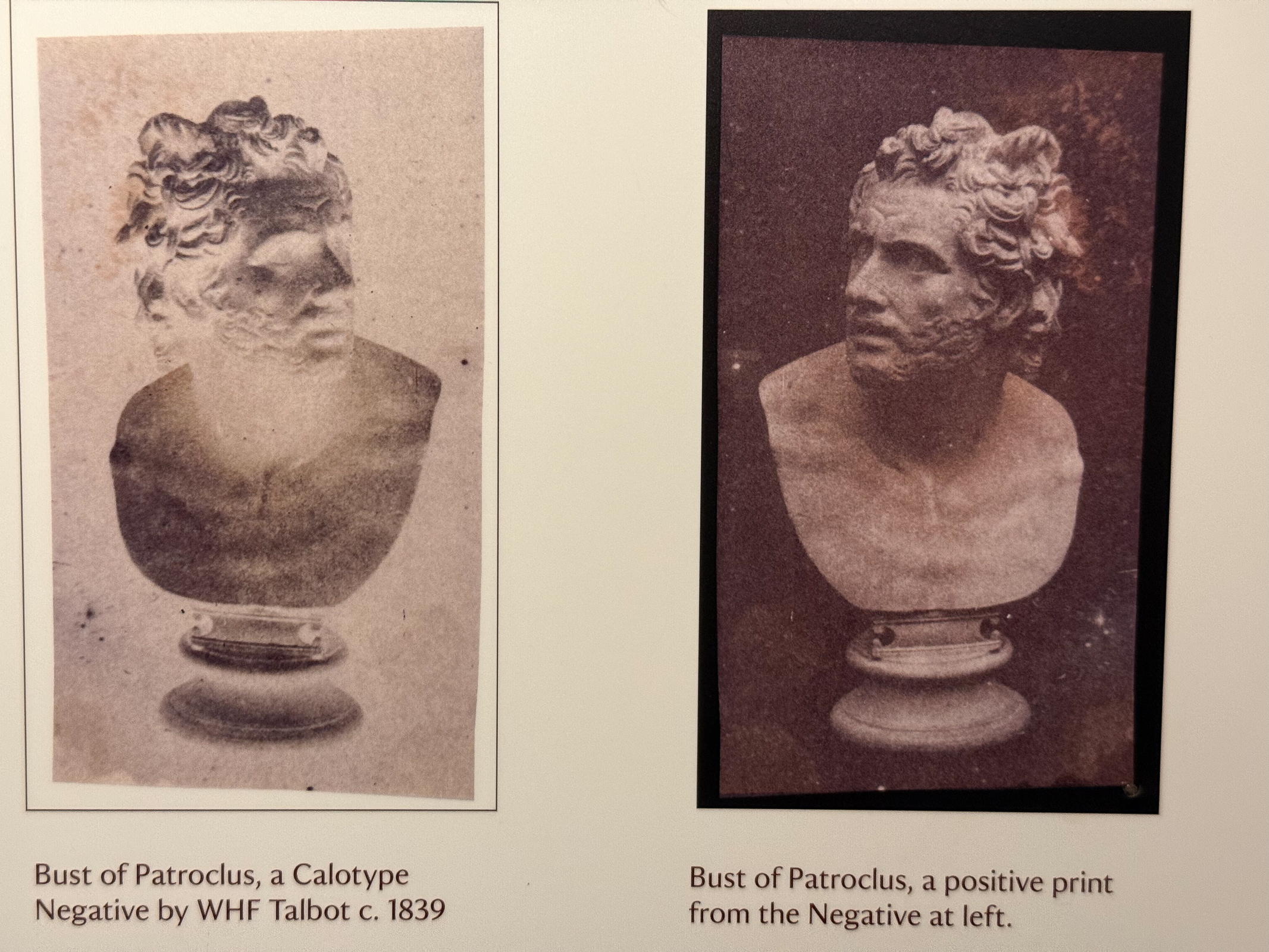
The last time I visited Lacock Abbey was 1980 while on a photographic pilgrimage to one of the places where photography was invented. William Henry Fox Talbot created the negative/positive process in the late 1830s at the same time as Louis Daguerre invented his Daguerreotype process in France. In 1980, the museum curators surprisingly let us handle Fox Talbot’s original priceless prints. Today, although the museum was good, it lacked the visceral connection to the game-changing invention of photography. The real focus of Lacock Abbey today was the Abbey itself.

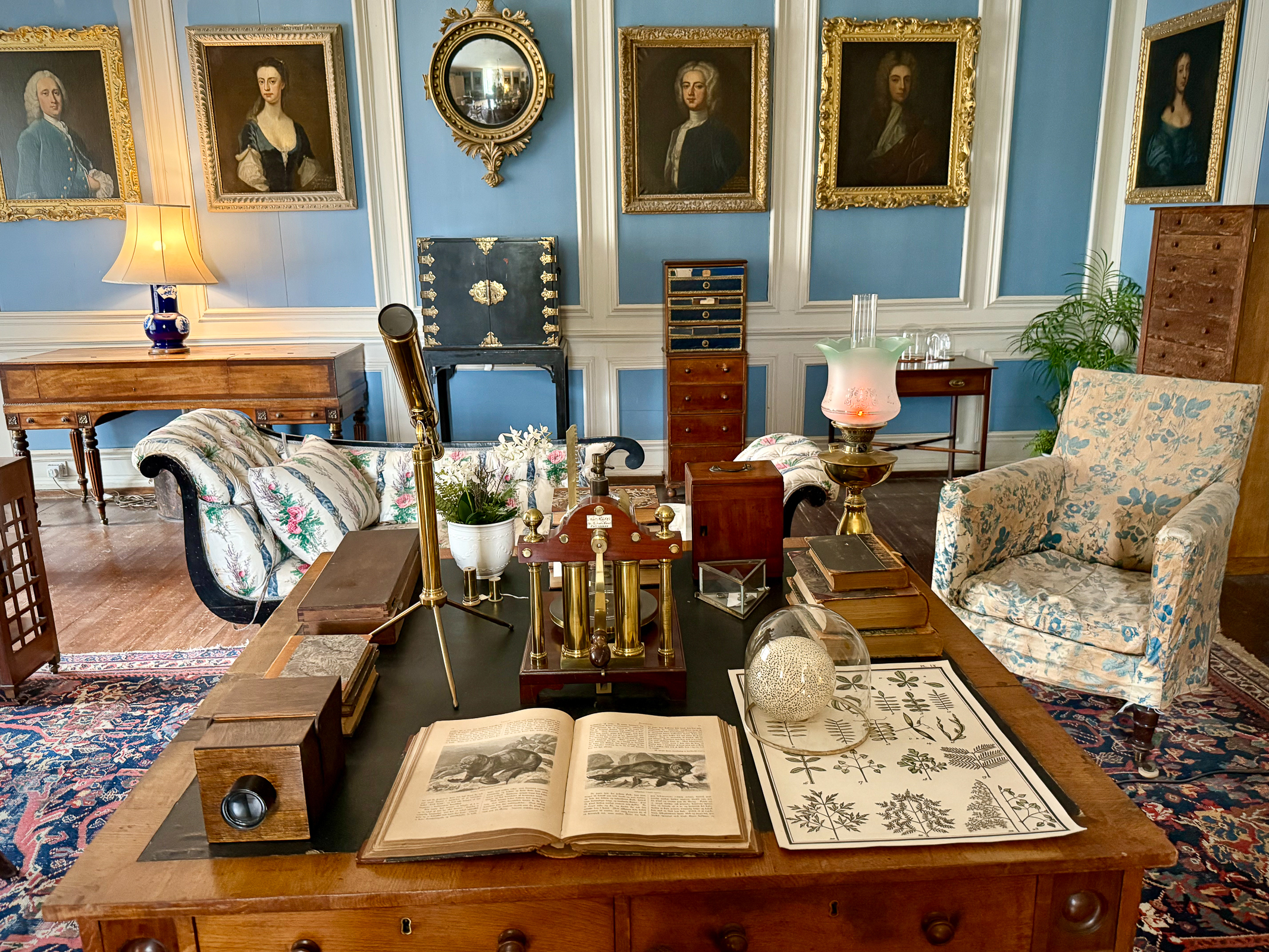
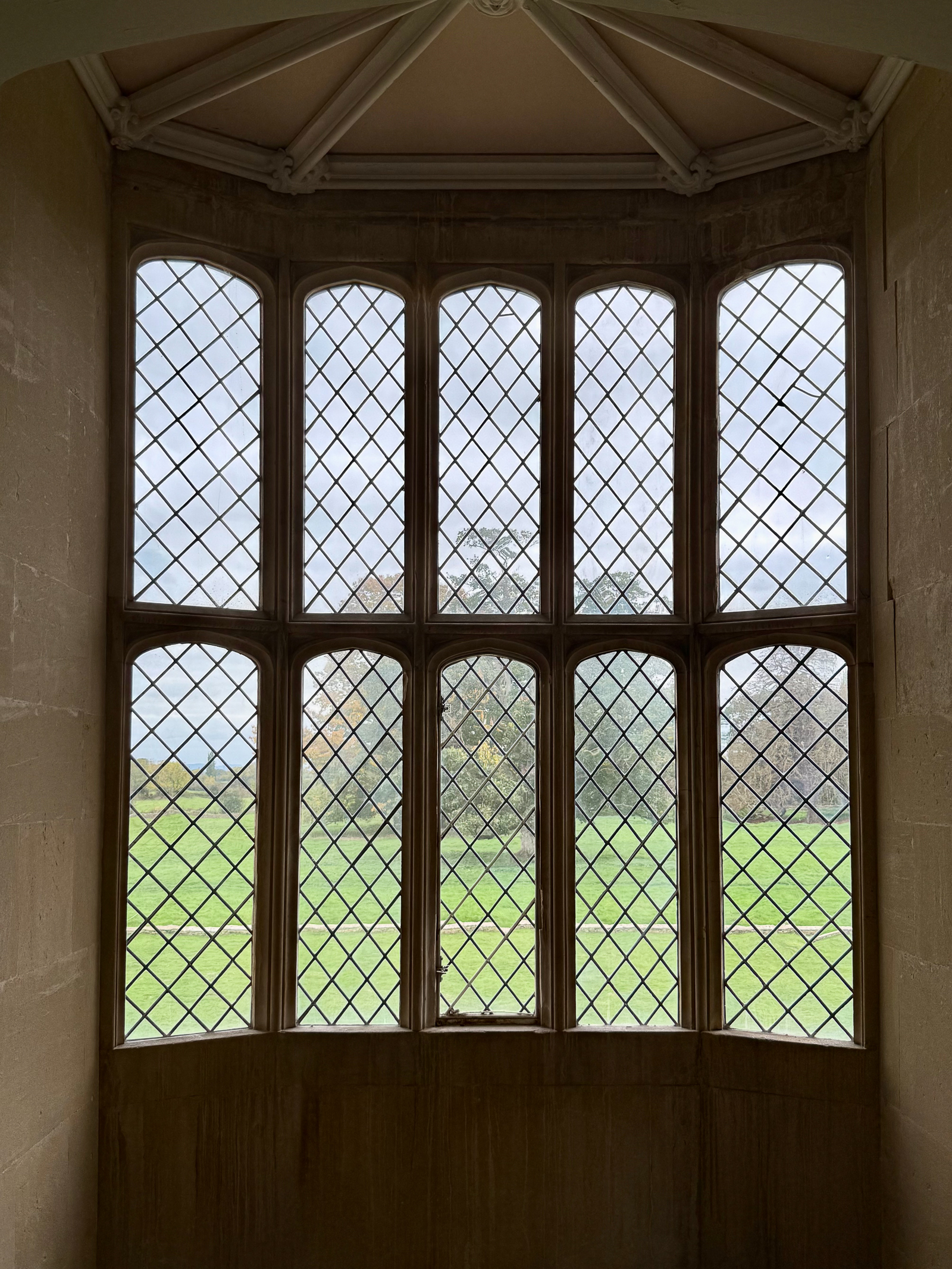
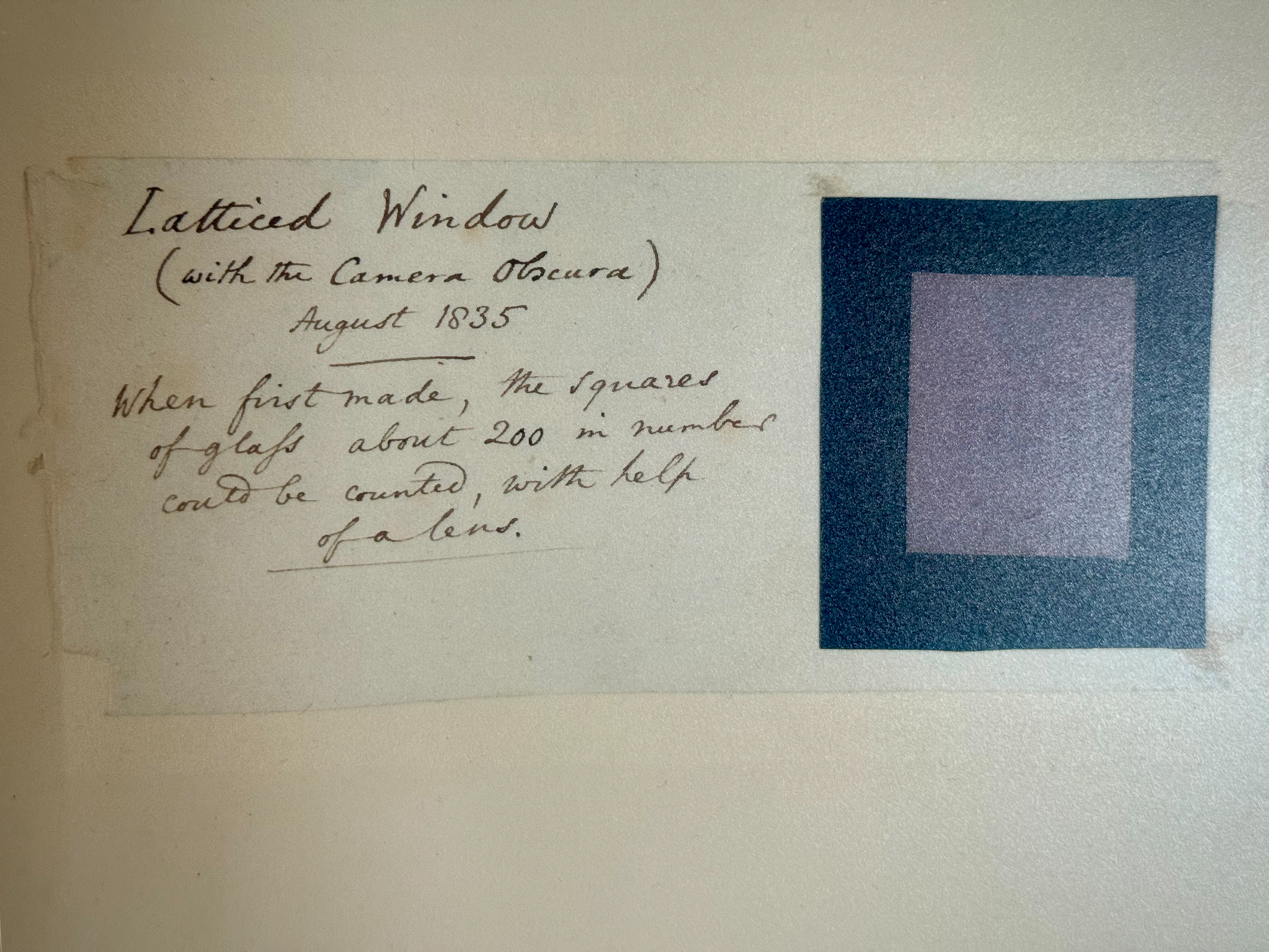
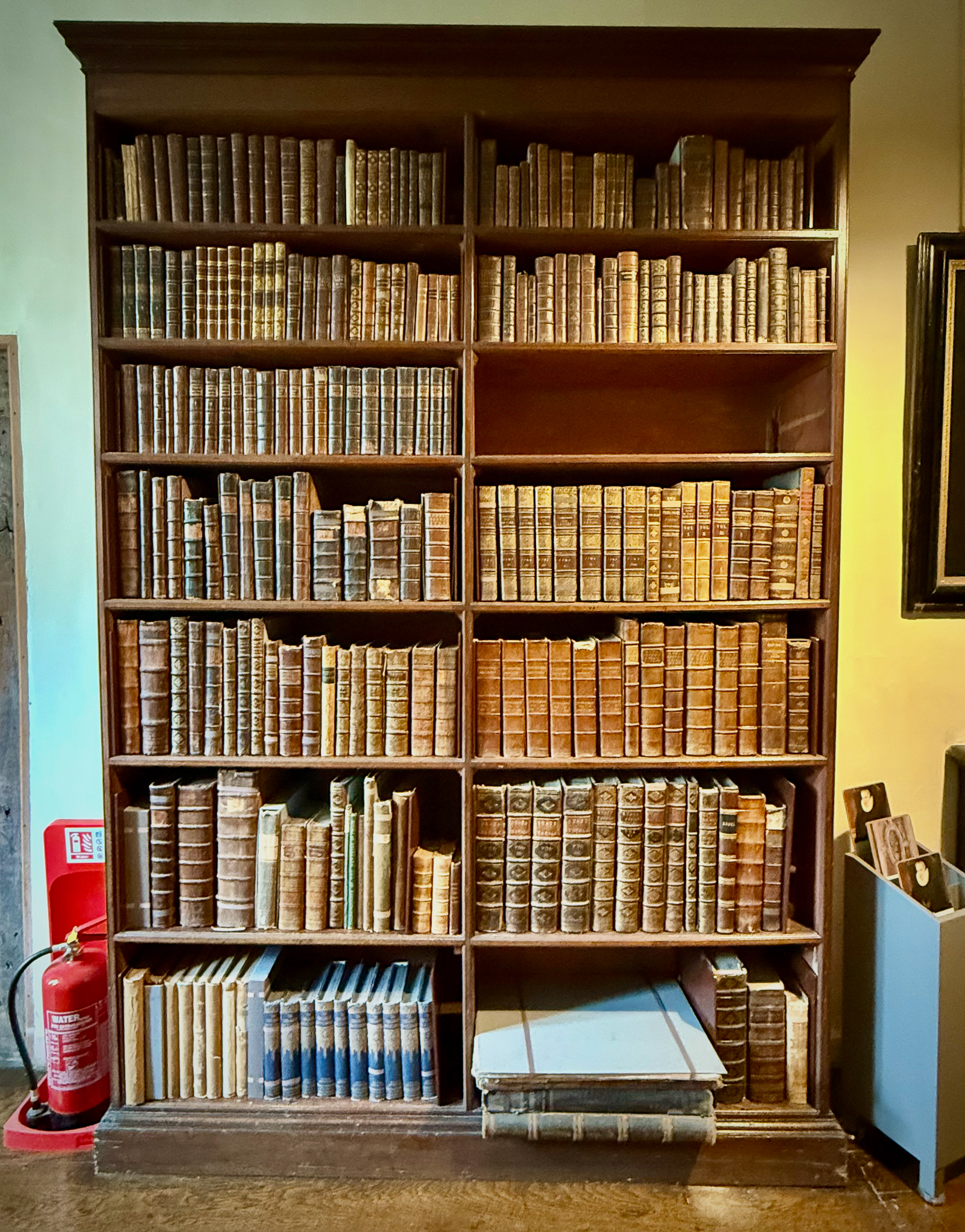
The abbey was founded in 1232 and continued as a nunnery until the dissolution of the monasteries in the mid-16th century. Much of the abbey cloisters remain unchanged since the 13th century but the many add-ons over the centuries created a mishmash of architectural styles that felt quite strange. The Talbot family eventually inherited the estate, and Fox Talbot made his first photograph in 1835. It was an image of the latticed window in the South Galley, and we were thrilled to pass by it on our self-guided tour of the house. Here was the visceral connection to this astonishing discovery that changed the world that I felt on my last visit in 1980. It was wonderful to speak with the smart guides on our walk. It was especially thrilling to see parts of Fox Talbot’s extensive library throughout the house and to see the ideas that motivated this extraordinary man.

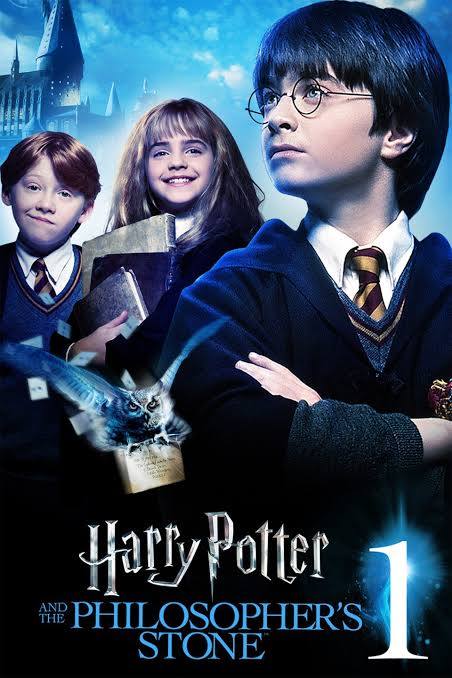
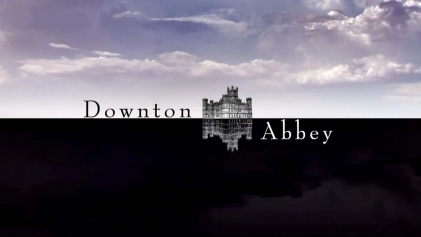
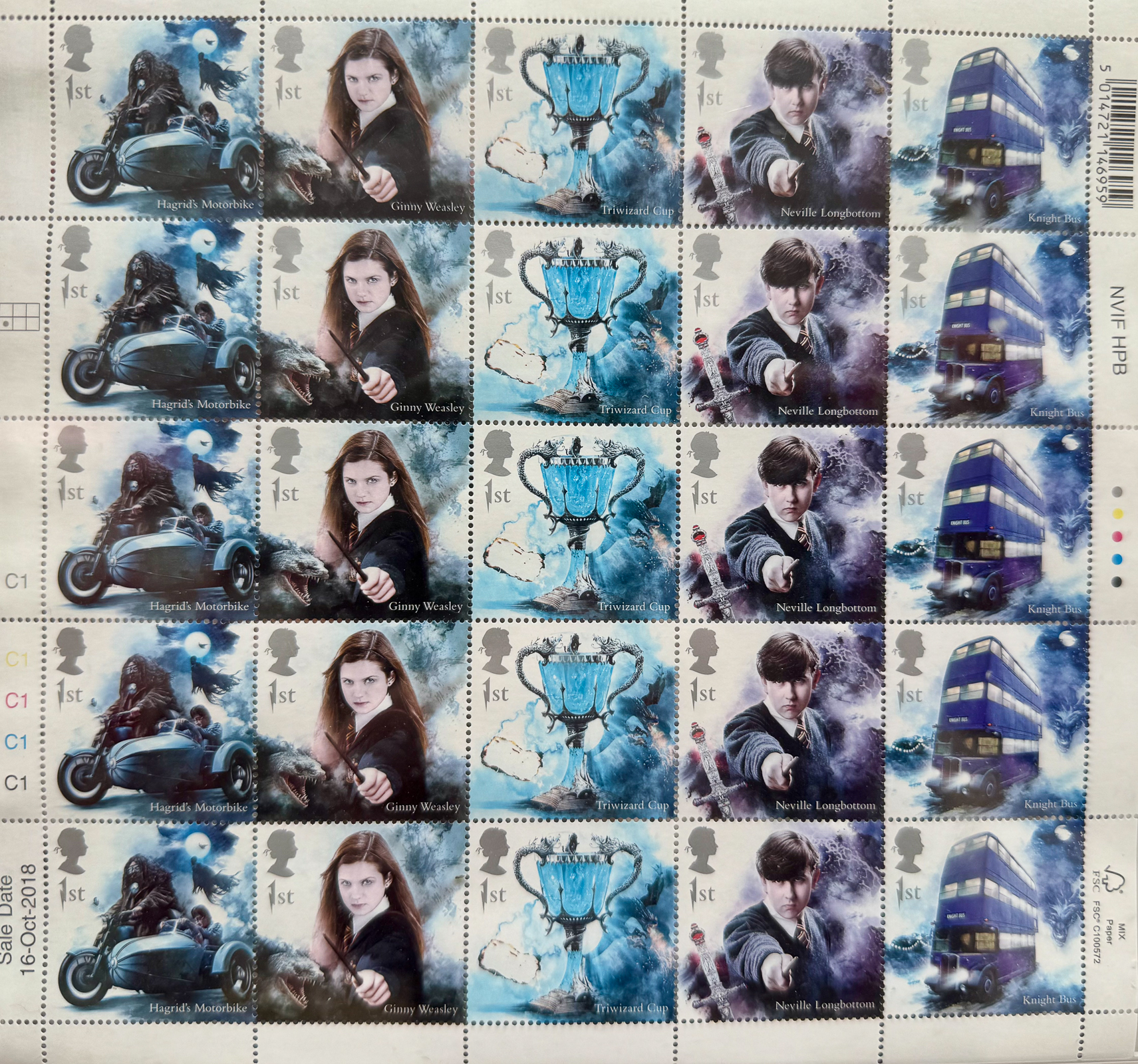
Today, Lacock Abbey is the property of the National Trust. Unbeknownst to most of us, because of the beautiful preservation of Lacock Abbey, people have seen this place many times in many movies. Parts of several Harry Potter films have been made here along with many other historical dramas such as Jane Austen’s Pride and Prejudice and the series Wolf Hall. Parts of the ever-popular Downton Abbey series were also filmed here. It is slightly ironic that one of the places where the photographic visual image was invented is now best known for…visual images.

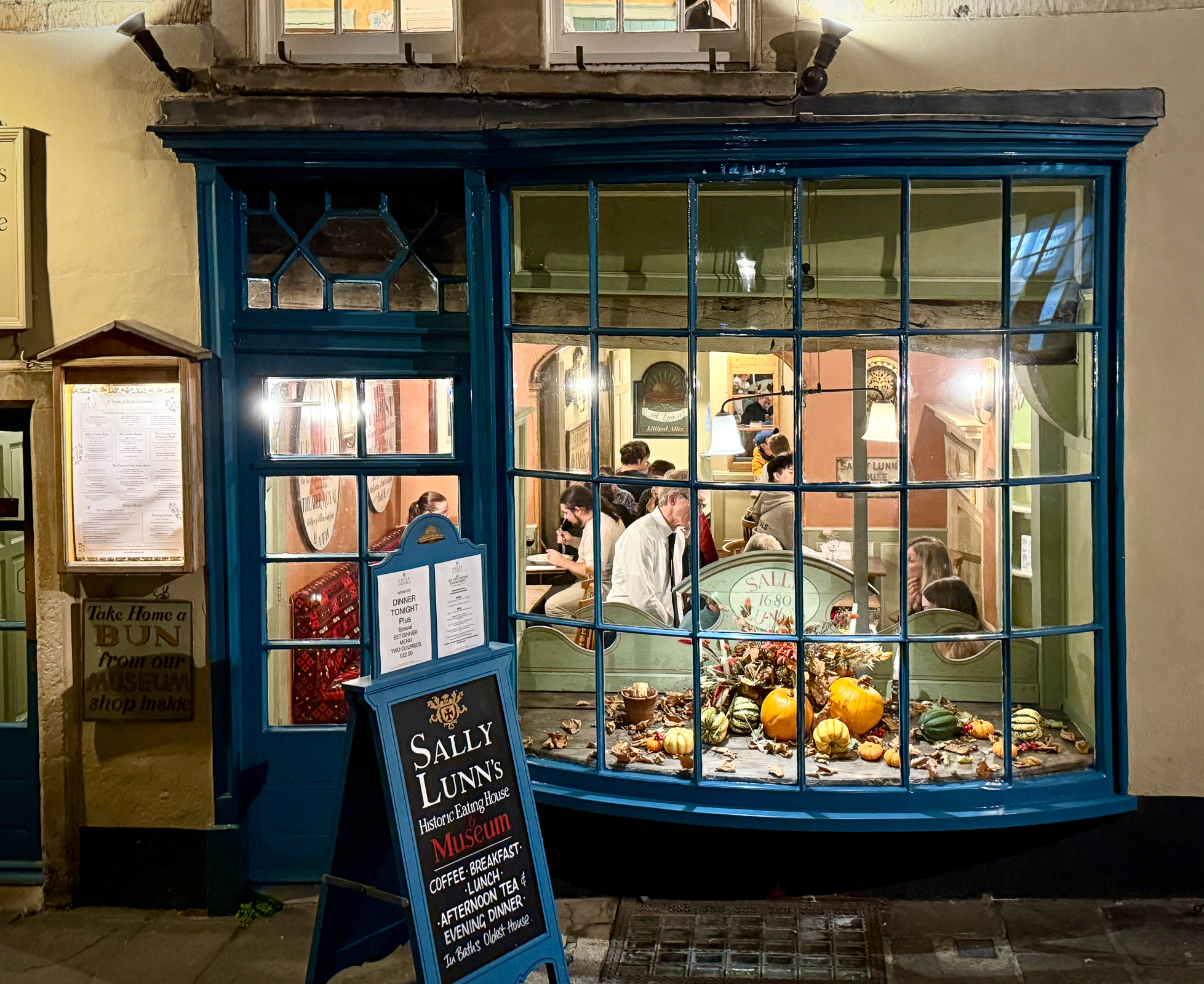
The city of Bath, England is famous as the Roman spa town of Aquae Sulis but human activity around the hot springs dates to 8,000 BCE. Bath did not seem quite as overwhelmed with tourists as York did and we enjoyed our one night there wandering the medieval streets and visiting the Bath Cathedral. Even in touristy cities, it is interesting to see a glimpse beneath the surface of the struggles of real people living here.

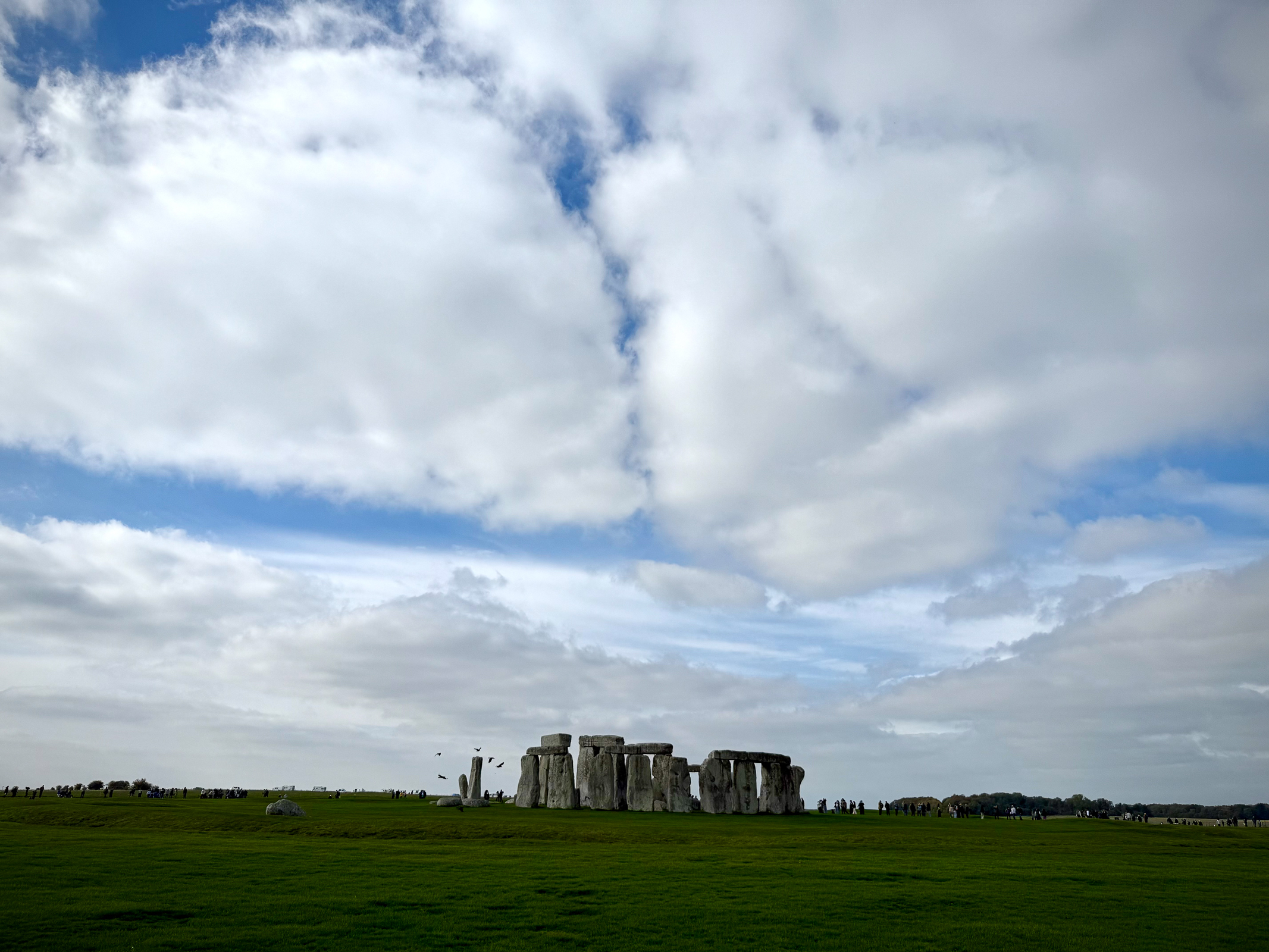
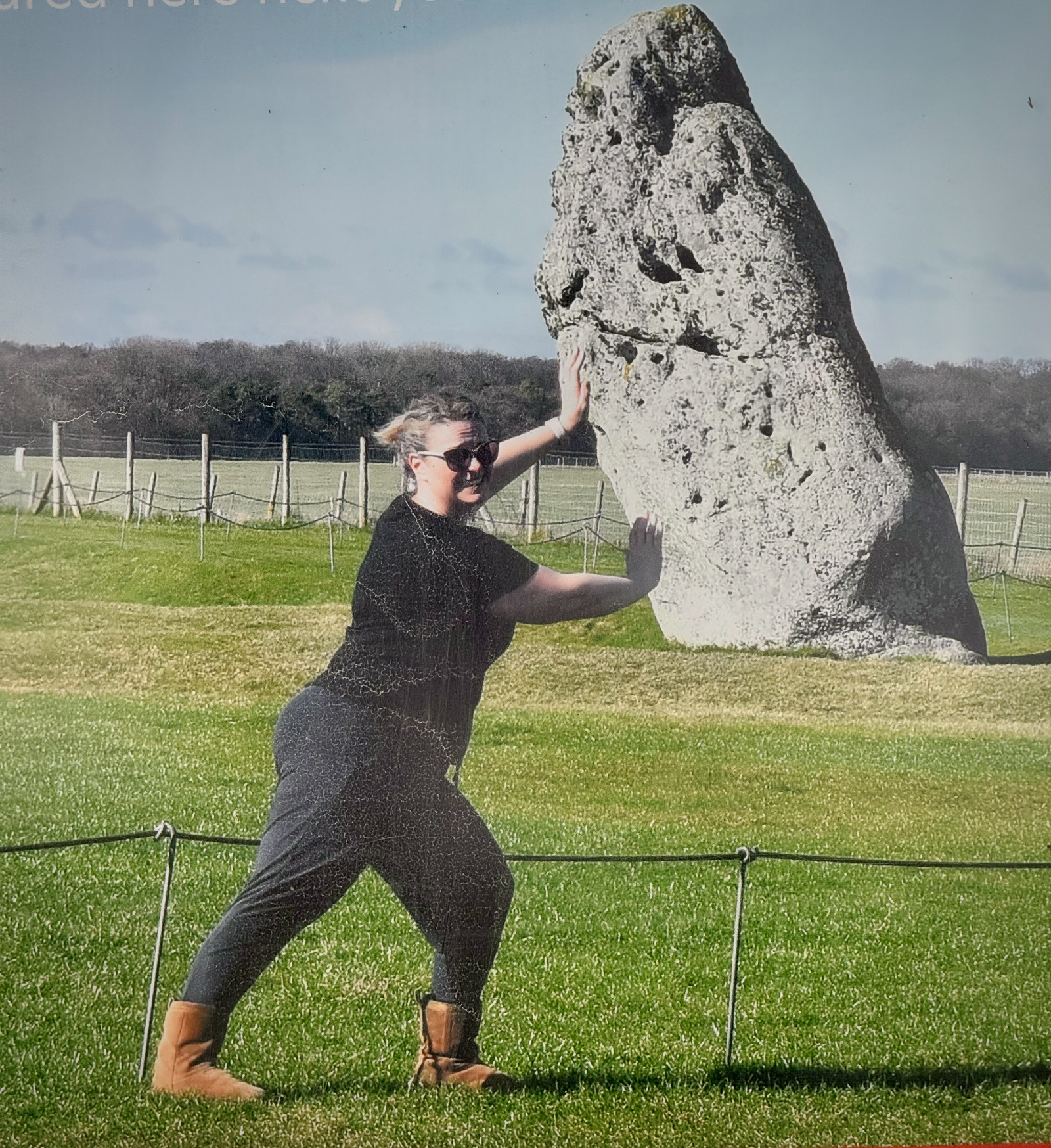
Driving back to London, we stopped at one more place I’ve always wanted to see – Stonehenge. This prehistoric megalithic structure on the Salisbury Plain is one of the most famous places in the UK. Although crowded, careful planning went into the flow of the visitors so that the overall experience was not one of being overwhelmed with the crowds. Although the 5,000-year-old structure is rather small, the overall space is huge, and this is one of the few places on our trip where I could appreciate the surrounding vastness of the landscape. The site and its surroundings were added to UNESCO’s list of World Heritage Sites in 1986.Apparently, Stonehenge was a domain of the dead from its very beginning. Its east-west alignment may have had ritual significance. Other excavations sites in the area may extend the origins of Stonehenge back 6,000 to 8,000 years ago. Despite the number of people visiting, physically being at this mysterious spot was quite moving.

We really wanted to linger but we had one more appointment at the Stansted Airport outside of London. After three weeks of white-knuckle driving on the wrong side of the road in England, we finally dropped our rental car off at the car rental where we started our long drive. Although I had gradually gained more confidence in my English driving, I was very glad to give up our car, especially without getting into any scrapes, fender benders or accidents. We checked into our room at the airport hotel and prepared for the next part of our journey.

Next stop: Sarajevo

2 Comments

Filed under Uncategorized

WALES – Brecon Beacons, Merthyr Tydfil and Cardiff

The beautiful Brecon Beacons National Park covers over 500 square miles on the border between Mid and South Wales. We drove up from Hay-on-Wye into a mysterious area that contains some of the highest peaks in Wales, includes a UNESCO Global Geopark and is an International Dark Sky Reserve. And soon the Park will reclaim its’ original Welsh name and become Bannau Brycheiniog National Park. We encountered a way of preserving land into a National Park that was very different from American National Parks. In the US, we tend to value wilderness and little development in our parks. Here, local agriculture is preserved along with the stunning views and remarkable landscapes. Roman forts and Celtic settlements were part of the park along with the rich natural beauty and remote rugged mountains of the area.

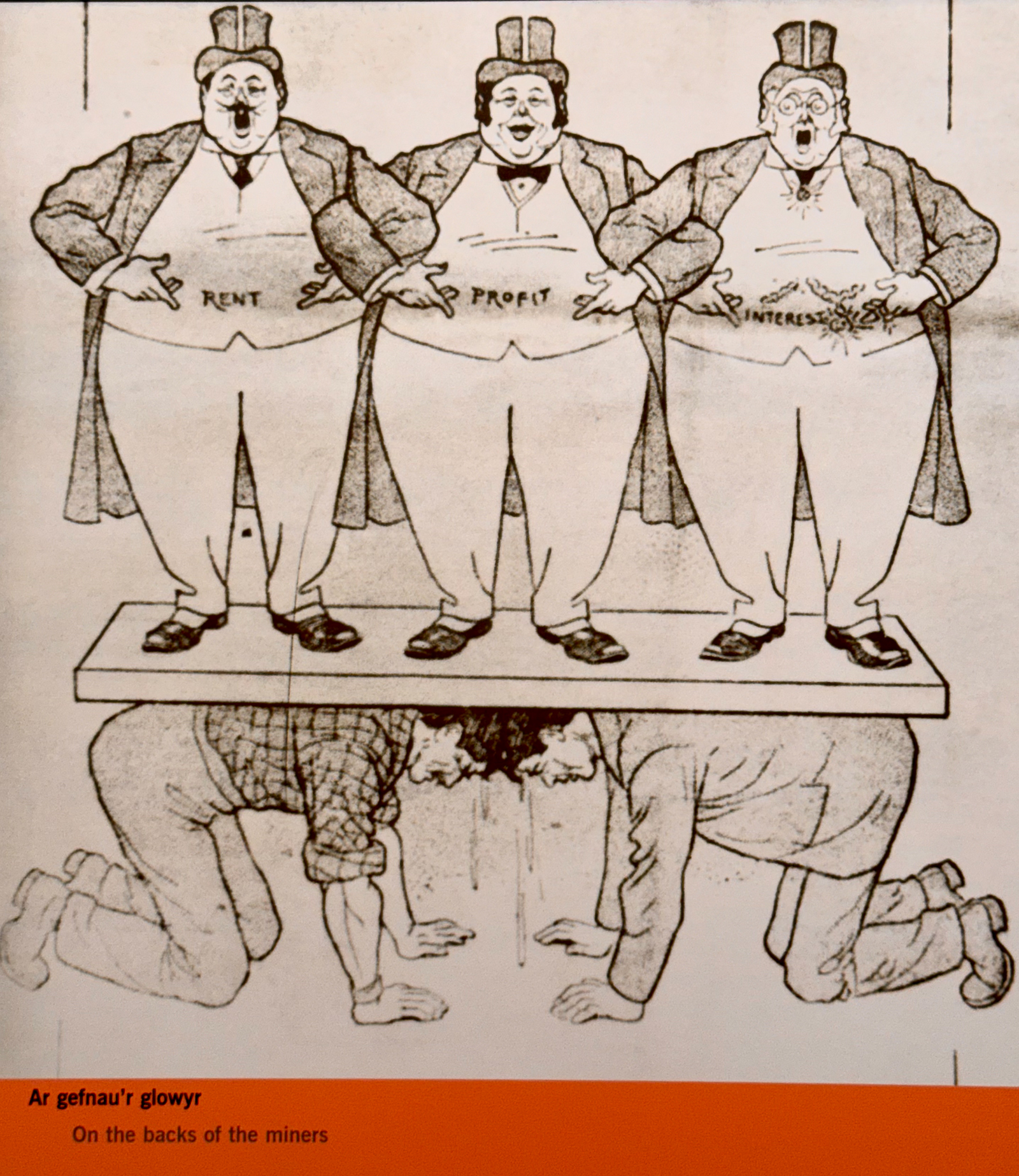
Merthyr Tydfil took its name from a martyred daughter of a Christian King in 480 CE. It is noted for its industrial past and was known as the “Iron Capital of the World” in the early 19th century. The world’s first steam-powered railway journey happened in Merthyr in 1804 appropriately from an ironwork to a canal. By the mid-1850s, Wales became the world’s first industrialized nation, as more people were employed in industry than agriculture, with Merthyr the biggest town in Wales at the time. The Donetsk region in Ukraine was originally developed as a mining and iron work area by a man from Merthyr in 1870. By the early 20th century Merthyr began long decline as mining and smelting jobs left the area culminating with a TV report listing Merthyr as one of the worst places to live in the UK.

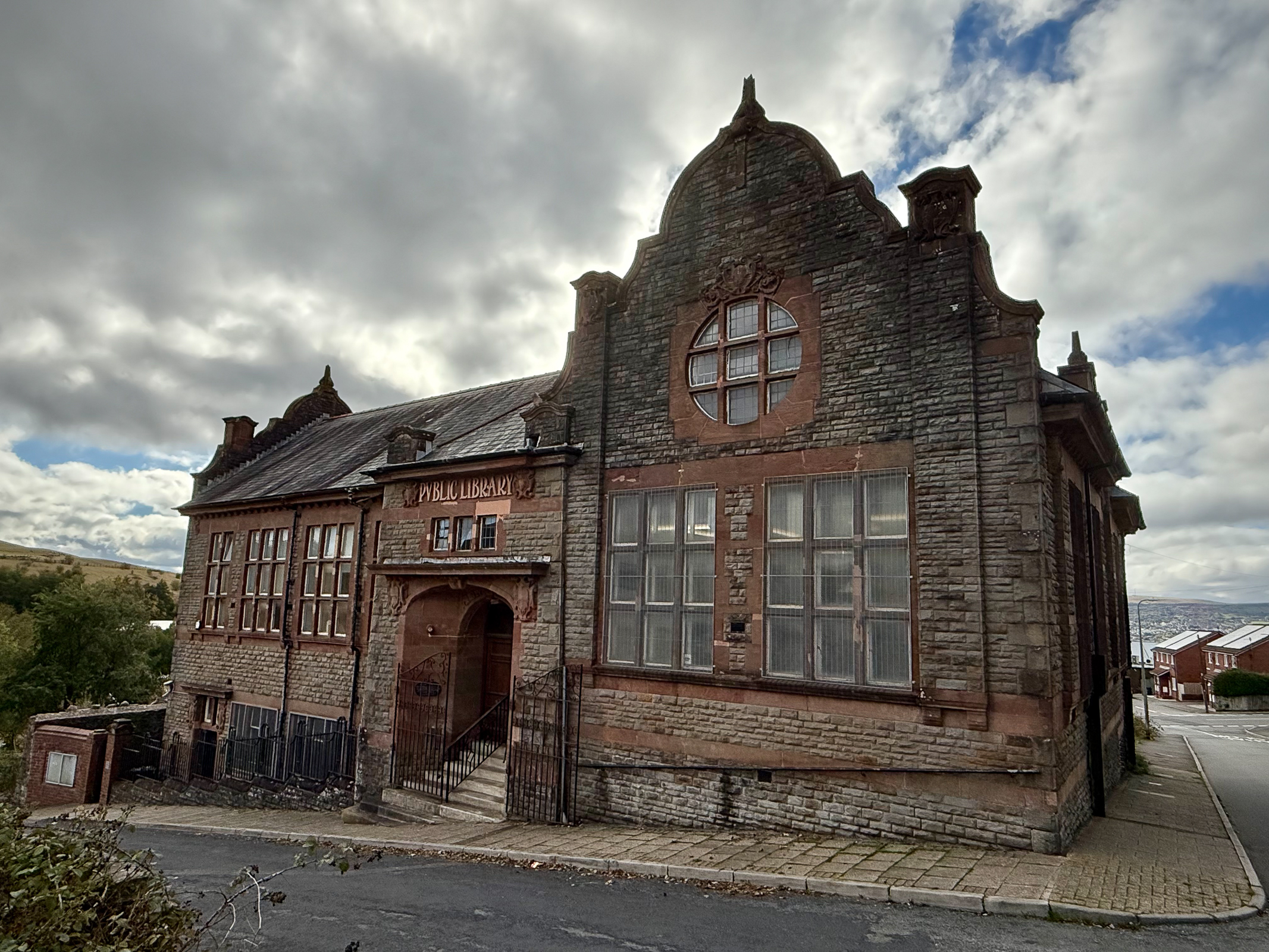
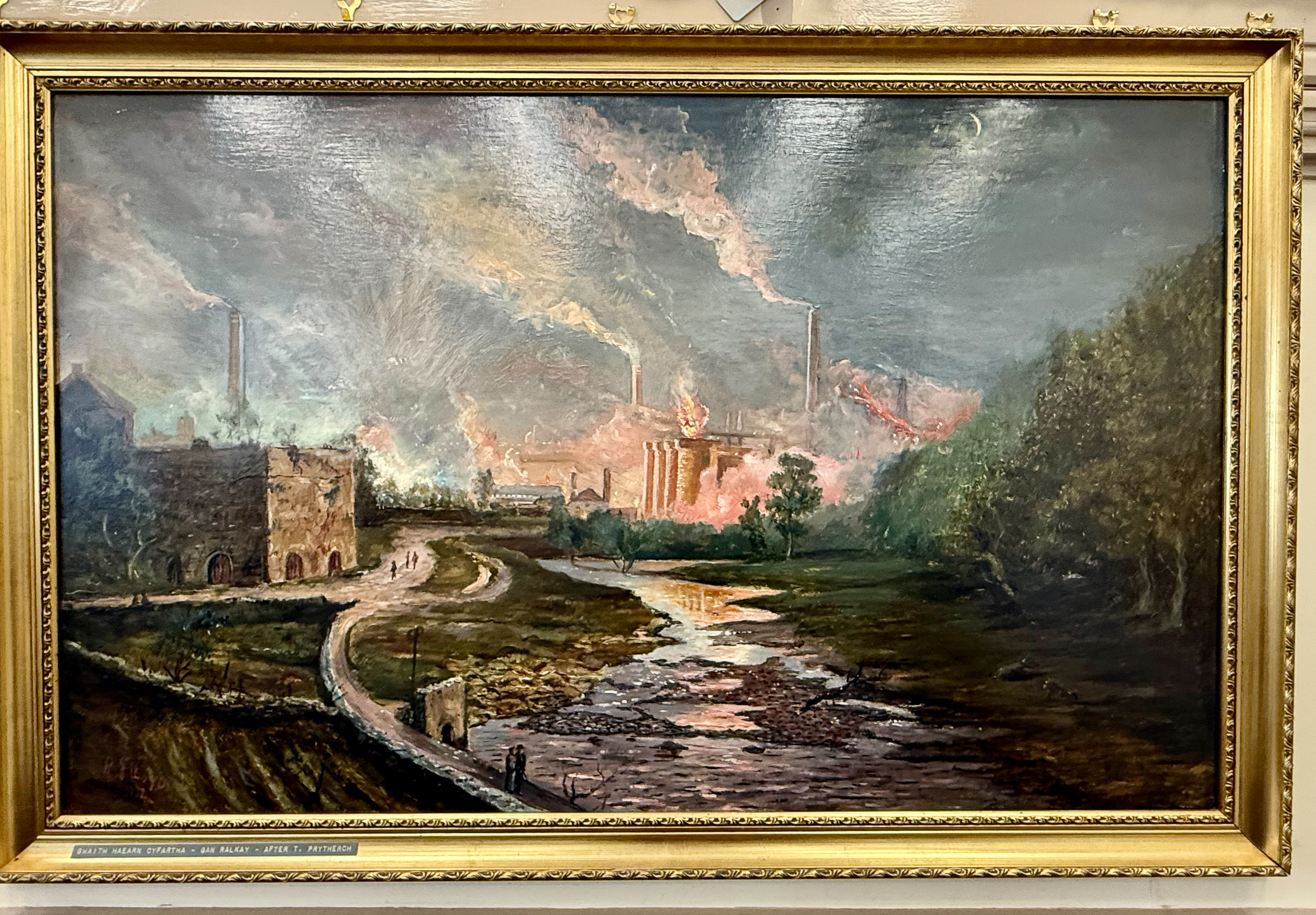
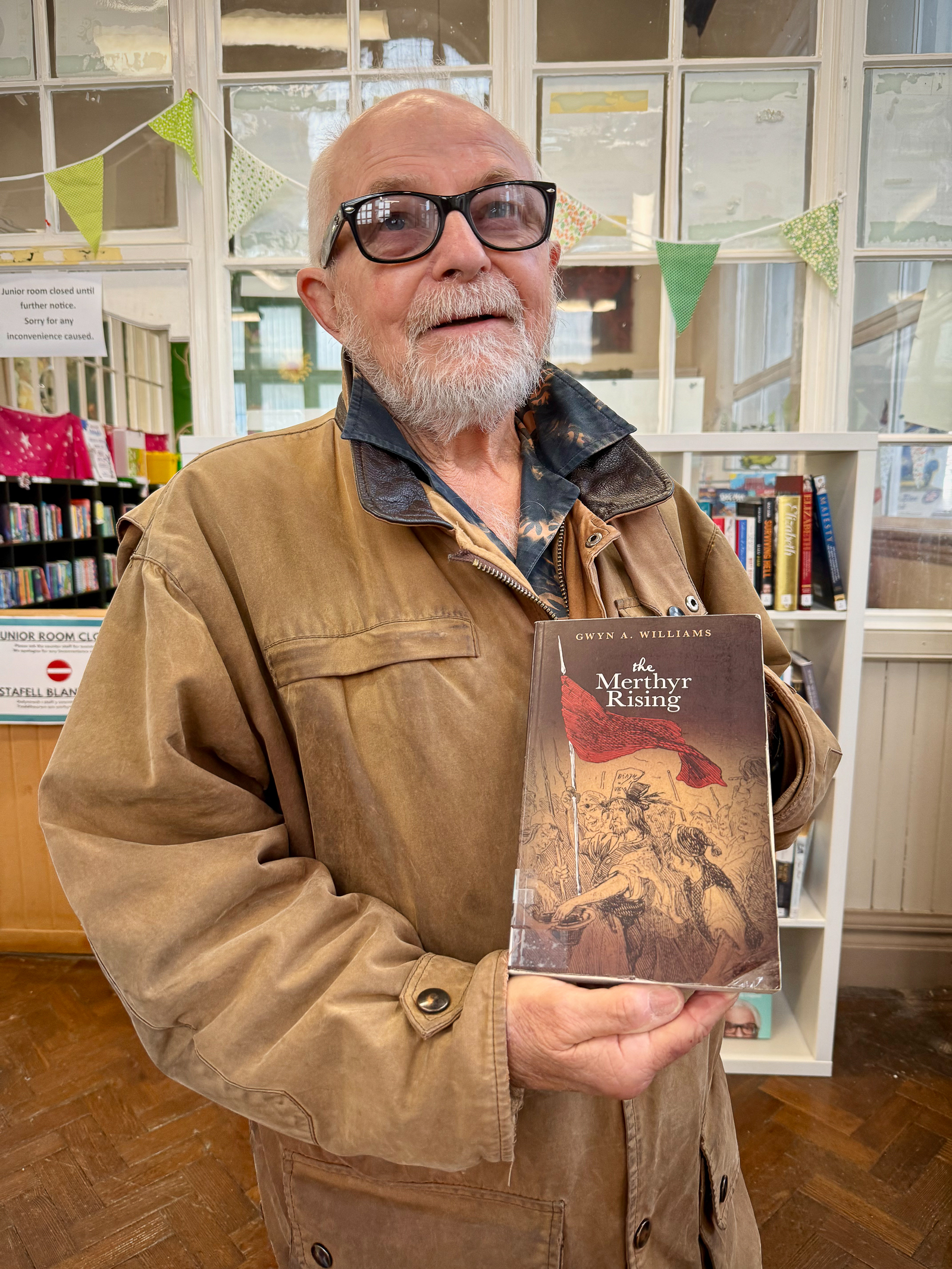
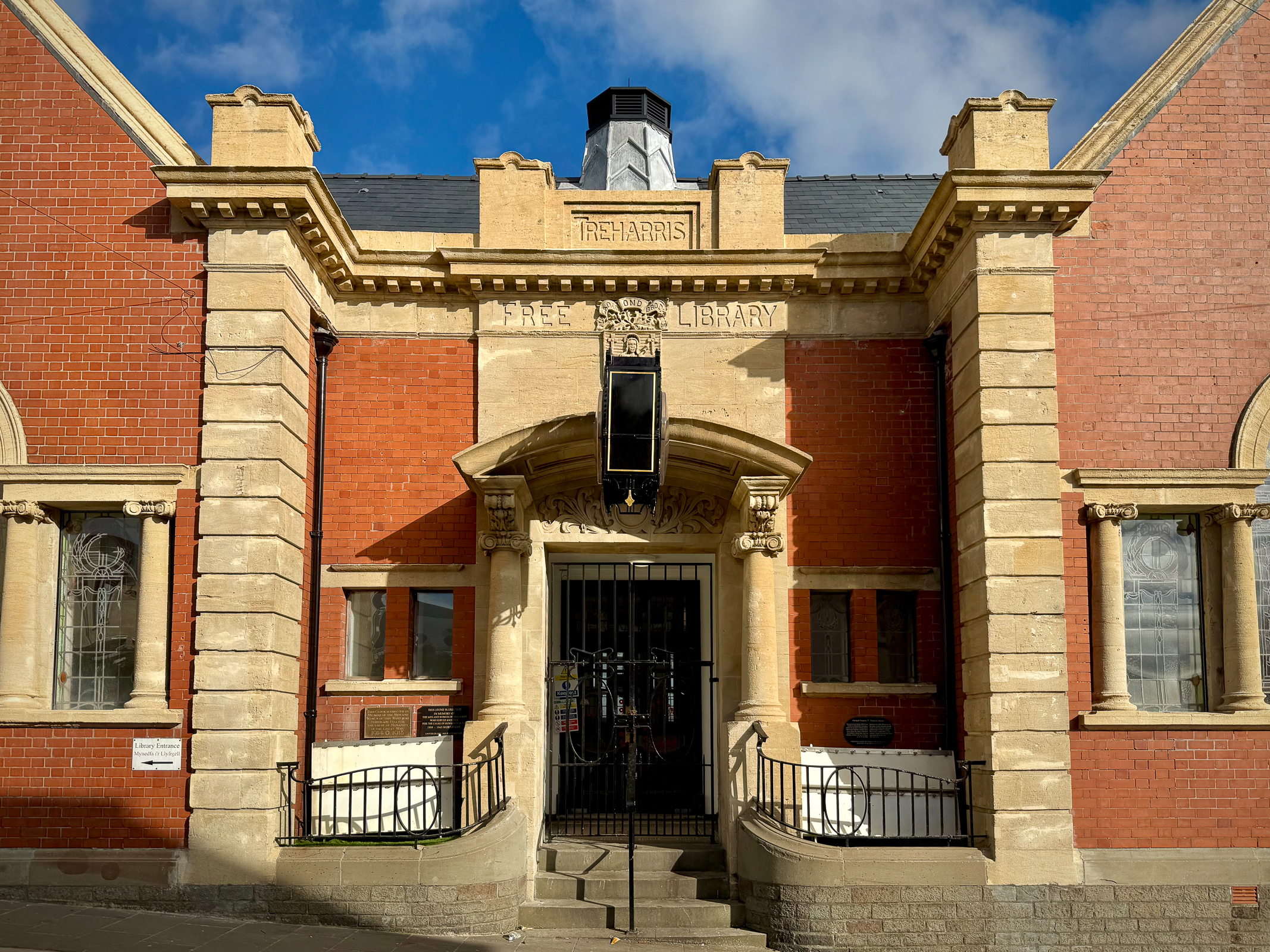
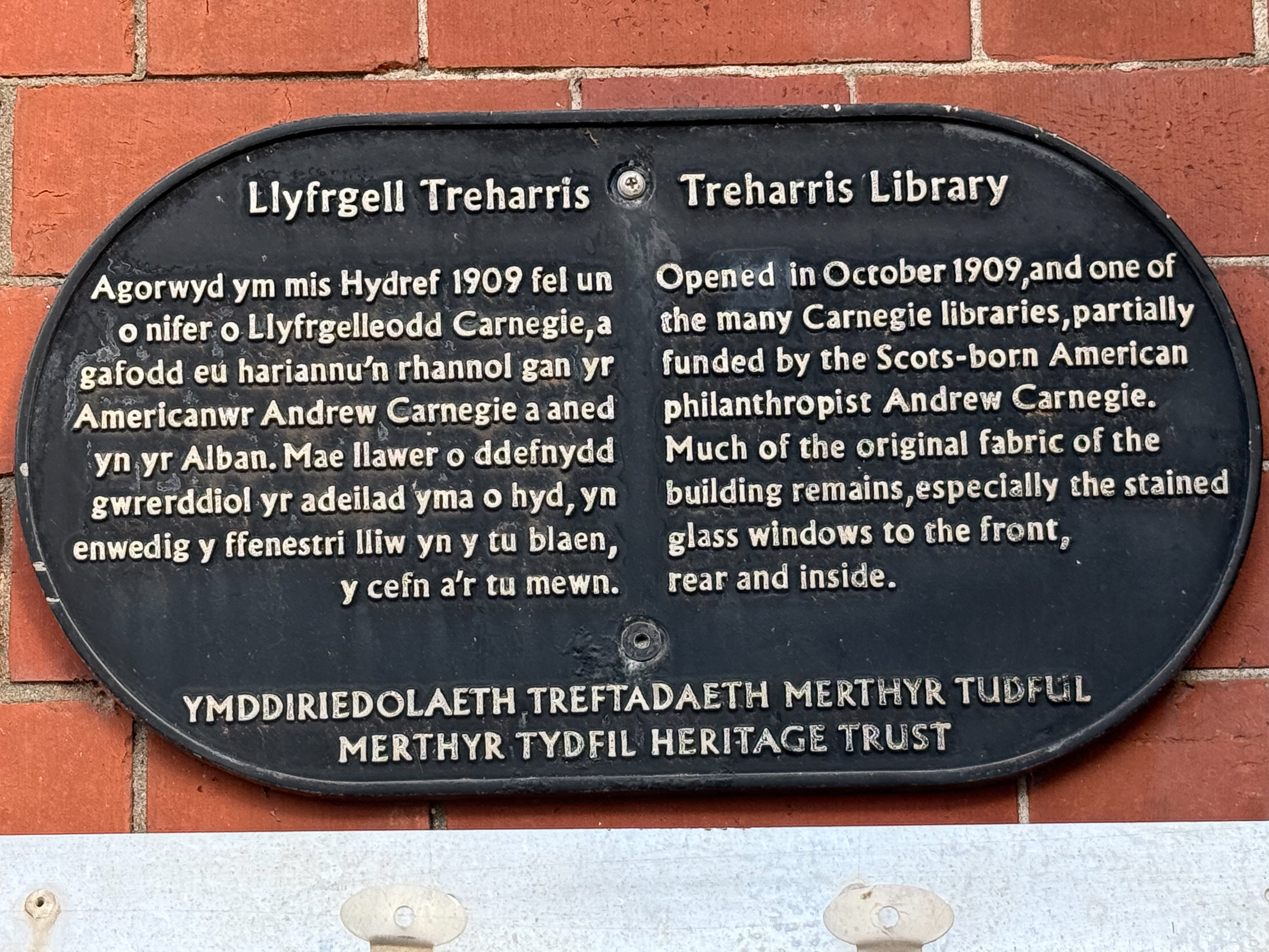
Our interest in this post-industrial area was, of course, the story of its library. The new library was built on land donated by the local ironworks in Dowlais neighborhood and opened “with a flourish and a key made of gold” in 1907 with funding by Andrew Carnegie. The neighborhood today was a little rough, and the library reflected the faded beauty of its former glory days. Inside were many paintings of the area’s industrial past. Some romanticized the history, and others suggested a worker’s hellhole.  One writer in 1850 while visiting Merthyr observed “It is like a vision of Hell, and will never leave me, that of those poor creatures broiling, all in sweat and dirt, amid their furnaces, pits, and rolling mills.” We later learned that in the epic series The Lord of the Rings, J.R.R. Tolkien, who lived in Wales, used the image of industrial Merthyr for the place he called Mordor. Even the names are similar. I had a fascinating conversation with a local man who was a socialist and very aware of the struggles of the workers in Merthyr. He suggested that I learn more by reading a book called Merthyr Rising which describes one of the world’s first industrial worker’s resistance to the inhumane working conditions of the newly emerging Industrial Revolution. He was a delight, and I will certainly read that book when we get back. We finished up the day photographing another Carnegie funded library in the struggling former-industrial town of Treharris. This one was undergoing a beautiful restoration and will reopen soon.

The Welsh capital of Cardiff was a delight. It feels like a very comfortable place to live, and we were impressed by the sparkling culture and cuisine. But like in San Francisco, the booming economy of the city is also leading to increasing income inequality and an unaffordable cost of living for many people here. Like the province of Quebec in Canada, Wales is proudly and thoroughly bi-lingual.

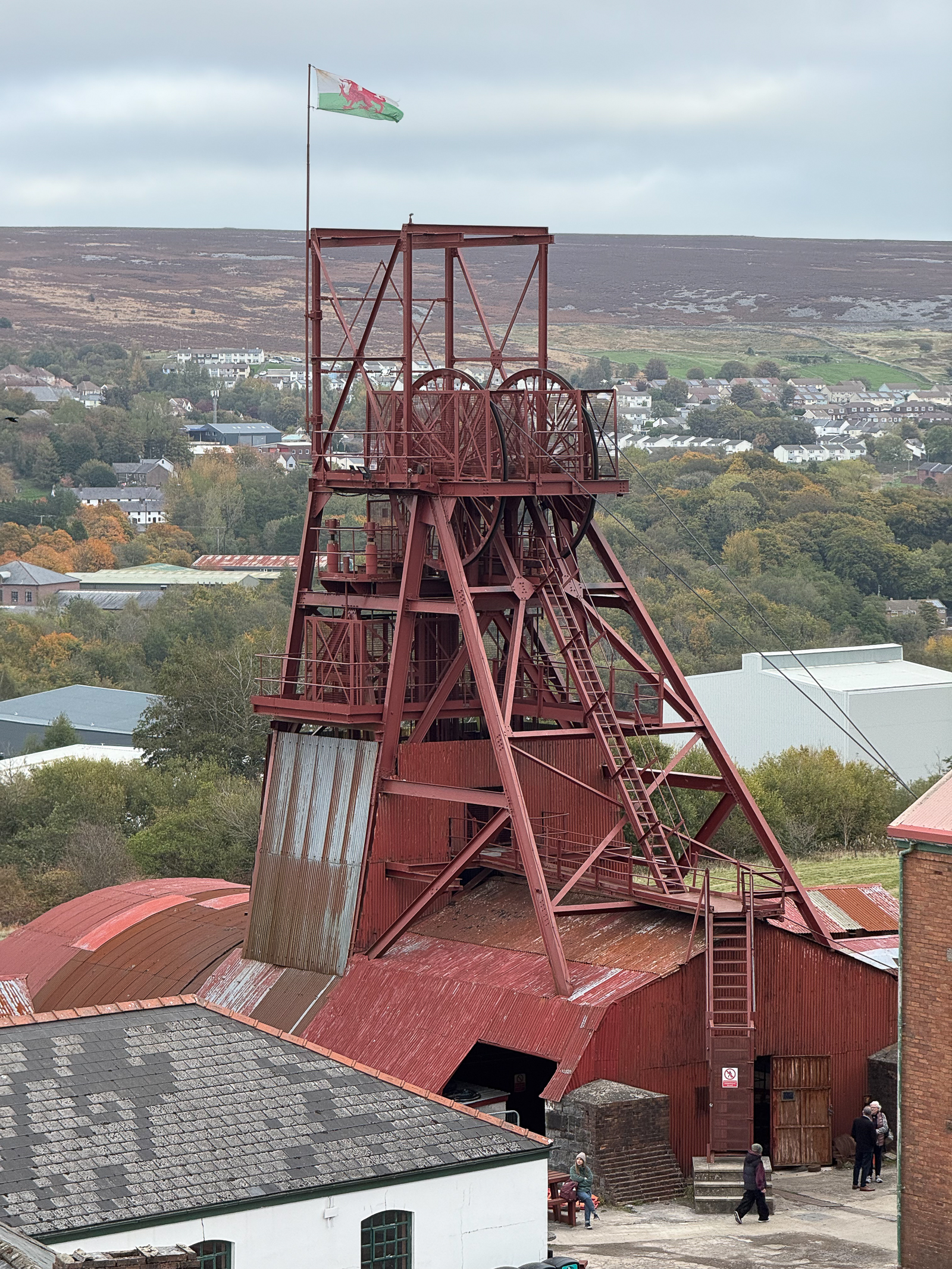
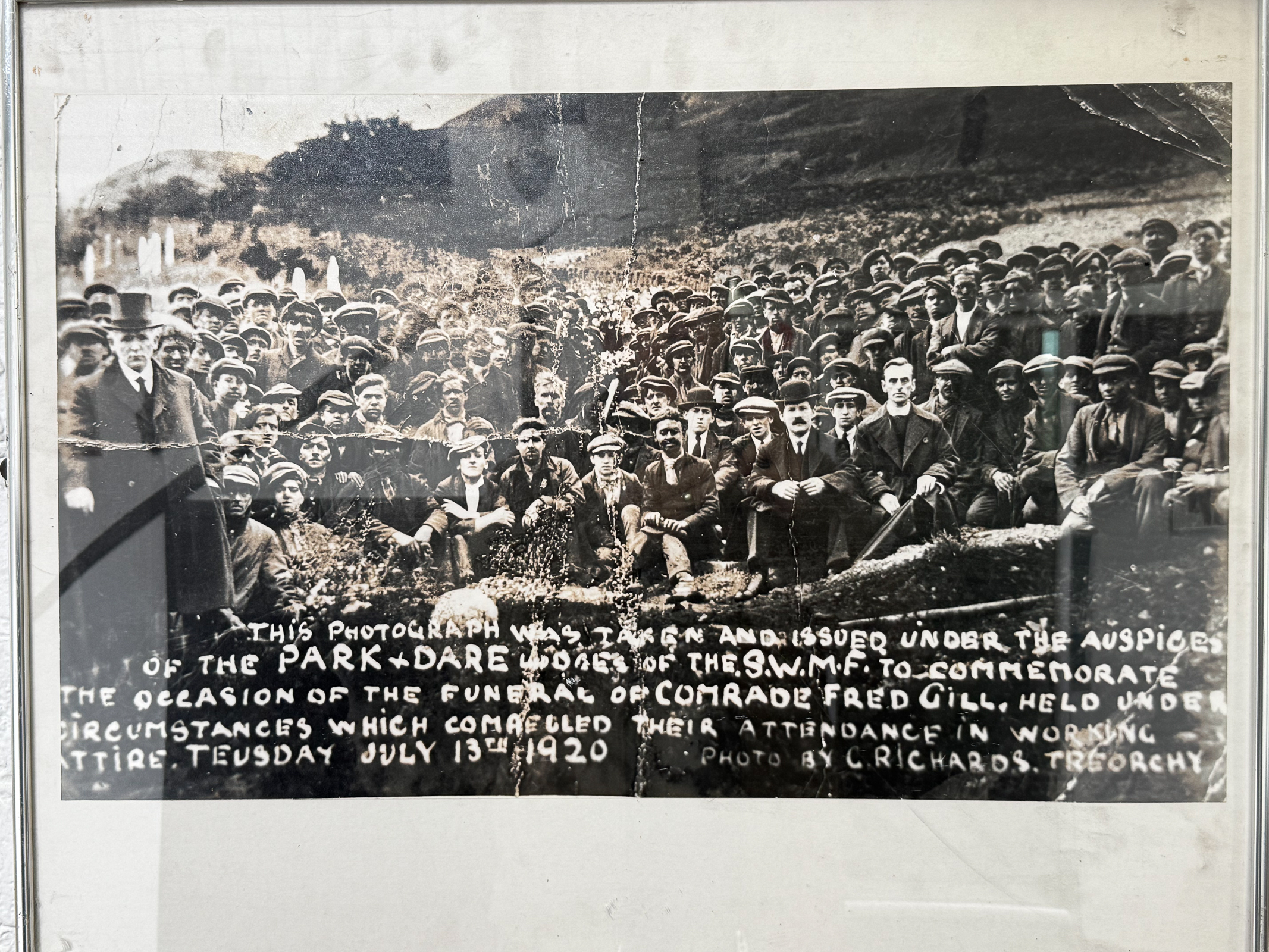
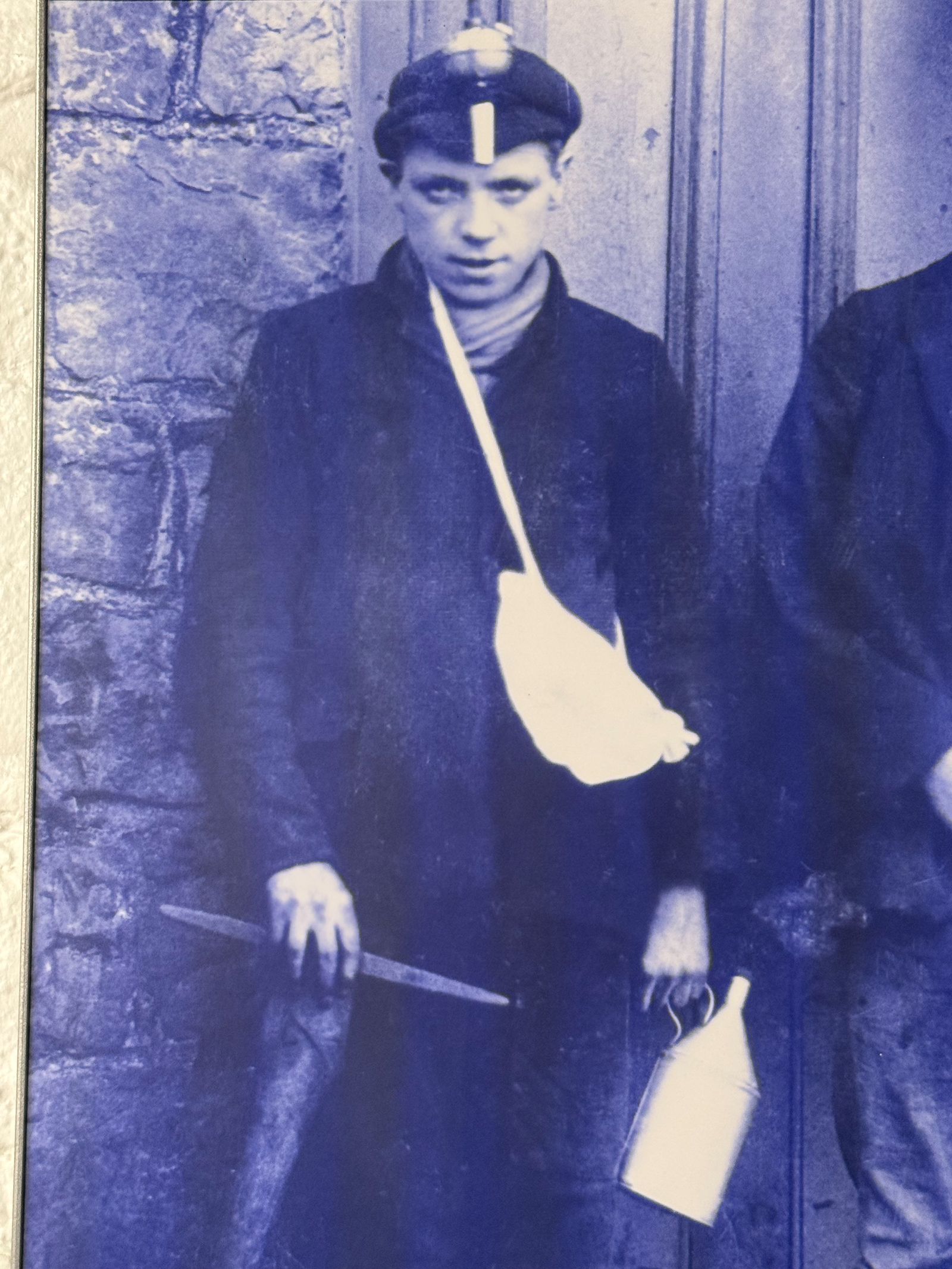
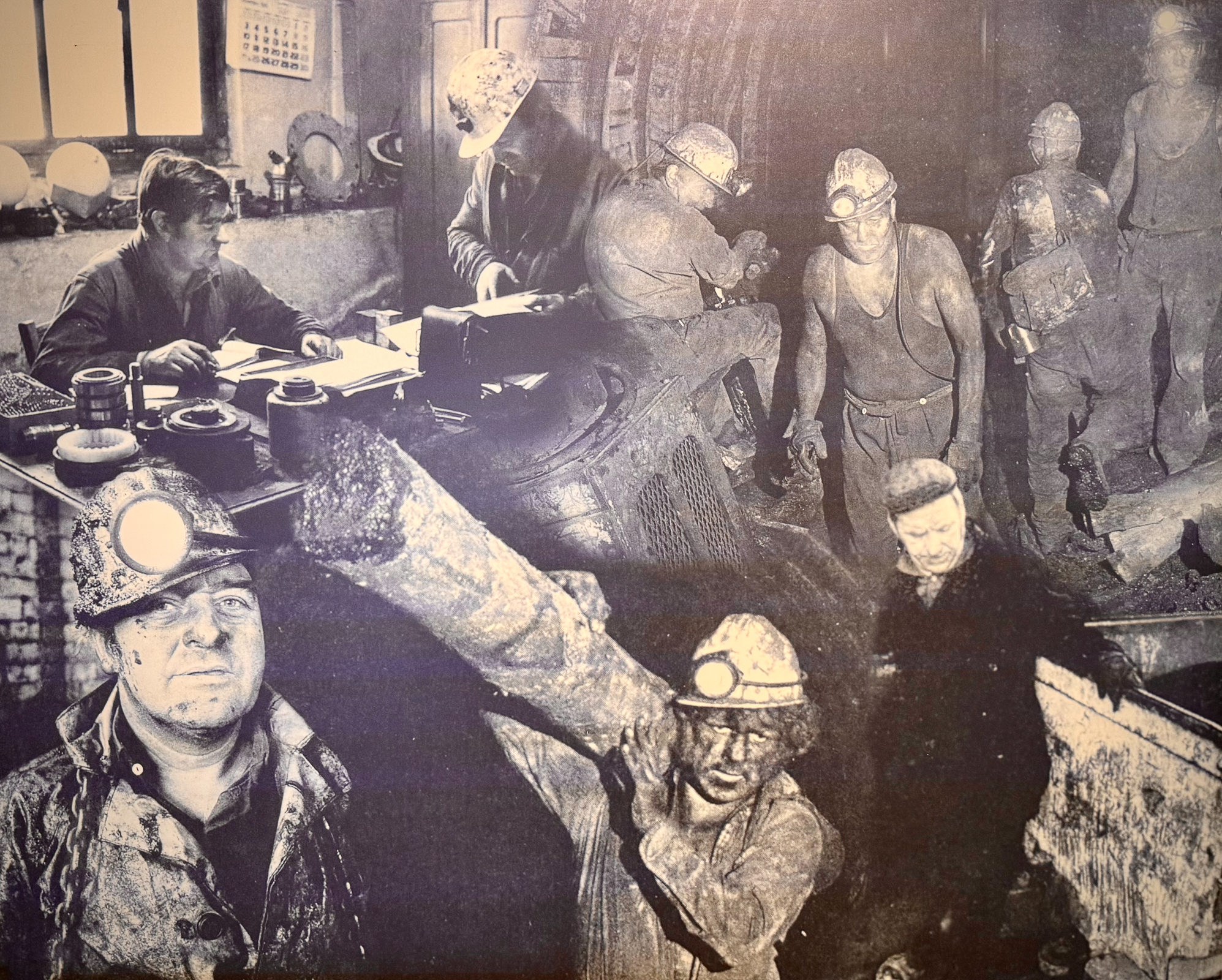
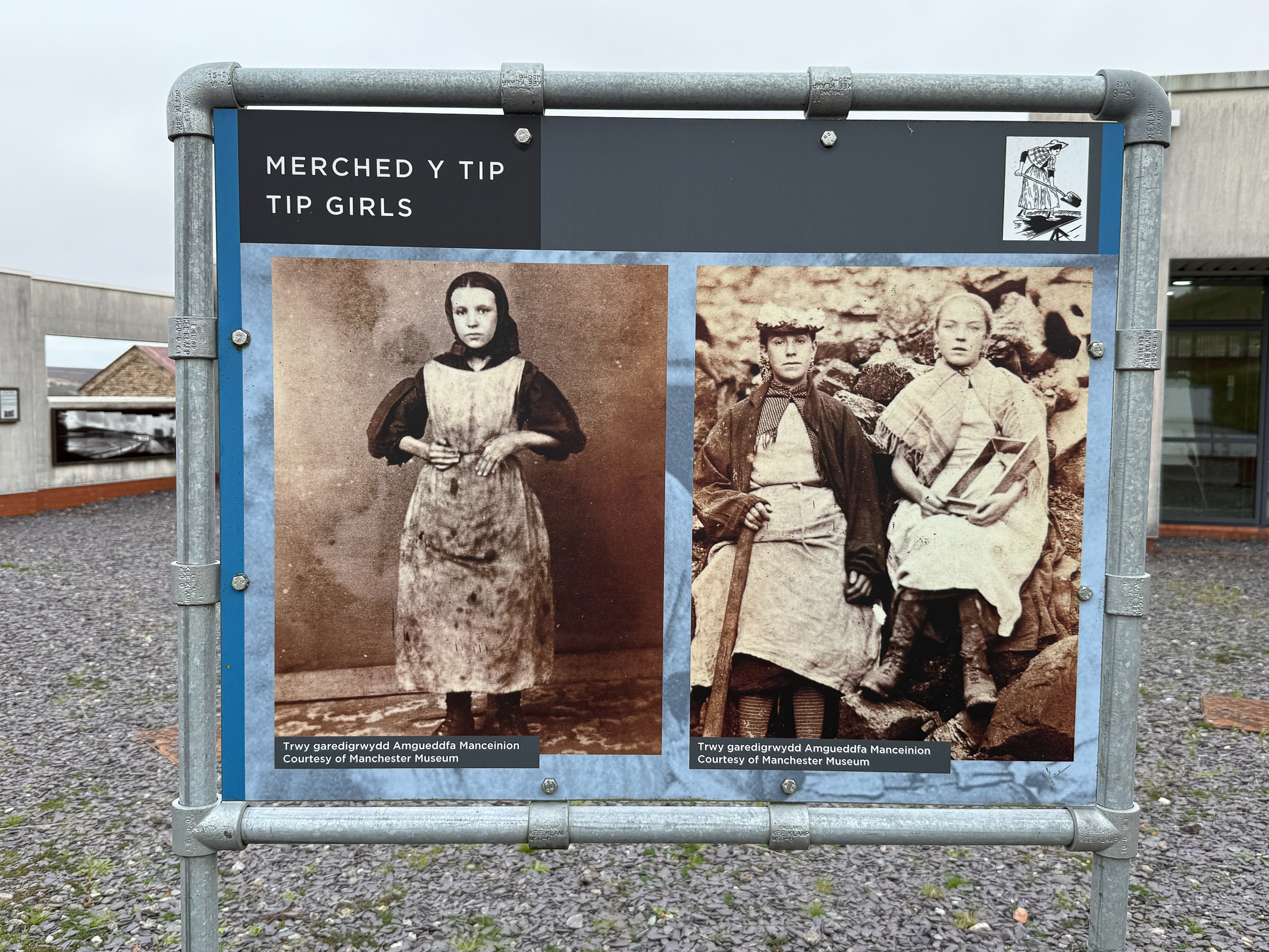
The next day we went to the Big Pit National Coal Museum. Set in the Blaenafon Industrial Landscape, it is a UNESCO World Heritage Site and is considered one of the best mining museums in the world. It is one of the oldest and most important of all the large-scale industrial coal mining developments in South Wales and one of the last working coal mines in the area. The history of this place was hard and came alive through the wonderful use of historical photographs posted throughout the tour. We did the hour-long underground tour with an ex-miner and a group of other interested folks. There is no better way of understanding the claustrophobic world of a miner than being in a mine when they turn out lights and you stare into blackness. This well-formed museum touched me with its good use of history, photography, illustrations, installations and art. Plus, I will never forget the visceral tour of the mine.

Returning to Cardiff for our final night, we dined at the Botanist. There are a series of these throughout the UK and the last one we went to was in Birmingham, England. It is loosely based on a theme of early 19th century woman’s illustrations for botanical texts. The food was delicious and both places were fascinating. The next morning, we bought some of the famous Welsh cakes that were originally the food for miners but now are slightly sweet delights needed to continue a long library road trip.

Next stop: Bath and beyond…

1 Comment

Filed under Uncategorized

THE SOUTHWEST – Hereford and Hay-on-Wye

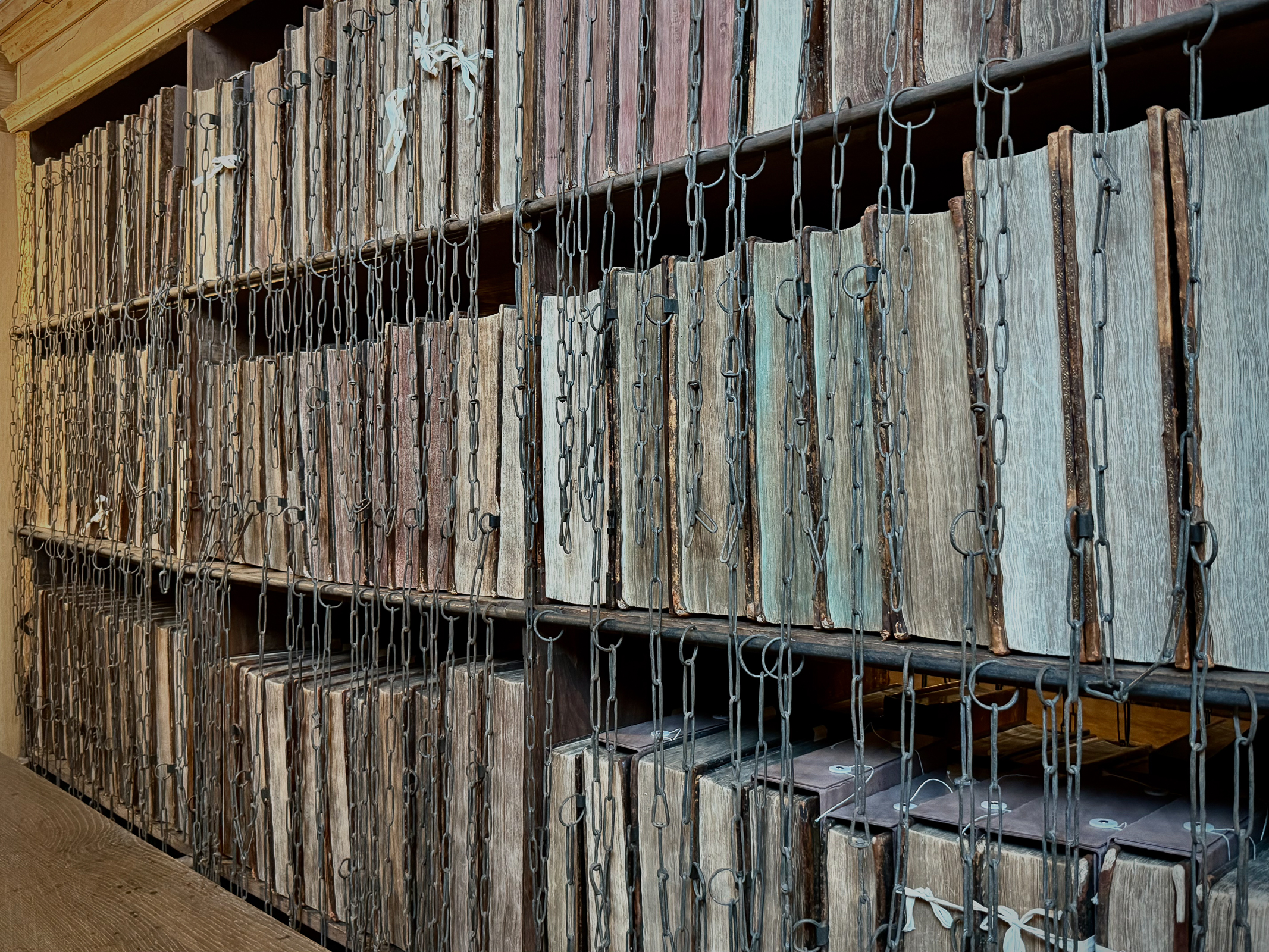
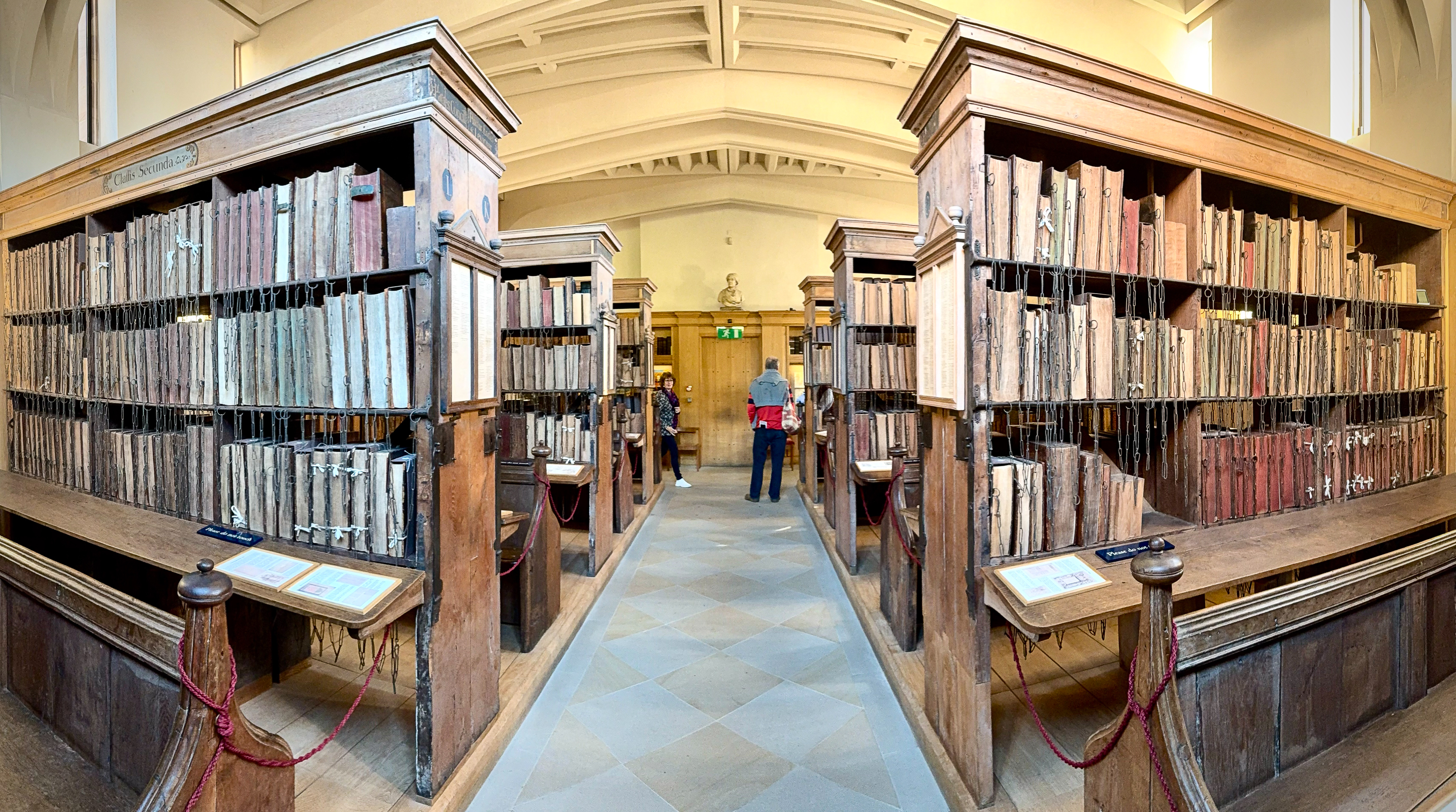
Our longest drive of the trip was from York in the central northeastern part of England to Hereford in Britian’s southwest near Wales. In the Hereford Cathedral Chained Library, we visited the largest surviving chained library in the world. In the early 17th century, collections like this could be found in libraries and cathedrals, but this is the only one to survive and still to be chained. The chaining of books was the most effective security system in European libraries from the Middle Ages to the 18th century. The library contains about 1,500 books, dating from around 800 AD to the early 19th century, including over 200 medieval manuscript books. The books are still examined today by scholars who come from all over the world to study them.

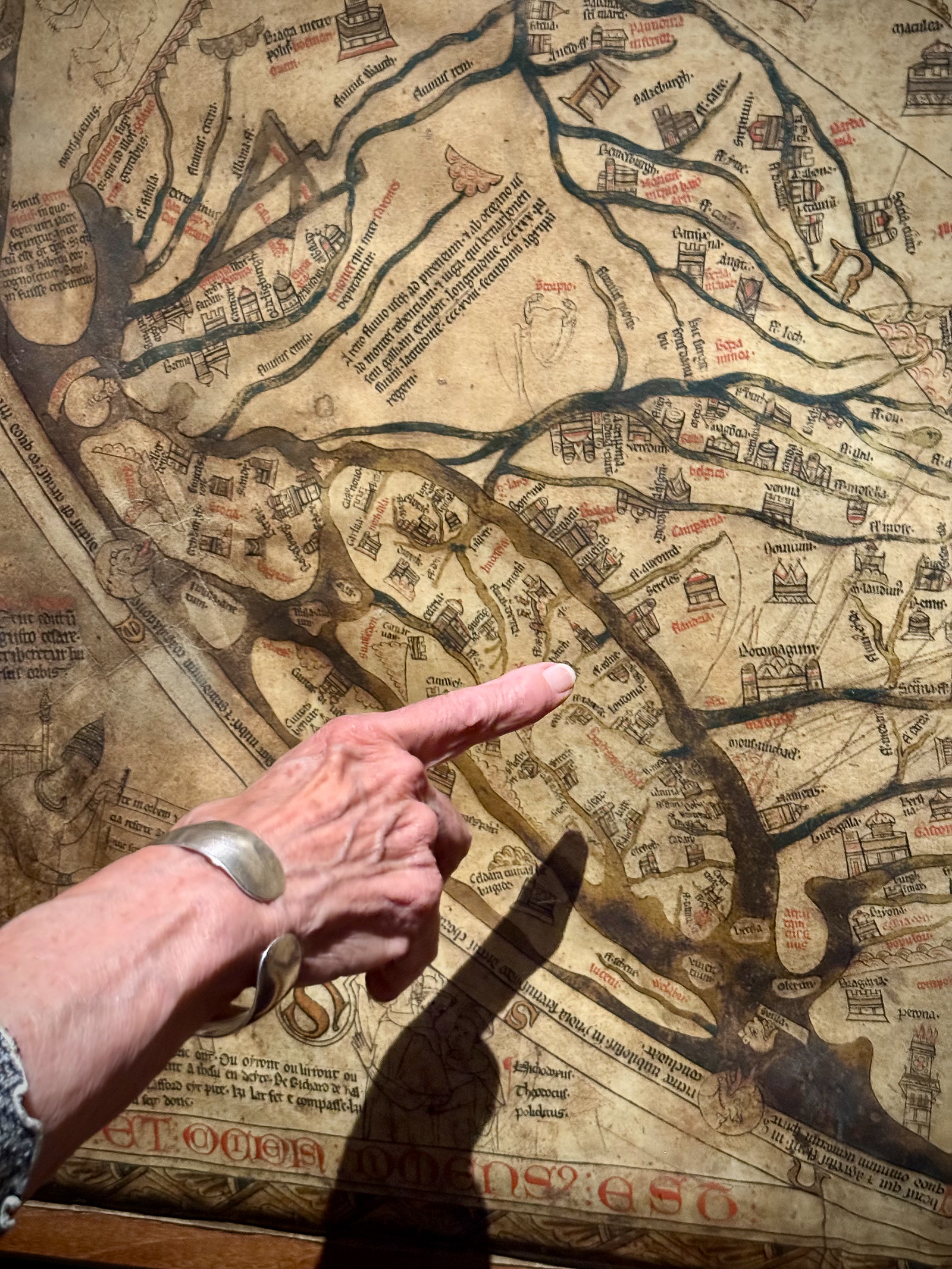
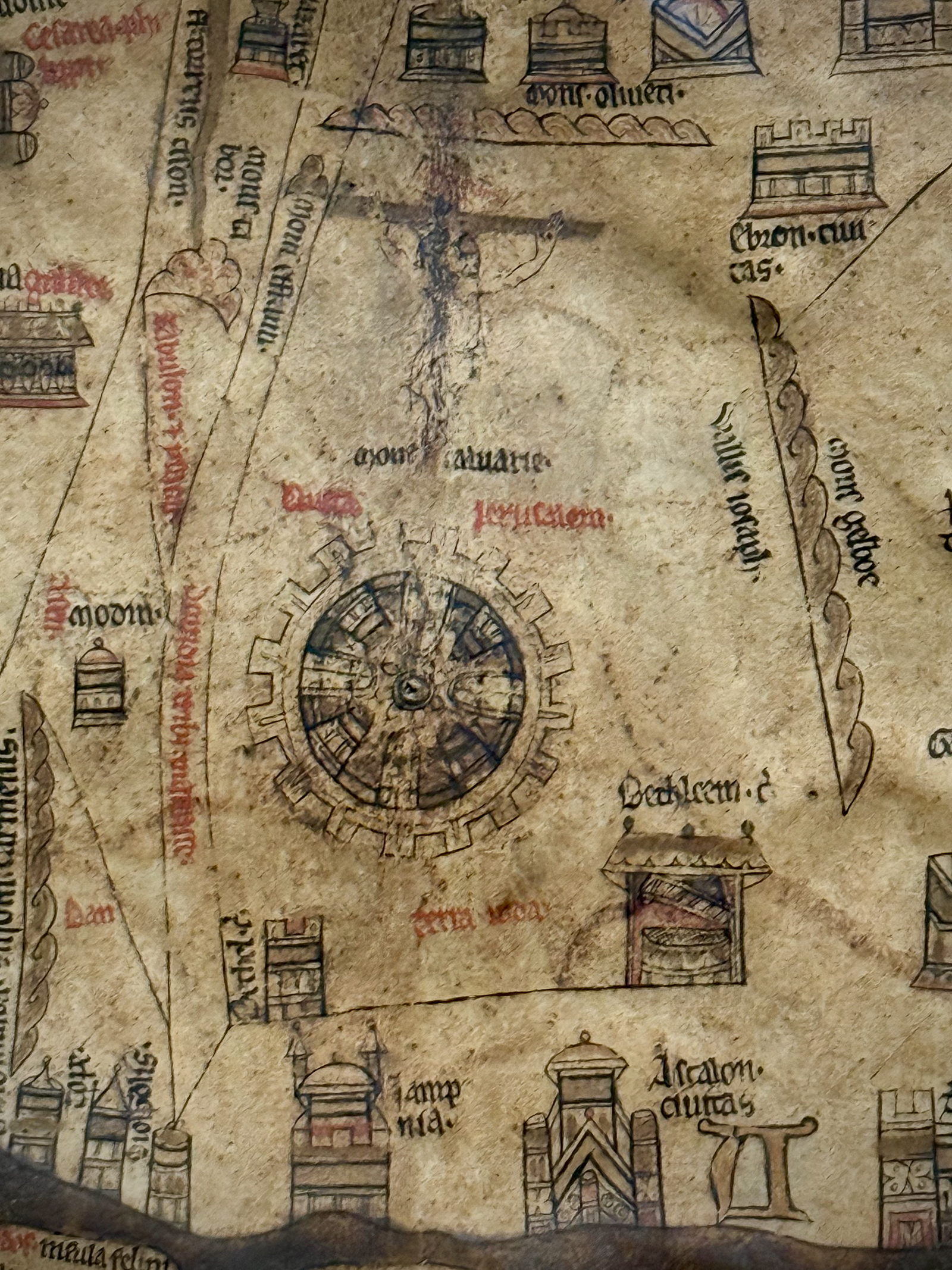
The Hereford Mappa Mundi is unique in Britian’s heritage, an outstanding treasure of the medieval world. It records how 13th century scholars interpreted the world in spiritual as well as geographical terms. The Mappa Mundi is drawn on a single sheet of vellum (calf skin) with the city of Jerusalem located on the map in the center of the world. Superimposed on to the continents are drawings of the history of humanity and the marvels of the natural world. It is considered one of the most important and celebrated medieval maps in any form. We were lucky to get a wonderful introduction to the history of the map by a well-informed, retired man who volunteers for the church.

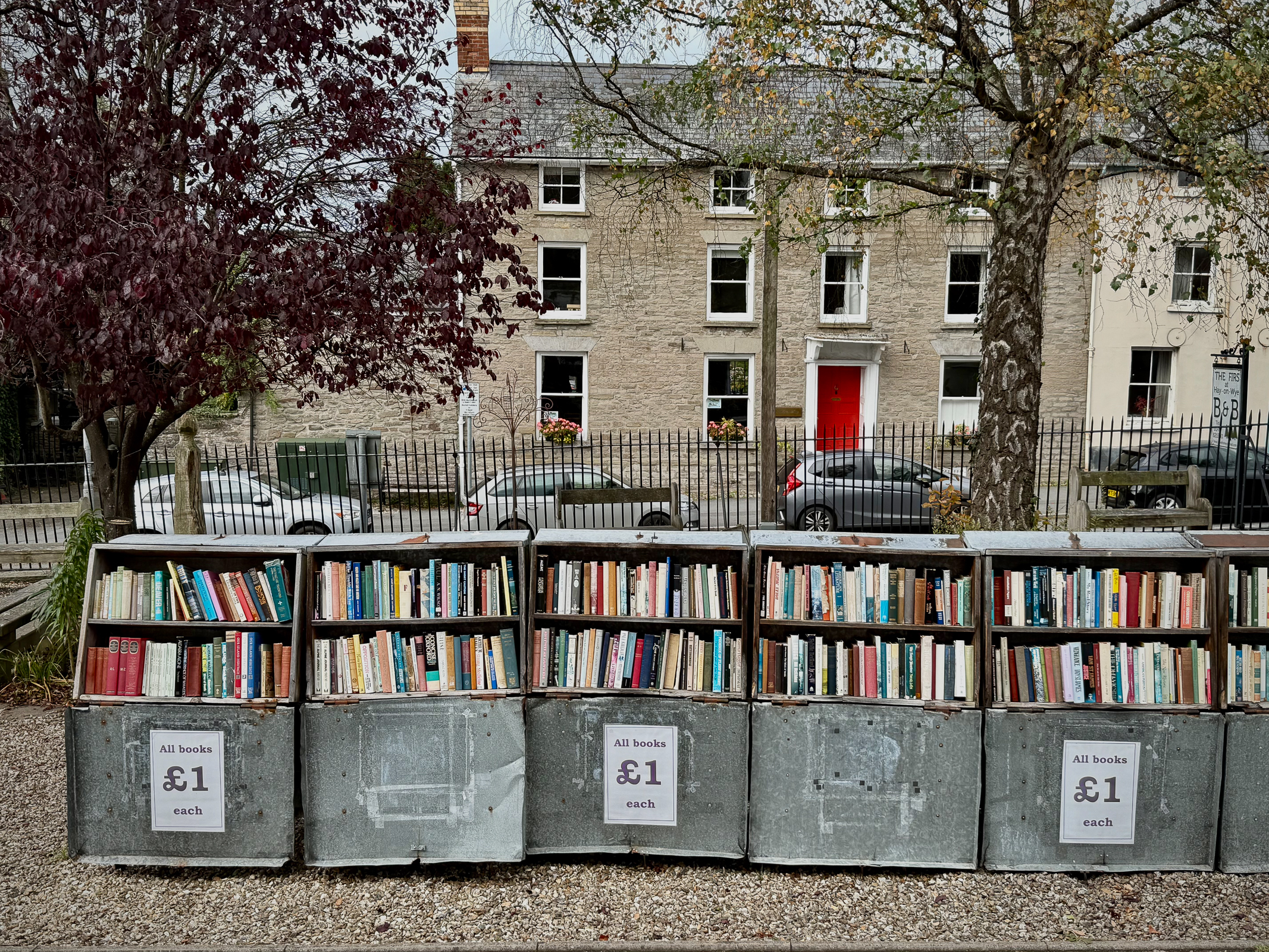
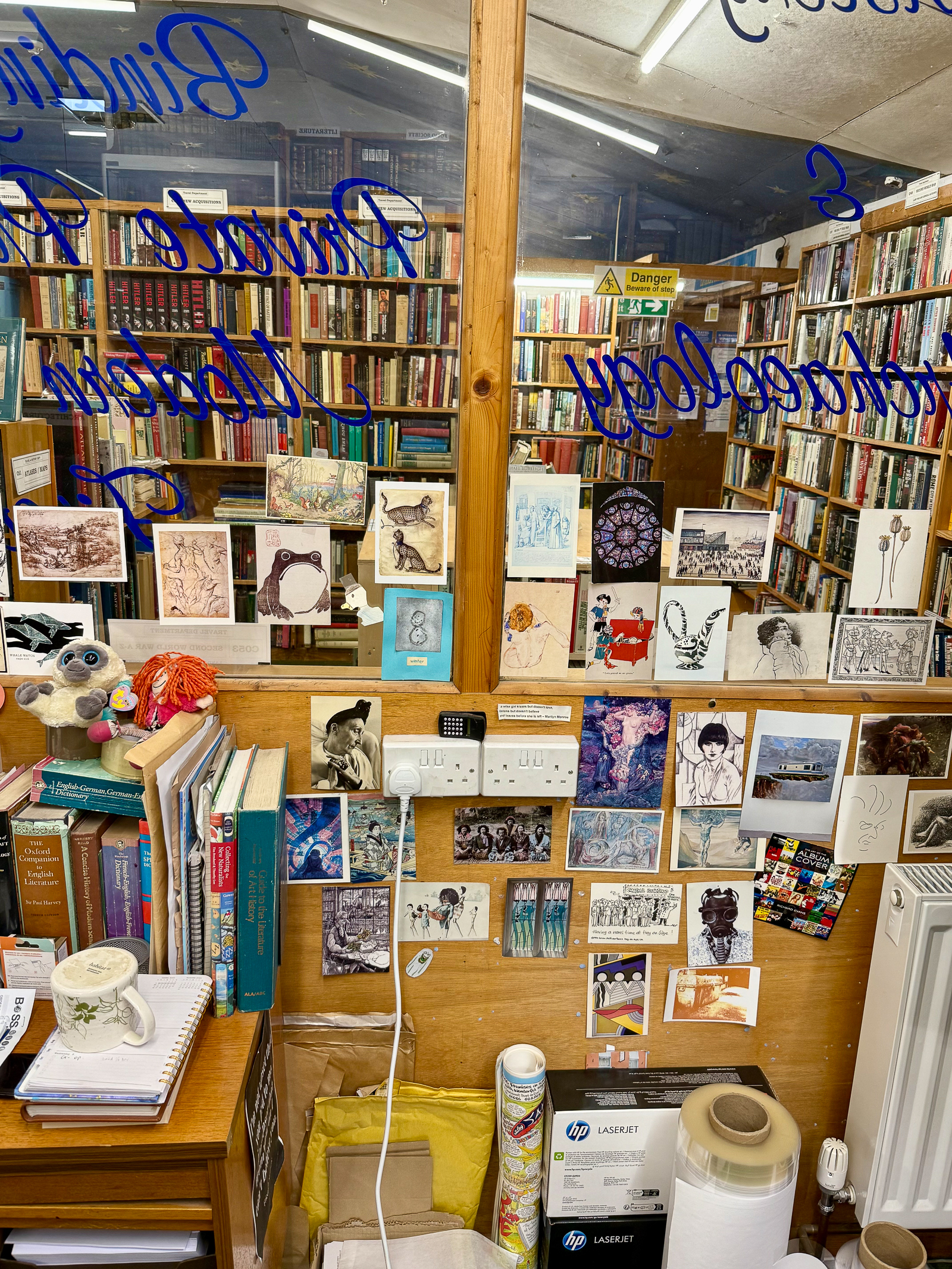
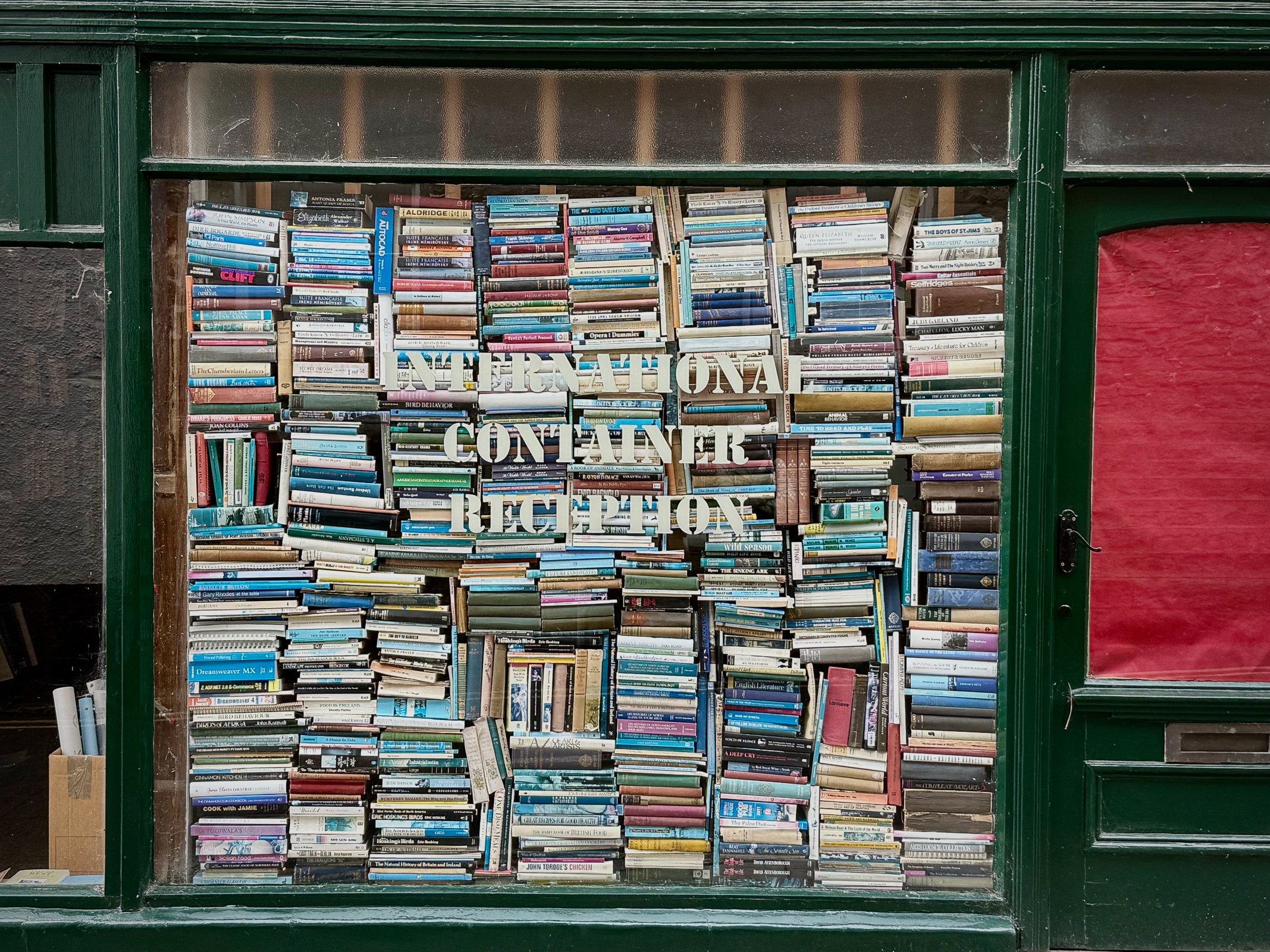
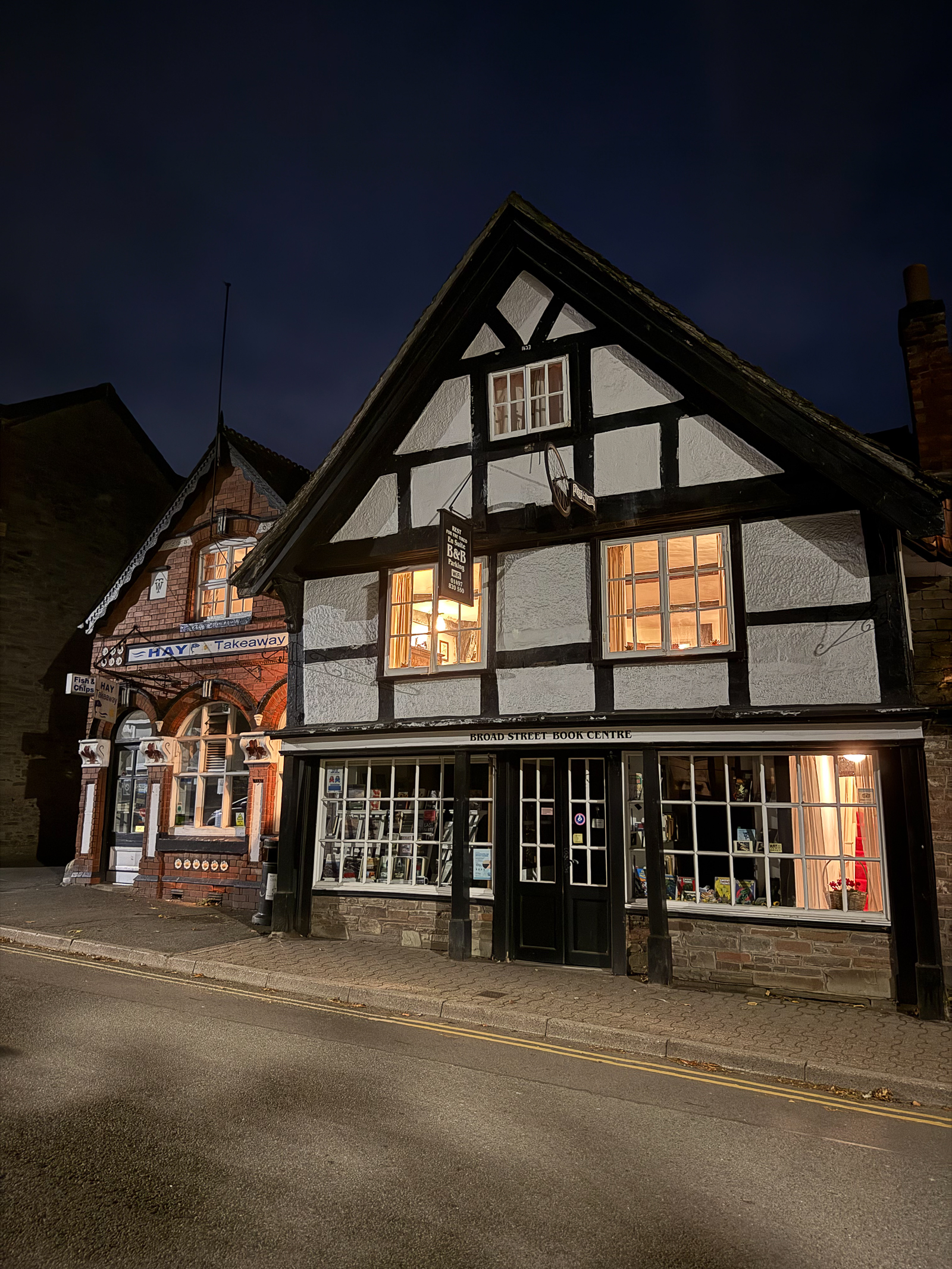
Hay-on-Wye is a unique place located in Wales on the border with England. With over twenty bookshops, it is often described as a “town of books” and is the site of internationally acclaimed literary celebration called the Hay Festival. Bill Clinton has described the festival as “The Woodstock of the mind” and our friend, the writer Rebecca Solnit, has spoken there several times. It also hosts a philosophy and music festival called How the Light Gets In which aims to get philosophy out of the academy and into people’s lives. It even had a self-proclaimed “King of Hay” bibliophile Ricard Booth who in 1977 declared Hay-on-Wye to be an “independent kingdom” with himself as monarch.

The 11th century origins of Hay-on-Wye began after the Norman invasion of Wales. Today it keeps its economy going through bravado, book selling, and tourism. Many of the old buildings have been beautifully preserved with great effort to keep some of the architectural heritage alive. The area around Hay is almost entirely devoted to agriculture.

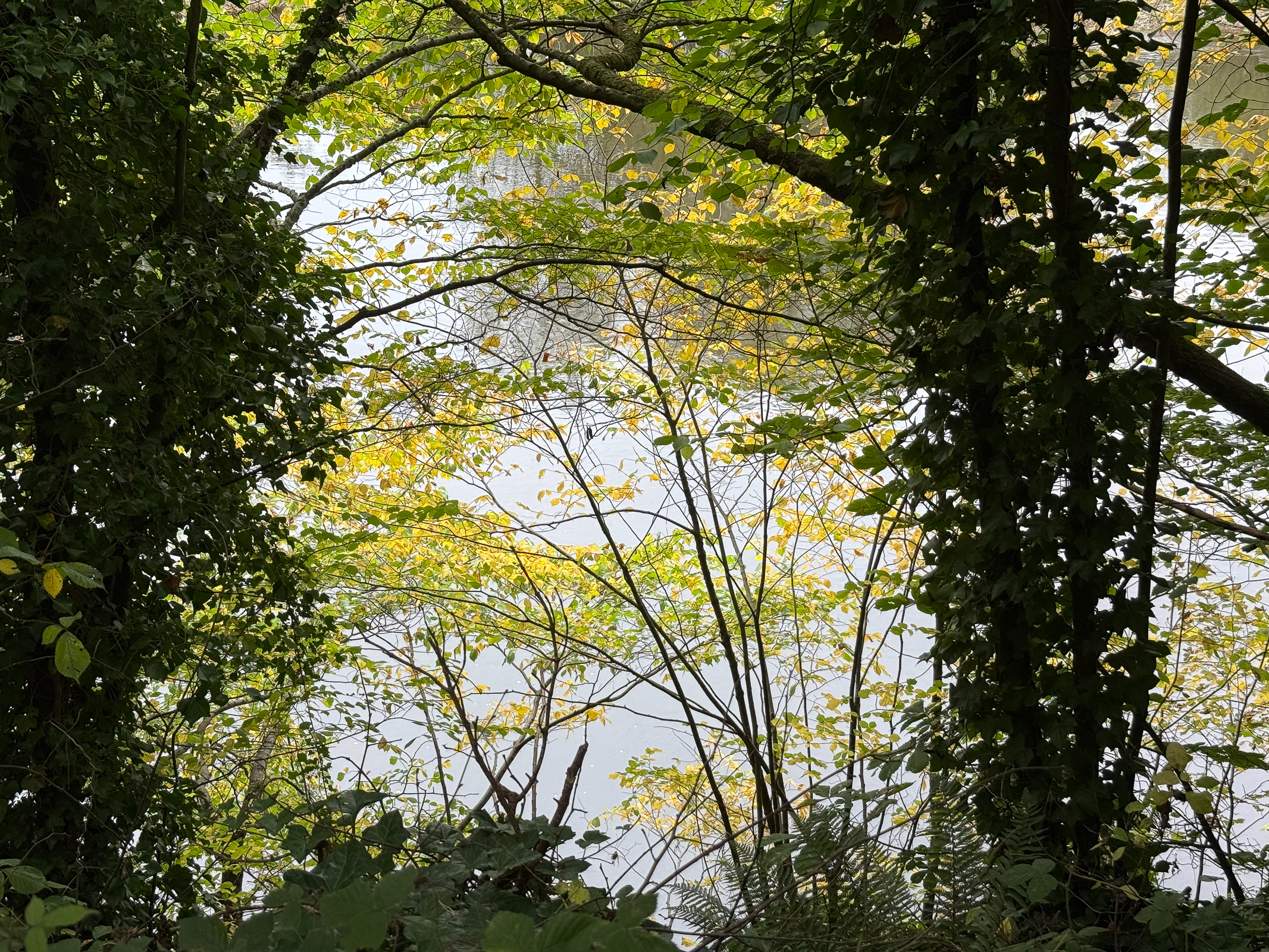
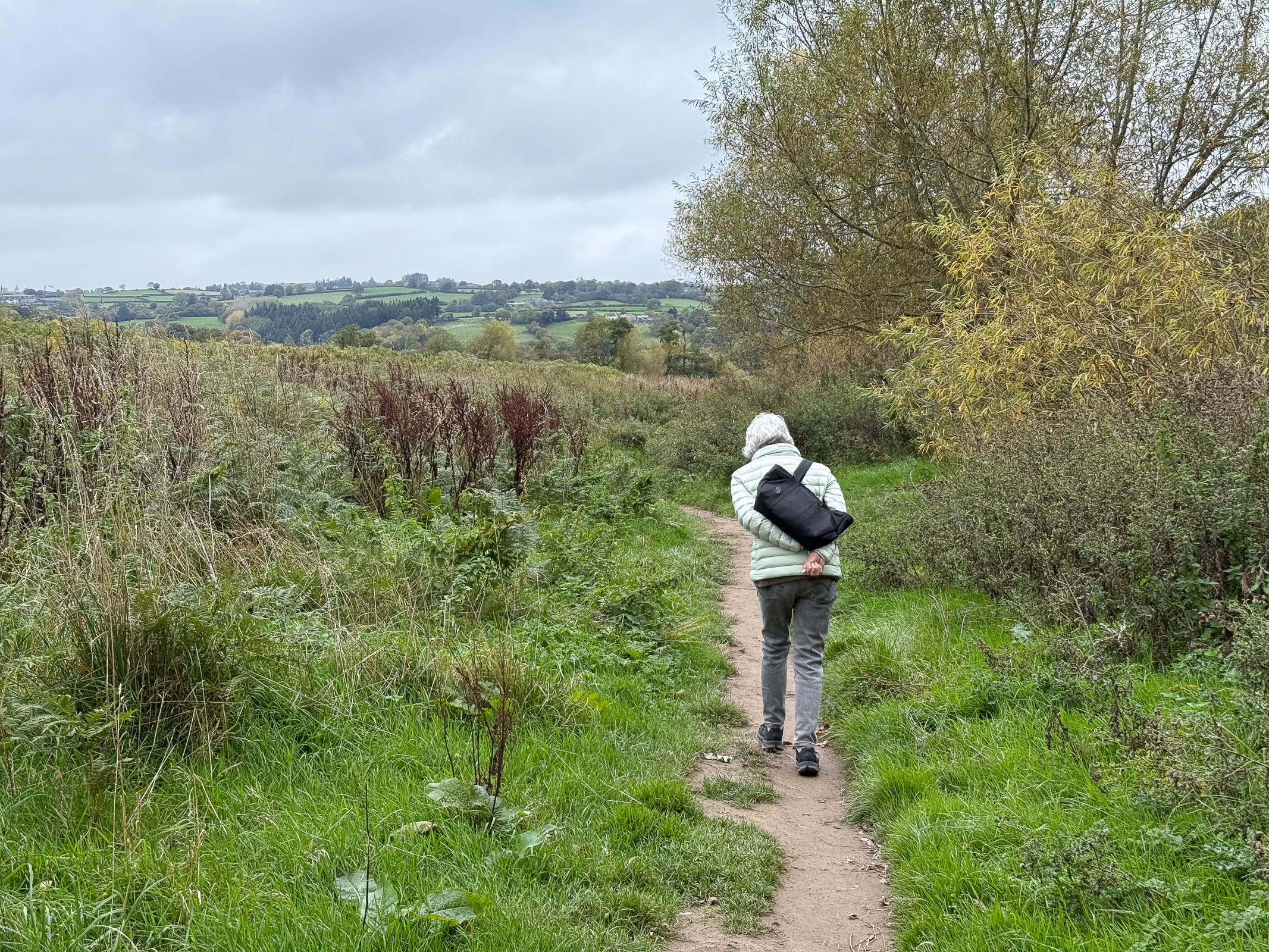
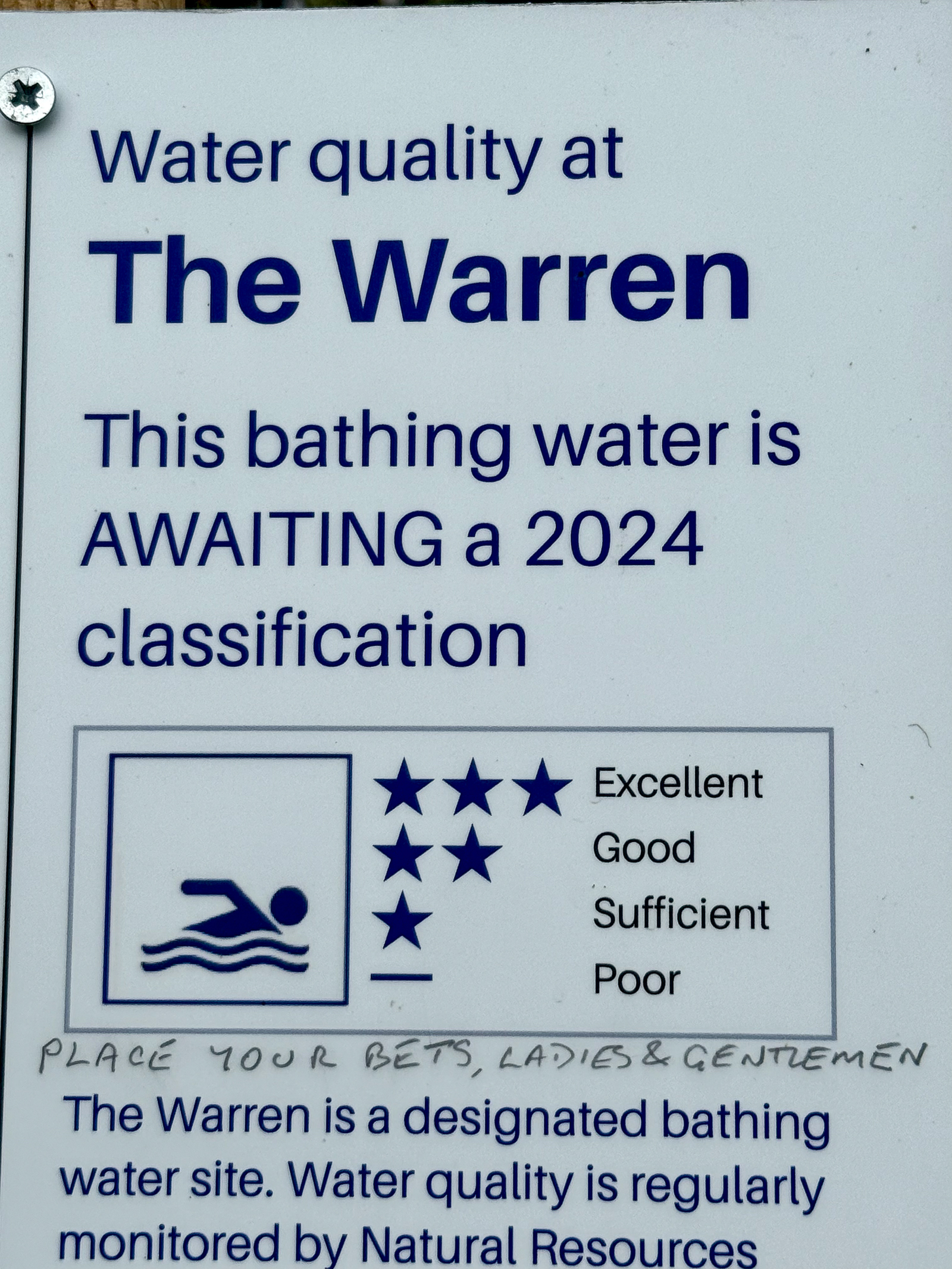
We decided to take a walk along the beautiful River Wye River Walk (Llwyer yr Afon). This valley and river are considered one of the most beautiful spots in the UK and many people come here to swim and kayak. Some of the best salmon fishing in the UK is here in the River Wye. However, as we walked along this famous river to a beach called the Warren, we gradually became aware that something was wrong in this national treasure. The largest environmental lawsuit in the history of the UK has been recently filed to protect the River Wye and other rivers in the region. The lawsuit is against major corporate poultry producers including subsidiaries of the international pollution bad-boy Cargill, Inc. Big corporate ag pollution is also a major problem in my childhood home of the Central Valley in California. The San Joaquin River is considered one of the worst polluted rivers in the United States, mostly due to agricultural waste runoff from the productive fields of the San Joaquin Valley. It was shocking to see the same tragedy of greedy concentrated wealth overwhelming the local agriculture and environment in the bucolic valley of the River Wye in Wales.

Next stop: Wales
 

2 Comments

Filed under Uncategorized

THE NORTHEAST – Newcastle-upon-Tyne and York

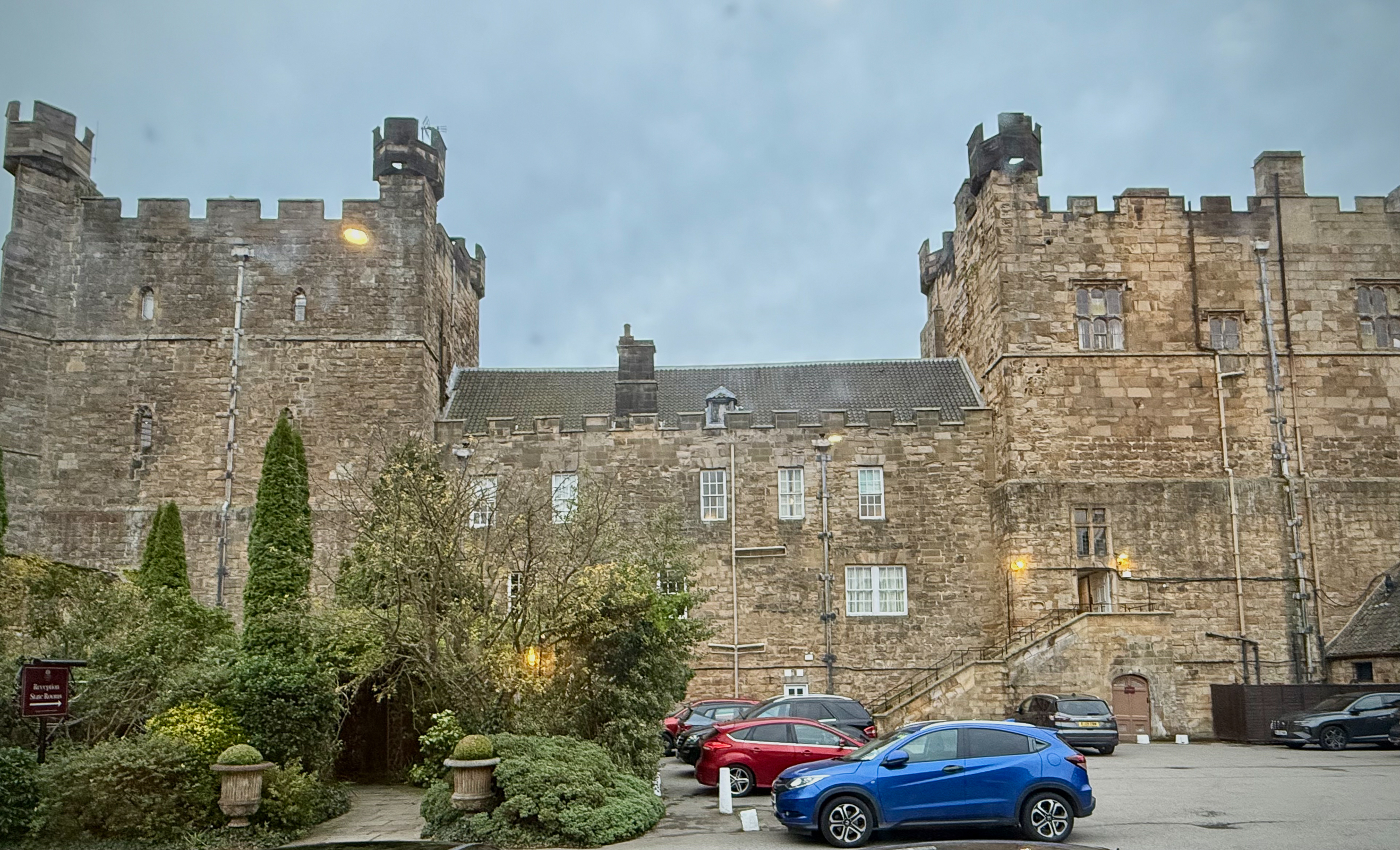
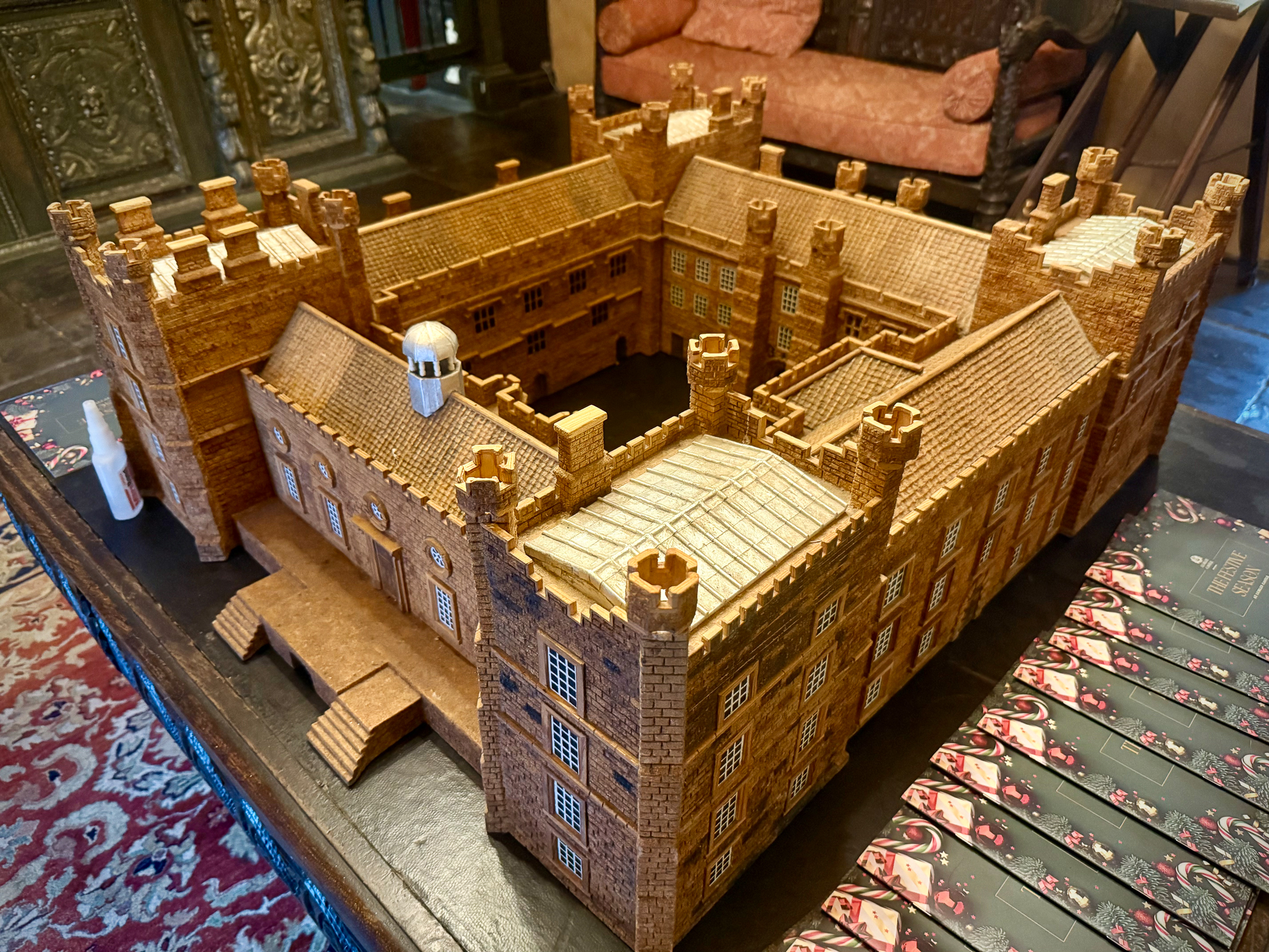
We arrived at a castle in the land of my ancestors between Newcastle-upon-Tyne and the city of Durham in England’s northeast. Lord Lumley built the castle in 1390, but he soon lost his head by backing the wrong side of a rebellion. It is now an impressive hotel where we stayed for two nights. We were blown away by the size and opulence of the place and needed a map to find our way to dinner. After dinner, we made our way to the appropriately named Library Bar for a drink where we sampled the Scottish whiskey and the very old, well preserved book collection. Why can’t all bars be like this?

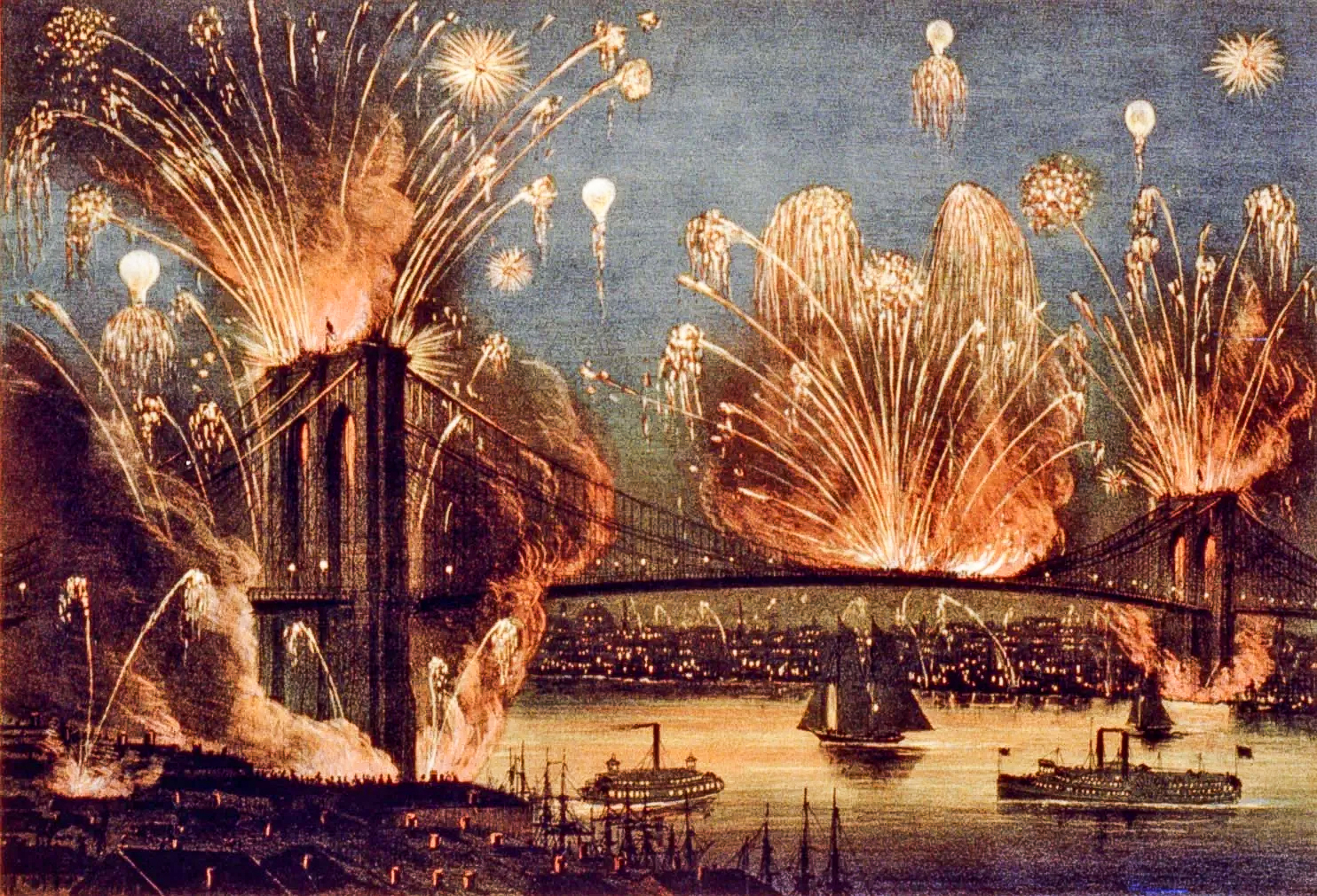
My grandfather emigrated from Newcastle with his family to New York City at the end of the 19th century. According to family lore, they arrived the day the Brooklyn Bridge opened. They were amazed at how friendly the Americans were welcoming them to their new home with fireworks, cheering people and tugboats spewing big arcs of water. At least that is how the legend goes…

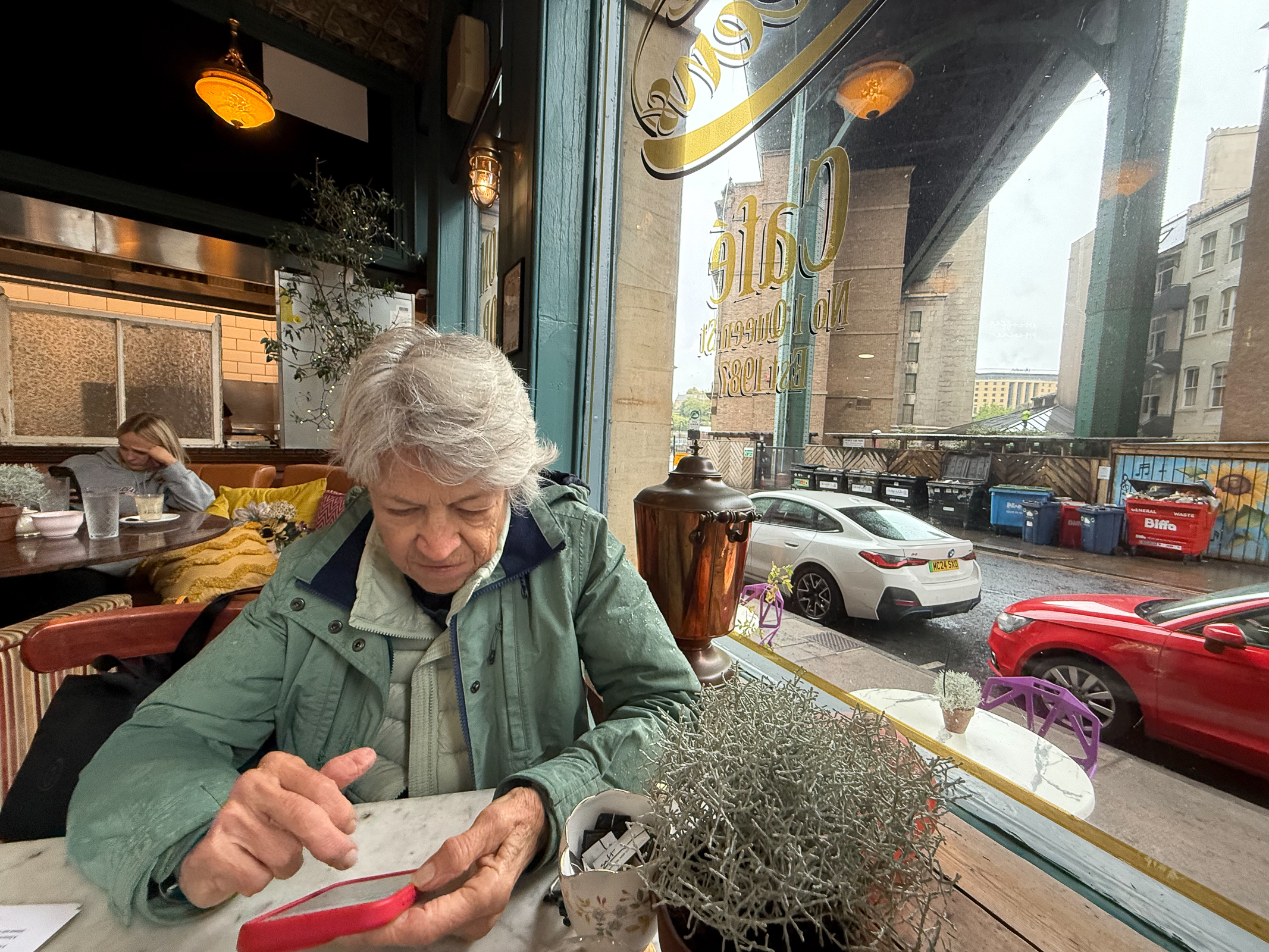
On our way to Newcastle, our cabbie was a wonderfully entertaining guy. But he turned out to be a big supporter of Nigel Farage and the British equivalent of our MAGA extreme right-wing party. While we were in his cab, he perfectly articulated the pervasive fear of immigrants felt by many working-class Brits, especially outside the big cities. His fears were like many Americans that voted for Trump, especially among young men. It showed how the rise of authoritarianism in the US is really a world-wide problem. Immigration is one issue the far-Right has successfully seized upon to gain power everywhere. Although the next election here is several years away, I fear that England could make the same mistake of electing a wannabe dictator as our country did in 2024.

Newcastle-upon-Tyne is a post-industrial wonder. The urban center is one of the most compelling examples today of urban rejuvenation in England. It is a unique mix of urban grit and working-class pride combined with sophistication and culture.

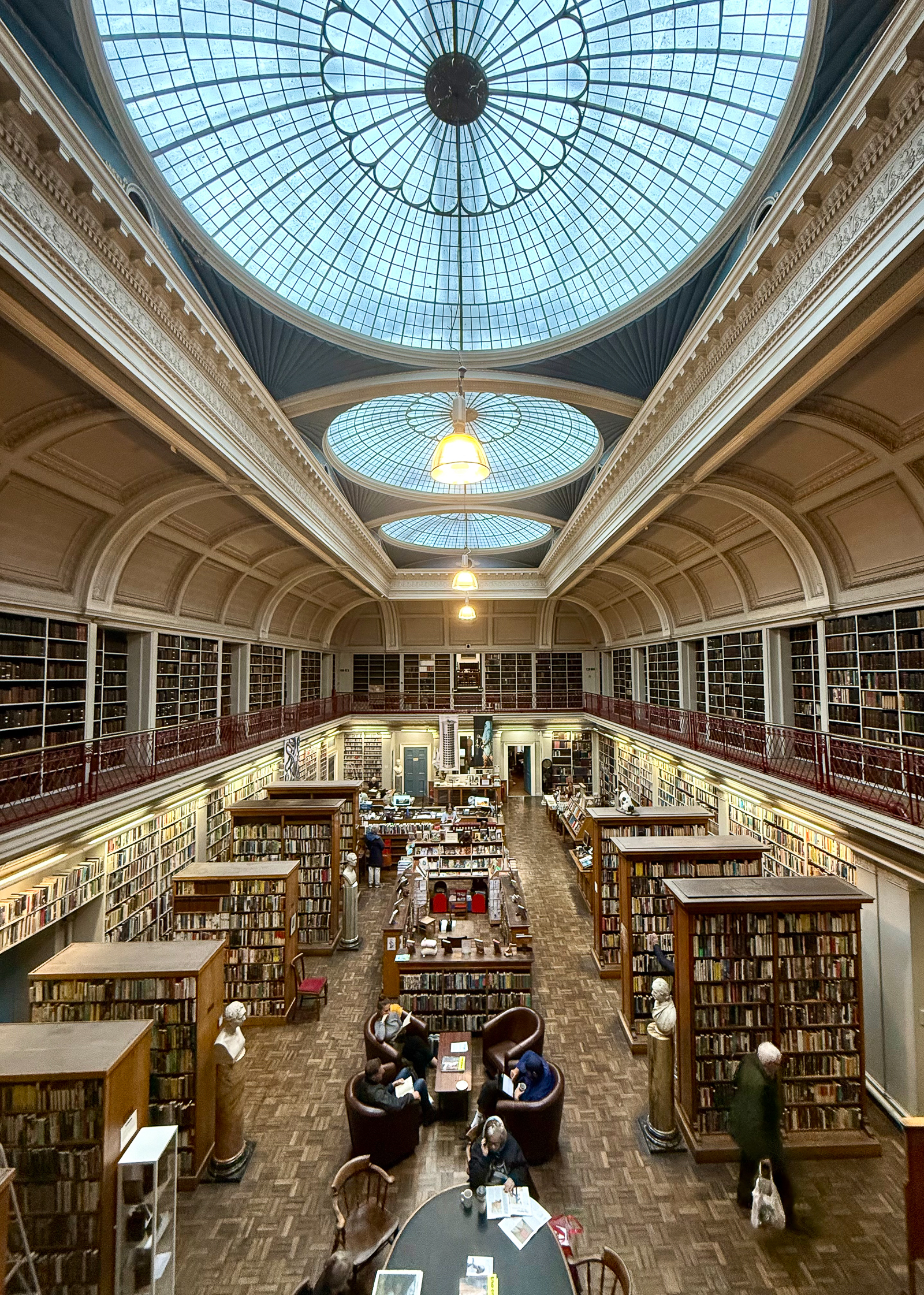
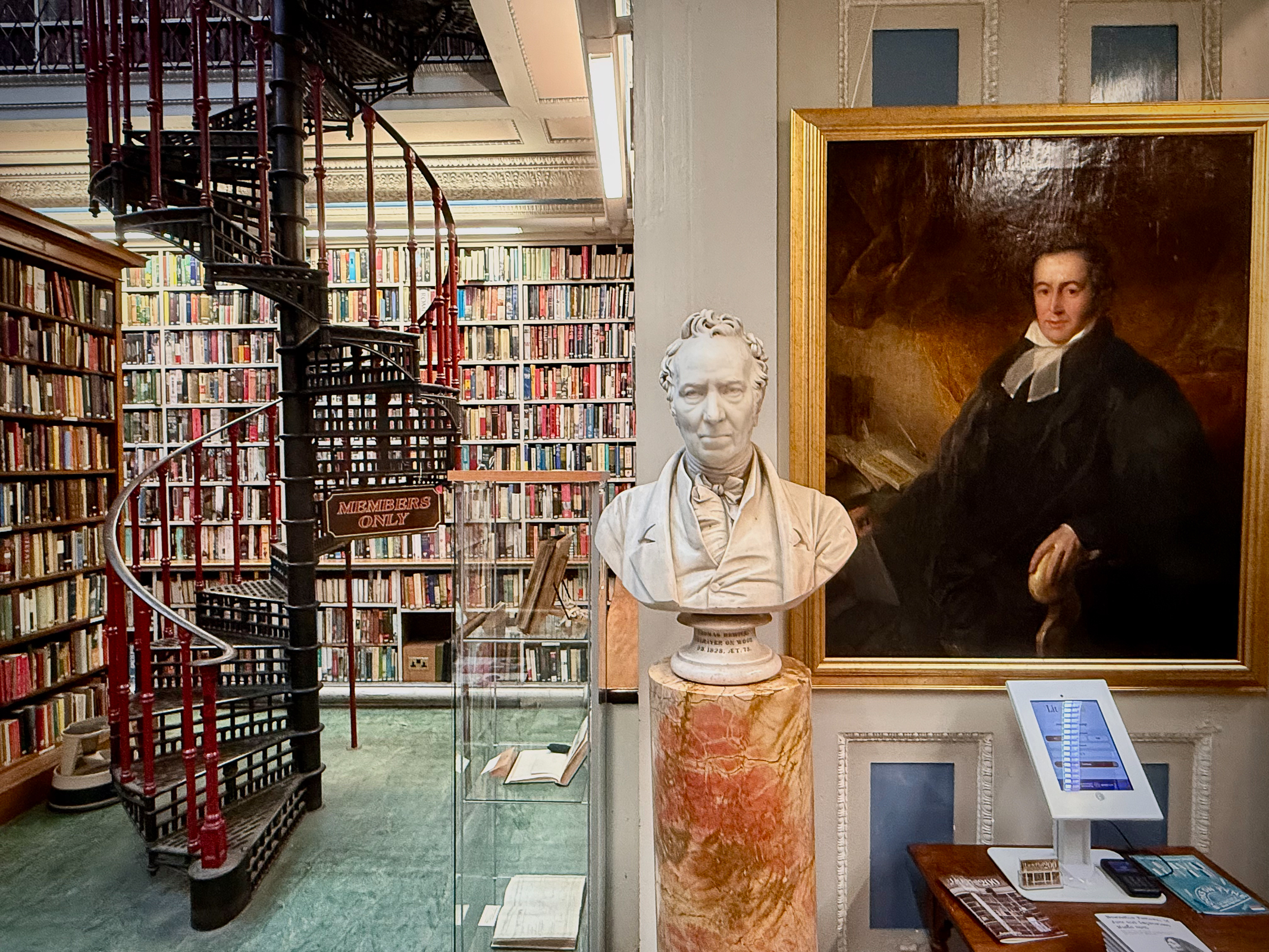
We headed straight to the Lit & Phil and spent most of the day photographing and enjoying the largest independent library outside of London. The Literary and Philosophical Society of Newcastle-upon-Tyne was founded 1793 as a “conversation club” and was host to a long list of the fascinating intelligentsia of the era. In doing our research last summer, we watched a recent film produced by the Lit & Phil called “Mrs. Affleck’s Affliction”. It sparked our interest, and we were thankful to find this inspiring, dynamic place in the gritty city of my ancestors.

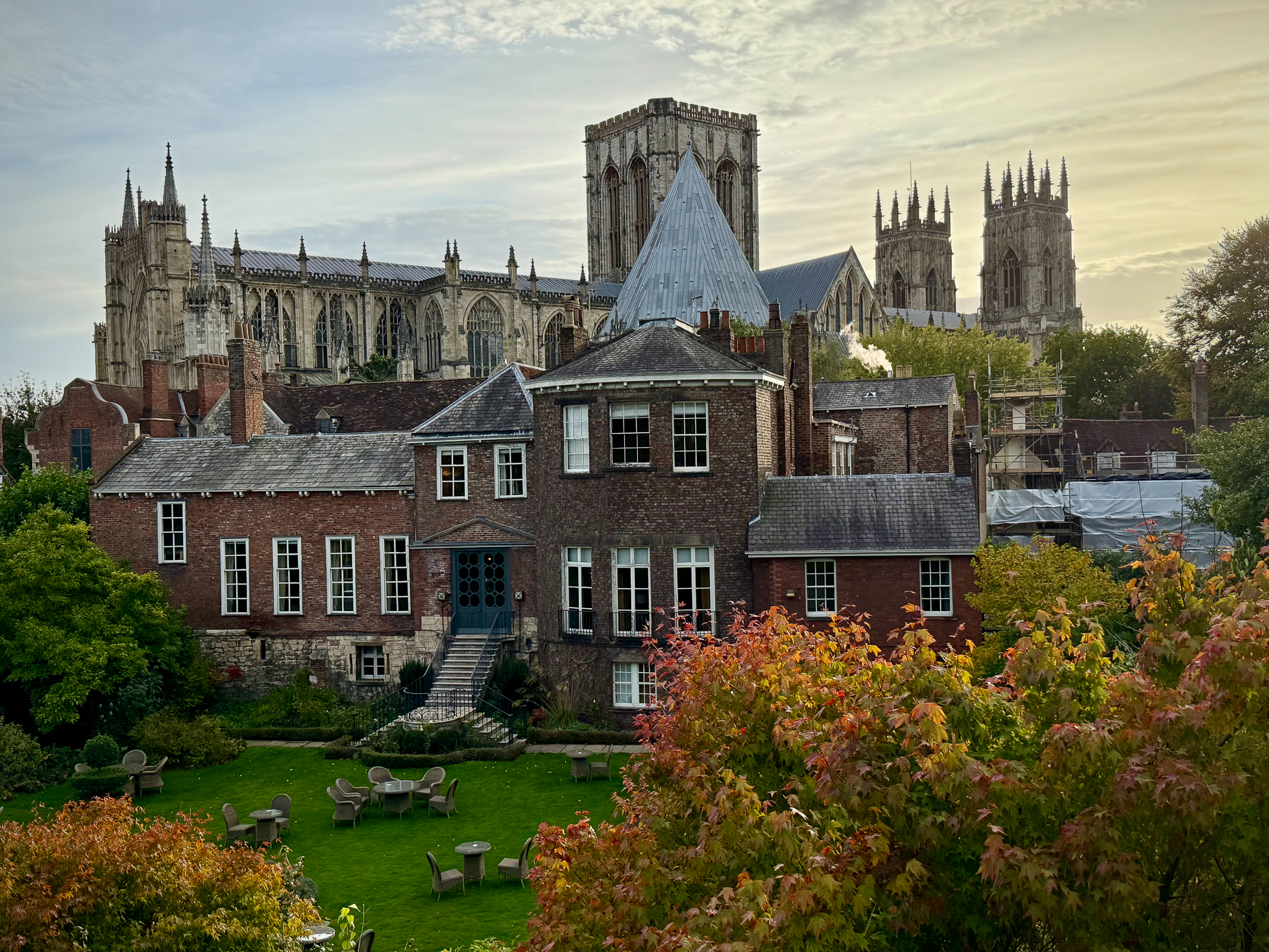
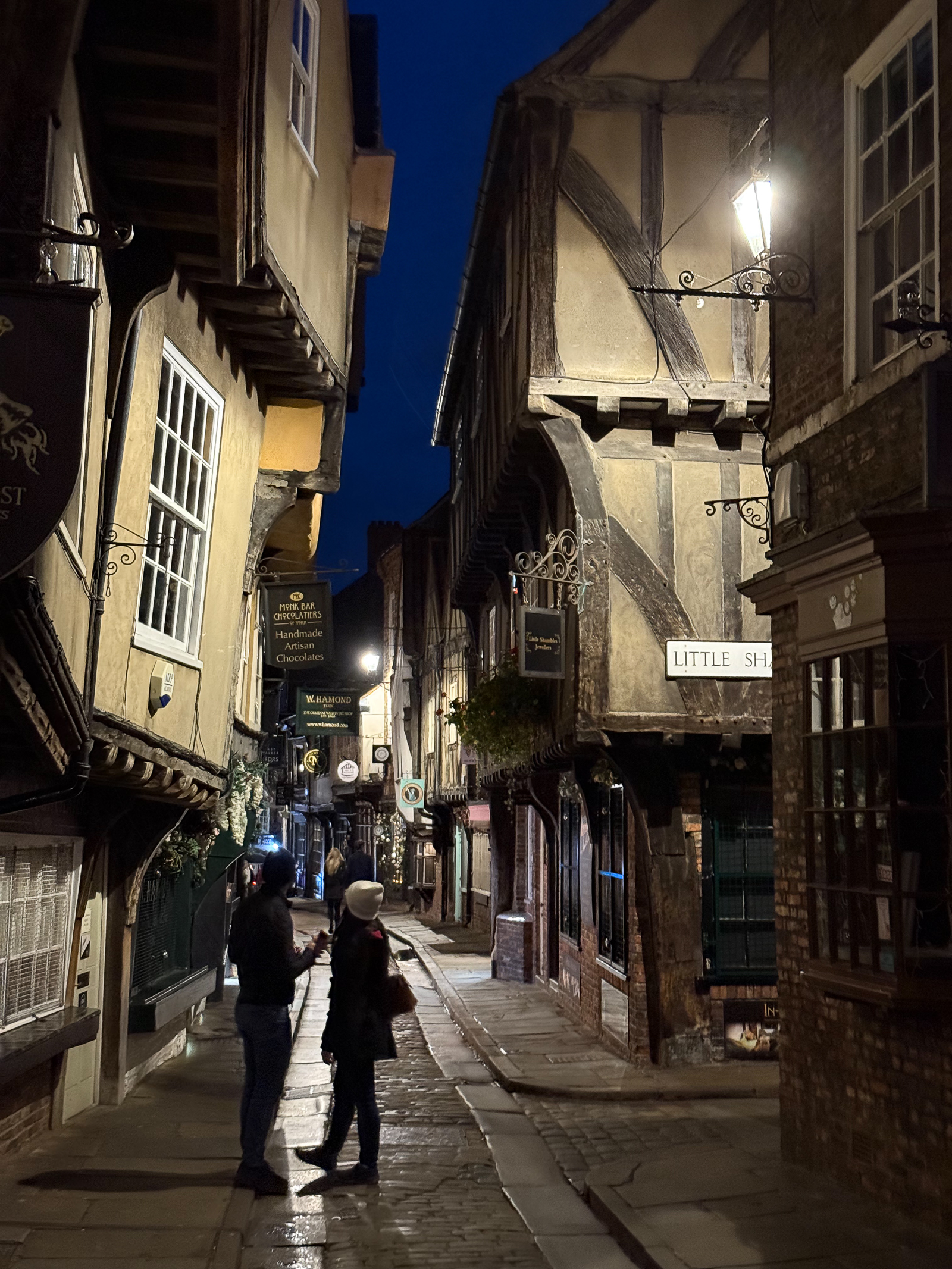
We were not quite prepared for the City of York. Its’ medieval labyrinth of narrow streets and alleyways surrounded by a vast 13th century protective wall was inspiring and a fascinating look into a beautiful old English city.

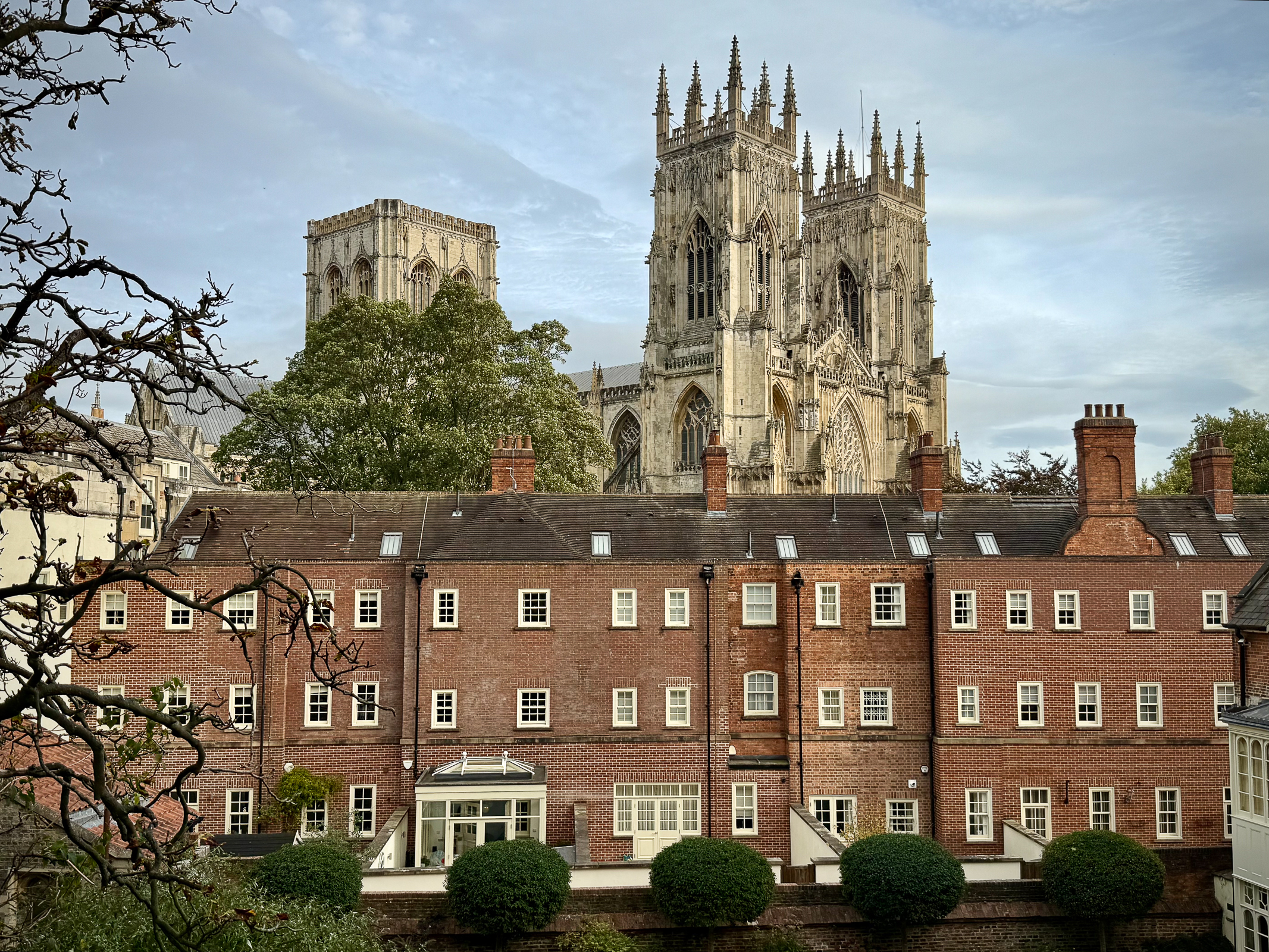
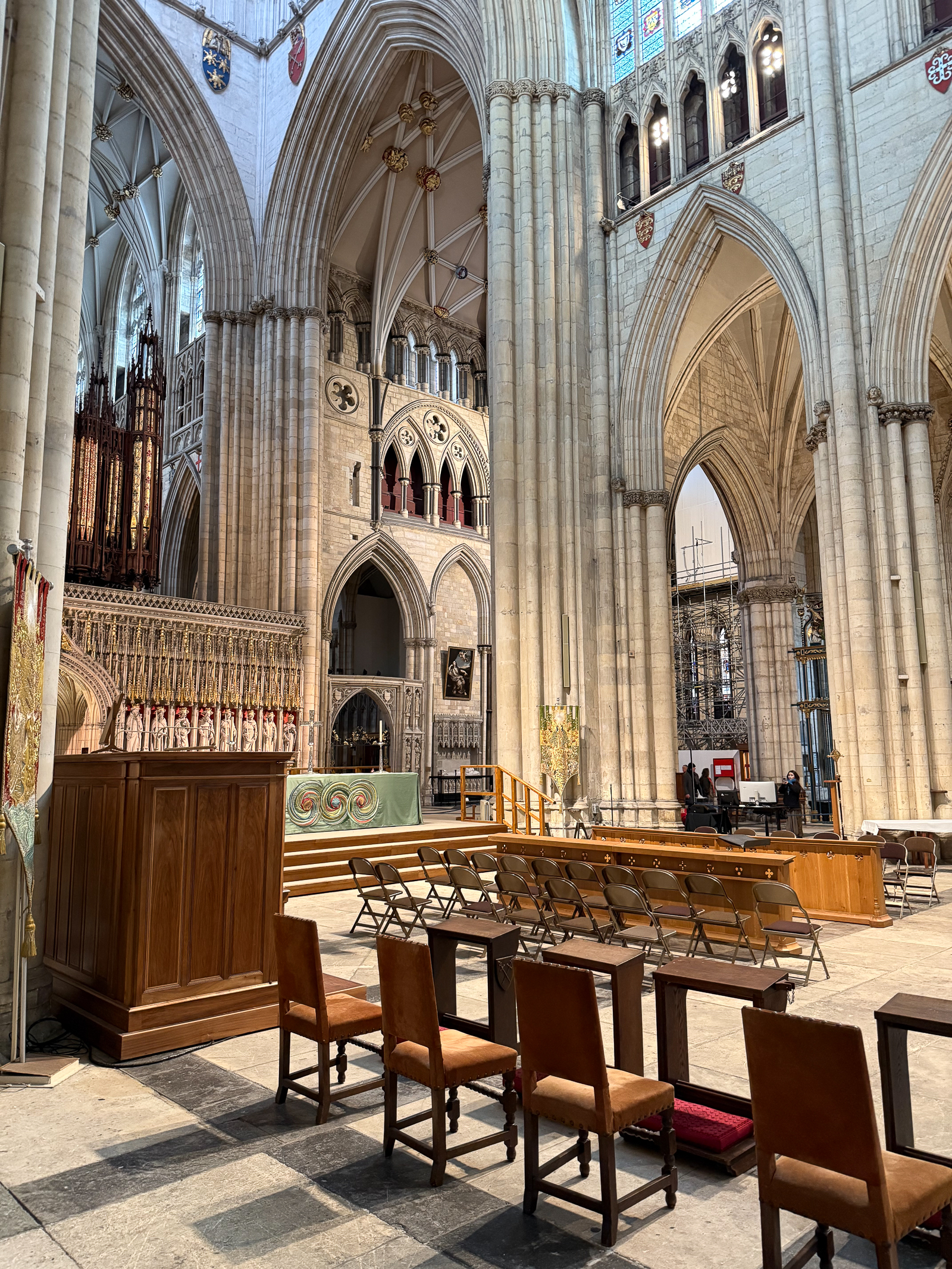
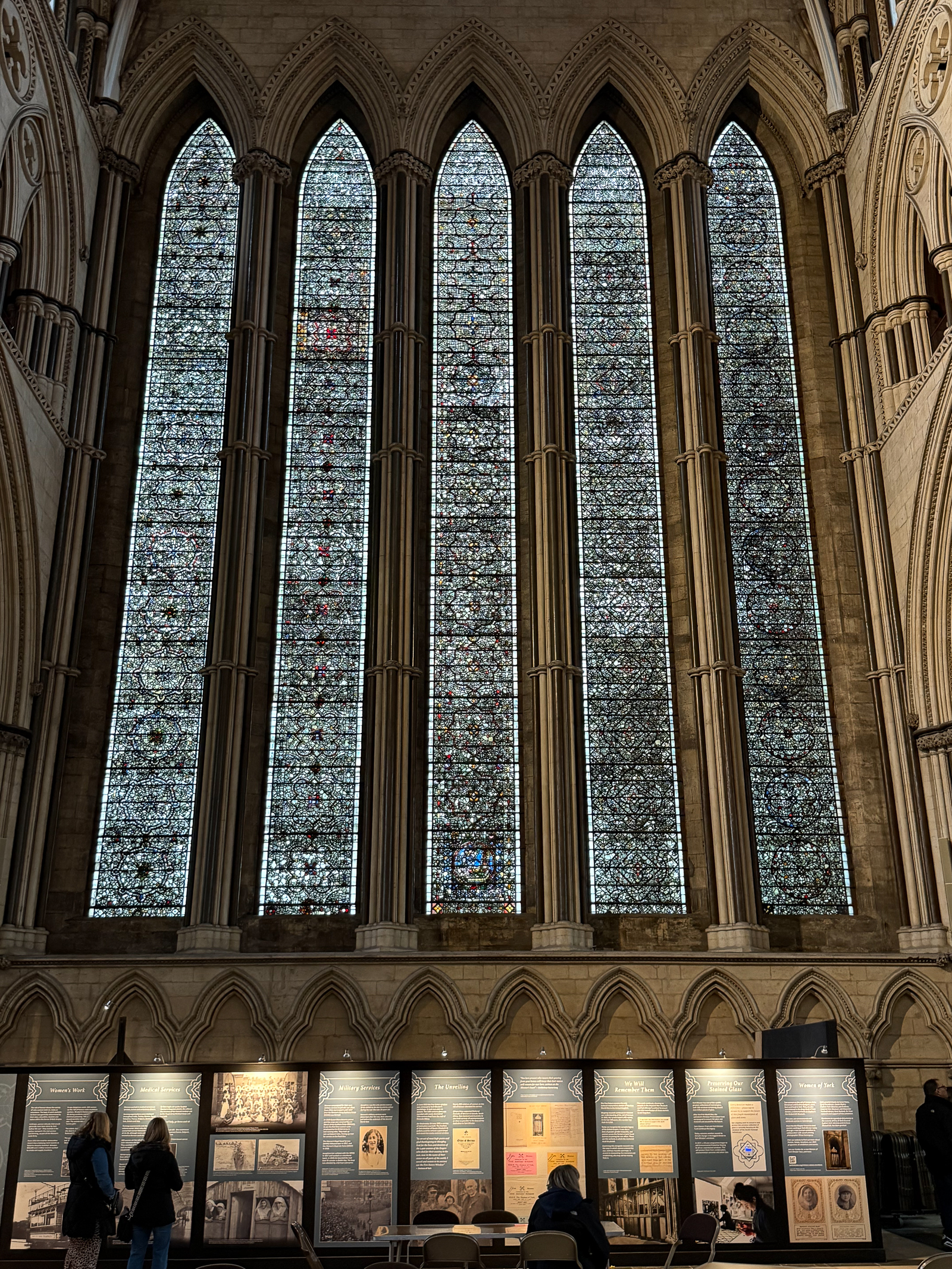
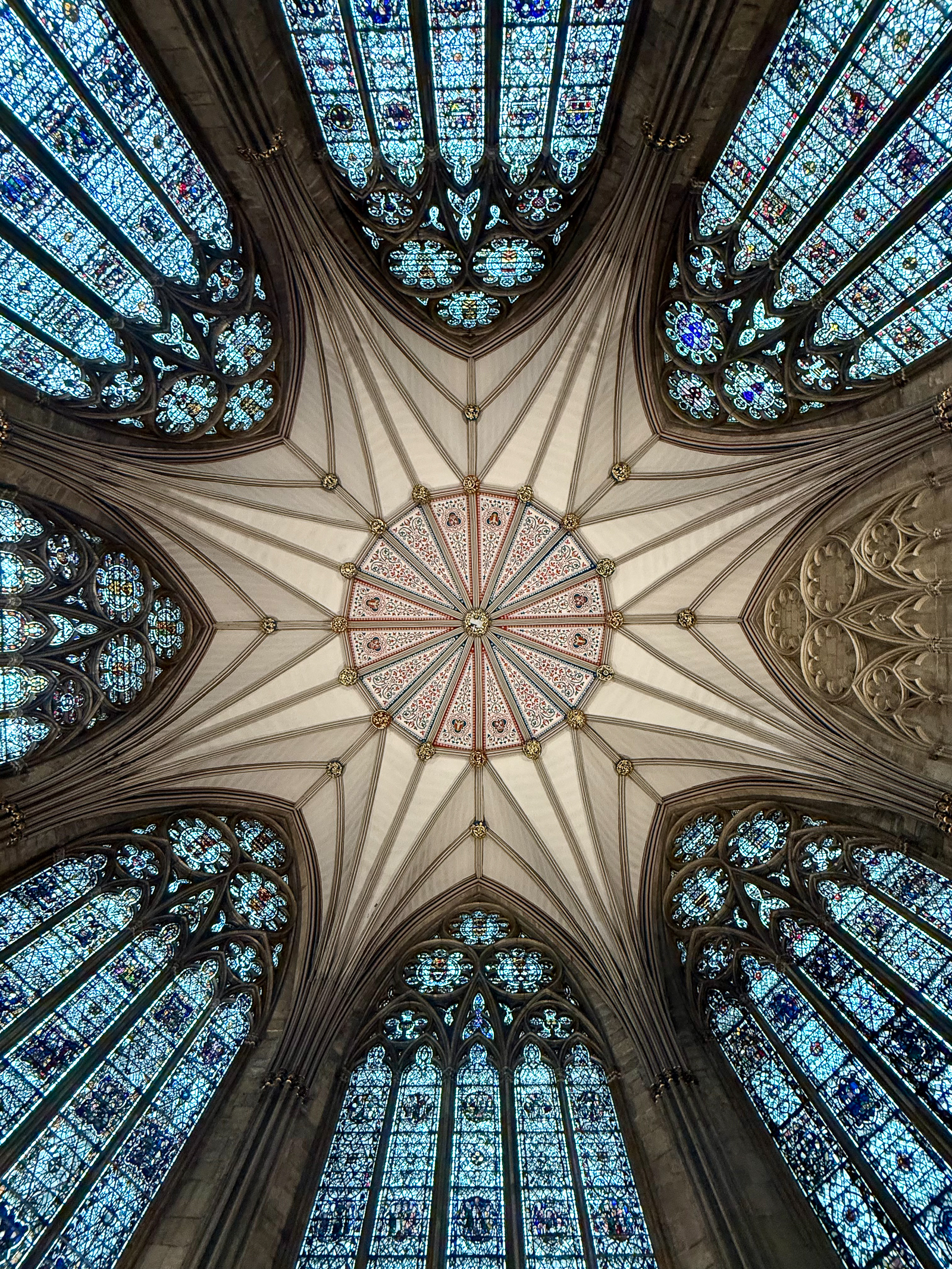
But we arrived on a Sunday afternoon and were unprepared for the vast number of tourists in the crowded city center. We moved slowly through the crowds towards the immense, awe-inspiring York Minister, one of the most beautiful Gothic cathedrals in the world. As we were engulfed in humanity, we lifted our gaze to the vaulted ceiling and the heavens beyond in the largest medieval cathedral in Northern Europe. The first church was built here in 627 AD and the current church in the 13th century. Its great age, scale and beauty were profoundly moving.

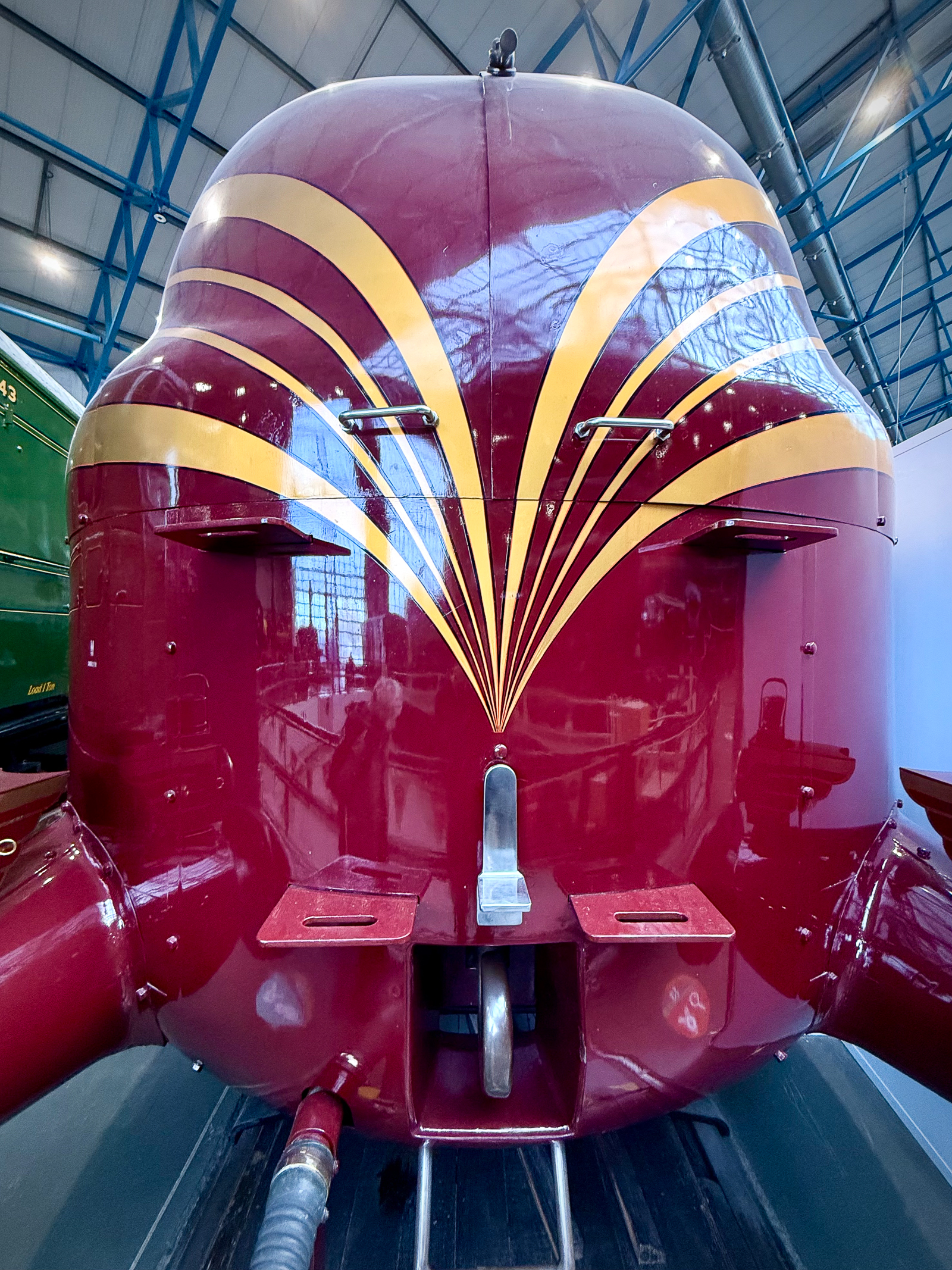
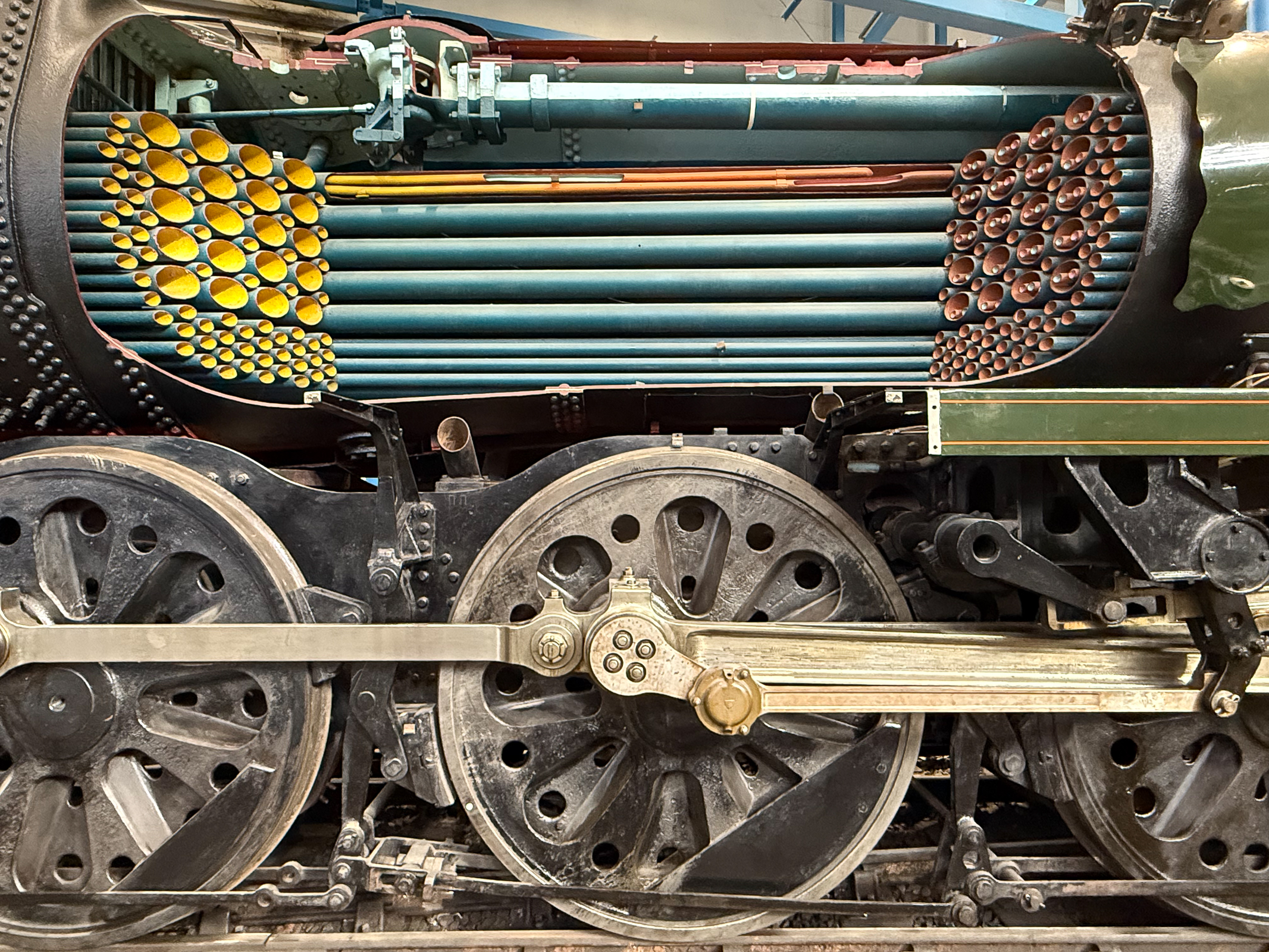
The National Railway Museum was also a surprise and one of the biggest railroad museums in the world. It contains over 100 locomotives and was crammed with fascinating stuff. My inner seven-year-old was set free here.

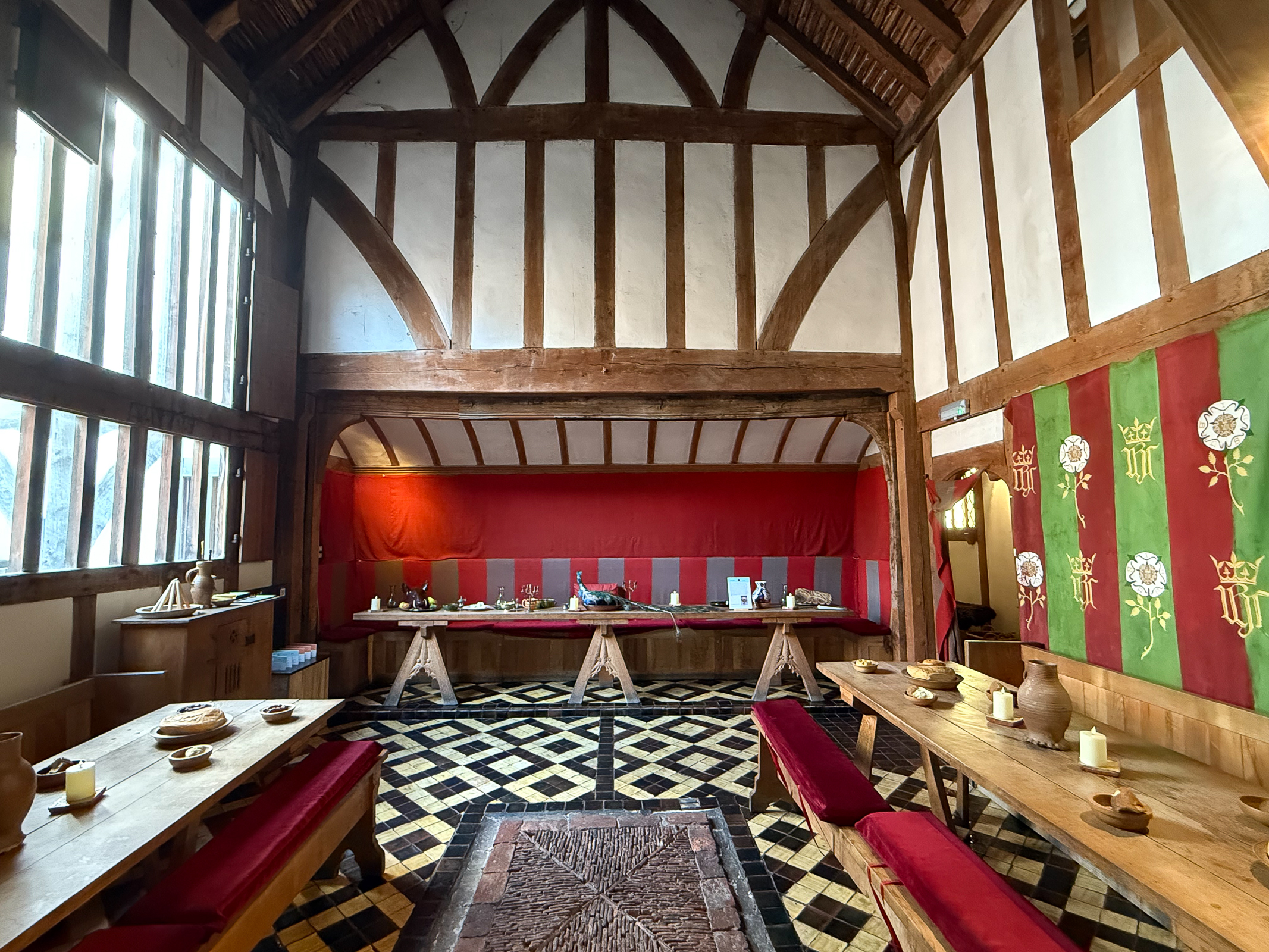
Another unique site in York was Barley Hall. It is a restored medieval townhouse, tucked down an obscure alleyway, and included a permanent exhibit of the life and times of King Henry VIII. Again, it was a great introduction to a cleaned-up version of medieval England.

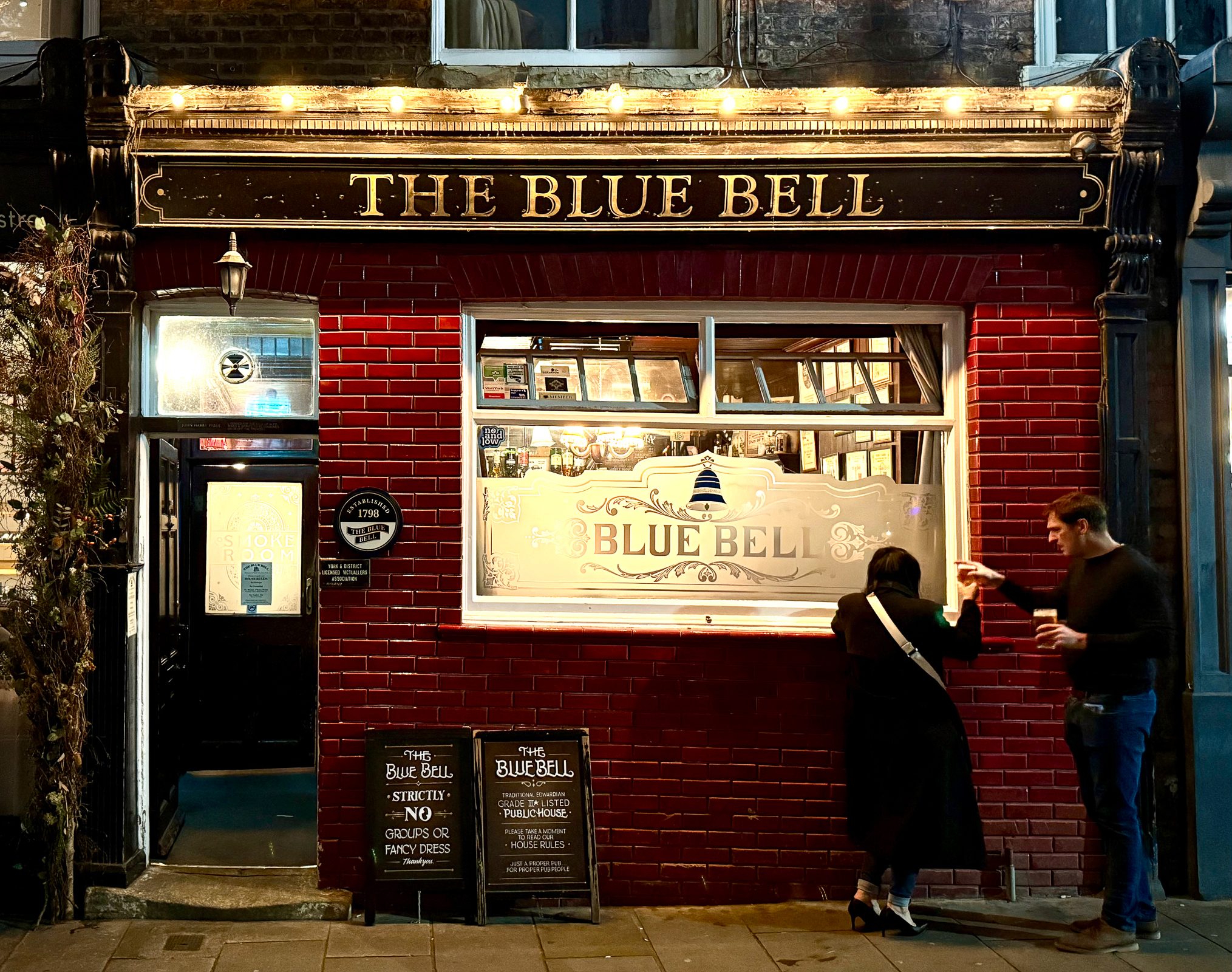
English pubs are pretty special and one of the best of this whole trip was the properly British pub called the Blue Bell. It was incredibaly small in a 200-year-old room with a smoldering fireplace in a wood-paneled space, with a décor untouched since 1903. The English couple next to us were retired British military, he a colonel and she a nurse. During their time in service, they had been stationed everywhere including Bosnia at the end of the war and in Northern Ireland during the time of the Troubles. We had a rousing and fascinating conversation with them fueled by a few pints. Despite some of their difficult assignments in the British Army, they were some of the funniest people I have ever met. It was a gift for us to mix it up with the locals at the Blue Bell in York. As travelers, we have come to appreciate the kindness of strangers.

Next stop: the Southwest – Hereford and Hay-on-Wye.

Leave a comment

Filed under Uncategorized

THE NORTH COUNTRY – Carlisle, Edinburg and Lindisfarne

It is horrifying to watch the crack-up of our country. It is even stranger to watch it happening from afar. Nothing has prepared our nation from an autocratic takeover. We thought our system of checks and balances and separation of powers would protect us. But Trump is ramping up his takeover by sending troops into American cities, uninvited. Everyone we spoke with here in the UK expressed outrage at what is happening in the US and offered sympathy for our plight. We can only hope that on our return to our dear home of San Francisco we will not find National Guard troops and ICE agents swarming the streets. Marc Benioff and Elon Musk be damned. We are steeling ourselves for what may be a bumpy return.

Our trip to the far North of England continued as we left the Lake District and landed in Carlisle, close to the Scottish border. Our friend John Darwell and his partner Katrin live in an old school building surrounded by English farmland. He is a retired photography professor and is well known for his many published photo books. Katrin, originally from Germany, currently teaches photography, philosophy and other subjects at local universities. We obviously had a lot in common. They also have an adorable puppy named Rosie who is starring in her current role as the Terror of Cumbria.

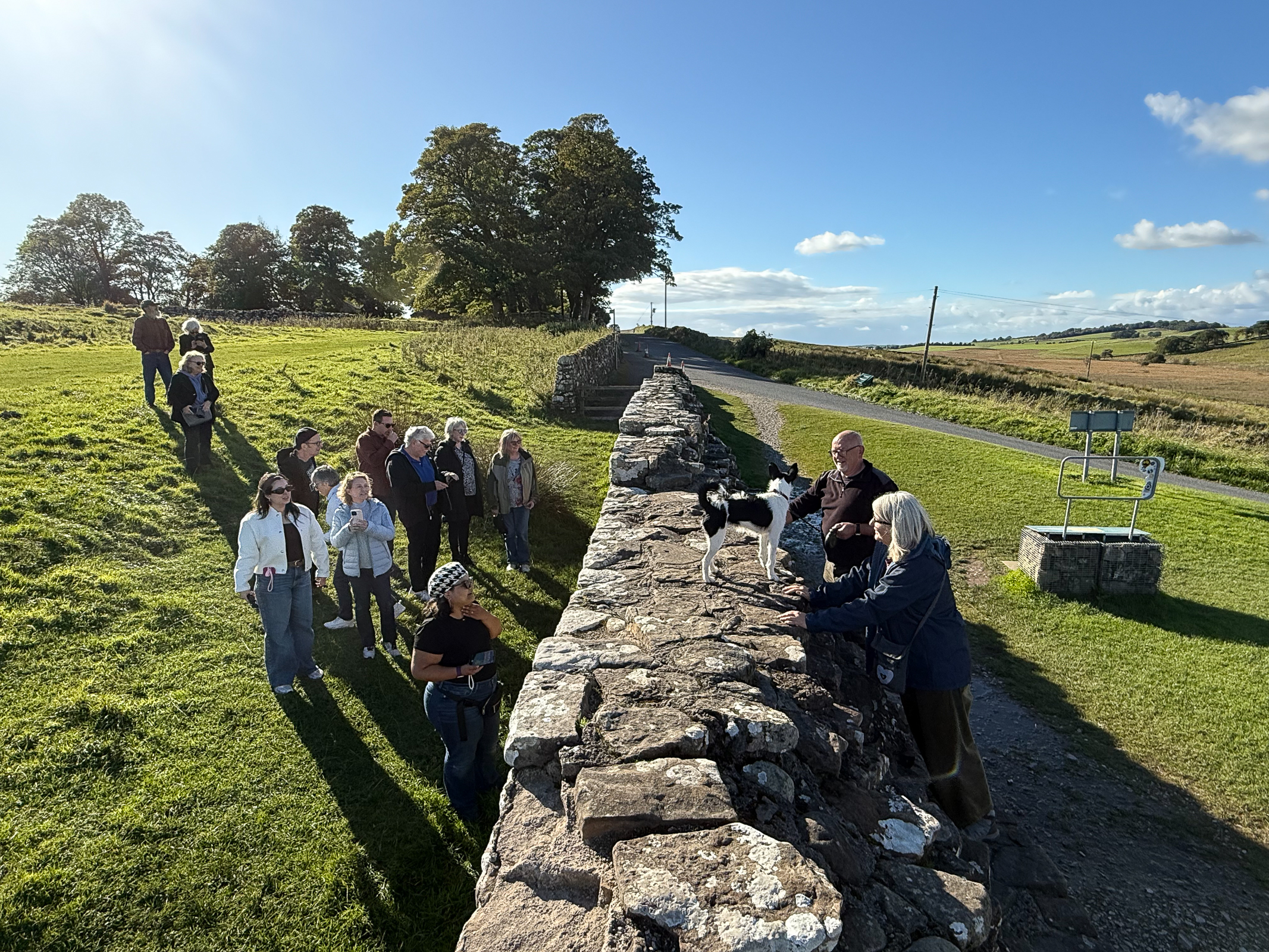
The next day we visited two attractions in nearby Carlisle, the Carlisle Cathedral and the World Heritage site called Hadrian’s Wall. The Cathedral was surprisingly glorious, and the ancient Roman wall lived up to its world class status. The Wall was a Roman frontier built starting in 122 AD to mark the edge of the empire and to keep the Scots out. It stretches 73 miles across the entire width of Britian, and we visited one of the better-preserved parts of the remaining wall. We later took a hike along a ridge in the late afternoon Northern light. While walking across the undulating hills and beautiful farmland, we looked to the North and finally saw Scotland.

The United Kingdom is a complicated political place. As we drove north the next day, we didn’t see when we transitioned from England to Scotland. Although they are two separate countries, with separate parliaments, Prime Ministers, and histories they are also deeply bound together. A few years ago, a vote on Scottish separation was turned down by the Scottish voters. Although, BREXIT shook things up, it seems like the United Kingdom will remain united, for the time being.

As Americans, we really did feel like we were in a separate world from England when we arrived in the Scottish capitol of Edinburgh. We went to an exhibit at the National Galleries of Scotland of the artist Andy Goldsworthy. He is English but now lives in a rural part of Scotland. He uses the landscape and nature as the basis for his art, and we gained even more appreciation for his work by being in the place of his inspiration. It was the same appreciation we experienced for the writer Wordsworth after being in his home in the Lake District.

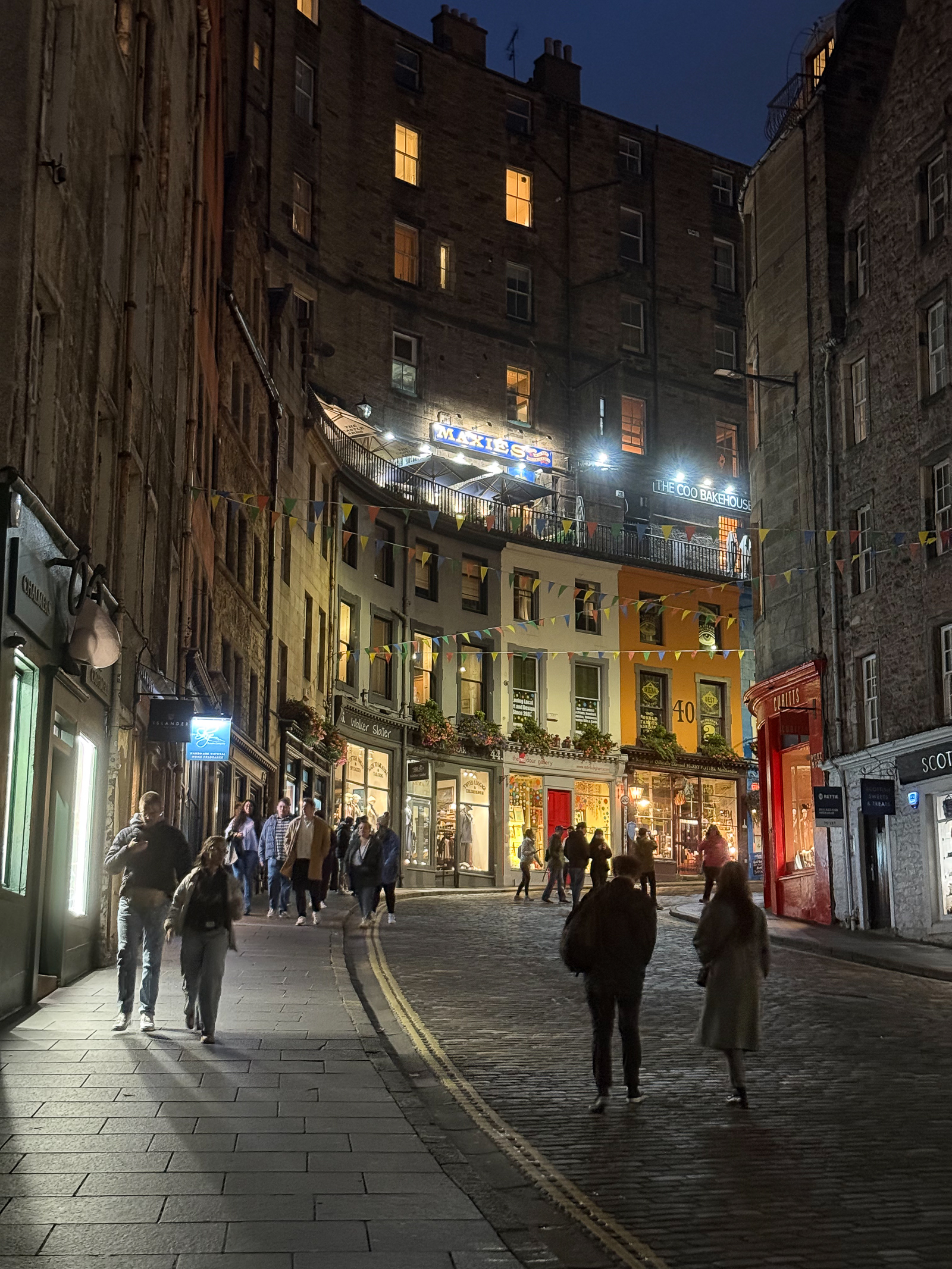
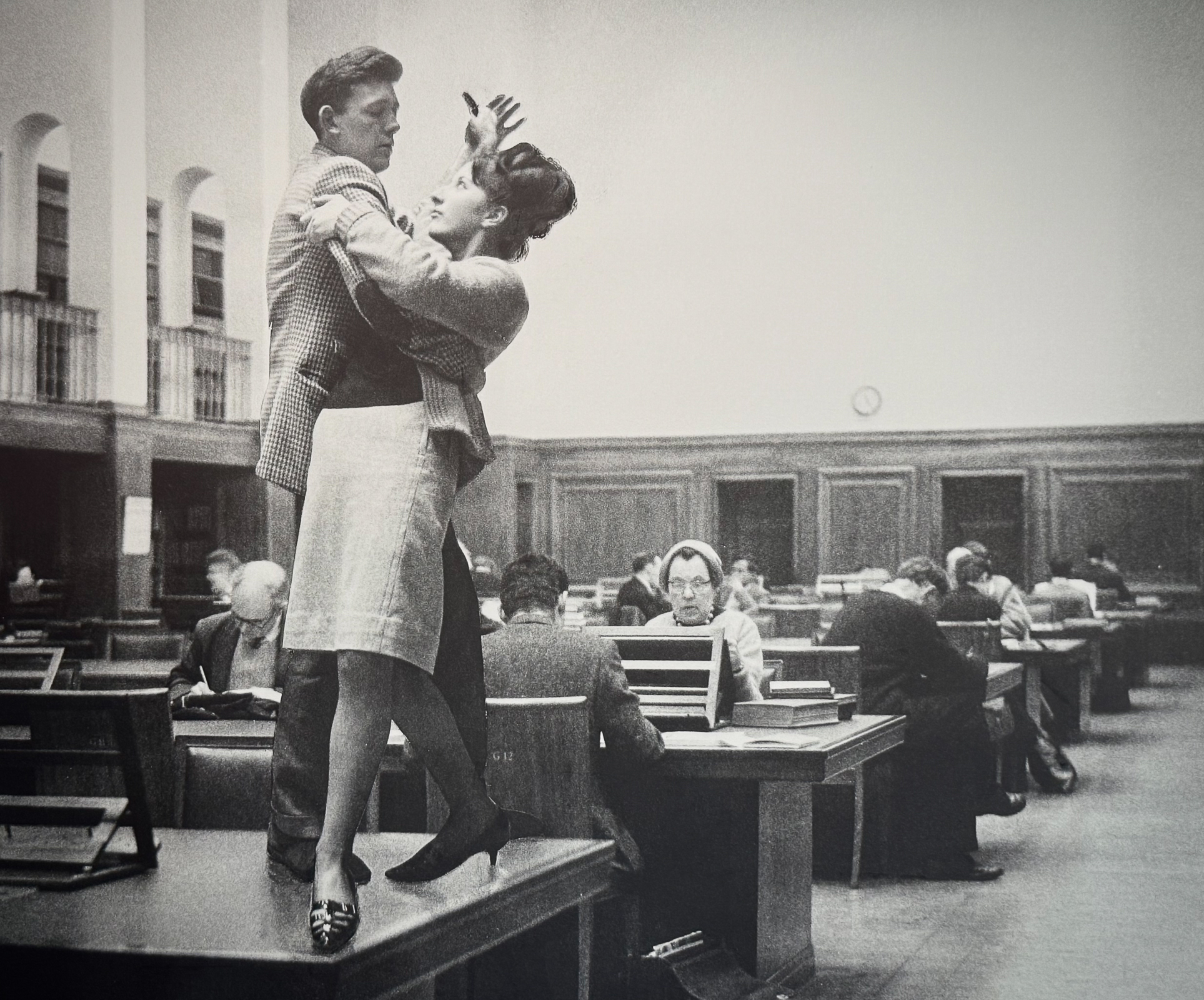
Edinburgh is a city of hills, castles and cathedrals. We got an unintentional but exceptional workout climbing around the steep hills of the old city and the Royal Mile. We were inspired by some whimsical photos made in the 1960s of the library staff dancing on the reading tables of the Scottish National Library. But the more interesting Central Library of Edinburgh was across the street and was originally built by the famous Scottish native Andrew Carnegie.

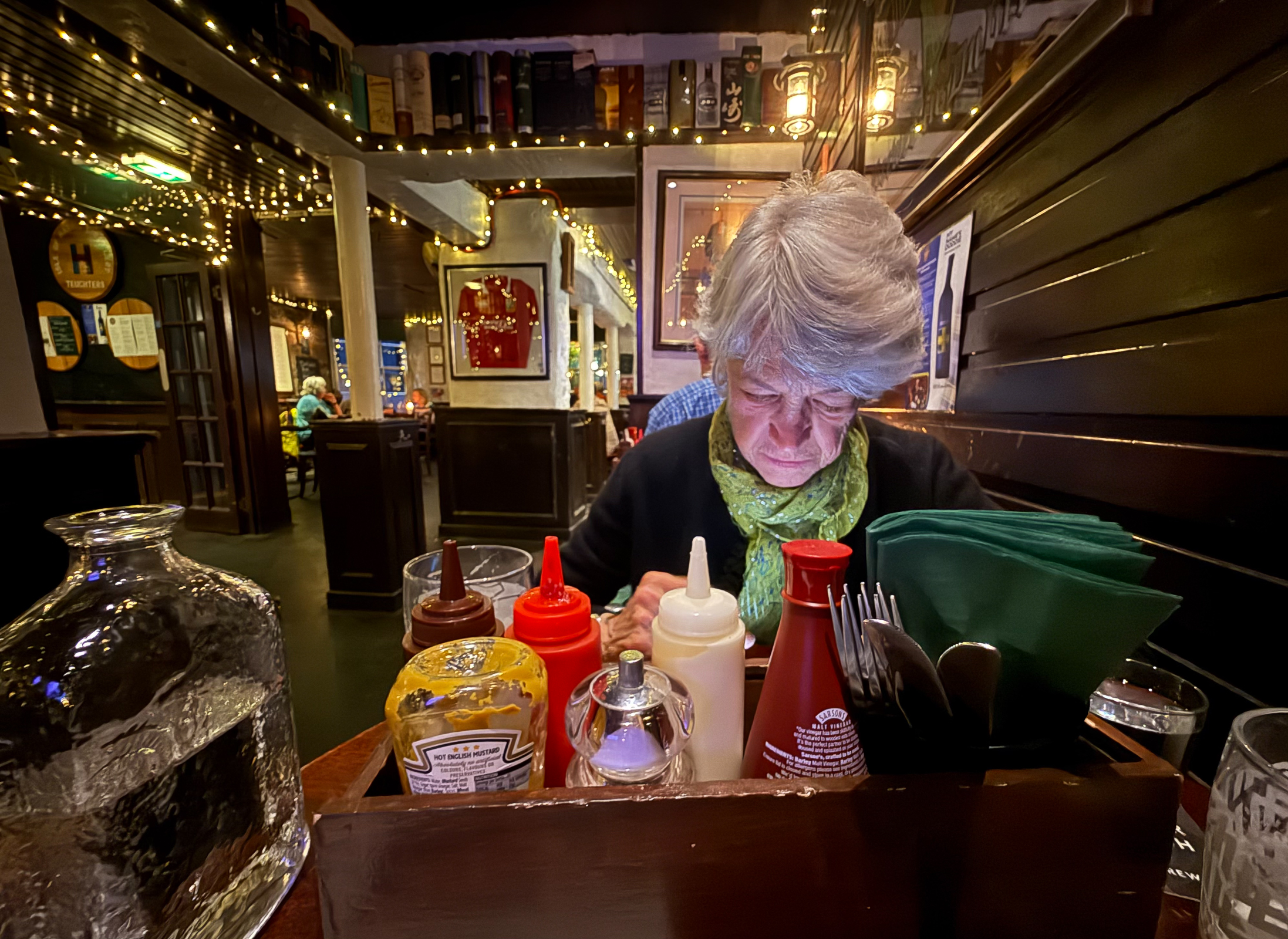
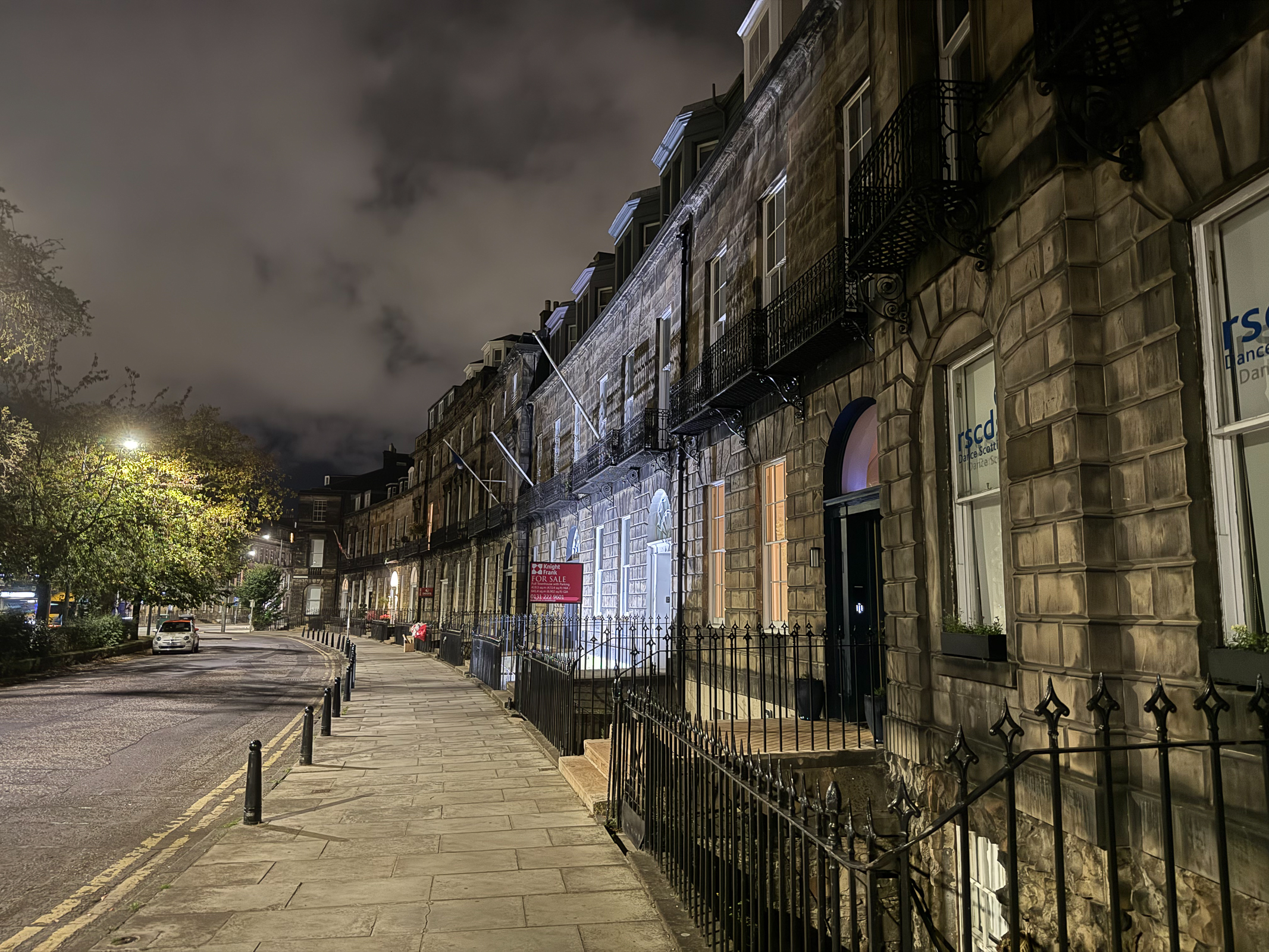
One of the great experiences of traveling is finding the best of the local food. In a pub called Teuchters Bar & Bunker we encountered a new cuisine of Haggis, Neeps and Tatties as well as Cullen Skink. None of this food is healthy but when in Edinburg…I even tried a very peaty Scottish whiskey and some toffee sticky pudding. Next week I’m going on a diet. To work off a very small fraction of our heavy meal, we walked home through the misty and wonderfully moody dark streets of Edinburgh.

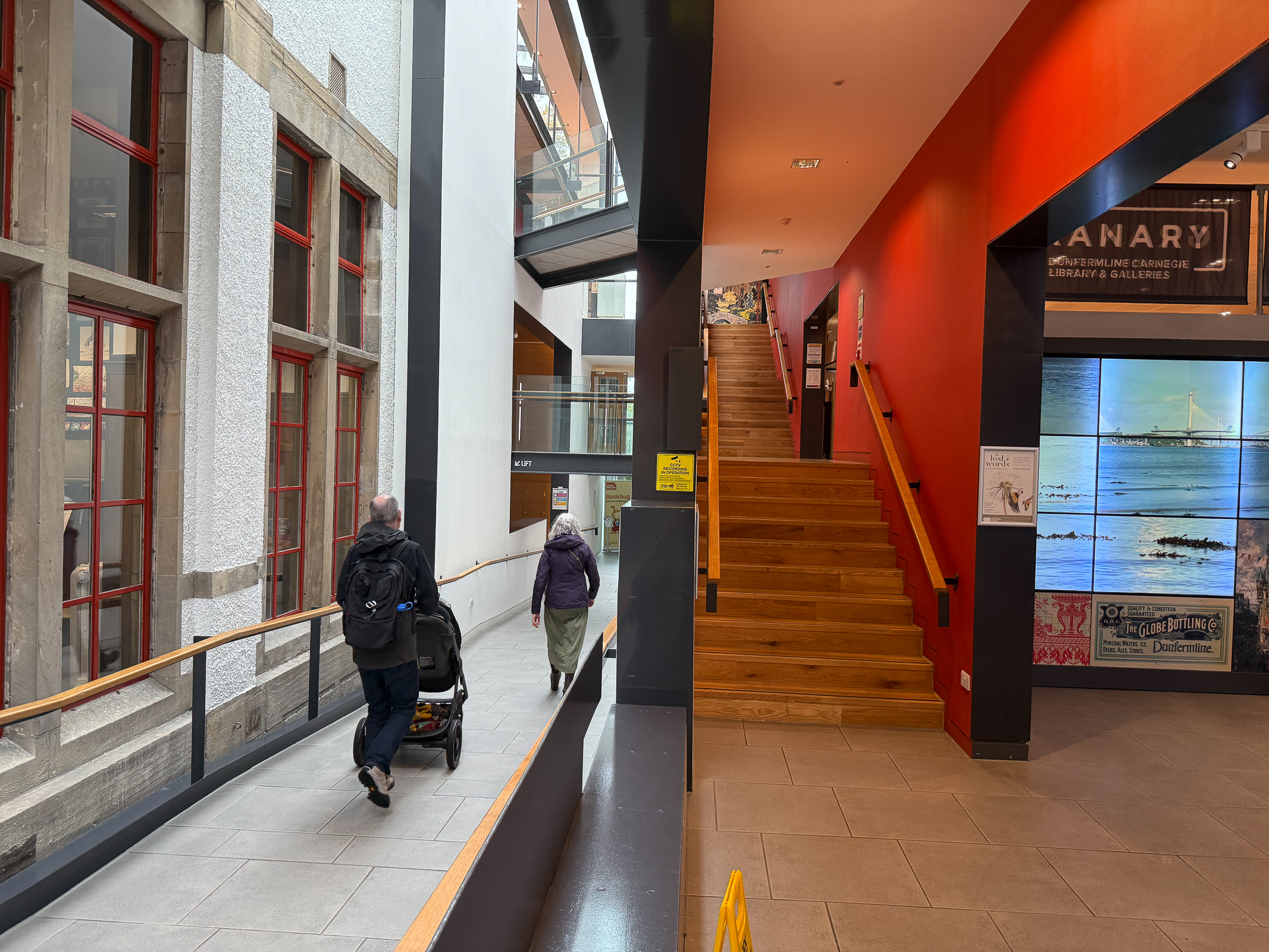
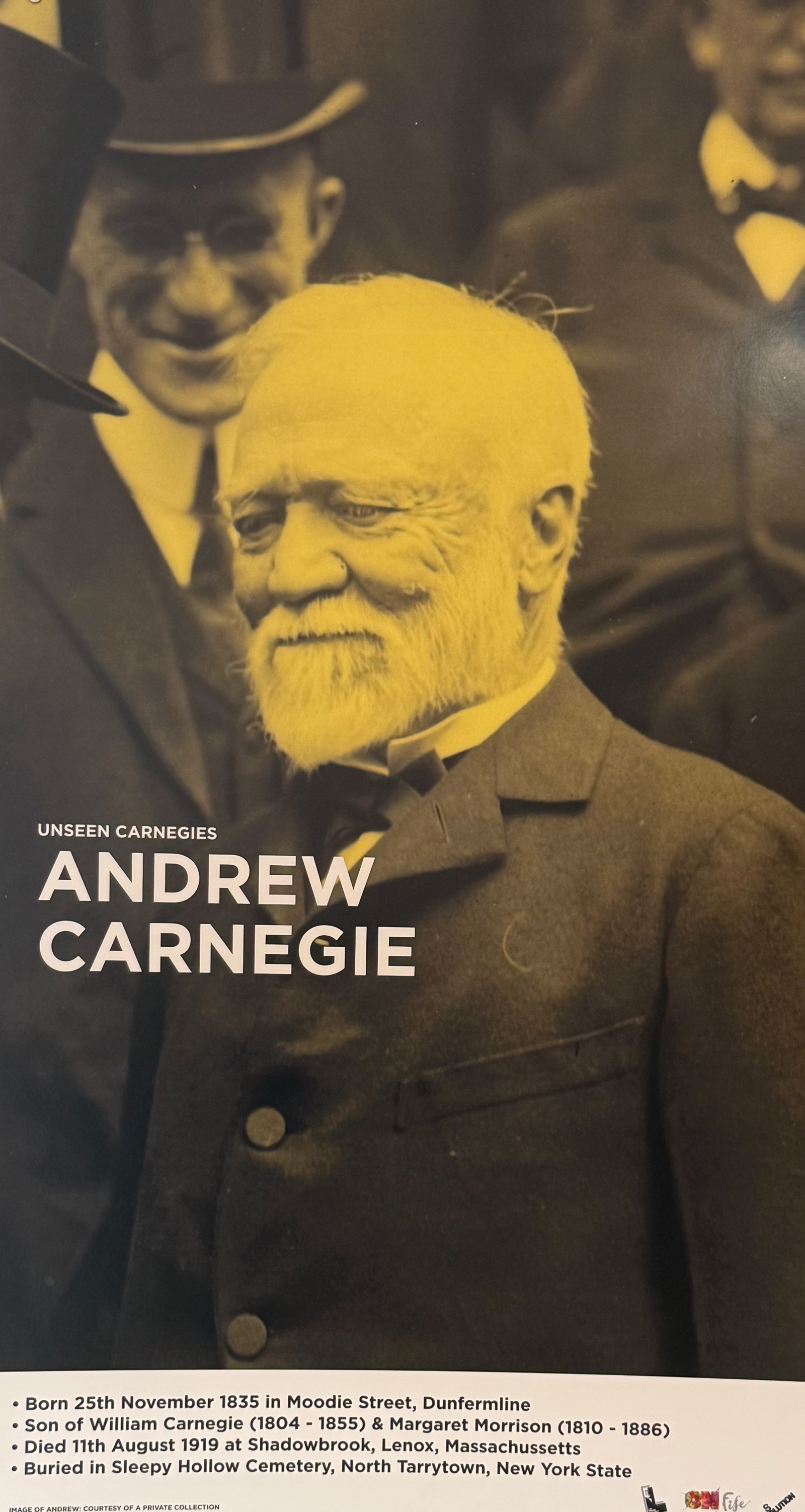
The next morning, we drove 30 minutes north in the rain to the small town of Dunsfermline. Here was the birthplace and childhood home of Carnegie and here he built the world’s first Carnegie Library. It has been wonderfully restored retaining elements of the old library with a beautifully designed new addition. Of course, this is Carnegie’s hometown, but it was curious there was no mention of the complexity of Carnegie’s career. During his lifetime, his library building campaign doubled the number of public libraries in the United States. But he also treated his steel workers horribly, sometimes calling in troops to violently crush strikes at his steel mills. Perhaps his library building later in his life was to atone for his sins as he was building his empire. He was a complicated man rather than the purely great man depicted at the Dunsfermline Carnegie Library.

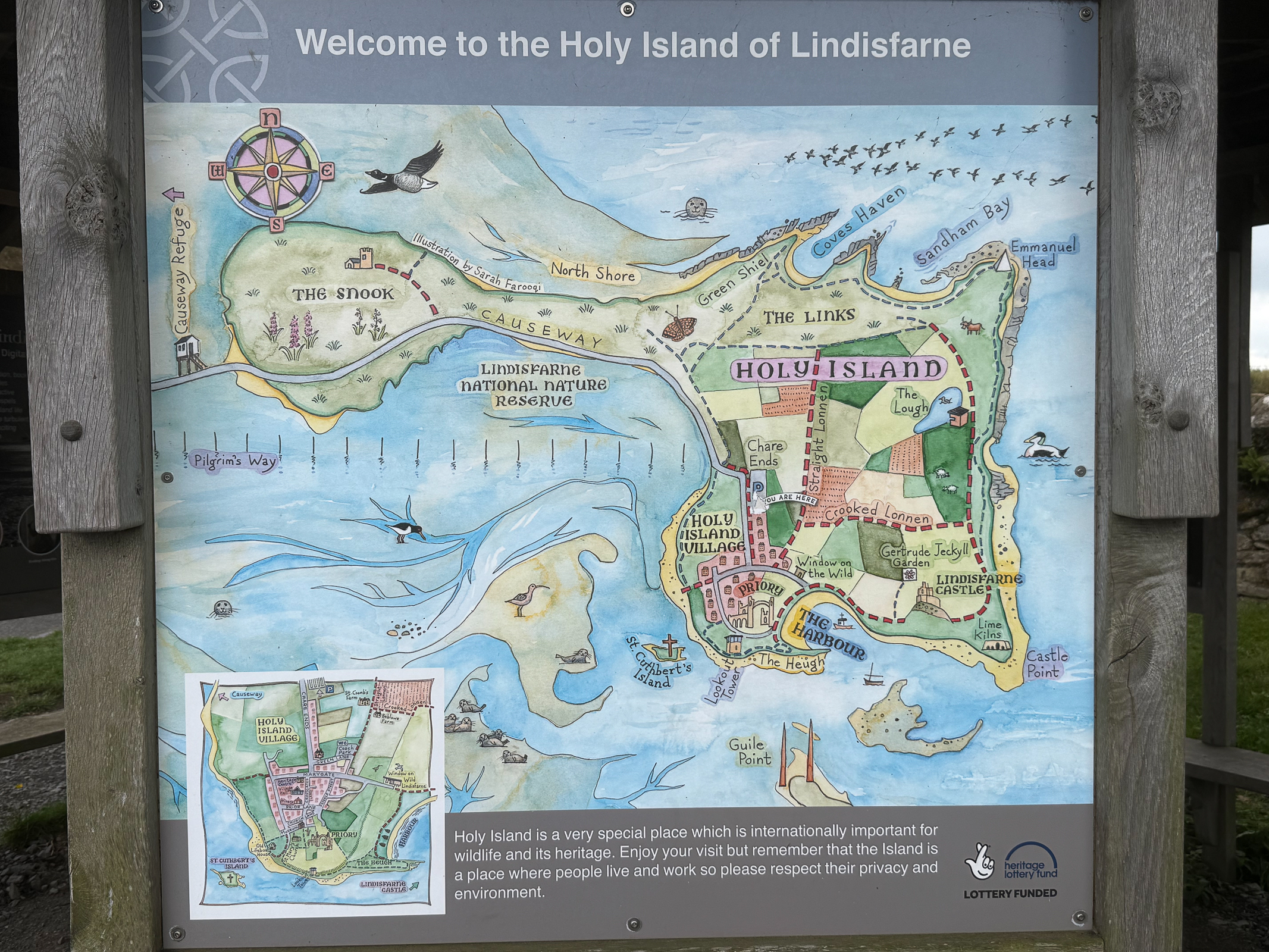
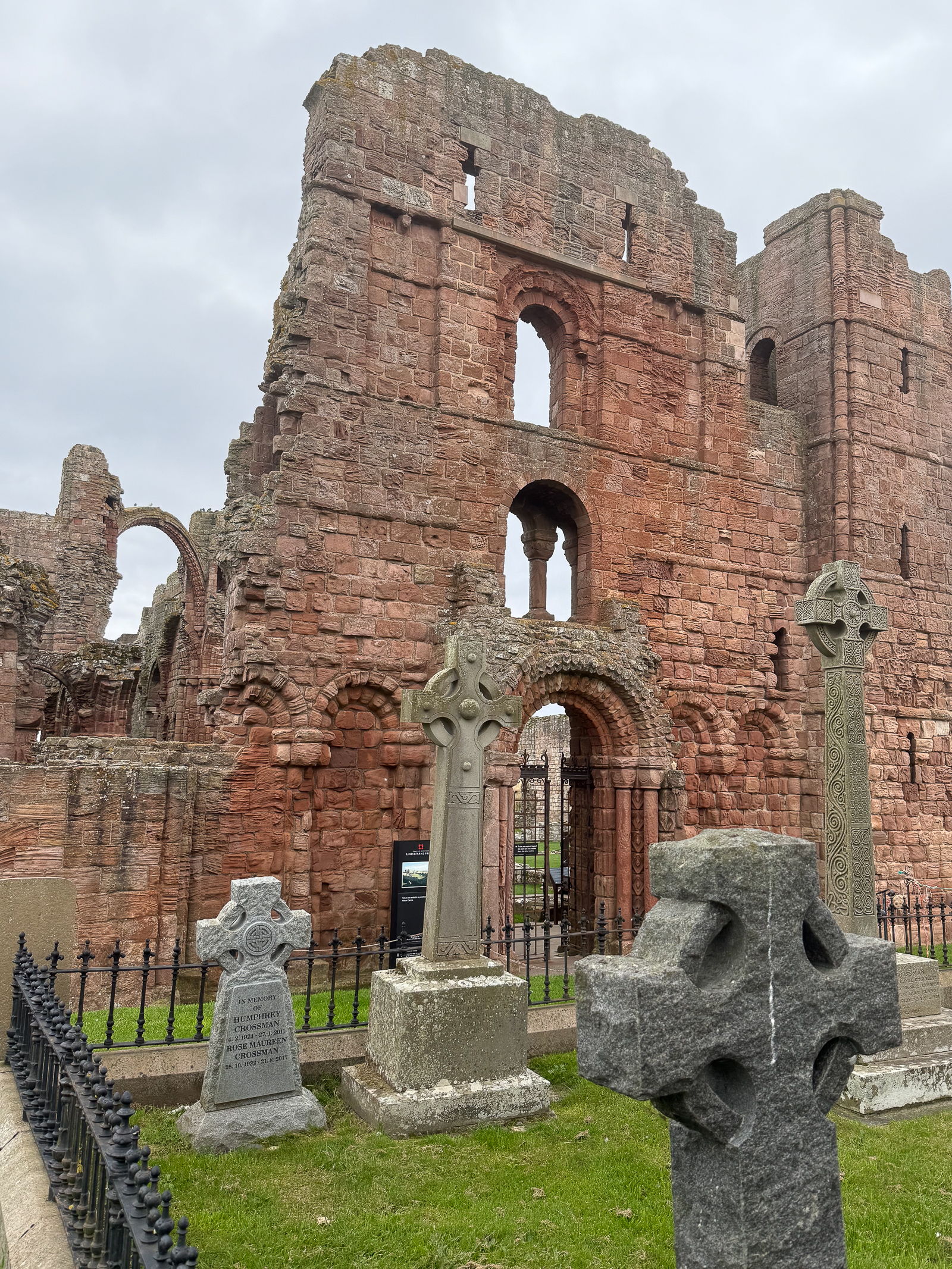
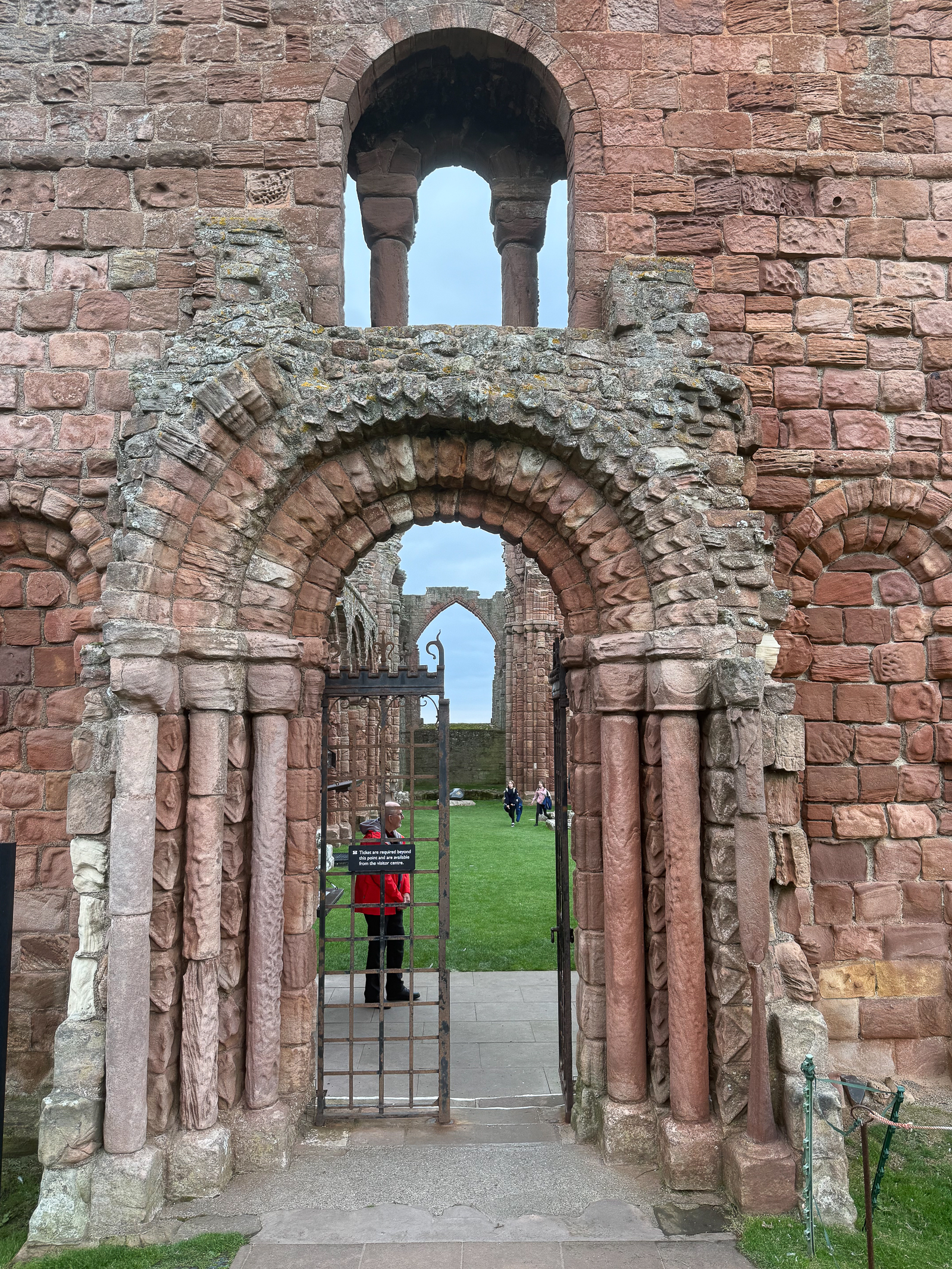
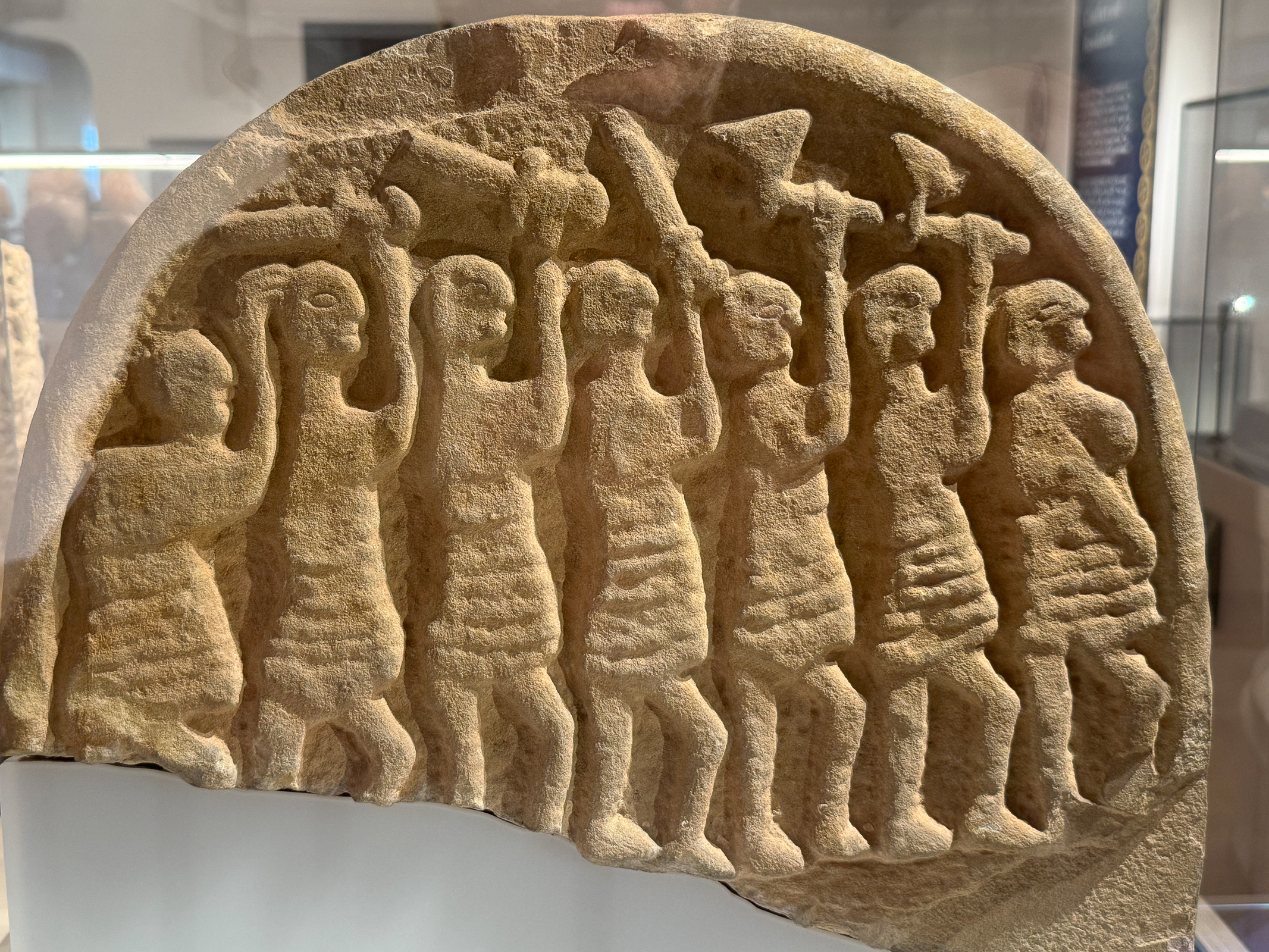
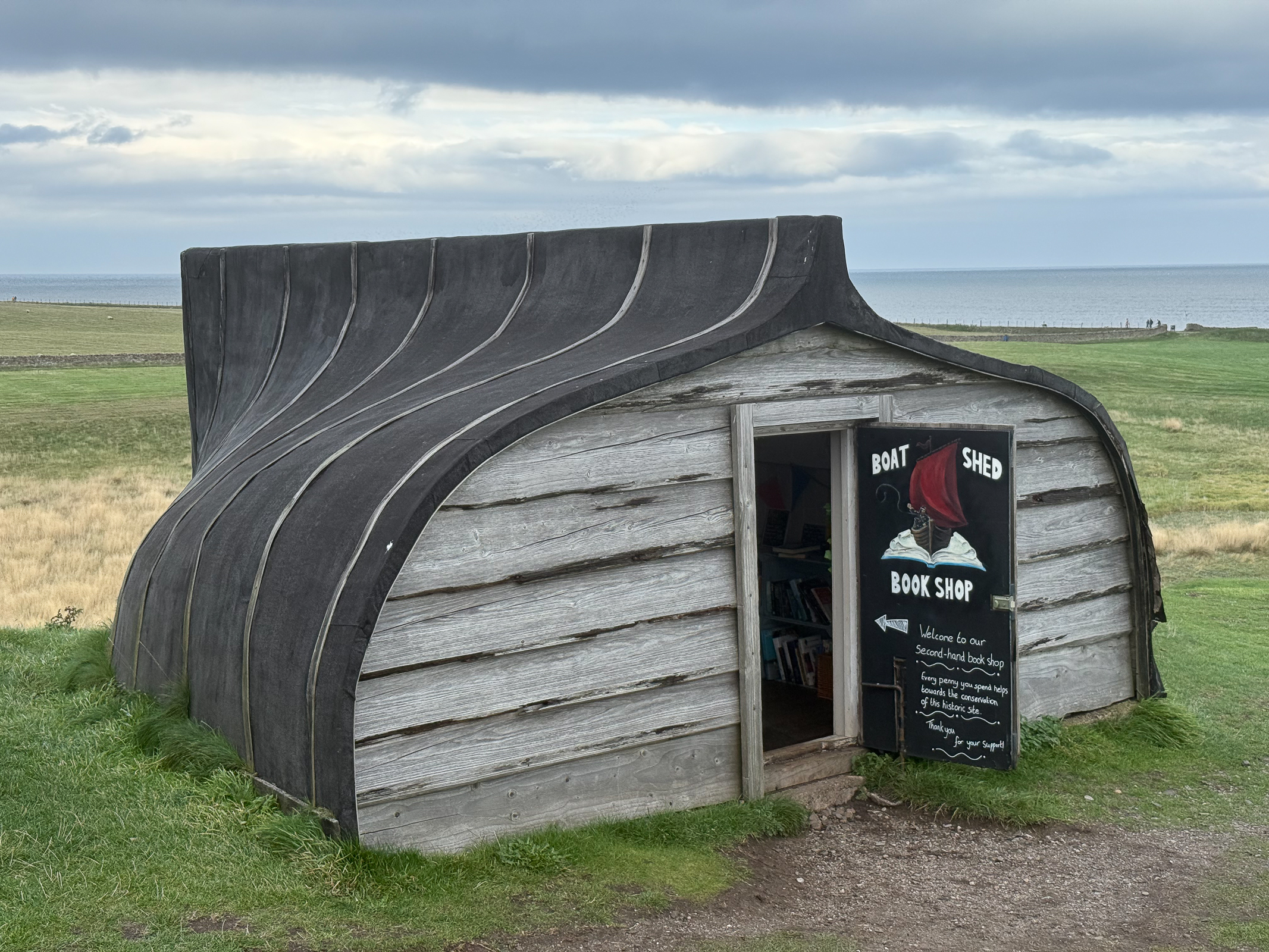
The weather in northern England and all of Scotland is famously bad. Remarkable, we have been spared the worst of it. But now a big storm was heading our way as we left Scotland and headed to the remote Northeast corner of England. We quickly drove by the wonderfully named town of Burwick-upon-Tweed and headed to the Holy Island of Lindisfarne. Driving ahead of the approaching storm, we were warned to consult the tide tables as many cars have been stuck on the causeway that connects the mainland to the island. On Holy Island, is an ancient abbey first built in 643 AD. Many invaders have ravaged this religious community since then including the relentless Vikings. The Normans and countless others followed. Today it is a breathtakingly beautiful and lonely place. The ruins of the abbey were haunting and our hike out to the Norman Castle showed us the sweep of the land and the dark grandeur of the North Sea. Fortunately, we made it off the island before the rising tides and threatening storm.

Next stop, the Northeast…

1 Comment

Filed under Uncategorized

AMBLING, RAMBLING, AND SCRAMBLING ON THE FELS, VALES AND TARNS OF THE LAKE DISTRICT

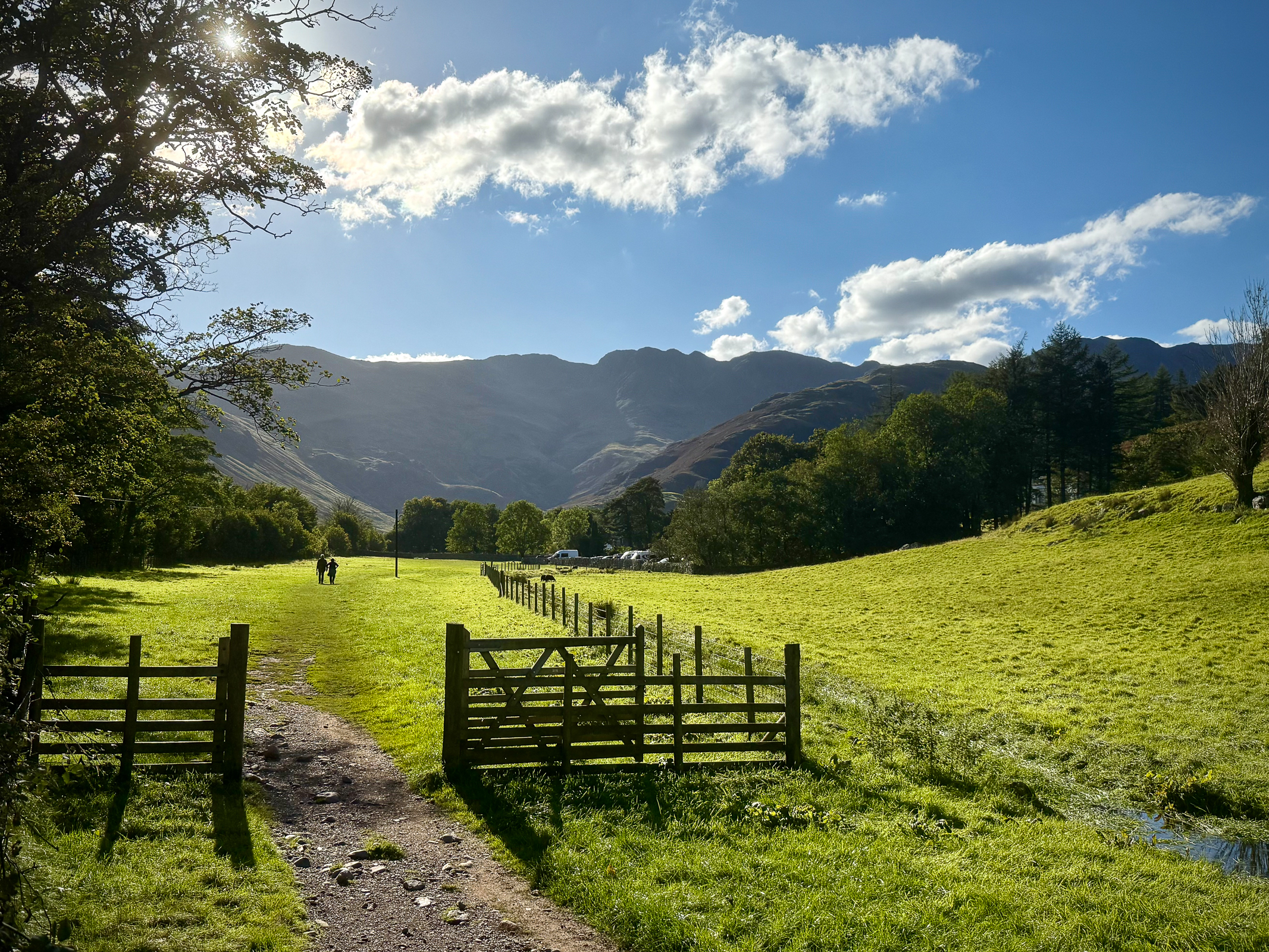
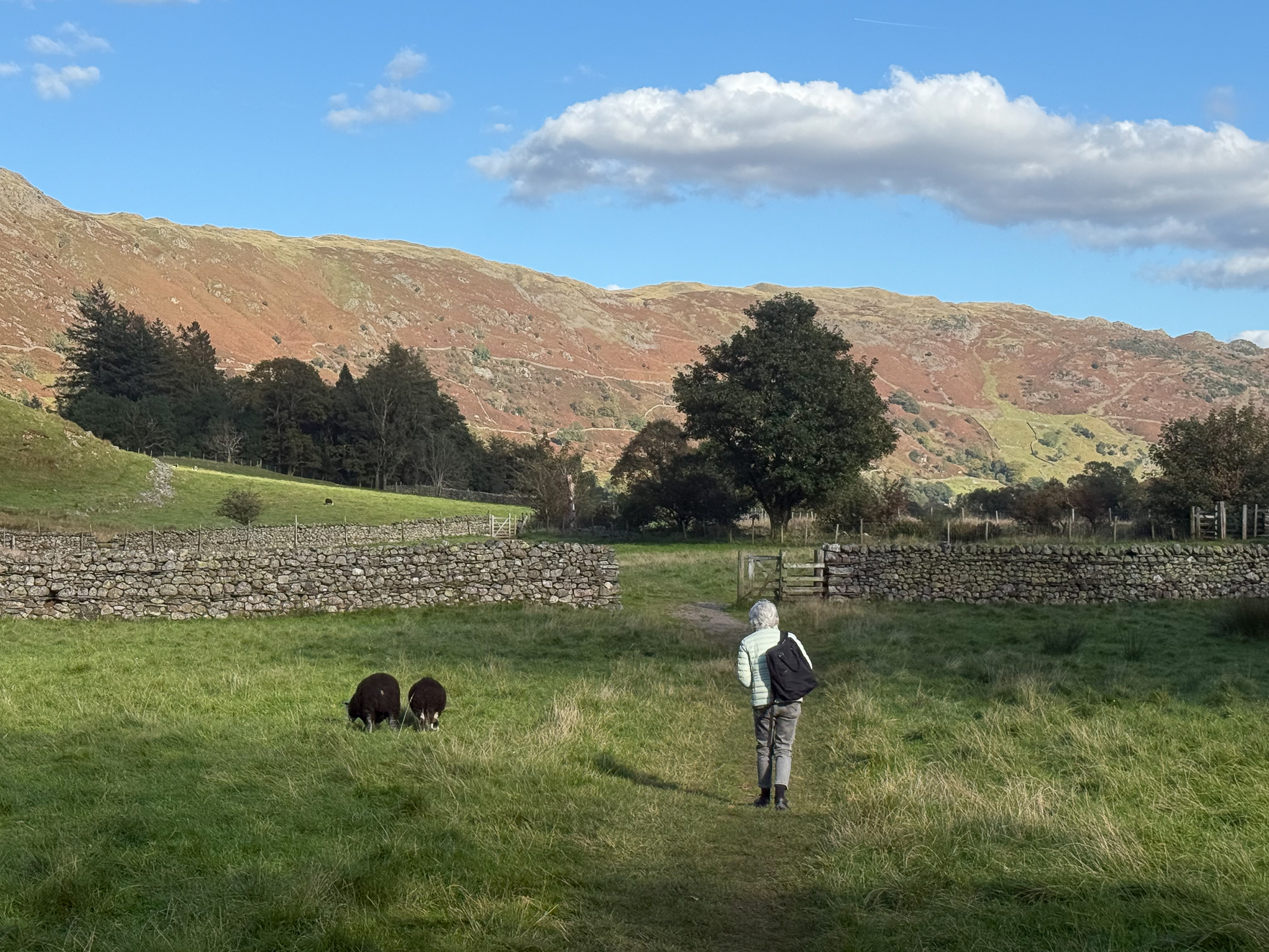
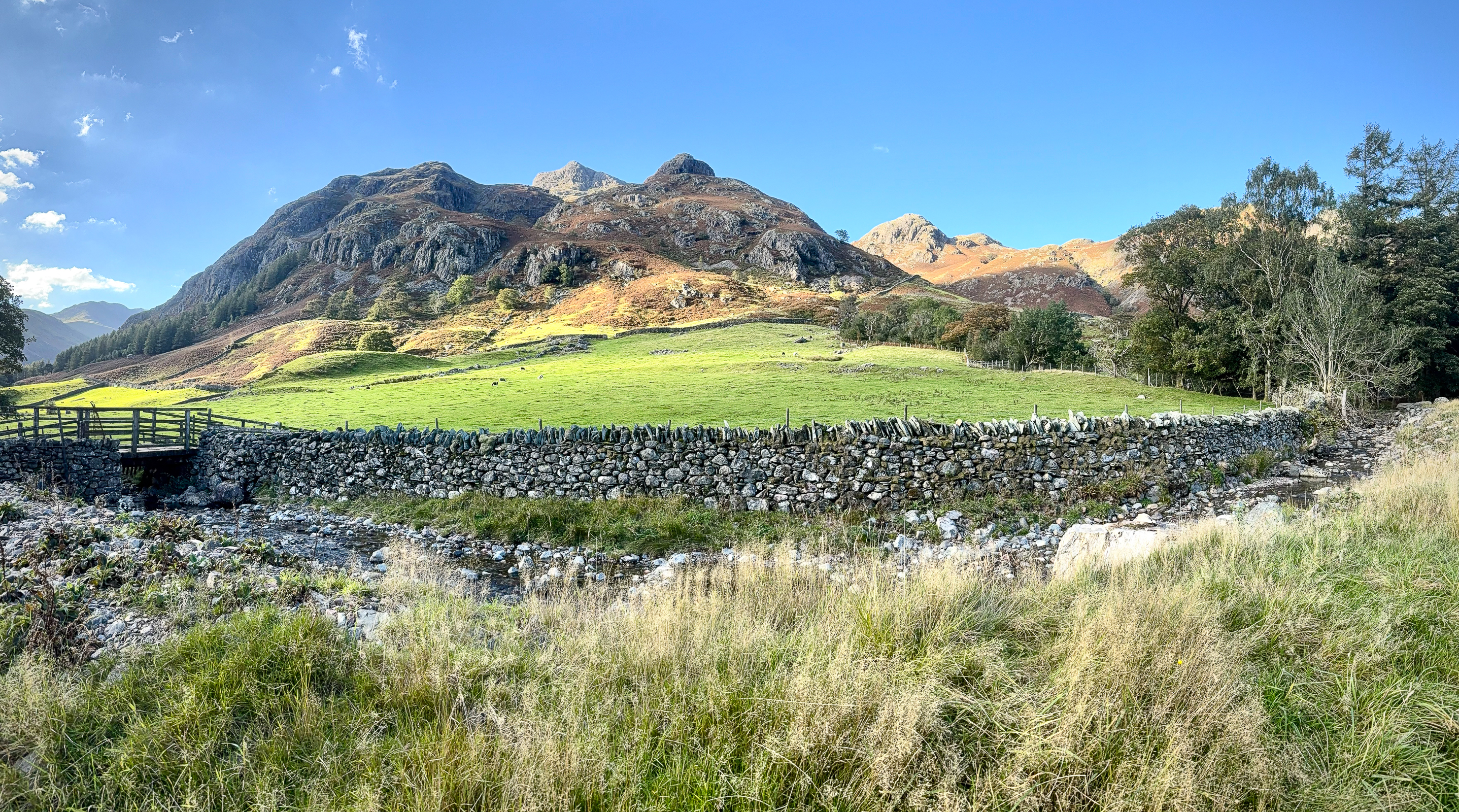
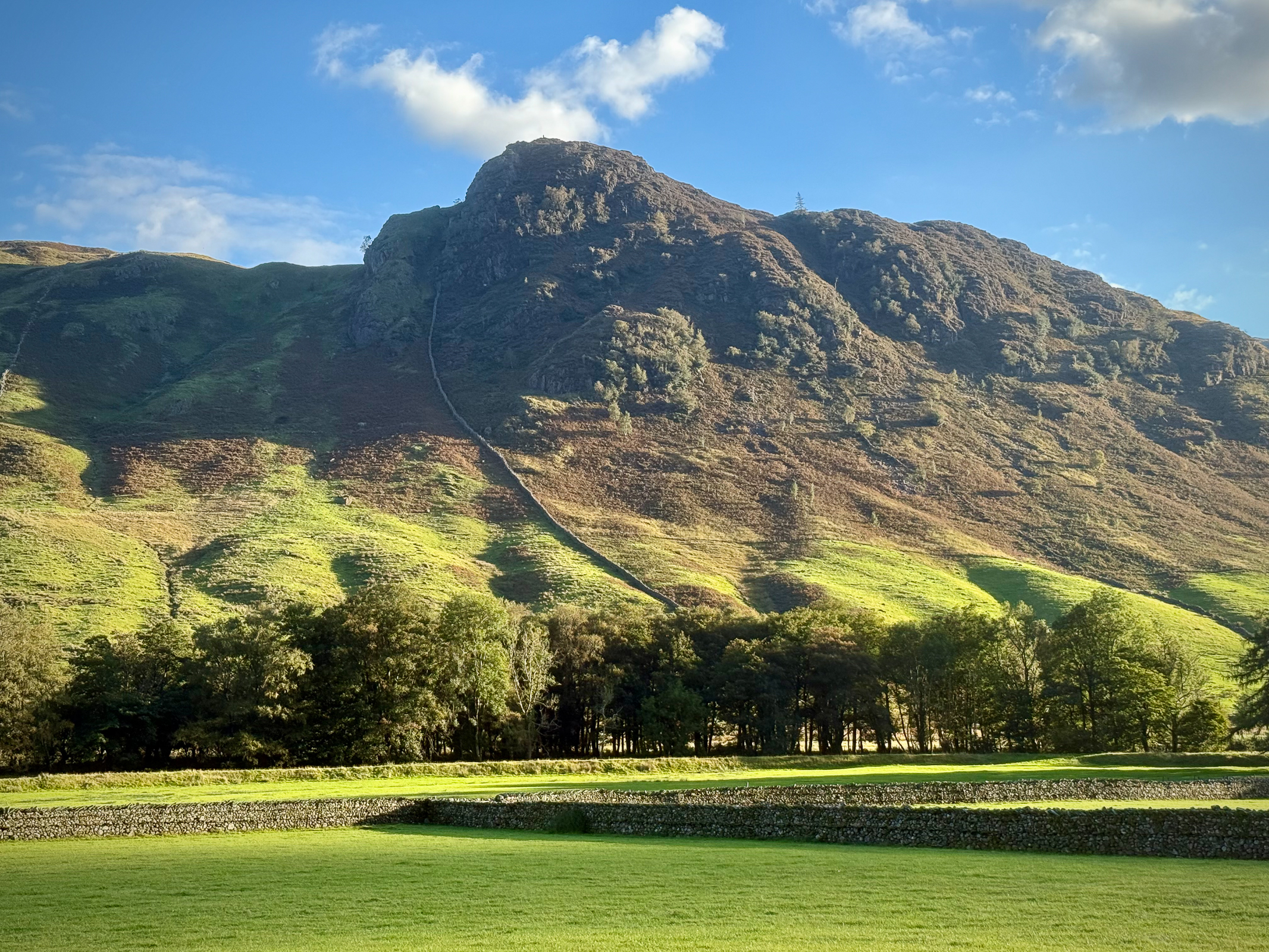
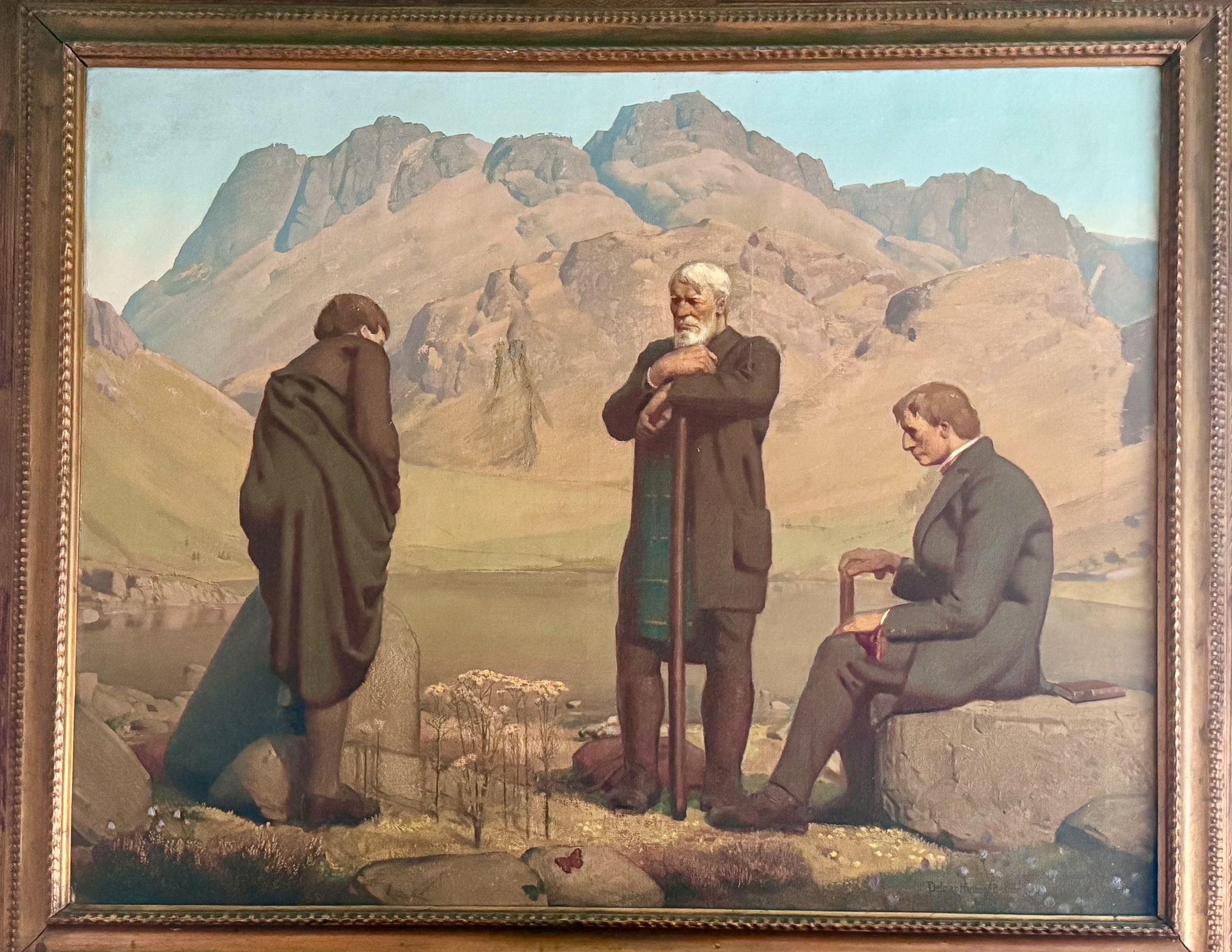
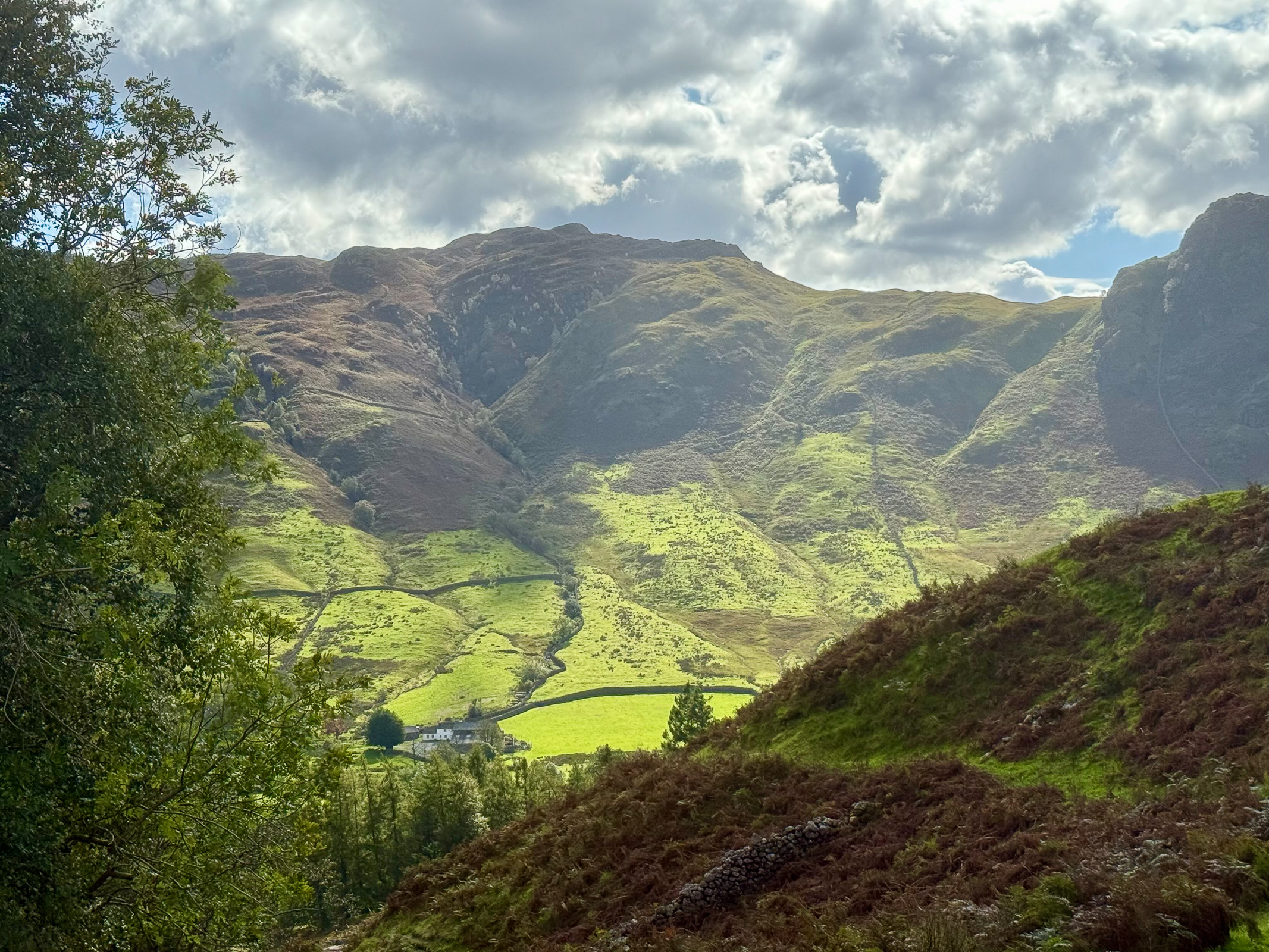
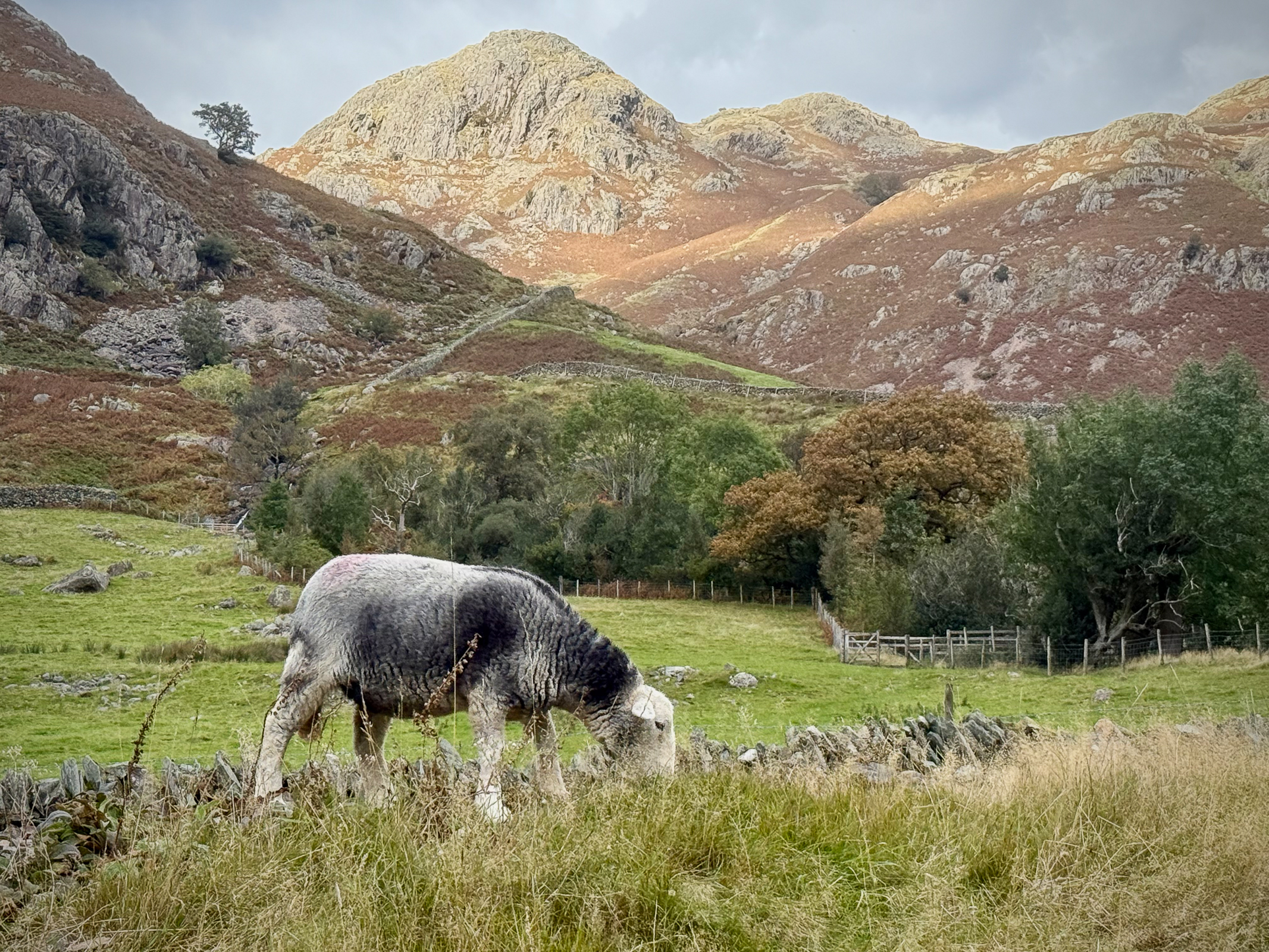
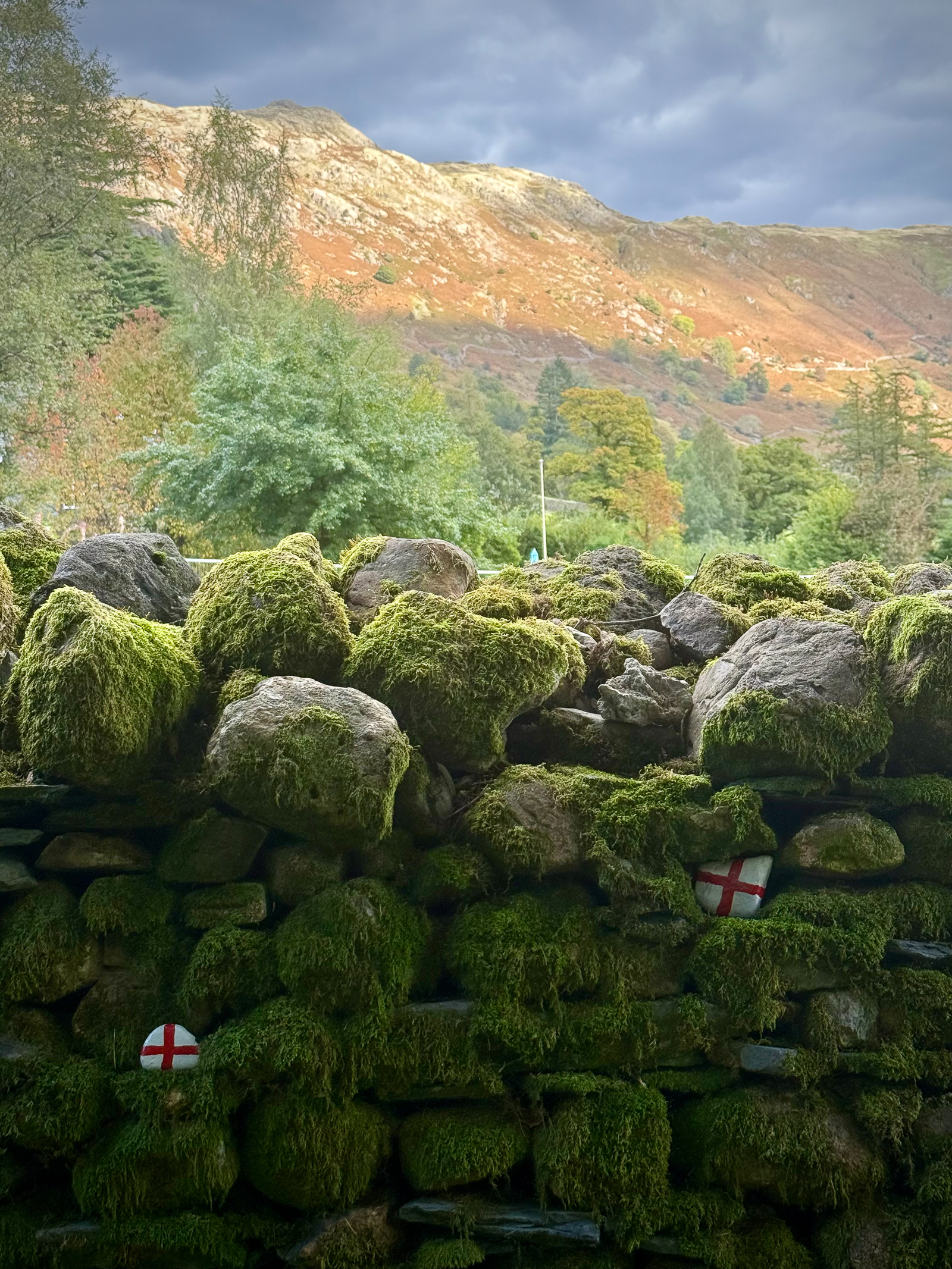
We spent two nights at the Old Dungeon Ghyll Hotel in the Great Langdale Valley of the Lake District National Park. Since 2017, this area has been a UNESCO World Heritage Site, in recognition of its unique hill-farming culture. In the morning, we hiked up most of the way to Stickle Tarn and Bright Beck, a little jewel of a lake. It was located above the by, in a thwaite, by the beck, and from it came a beautiful mountain gill.  A ring garth separated the inbye land from the fell side.  The connected valleys of Great Langdale and Little Langdale take their name from the Old Norse for “long valley”.

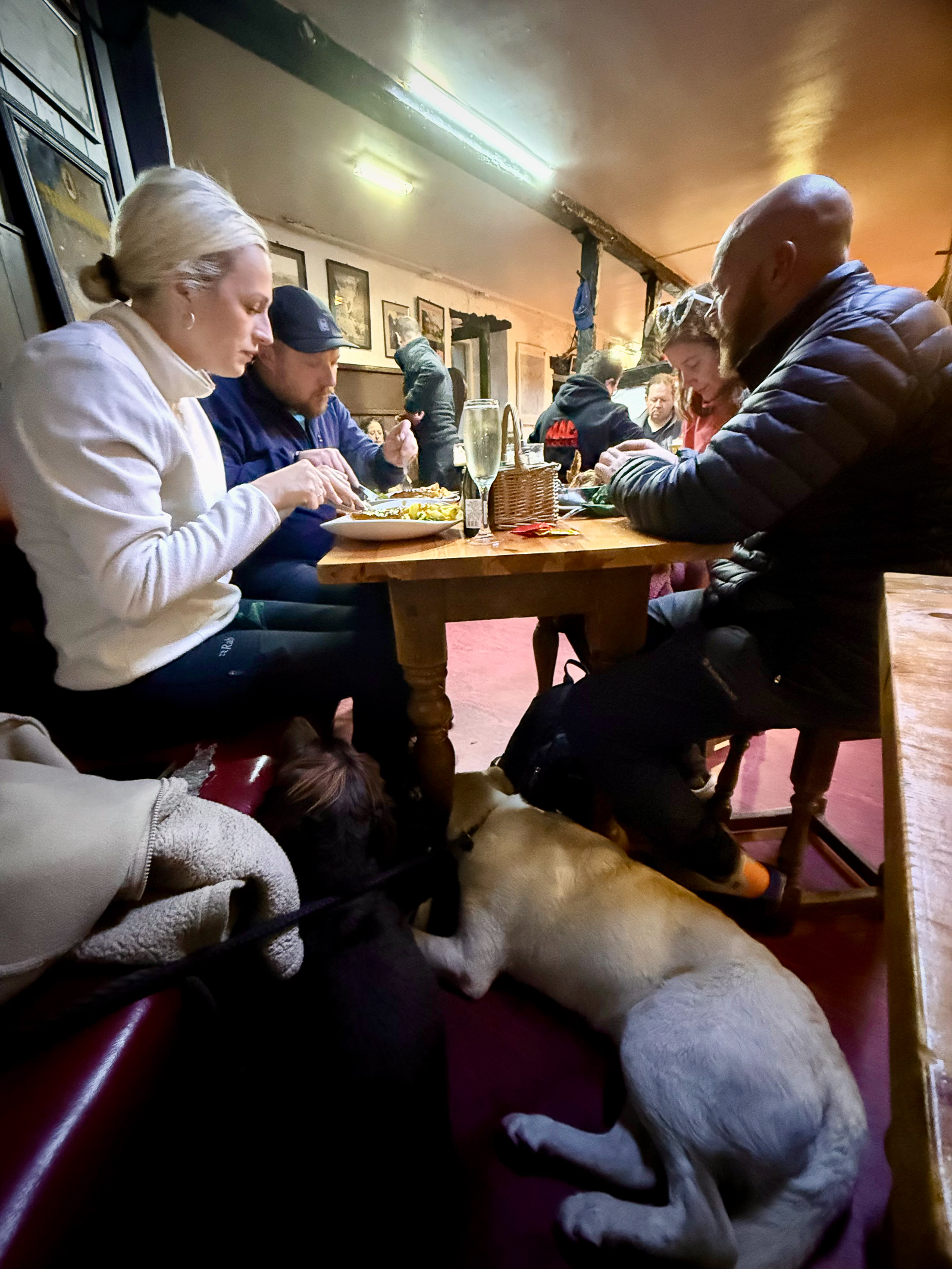
Our hotel was located on a site that has been occupied for 300 years. It was at the foot of the highest mountain in England, and serious hikers and climbers outfitted with serious equipment were taking advantage of this special place. It wasn’t crowded and it was dripping with history. Dinner at the Climbers Bar was a highlight. The meat pies were superb, the pints were great, and the toffee sticky pudding was simply the best I’ve ever had. We were fascinated by how the English (we were the only Americans) all had dogs, and brought them into the pub.

Historically, this area has been occupied for many thousands of years by many people including the Vikings, Celts, Romans, Normans, Welsh, Scots and English. Before the Norse settled here, Welsh was the language spoken in this area. The linguistic heritage from these people is astonishing and is especially felt in the beautiful place names of this remarkable place. Parts of the nearby contested border between England and Scotland were called the Debatable Lands and large clans of bandits called border reivers roamed this ungovernable area for hundreds of years until most of it was taken over by the king of England.

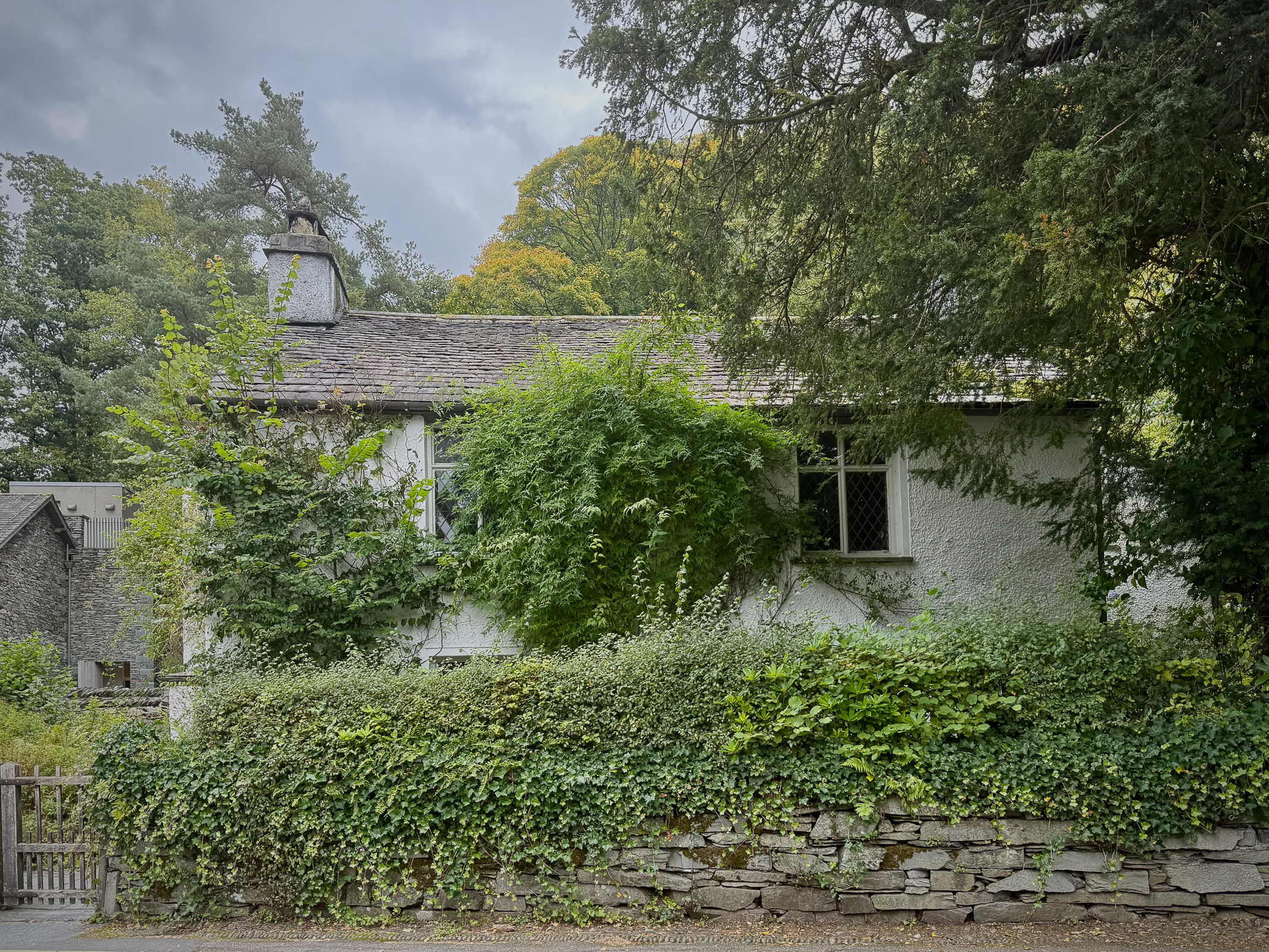
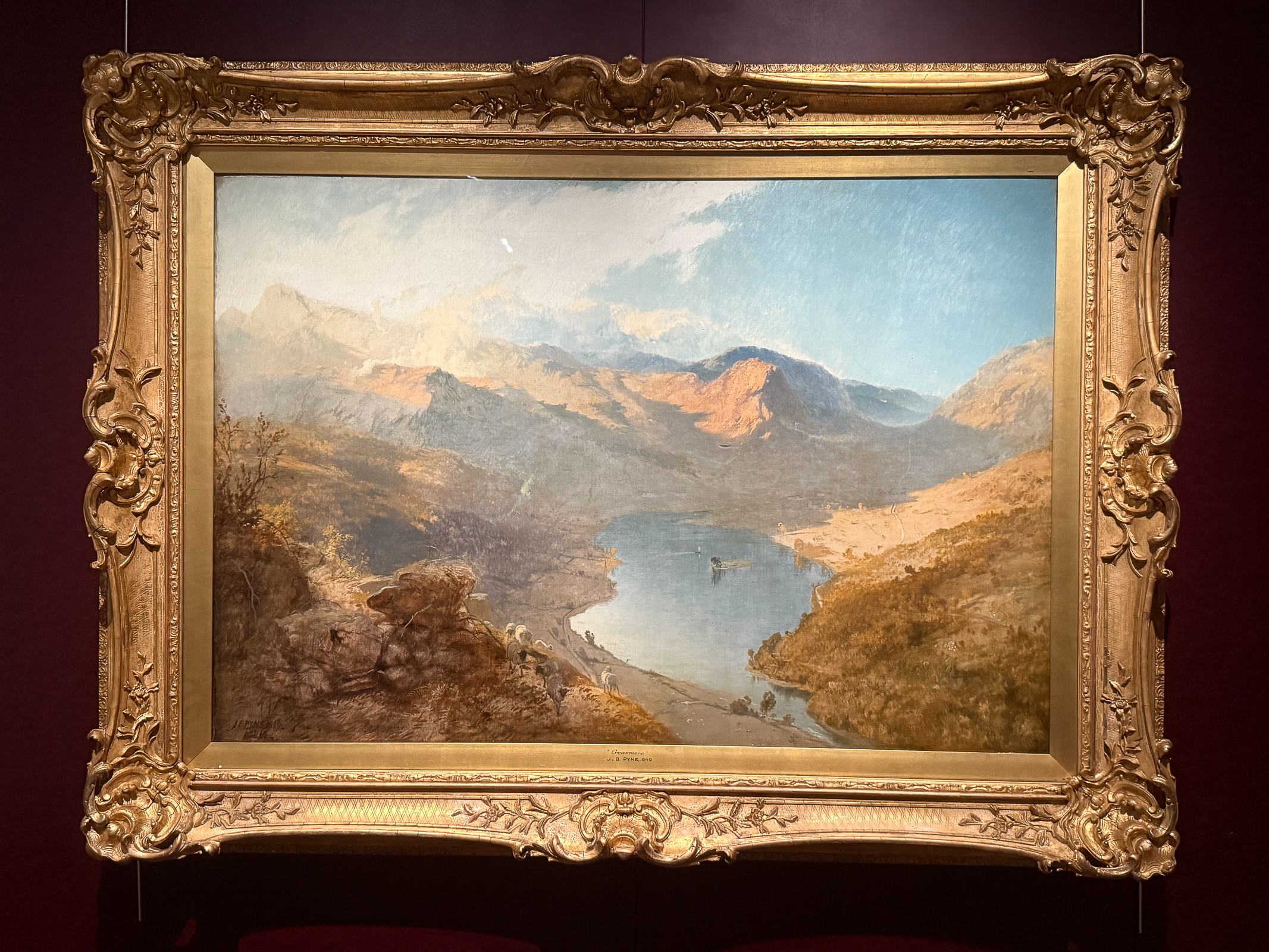
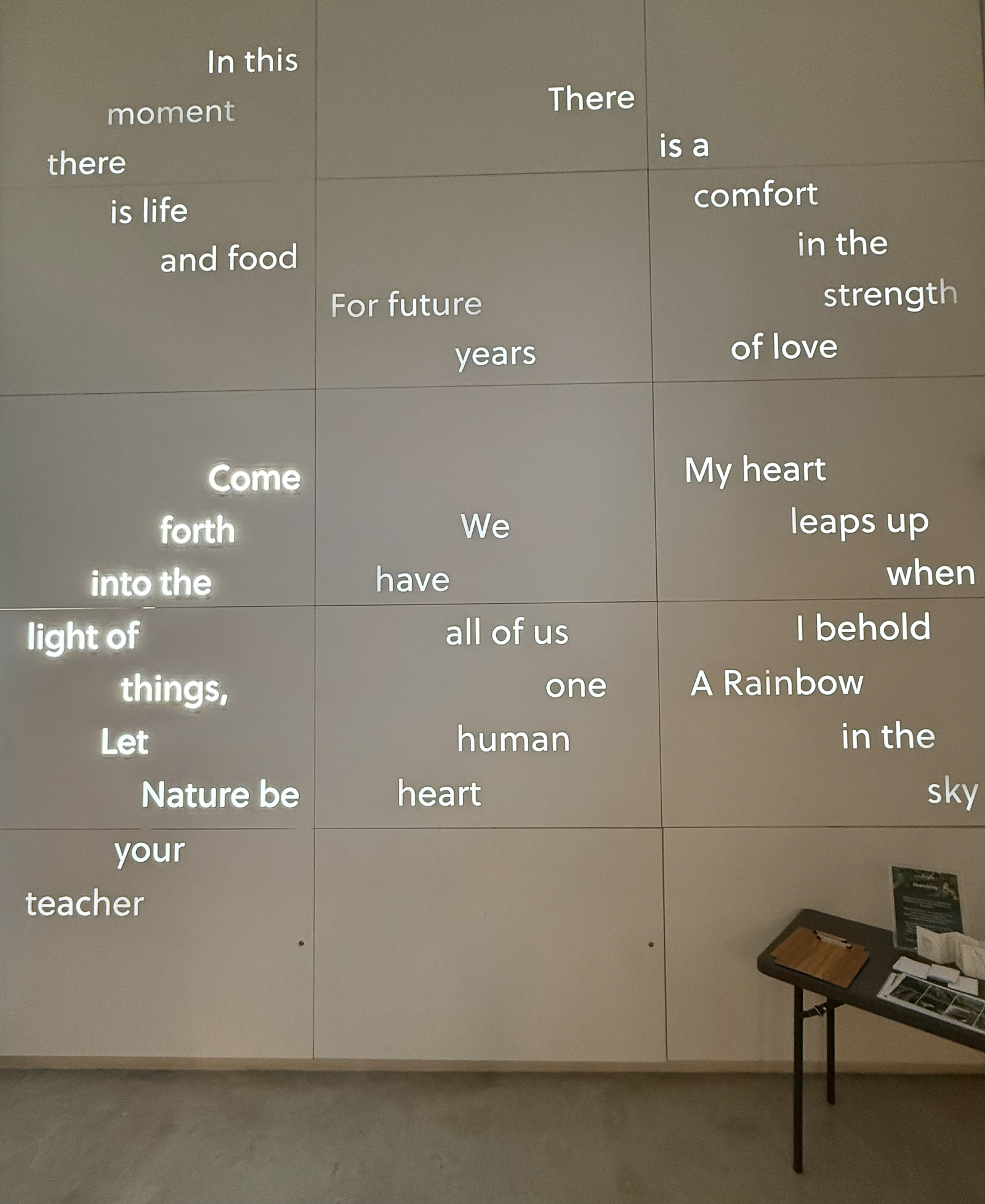
The famous English romantic poet William Wordsworth did much to increase the appreciation and protection of this lovely valley, writing about the Blea Tarn in his poem The Excursion and Dungeon Ghyll in The Idle Shepherd Boys. Wordsworth was a poet who helped launch the Romantic Age in English literature and remains one of the most recognizable names in English poetry. His work emphasized a deep connection and admiration with the natural world and the working people of this area. The little village of Grasmere has an illustrious literary heritage. We made a pilgrimage here to Wordsworth’s home called Dove Cottage where he wrote much of his early poetry. It was stirring to see where he wrote his formative work while he lived in this tiny, cramped cottage with his large family.

It was sad to see how the nearby villages of Ambleside and Windermere have become crowded, exclusive, over commercialized tourist-traps. Like Thoureau’s Walden Pond in Massachusetts, a place that had attracted creative artists seeking solitude has now become overrun by admiring fans and rapacious capitalism. Perhaps it speaks to a need for many to connect with something real rather than virtual. Certainly, the physical beauty here is astonishing and the literary legacy is inspiring. But I was happy to lose the crowds in our rear-view mirror and be far from the maddening crowd.  

As we left the Lake District, the last place we visited was the Castlerigg Stone Circle, which is part of the English National Trust. Built over 4,500 years and like the better-known Stonehenge in southern England, this quiet magical place only reinforced our fascination with this mysterious and beautiful part of England.

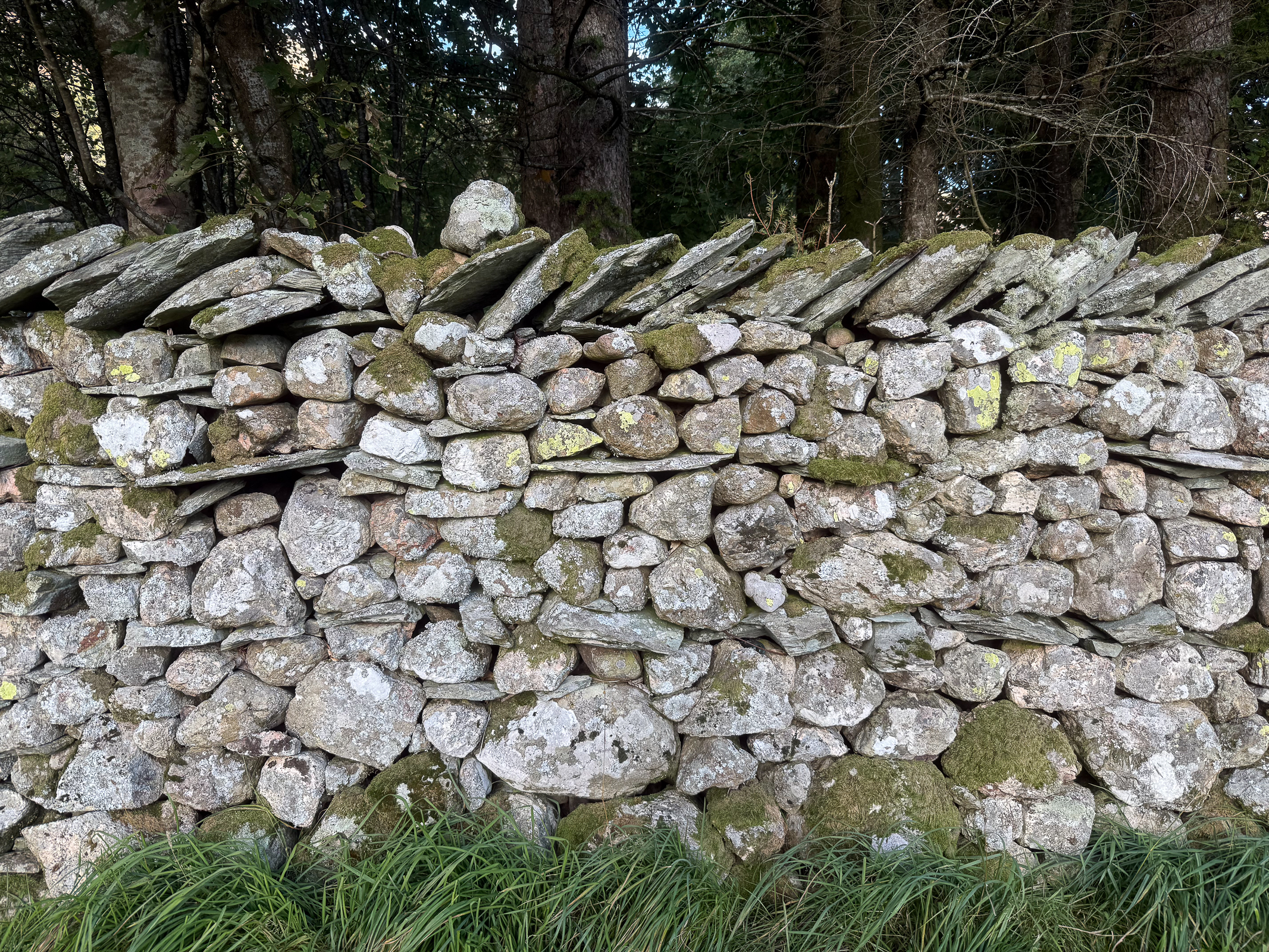
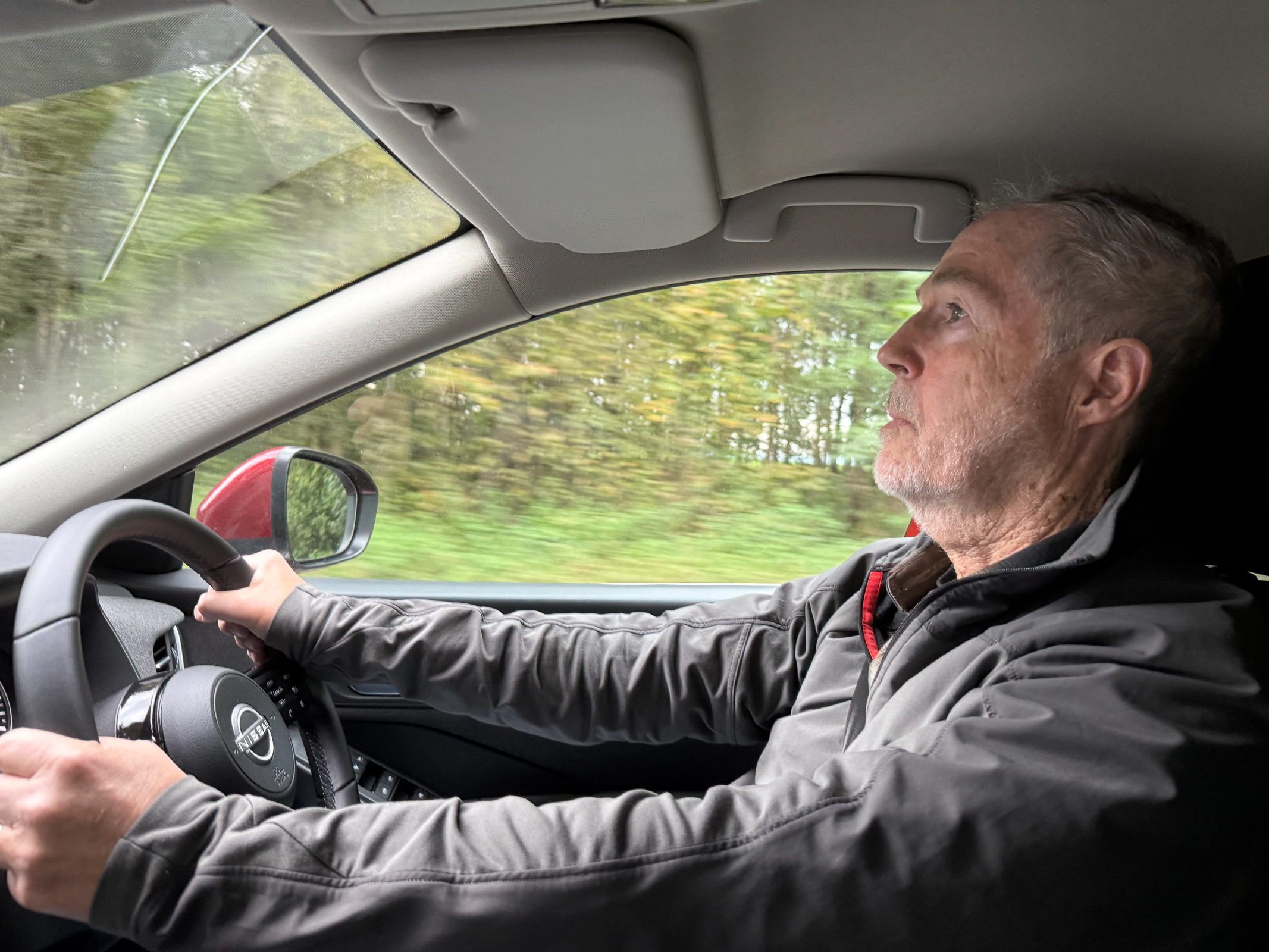
Driving the medieval and impossibly narrow roads of the Lake District was part of my cruel initiation into motoring in England. Ellen said she almost threw up as our oversized car scrapped against the hedges and ancient rock walls as other oversized cars, trucks and busses were barreling in the other direction inches from my face. All of this while driving on the wrong side of the road. I still hold on to the steering wheel with my two-fisted, white-knuckled death grip, but, despite a few close calls, I am gradually feeling more comfortable while driving in England. Miles to go before we sleep…

Next stop: the North.

4 Comments

Filed under Uncategorized

WE ARRIVED IN ENGLAND, AND TRUMP DEPARTS

We were so excited to be traveling to England, until we found out that Trump, our wannabe King, was hobnobbing with a real king in London. We had left the US partly to get away from the insanity of Trump World, but he got here before us. After a disastrous flight from New York where our flight was cancelled and we had to sleep in the airport, the last thing we wanted to deal with was our headline-grabbing President in the news here with the British Prime Minister and the nobility. Fortunately, he left just as we arrived.

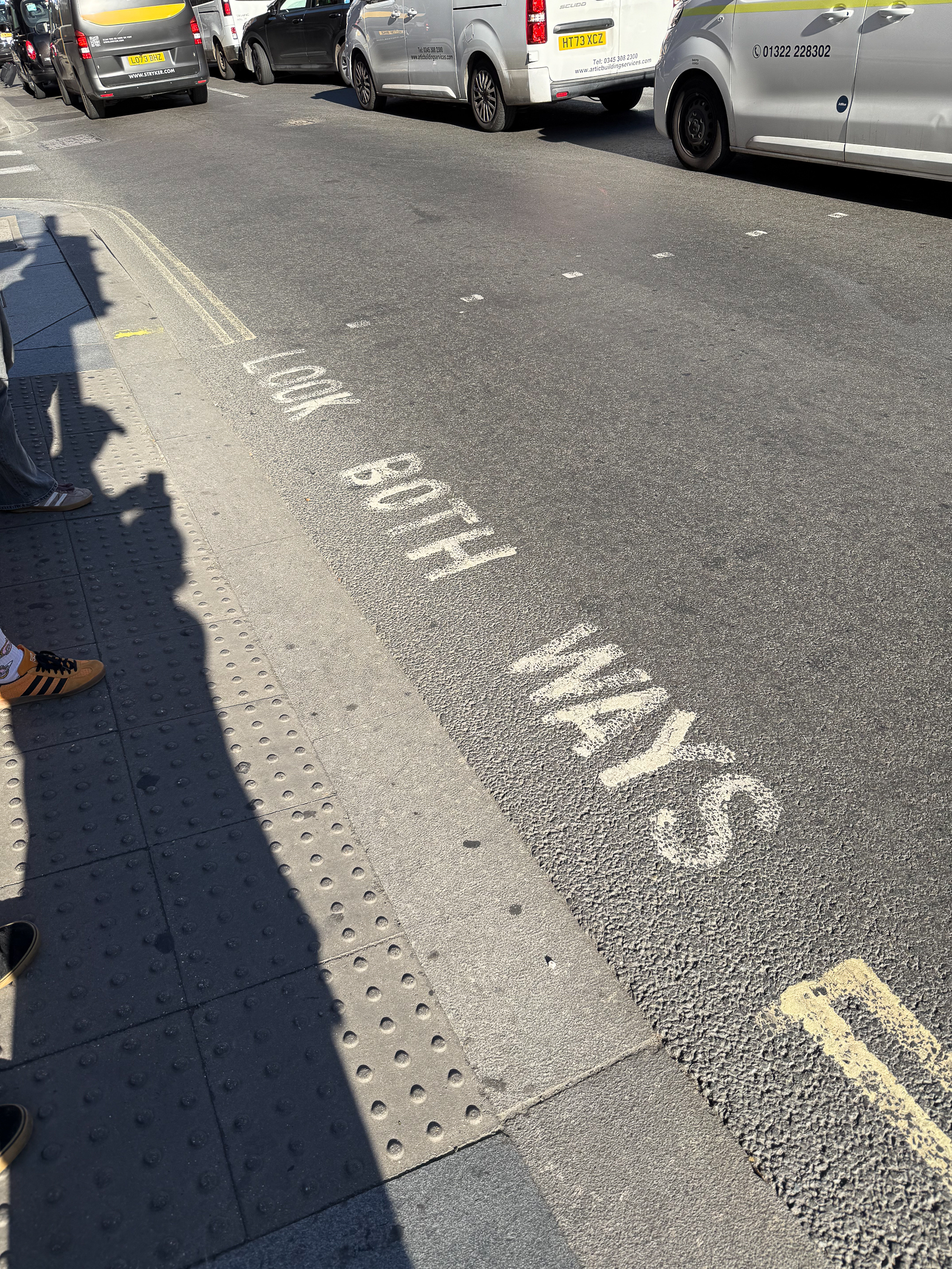
Our taxi driver was adamantly against Trump and said that the vast majority of the English found him appalling. We found that Americans in London need a little time to adjust after landing. Fortunately, translating the language is pretty easy. Unfortunately, figuring out the traffic patterns takes a little more time.

After sleeping 12 hours to recover from jet lag and no sleep at the airport in New York, we were surprisingly chipper as we entered this new country. Our friend Meridel was one of the featured panel speakers at an amazing conference on global water concerns called “Thirst”. It was organized by the Wellcome Collection and featured a fascinating, wide-ranging exhibition on the water crisis and various efforts by artists and others to address this existential threat.

We met Meridel at the symposium and also her Iraqi collaborator Jassim Al-Asad. They both gave a presentation on their Eden in Iraq Wastewater Garden Project. 

We also went to a presentation by a Palestinian sound artist in the Wellcome Foundation library. Much of the library’s collection consists of unique and unusual medically related devises and objects. But it seemed a little jarring to have the young Palestinian presenting her heart-felt work surrounded by this history of medicine.

Driving from London to Birmingham in a rental car was a little like rewiring my brain. I have spent the last 75 years being in cars that were driven on the right side of the road. Now I was having to relearn how to drive on the left side. White knuckles would be one way to describe our three attempts to simply get out of the airport car rental lot. Two hours later we arrived in Birmingham, but it took three more attempts to navigate the impossibly complicated streets in the old urban center while driving in the wrong lane.

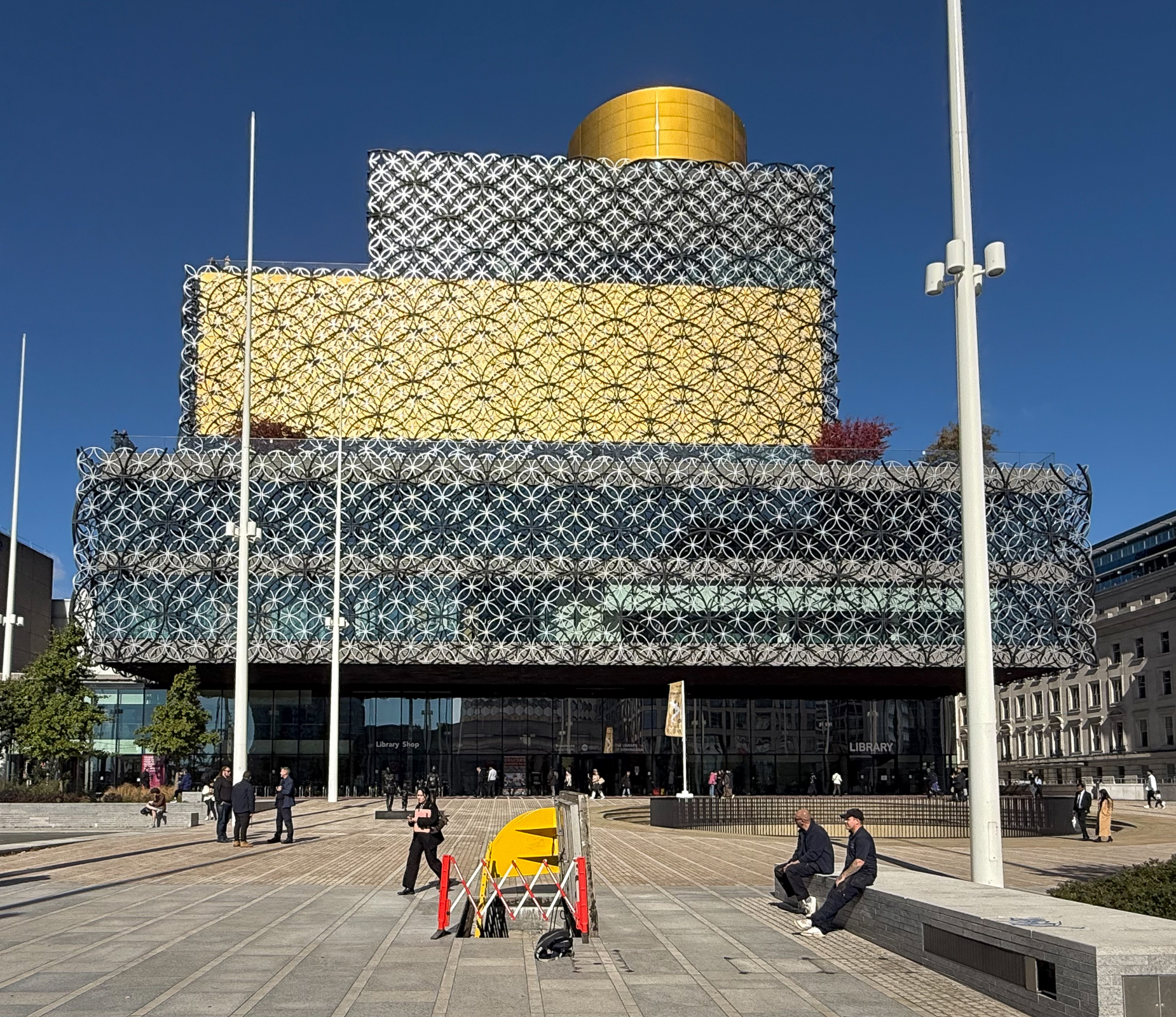
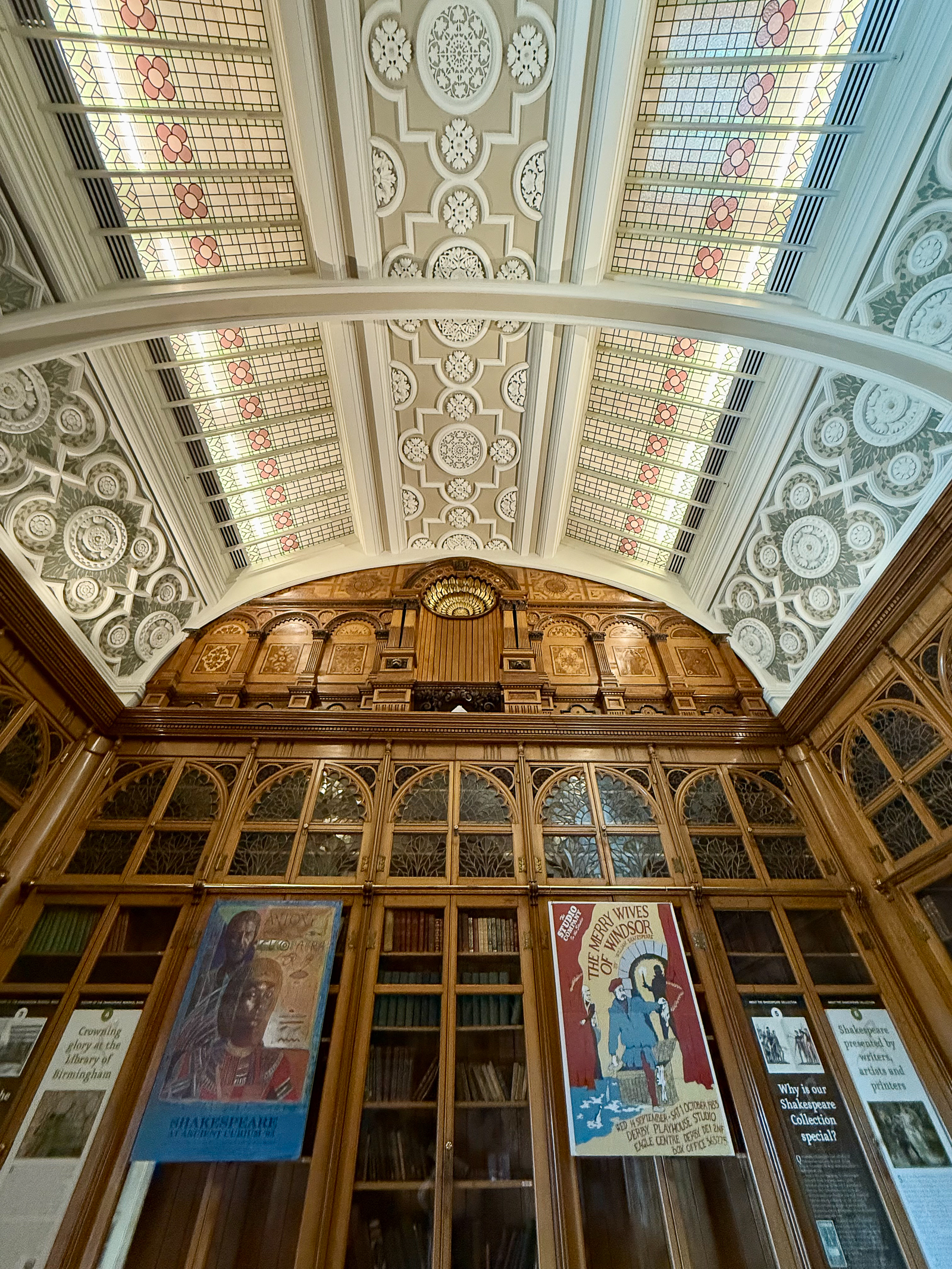
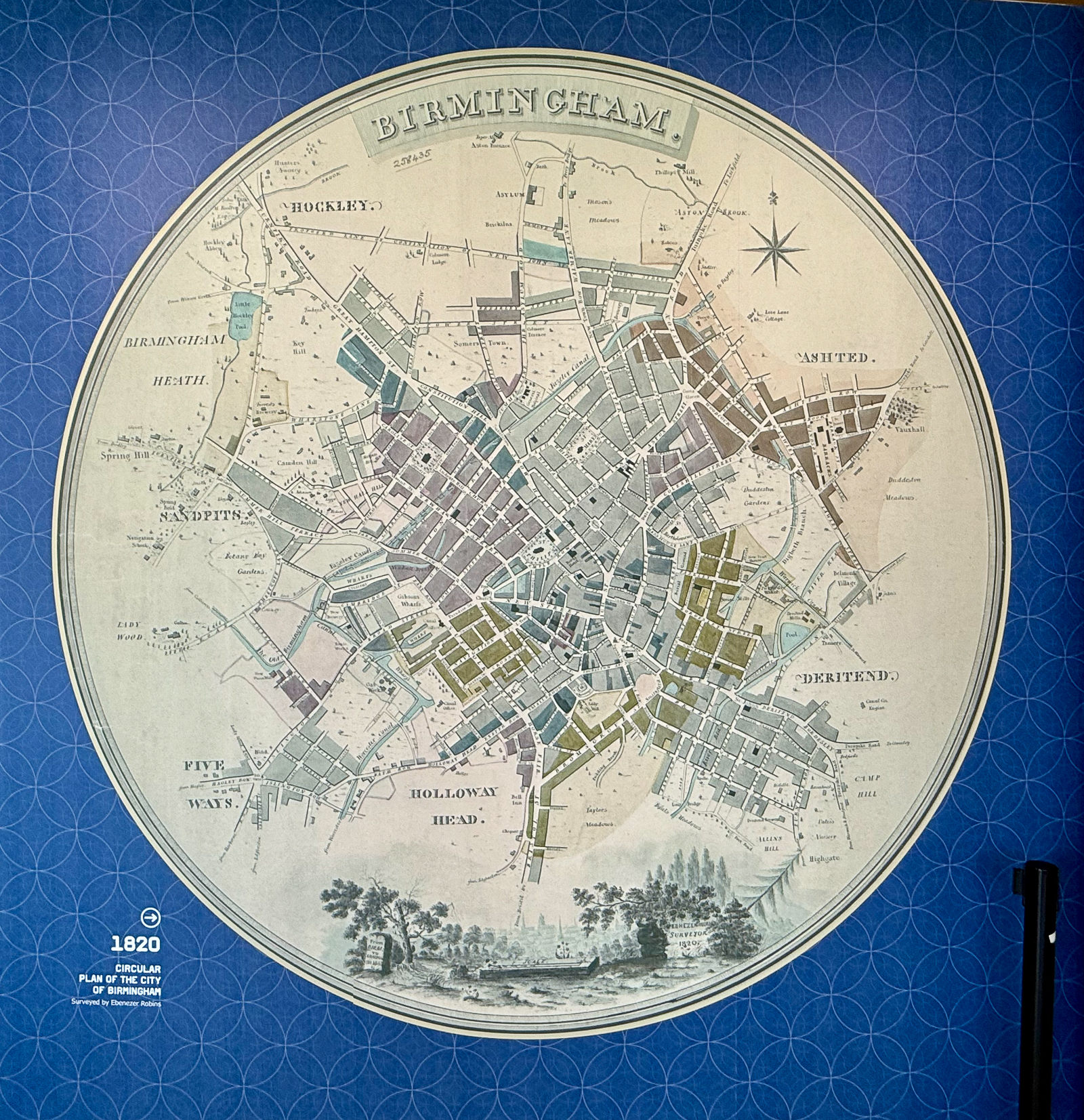
The goal of all this effort was to visit and photograph the Library of Birmingham. It has been described as the largest public library in the UK, the largest public cultural space in Europe, and the largest regional library in Europe. It has almost 2 ½ million visitors a year and is one of the most popular attractions in Europe. It is the flagship project for this post-industrial city’s redevelopment and was very impressive. Birmingham seemed a little scruffy and still has many problems, but this library is an impressive first step in rebuilding the urban core. We spent an evening and a good part of the next day photographing all parts of it.

Each day I gained a little more experience and confidence in my left side of the road driving skills. We drove for two more hours to the other big city in the Midlands named Manchester. Here we stayed for three nights with friends of Walker’s named Joanna and Michael. She is an American and went to school with Walker, and he is a Brit. They were the most fascinating people that were able to open up and interpret all things English. We could not have had better guides. We first met them a few years ago when they stayed with us on their bicycle odyssey riding from Seattle to the very bottom of South America and then back up through Africa.

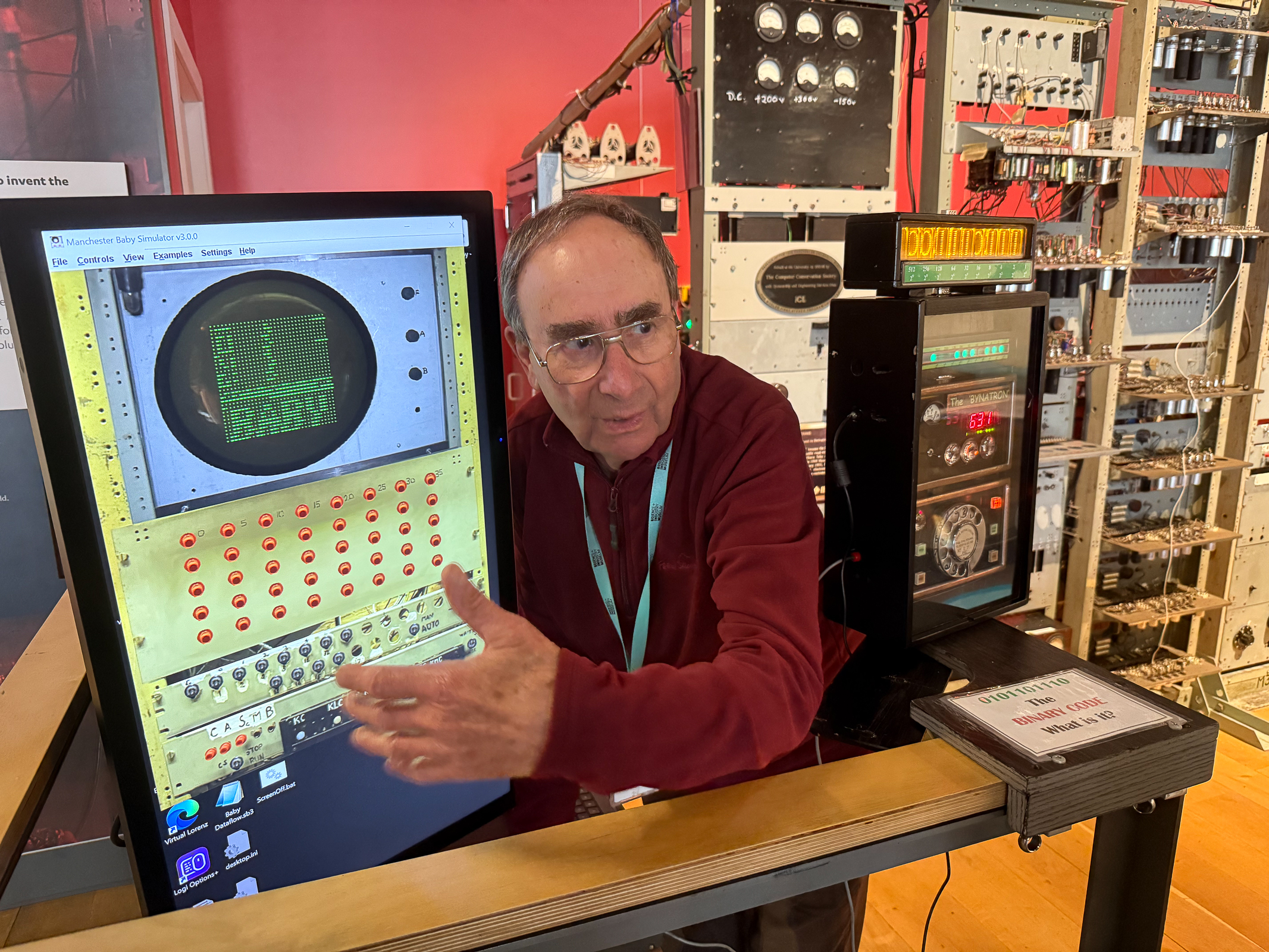
Manchester’s Science and Industry Museum featured much of the dynamic industrial innovation of a city that helped start the Industrial Revolution, for better and for worse. Even one of the earliest forms of the computer came from here.

Michael and Joanna were perfect hosts and took us to the site where the IRA blew up a large part of central Manchester, and a statue of Lincoln with his letter to the citizens of Manchester who sacrificed their dependence on Southern cotton to help end slavery during our Civil War. Ironically, the statue was surrounded by a well-organized homeless encampment. Finally, we saw a local artist’s wonderful depiction of Trump entitled “Mandate of Heaven”.

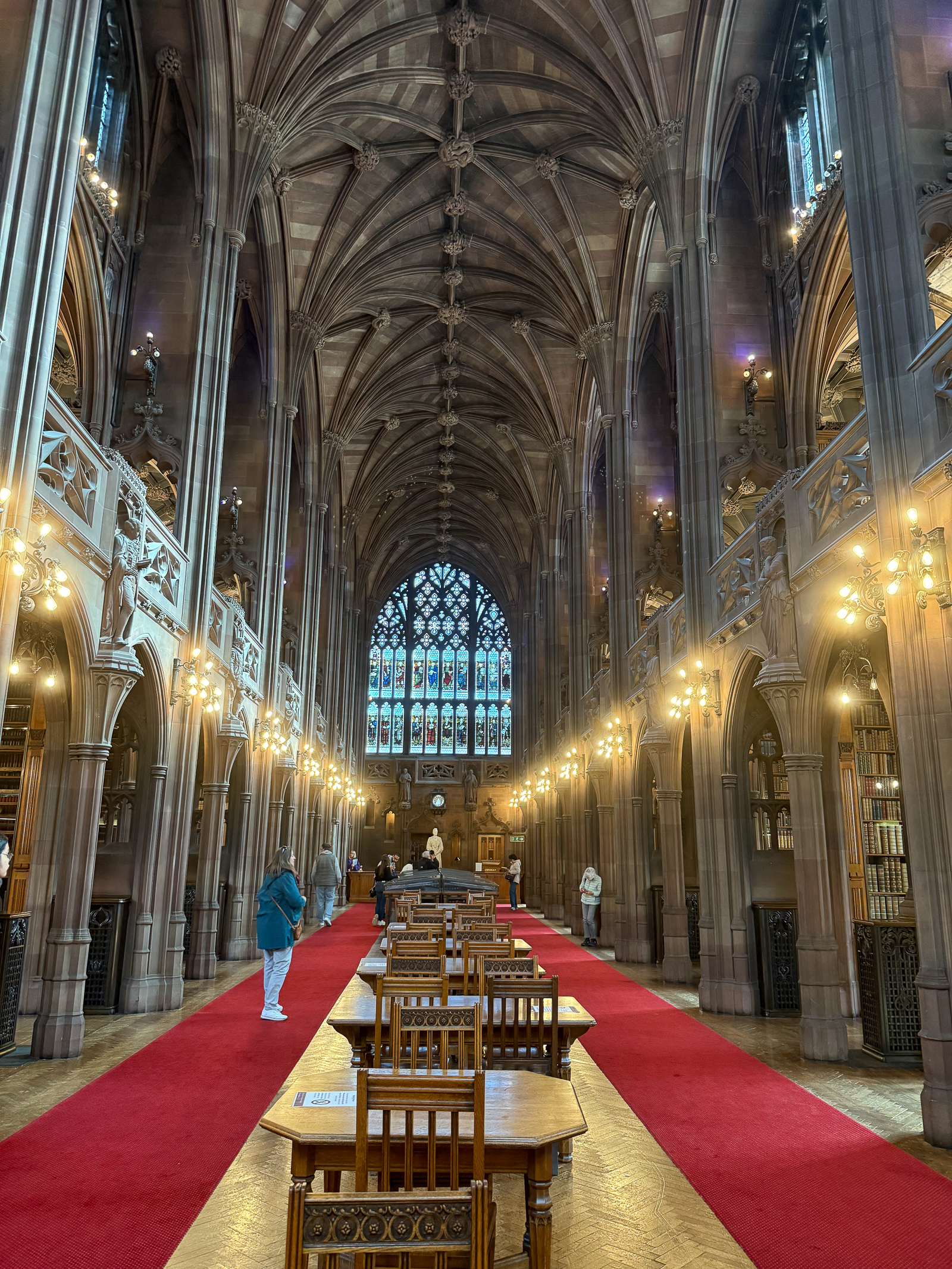
The John Rylands Research Institute and Library is a unusual late-Victorian neo-Gothic building which opened in 1900 by a wealthy widow in memory of her husband. It is the third largest academic library in the UK with a very large and impressive special collections. It felt strange being in a building that mimics the beauty of Gothic architecture but was built in the 20th century.

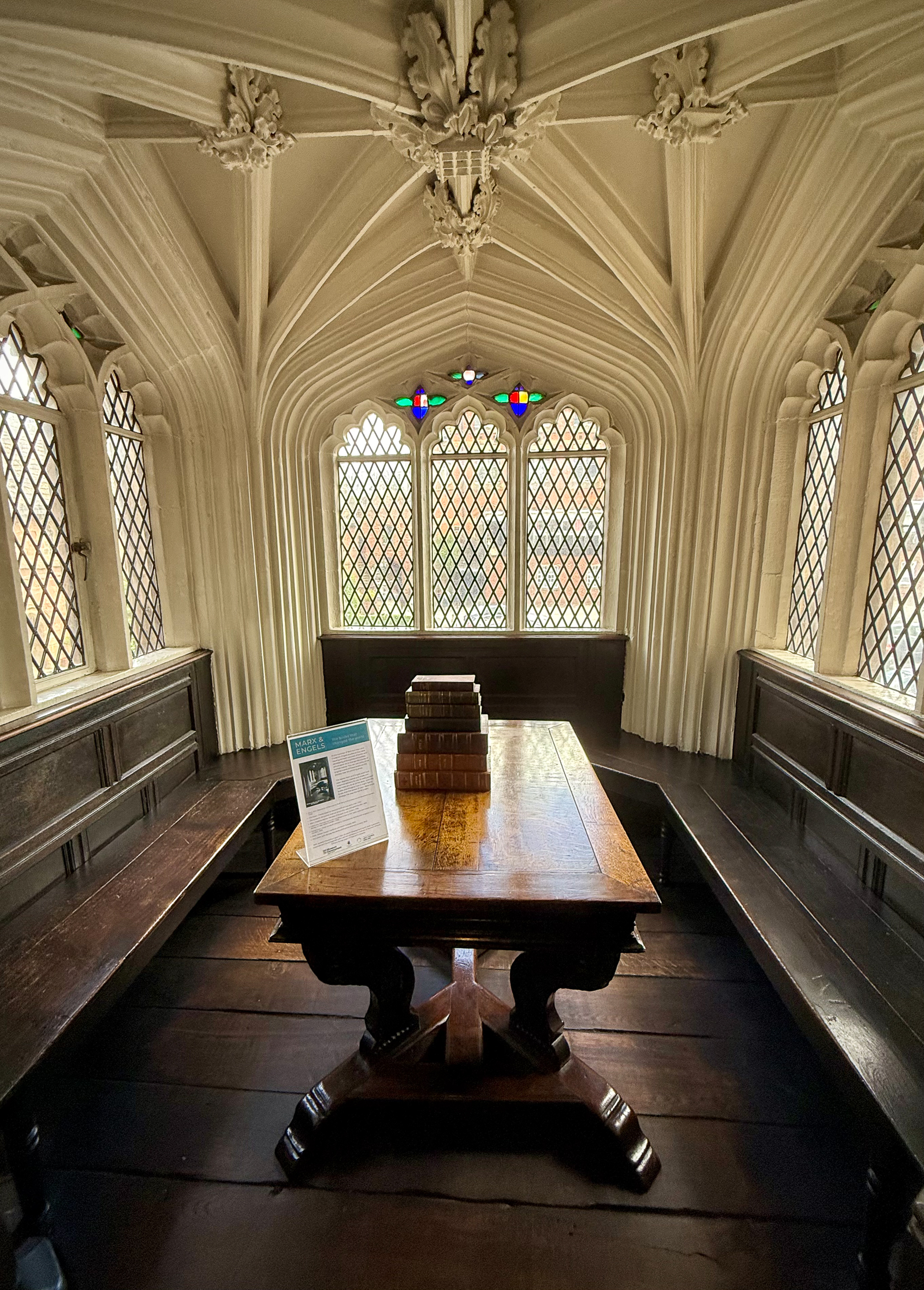
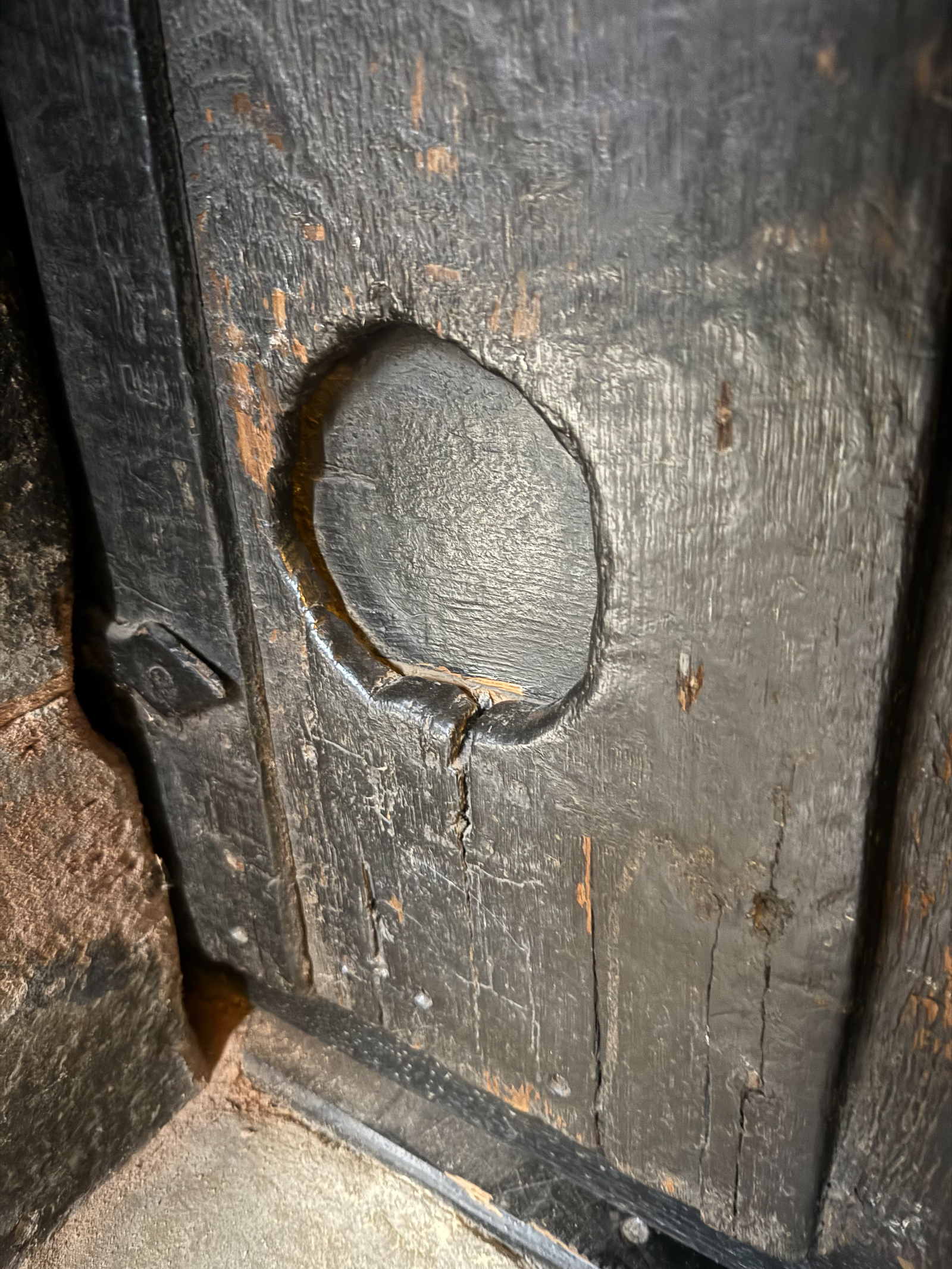
Our last library in Manchester was Chetham’s Library. It is the oldest free public reference library in the English-speaking world and was established in 1653. We had to take a tour to access the inside of the library, but the two guides made the whole experience fascinating. Besides the architecture and ambiance, one of the highlights was seeing the desk that Karl Marx and Fredrich Engles used to write the Communist Manifesto. The other highlight was seeing a medieval cat door, or as the English call it a cat flap.

While staying with our new friends in Manchester, we were able to indulge in spending time with their two delightful cats named Jose and Cali. We were in bad need for a cat fix, and these kitties were our saviors.

Next stop: The Lake District.

2 Comments

Filed under Uncategorized

SLAUGHTER OF THE INNOCENTS

As we see the end of summer transition into the colorful Fall tones of forested New England, we watch with horror as Trump rampages over our country’s economy and democracy. It was laughable to see Trump’s so called “summit” with Putin in Alaska. It was pathetic but not surprising to see Trump bow down to Putin but get nothing in return. It was as if Trump had purposely set himself up to be humiliated.

As a nation we are better than this. The amplified political rhetoric, anger, and fear floating around right now does not have to be our future. Heather Cox Richardson and others have spoke eloquently about our sometimes violent past when our country seemed to split apart only to gradually come back together after the dark fever dreams pass and we move into the sunlit uplands of better leadership.

Trump seems to relish pouring gasoline on the simmering fires of our current political passions. He did it again this week after the assassination of podcaster Charlie Kirk. I remembered that Kirk had been interviewed last March by our Governor/podcaster Gavin Newsom. Gavin had just started his new career in podcasting and was learning the ropes of how to do it when he interviewed Kirk. I admired Newsom for the courage of reaching out to the political right so his liberal audience could hear another point of view. Unfortunately, he chose Steve Bannon and Charlie Kirk as his first two guests. The results were a little like watching an energetic teen-ager playing a full game of baseball against a major league team. I listened to Gavin’s interview of Charlie Kirk to try to understand Kirk’s appeal. He was polite, smart, politically savvy, very Christian, and had a great ability to charm his audience. But I felt that he was troubling because he used his appealing ways to put his finger on and exploit points of deep anxiety among parts of our population, especially young men. Even though Gavin seemed unable to keep up with Kirk, I applaud our Governor for letting us hear what was a prominent voice in this rising tide of the young political right. We all need to hear this so we can find better ways to counter the far right’s hateful intolerance.

In the meantime, Putin continues his slaughter of the innocent people of Ukraine. We still get notes and posts from our librarian friends from different parts of Ukraine. Despite Trump’s shameless worshipping of Putin, Vlad-the-Impaler is undeterred in his cruel war against a heroic nation. The Russian military is engaged in a crusade that is nothing short of an apocalypse for the people of Ukraine. In the last few weeks, it has stepped up the number of its attacks on Ukrainian cities and especially Ukrainian civilians to the highest level of the war. Recently, one of our Ukrainian friends posted a beautiful photo of flowers in full bloom. I realized that when you are surrounded by the ugliness of war, simple things like a beautiful flower can be an act of defiance and resistance to the appalling circumstances that the good people of Ukraine now endure. We all seem to need some kind of therapy right now.

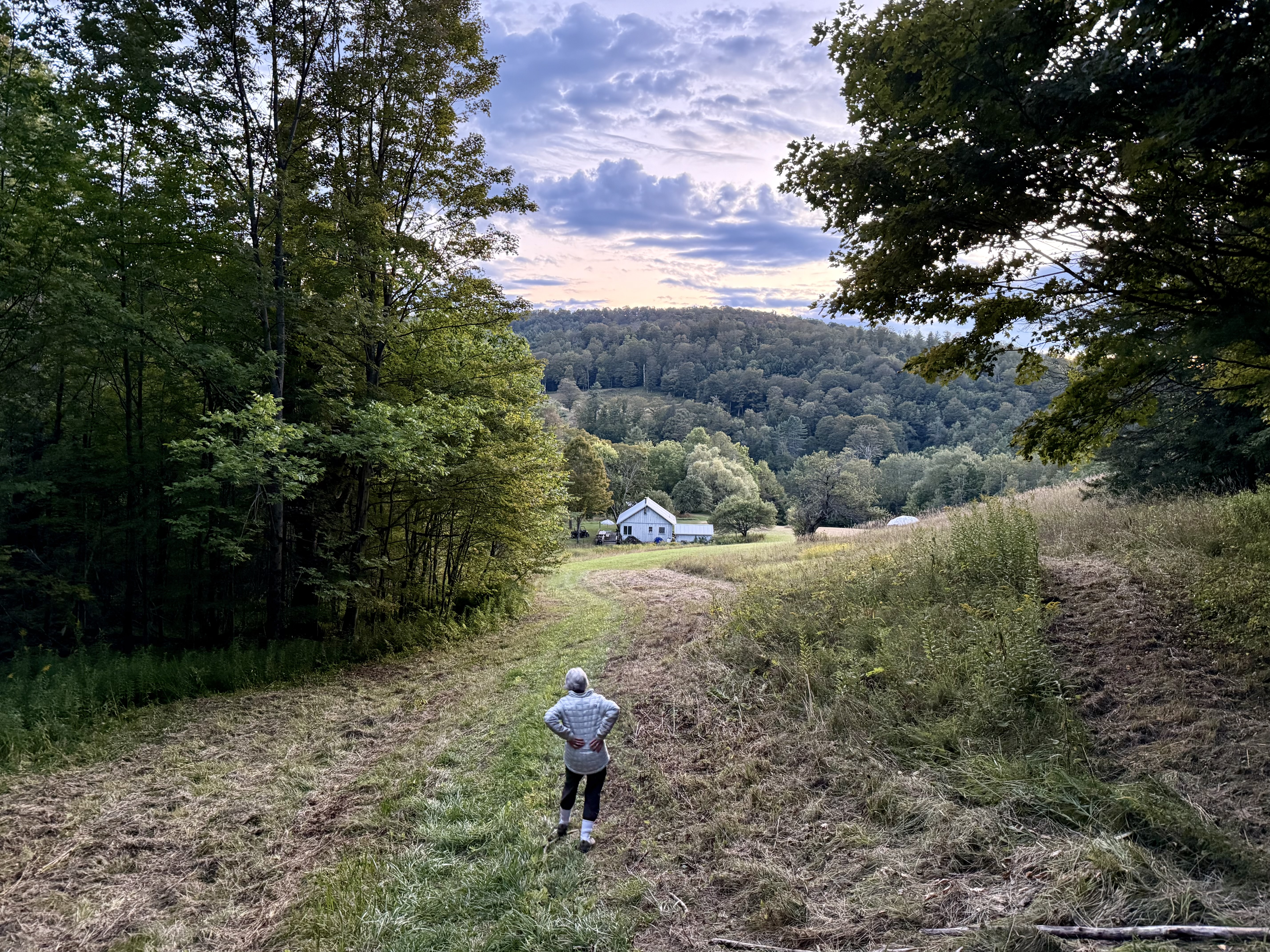
Our therapy for the moment is to spend a month in the beautiful Green Mountain state of Vermont. Parts of New England are currently going through one of its worst droughts ever and some areas are under an extreme drought warning. But it sure looks a lot greener than parts of our parched California and the American West.

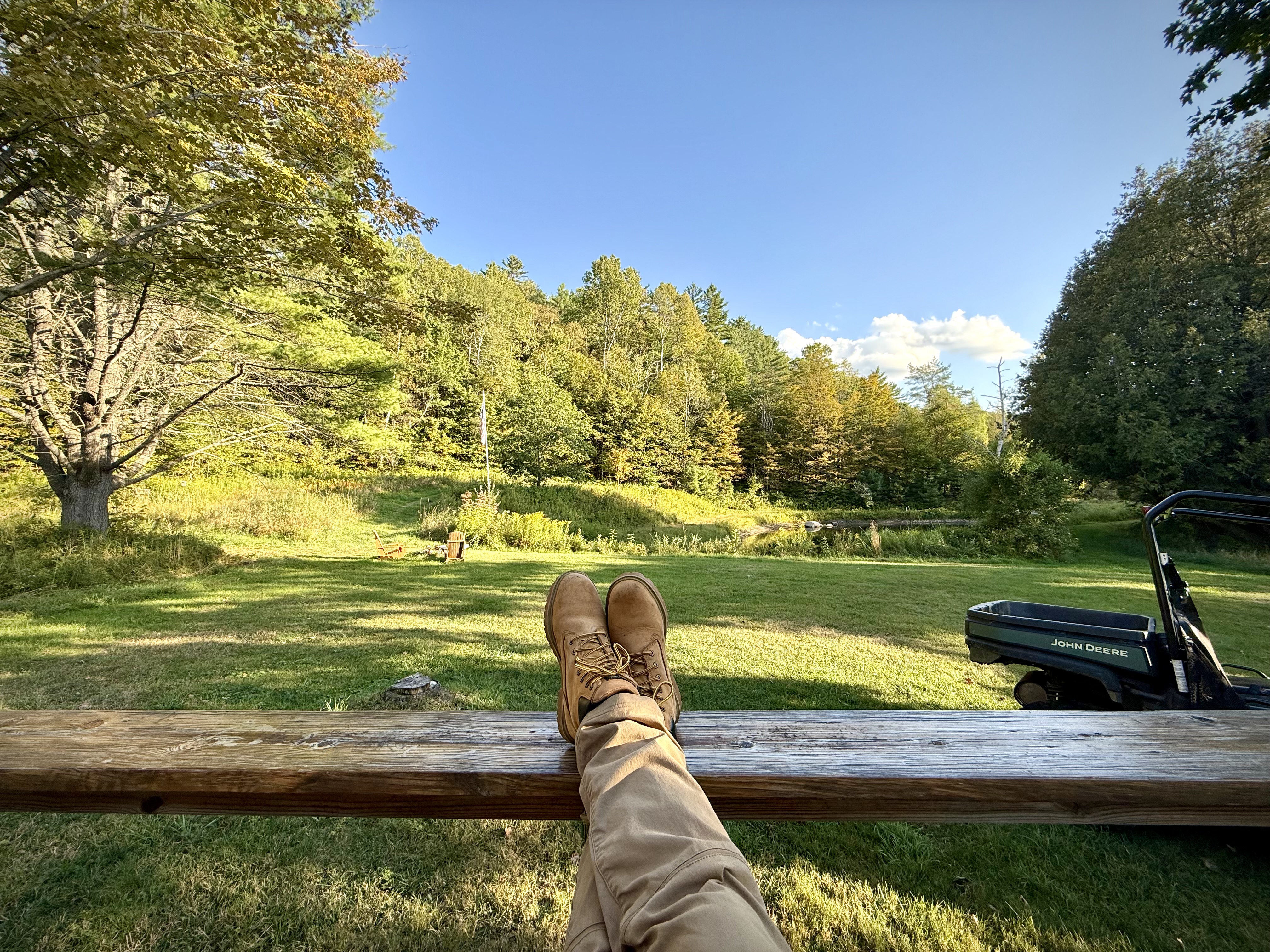
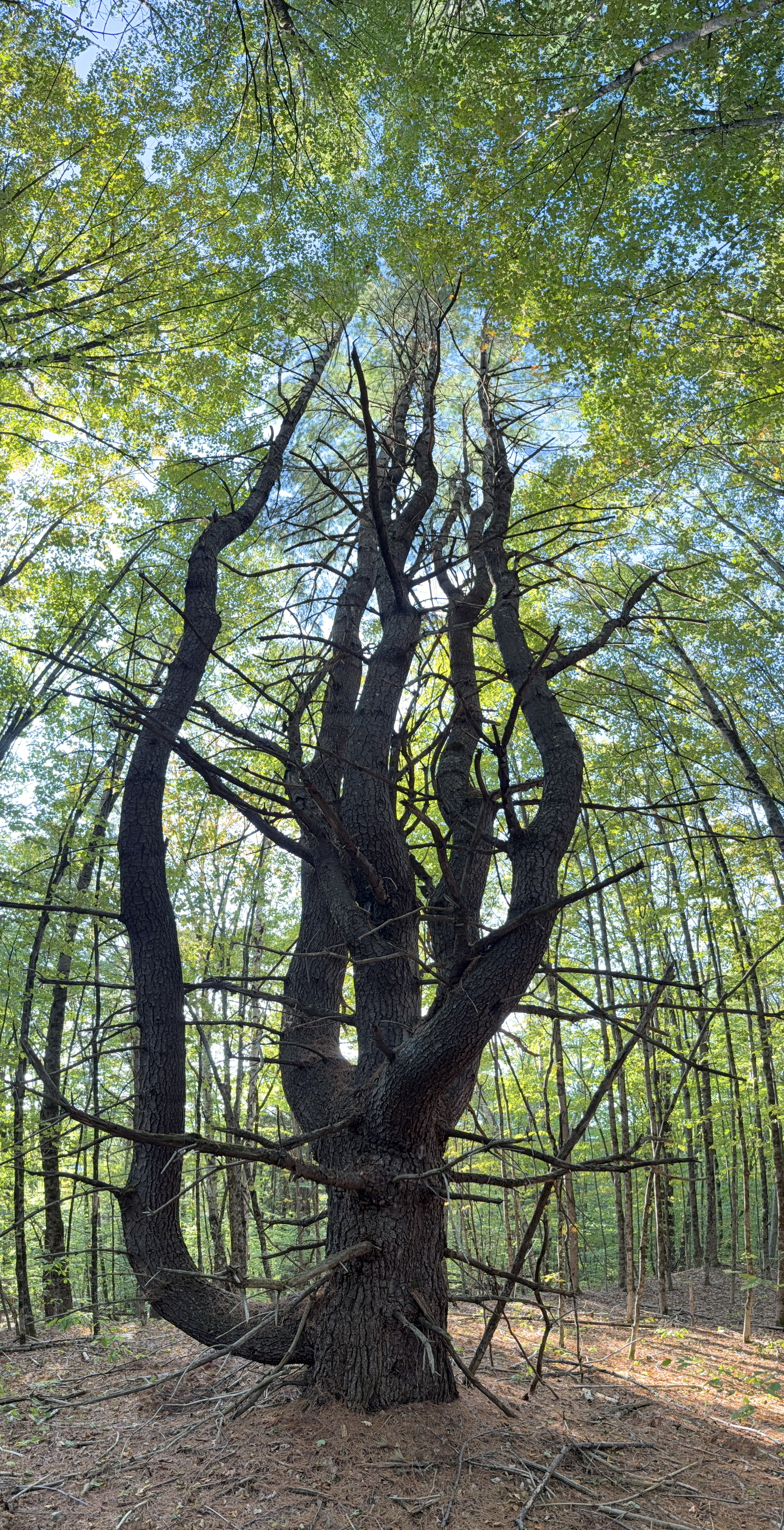
Occasionally, we tool around the property in an ATV, especially to go to the top of the nearby hill, called the “cocktail lounge”, to have a beer and watch the sunset. But the best way to enjoy the Vermont forests is to stretch our legs and hike.

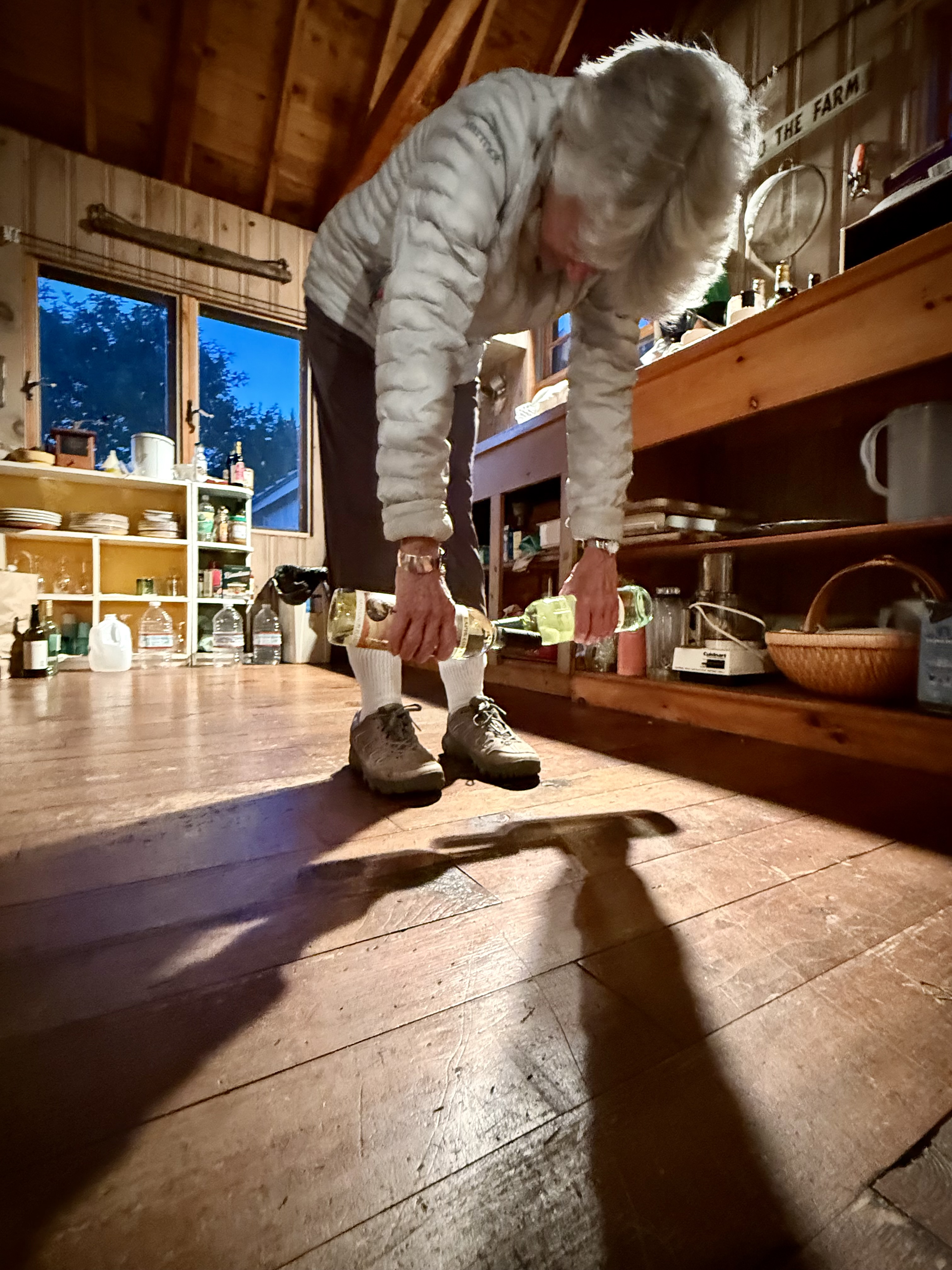
After my doctor recently recommended that I take my 75-year-old body to the gym, I have become a devoted gym rat in San Francisco along with our son Walker. In coming to rural Vermont, gym rats must become creative. I found that two 1-gallon water jugs make excellent weights for my workout. Two pieces of cord wood work pretty well too. Ellen prefers to do her arm lifts with two bottles of white wine. Whatever works!

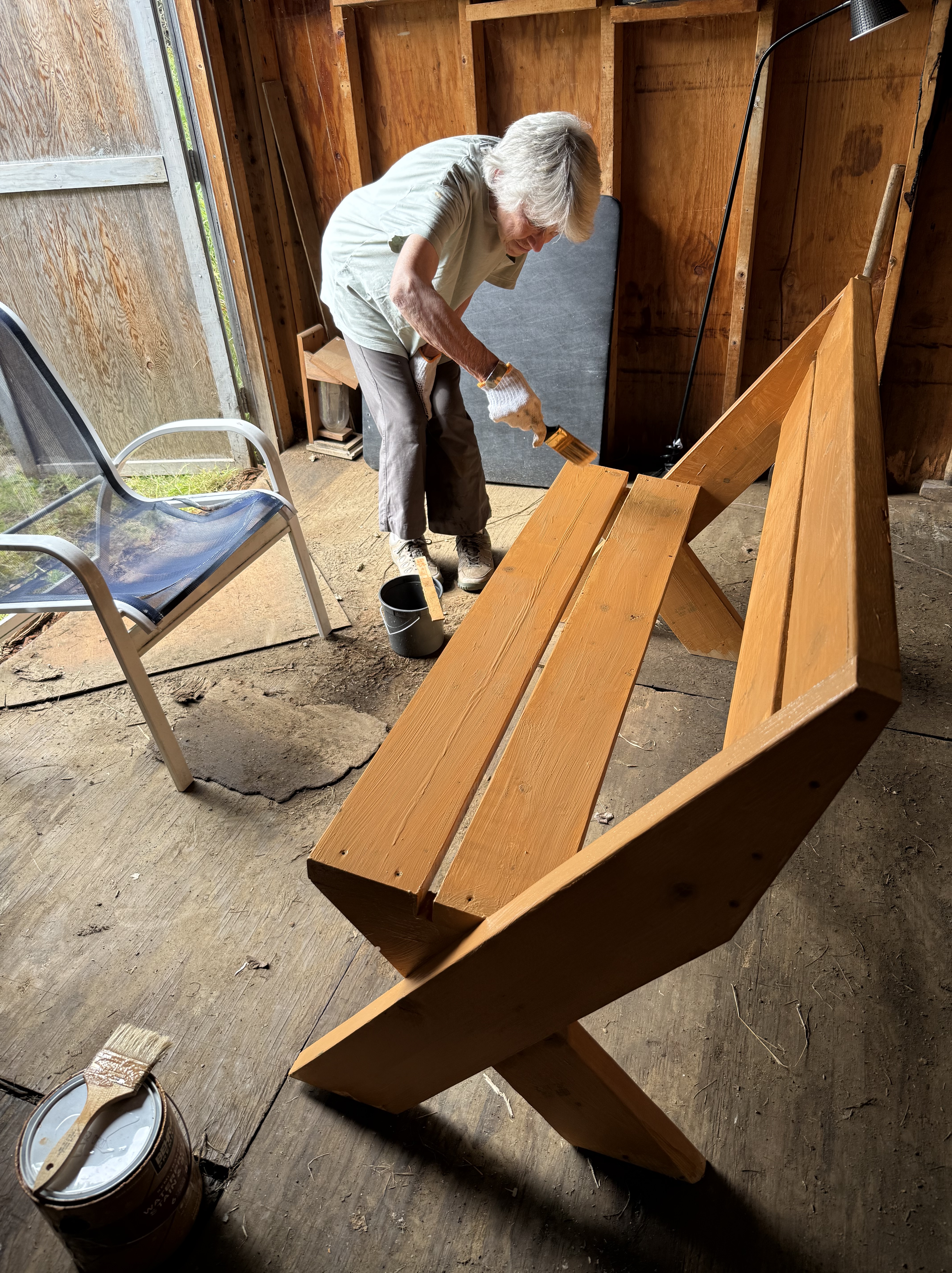
We spend a lot of time doing chores around the Farm including cleaning out around new trees with Ellen’s brother John, painting four coats on a new bench, and repelling the return of the dreaded orb weaver spiders. The work never ends.

One of our nieces explained to us that Vermont is maple syrup. We saw lots of examples of sugaring operations on our walks around the forests. The forests are much more developed and managed here than in the “wilder” forests that I’m used to in the American West.

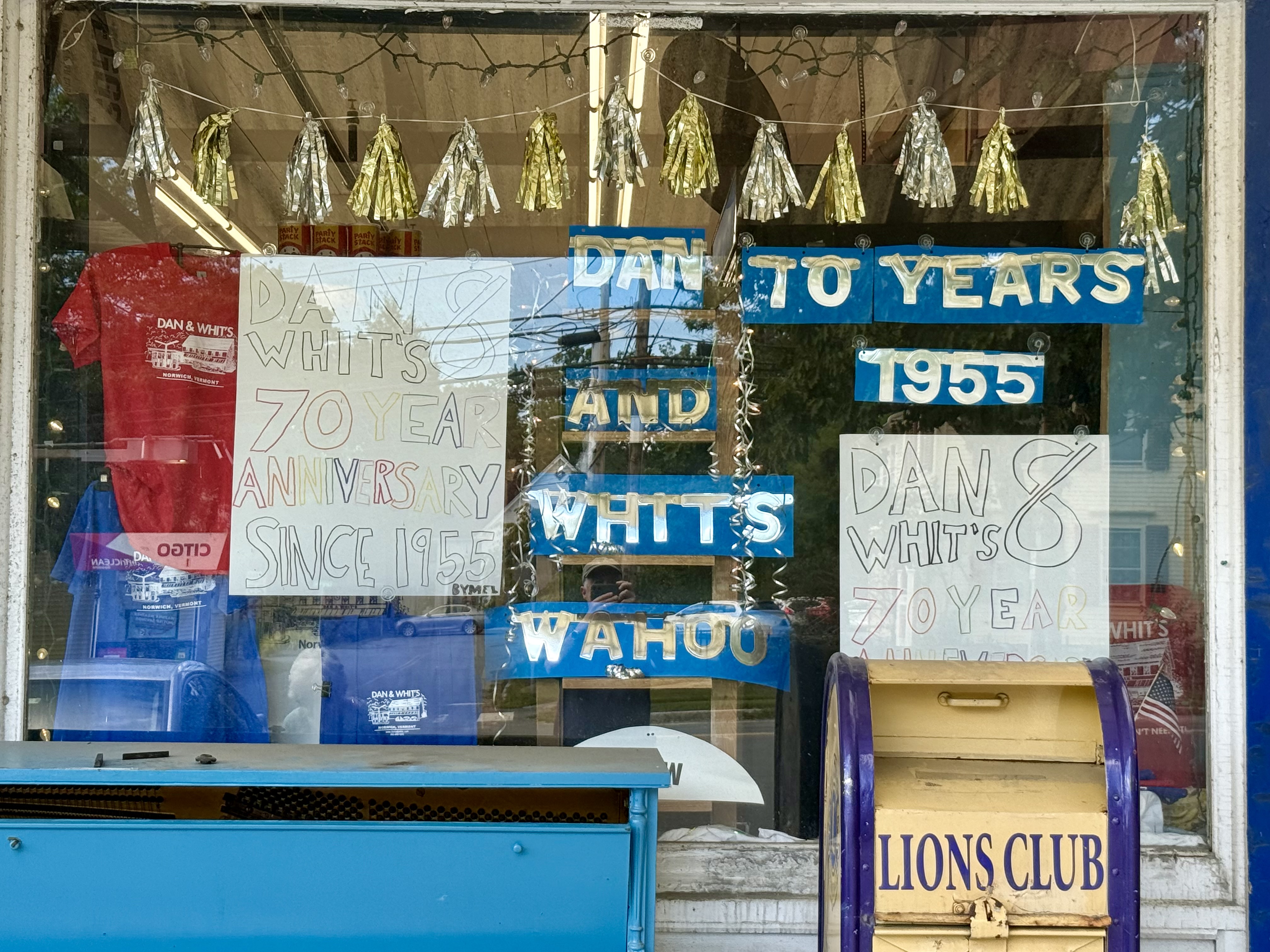
When I travel, I am often fascinated by signs that give a flavor of the local community. Our nearest small town of South Strafford had this sign about “Unconditional Love + Community”. Another nearby town of Norwich celebrated the 70th birthday of the beloved store of Dan and Whits. Finally, the barbershop Walt & Ernies had been in the same location of Hanover, NH since 1938. It is about to move to another nearby location, and all the locals (including me) put their farewell greetings on the wall. I loved the one that said, “Best Mullets Ever”.

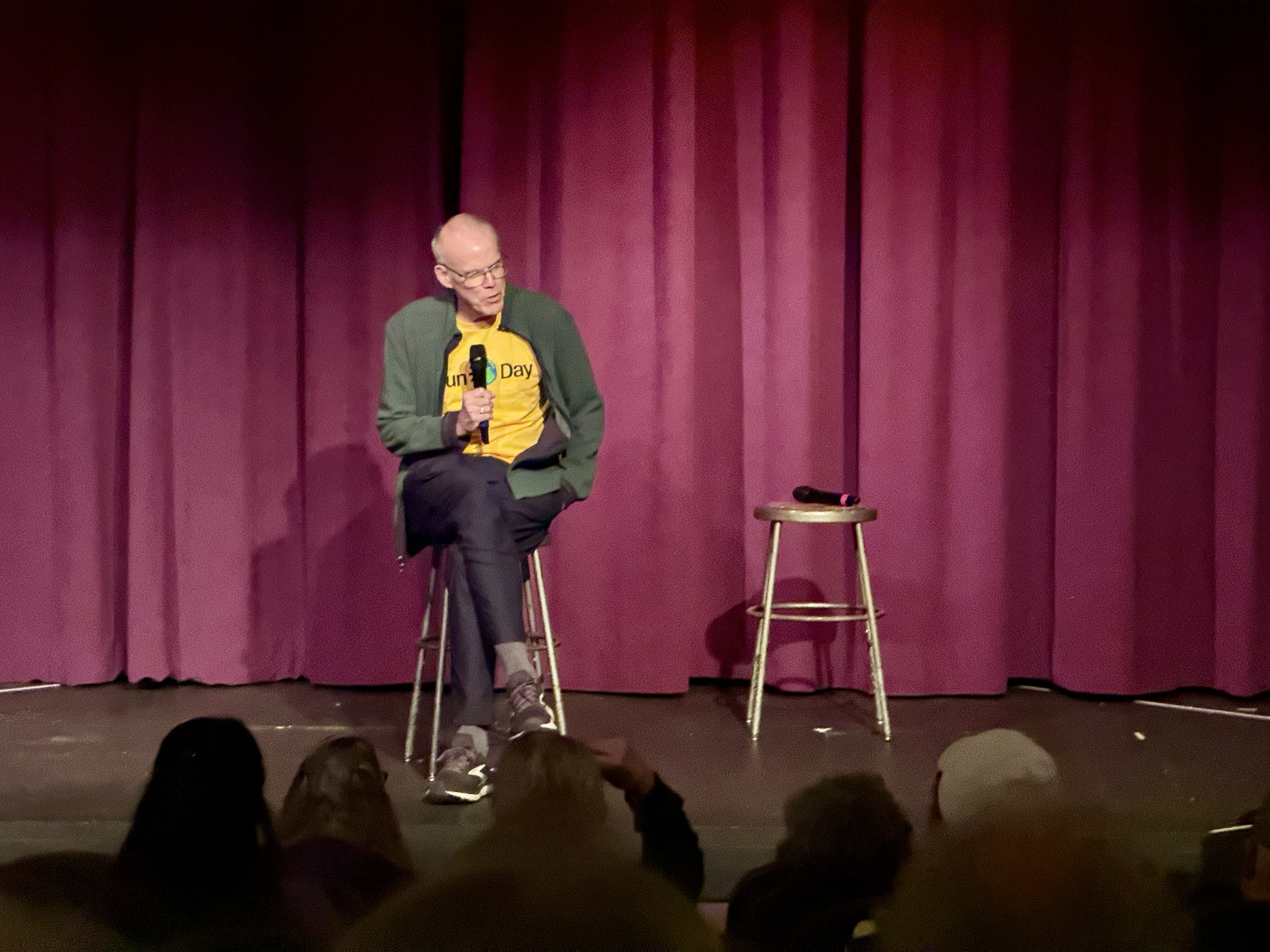
One of our urban friends could not understand what we do with our time in out-of-the-way rural Vermont. After all, we do stay in a cabin on a dirt road off a dirt road off a dirt road. But, perhaps surprisingly, our time is almost always occupied with Farm chores, hikes in the green forests, visiting family and friends, cooking meals, buying fresh corn at the local farm stand, staring at the stars, watching the clouds float by, and attending some of the large number of cultural events here in the Upper Valley of Vermont. One of those recent events was a lecture by environmental writer Bill McKibbon. His book The End of Nature was hugely influential, and he continues his work as a public activist in top outlets such as the New Yorker, the New York Times and the Atlantic. We spoke with him later at a dinner after his lecture. We also met our friends there including Jim Nachtway who is one of the great war photographers of our time. This rich cultural mix also includes thriving environmental centers and community supported organic farms such as Cedar Circle which has also become our go to place for a good cup of coffee.

Finally, I wanted to give a shout out to our son Walker. He continues his full-time creative and journalistic work for CBS News. He travels constantly for his job, but we do occasionally see his stories on the news and even sometimes see him in person when he returns to his home in San Francisco. He and his partner Rosa took a much-deserved vacation to Indonesia recently where they visited an increasingly rare healthy coral reef. Rosa, who is a certified scuba diver and Emmy Award winning filmmaker, took this beautiful photograph of Walker floating above the reef during Walker’s first dive. It is a remarkable image of hope and grandeur in our sadly troubled world.

Our next post will be sent from England. It seems like a good time to escape the current sour mood of our country. Hopefully, when we return in November, we will be reinvigorated to take on the challenges ahead. Talk to you soon…

3 Comments

Filed under Uncategorized