
We were initially skeptical about flying on the low-cost British airline Ryanair from London to Sarajevo. But Europeans seemed to embrace these cheap flights within Europe, and so did we. I spent the entire flight writing a blog with a pen on a ratty, coffee-stained notebook while glancing at my iPhone photos for reference. The young woman sitting next to us marveled at what I was doing. It must have seemed to her that I was like a medieval scribe hurtling through the air traveling to the Balkans in a jet airplane. We were happy when we safely landed and were amazed at where we had arrived.


When I first started thinking about doing a Global Library project ten years ago, I wanted to build on the stories of libraries I learned about while photographing American public libraries. The stories of two libraries both startled and haunted me. The priceless archive of the Catholic University library in Leuven, Brussels was intentionally burned down by the German army in WWI and again in WWII. We photographed that twice burned and twice rebuilt library when we began the project in 2016. The other library that haunted me was the National and University Library of Bosnia and Herzegovina in Sarajevo. It too had been cruelly targeted and intentionally destroyed by the Serbian army during the Bosnian war in 1992. We are hoping to wrap up our project soon and I imagined these two libraries as bookends to our very long effort photographing libraries in areas of conflict in many parts of the world.
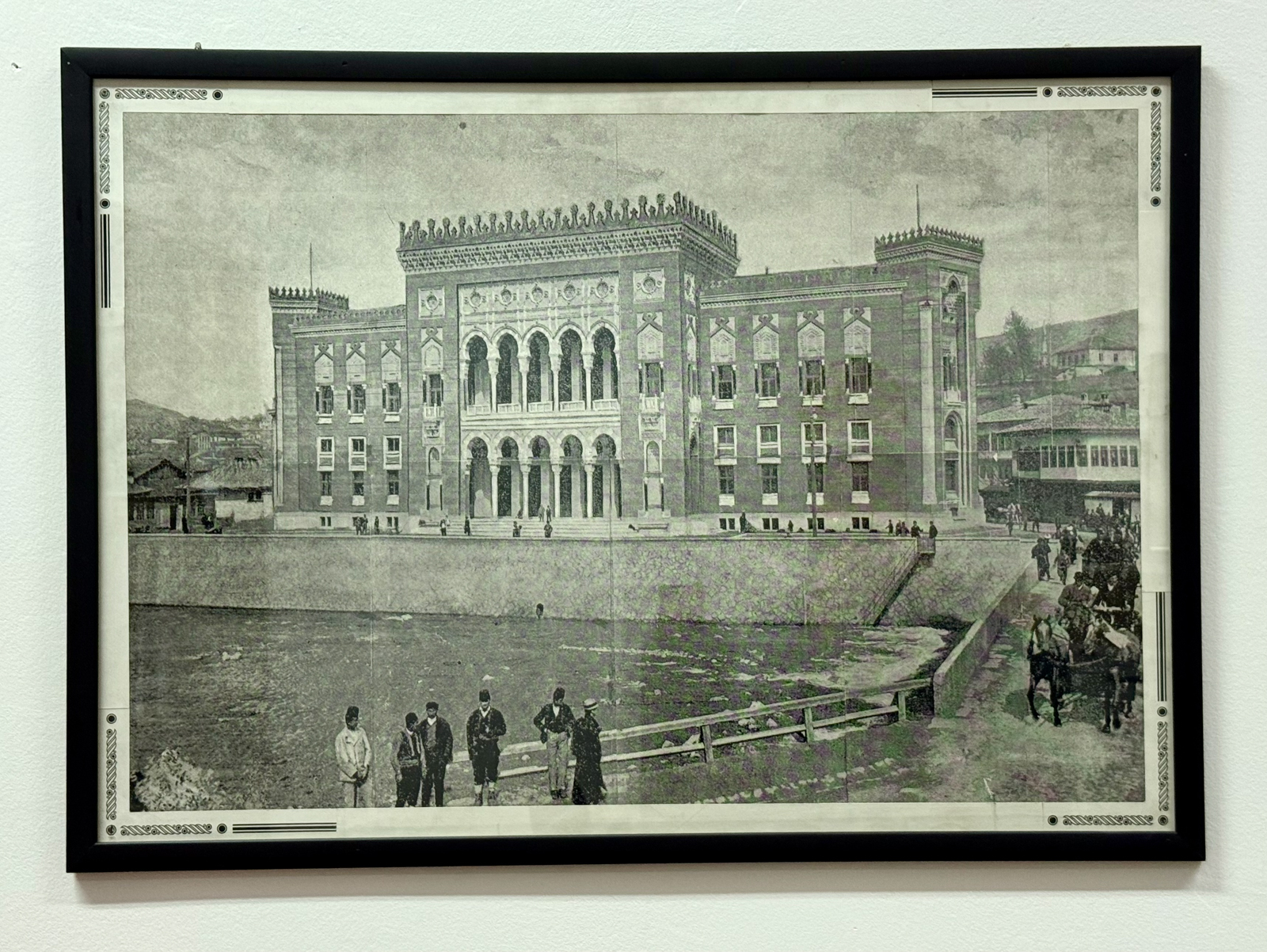
When the Serbian army destroyed the beautiful National Library, they also sought to destroy the memory of the Bosnian people. Their incendiary shells were designed to burn the books. Incredibly, after the fires started, the Serbian snipers and anti-aircraft cannons were used to kill the firefighters, librarians, and staff that tried to rescue the books. Only a few of the rare books were saved. No other buildings nearby were hit – the library was the only target. Almost all the Bosnian nation’s printed recollection of itself was lost. The fire burned for three days. The ash from the burnt volumes fell on the city for many days afterwards.

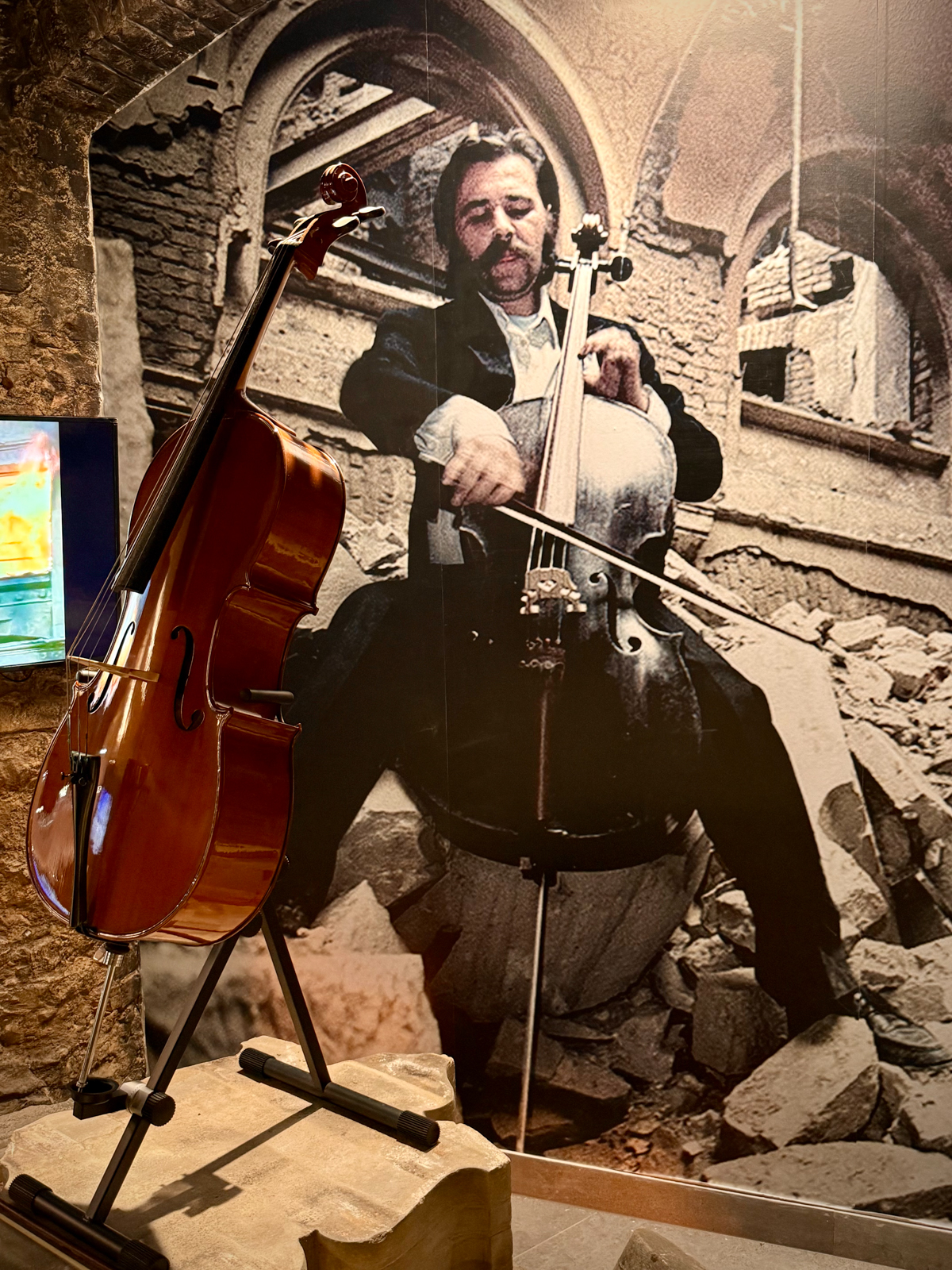
Sometimes there are certain images that haunt me as well. One is the famous photo of Vedran Smajlović, the “Cellist of Sarajevo,” who played in the ruins of the city, including the library. He played throughout the three-year siege of Sarajevo as a symbol of peace and defiance. His story inspired books, music, and became a global symbol of resilience during wartime. Fortunately, he was never hurt by snipers during his performances. We visited an exhibit of him and his cello in the reconstructed building that had housed the National and University Library. On display were bits and pieces of the original Library that evoked strong emotions in both of us.



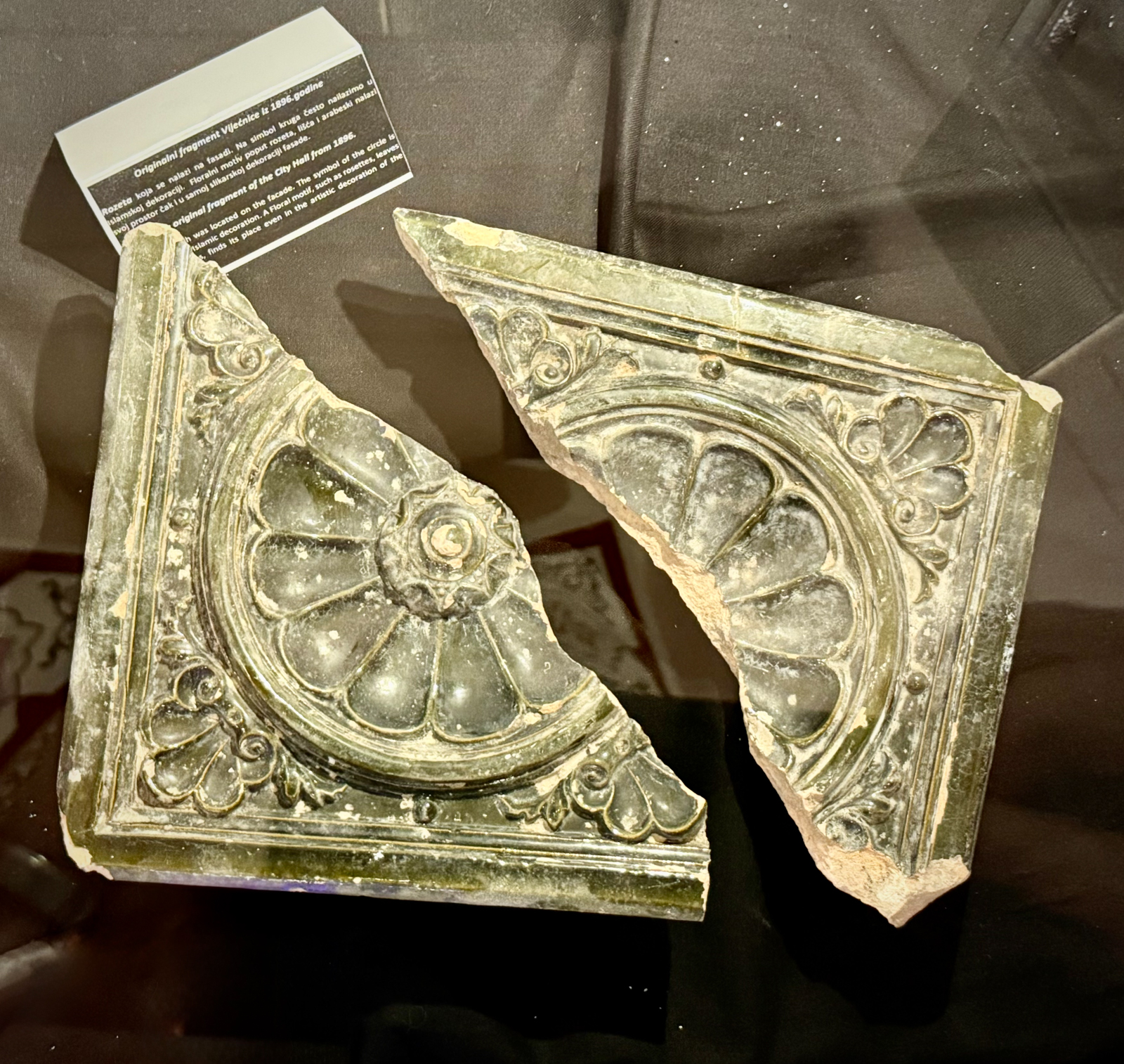
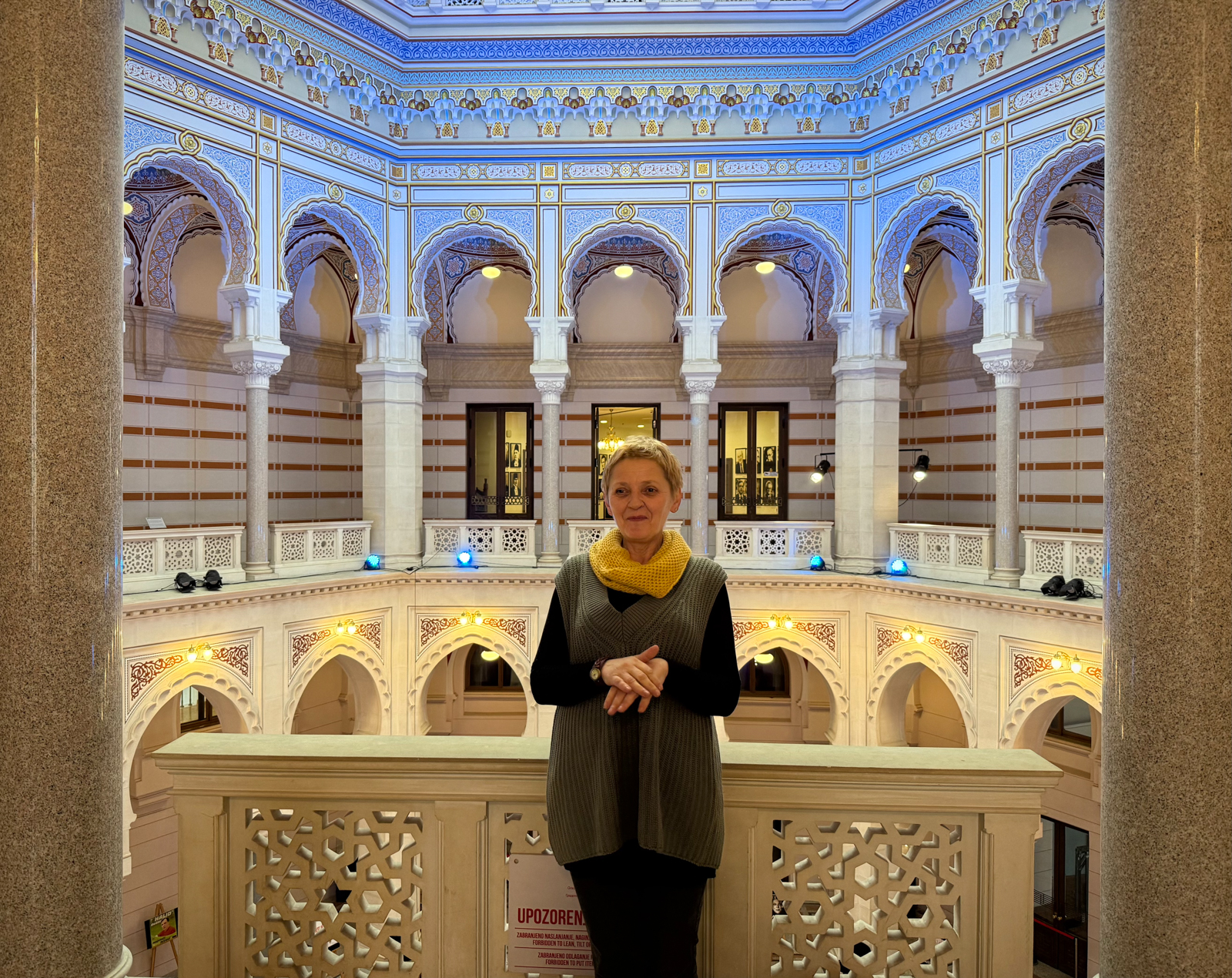
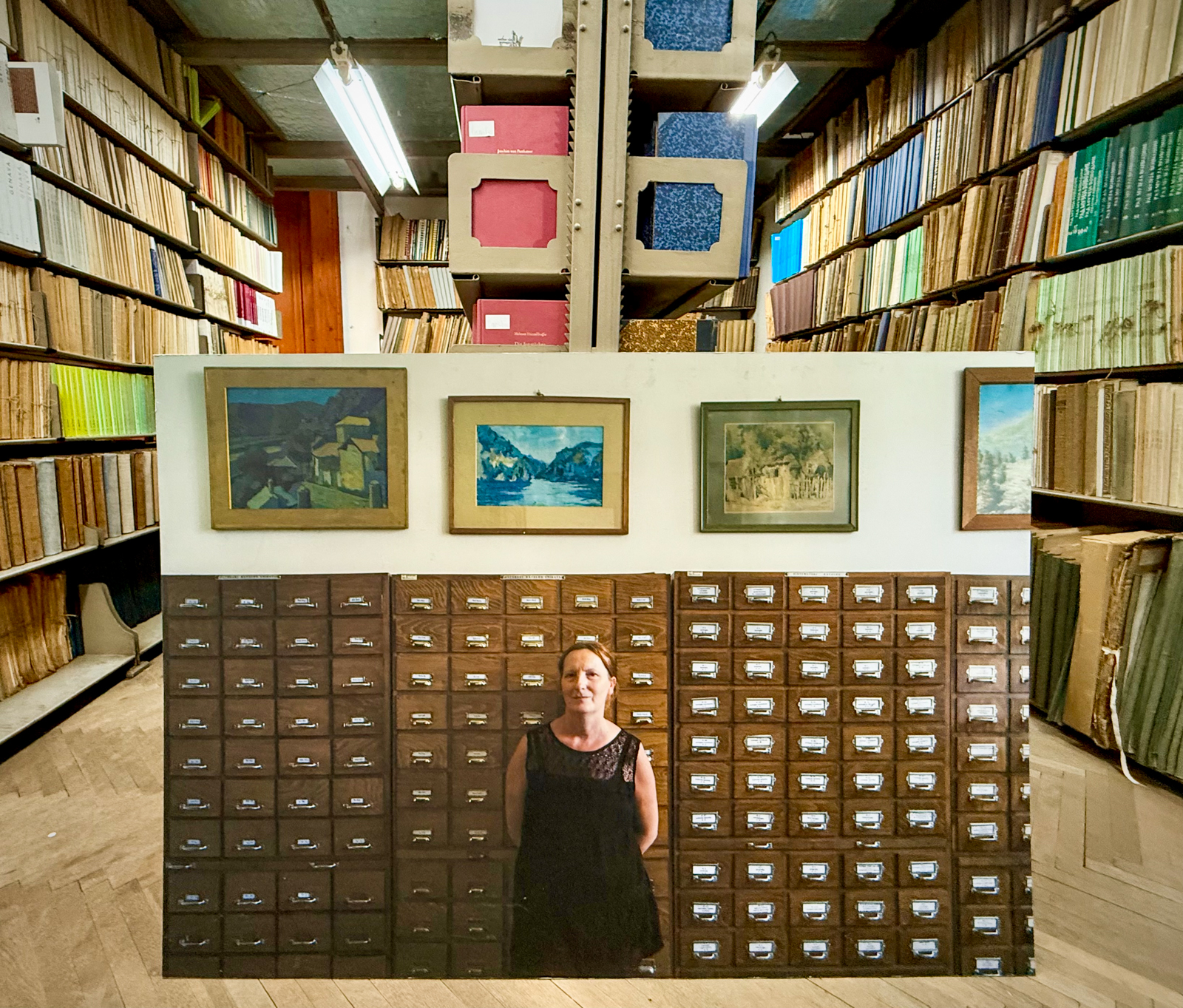
We were given a remarkable tour of the reconstructed building by a woman who worked for the National Library. She pointed out a plague that denounced the “Serbian criminals” who destroyed the library. She told us that it is very hard for her to bring her Serbian friends here. Although much of the printed memory of the Bosnian nation was destroyed, the painful memories of the war are still raw.

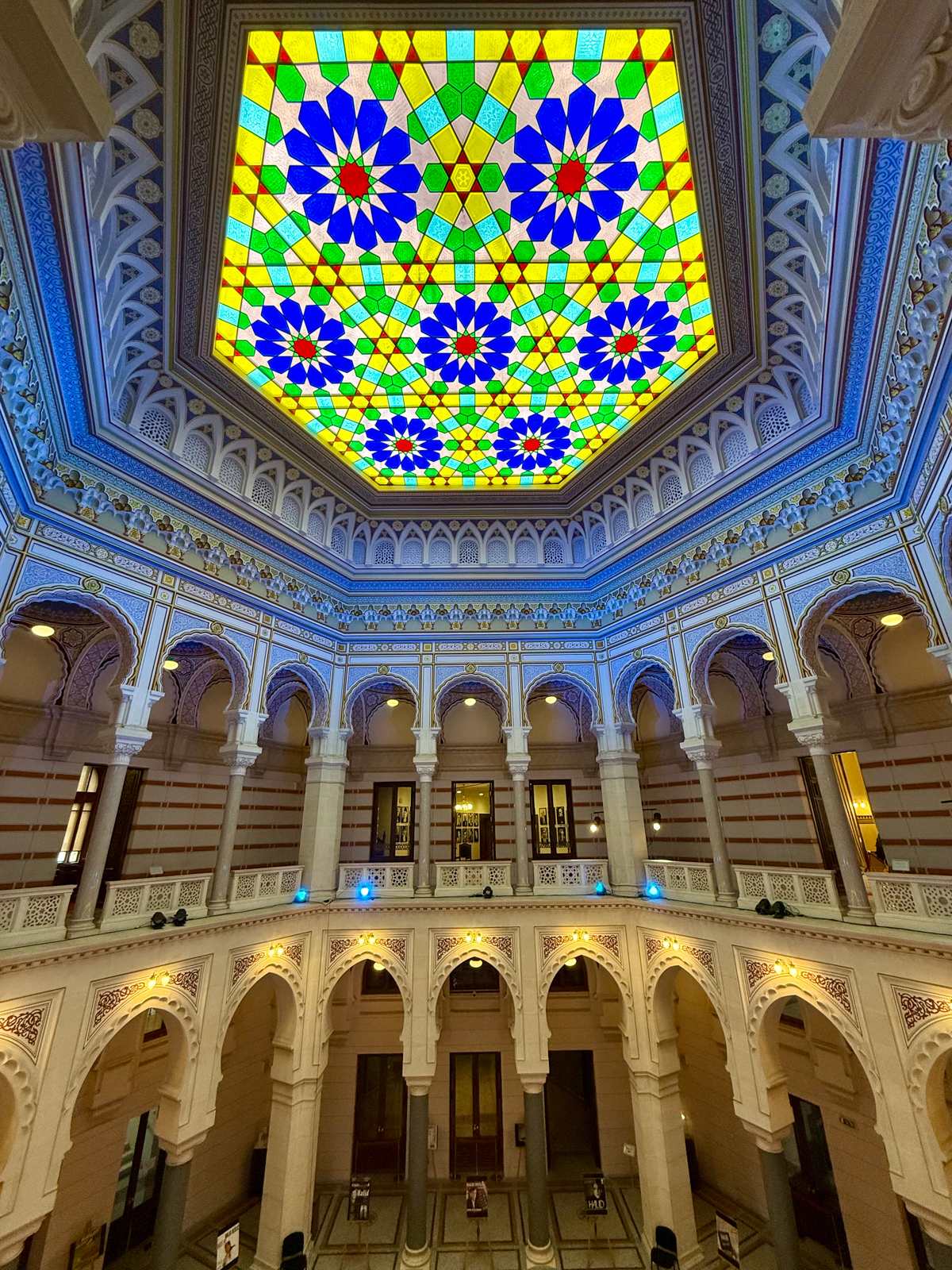
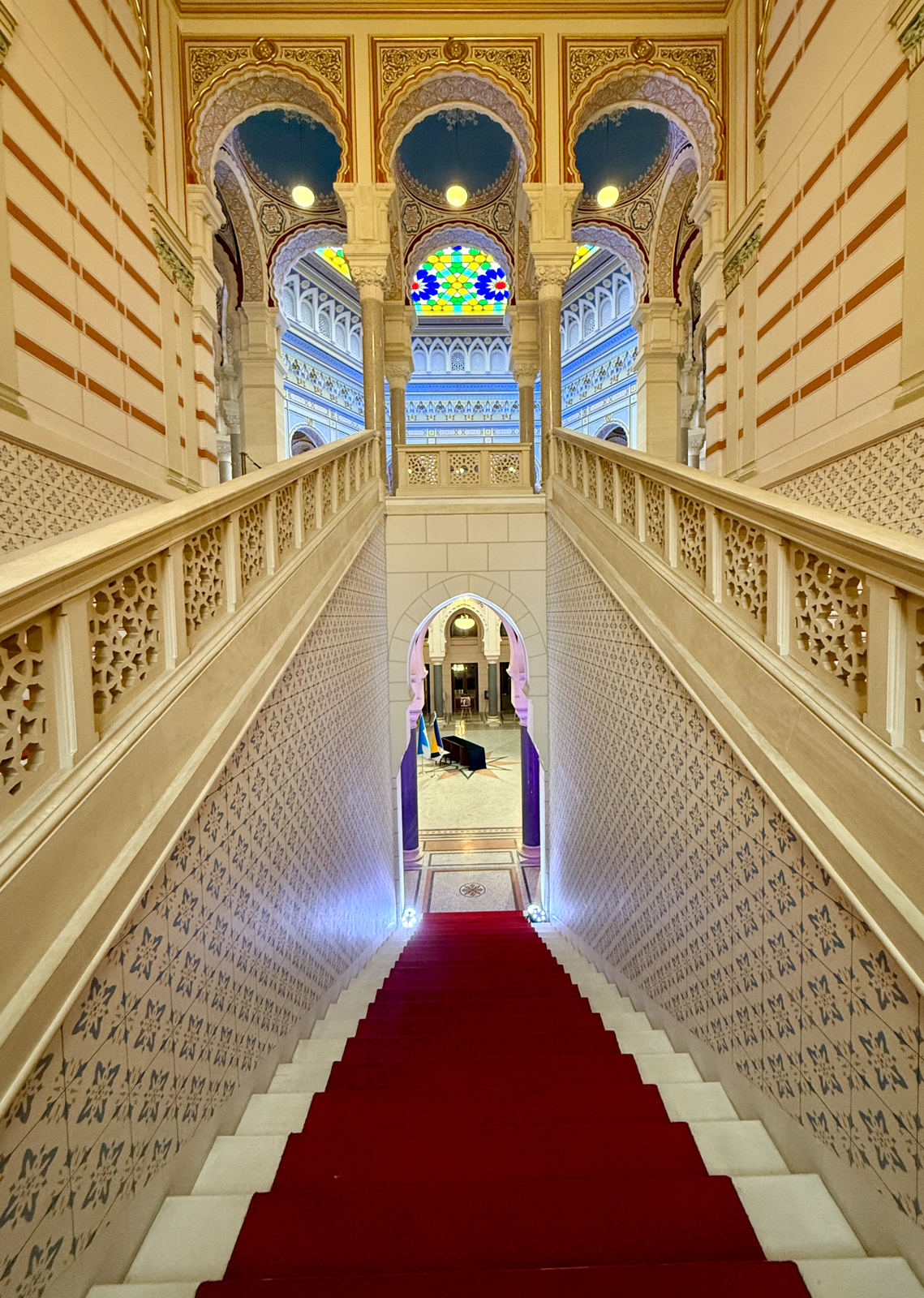
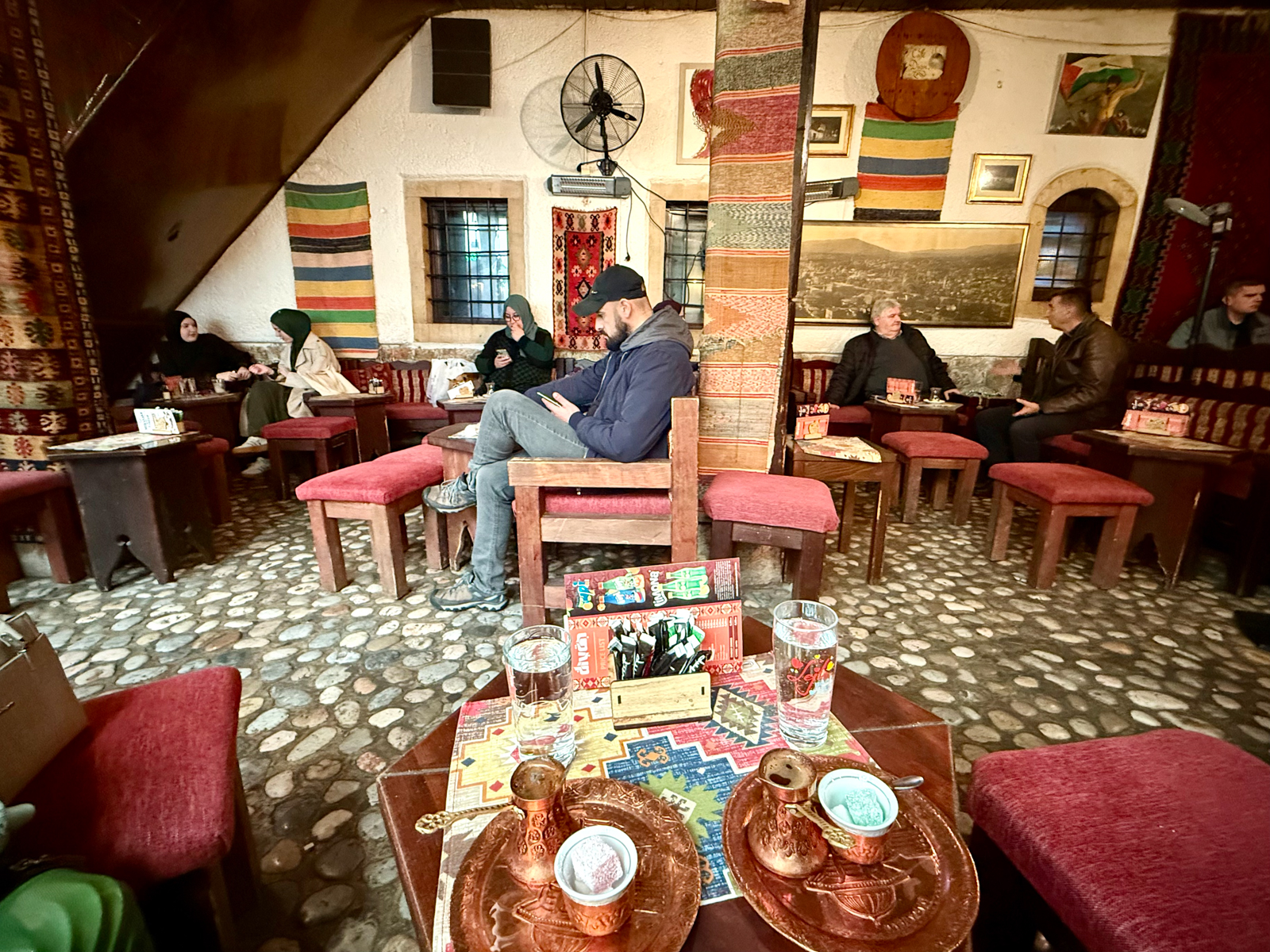
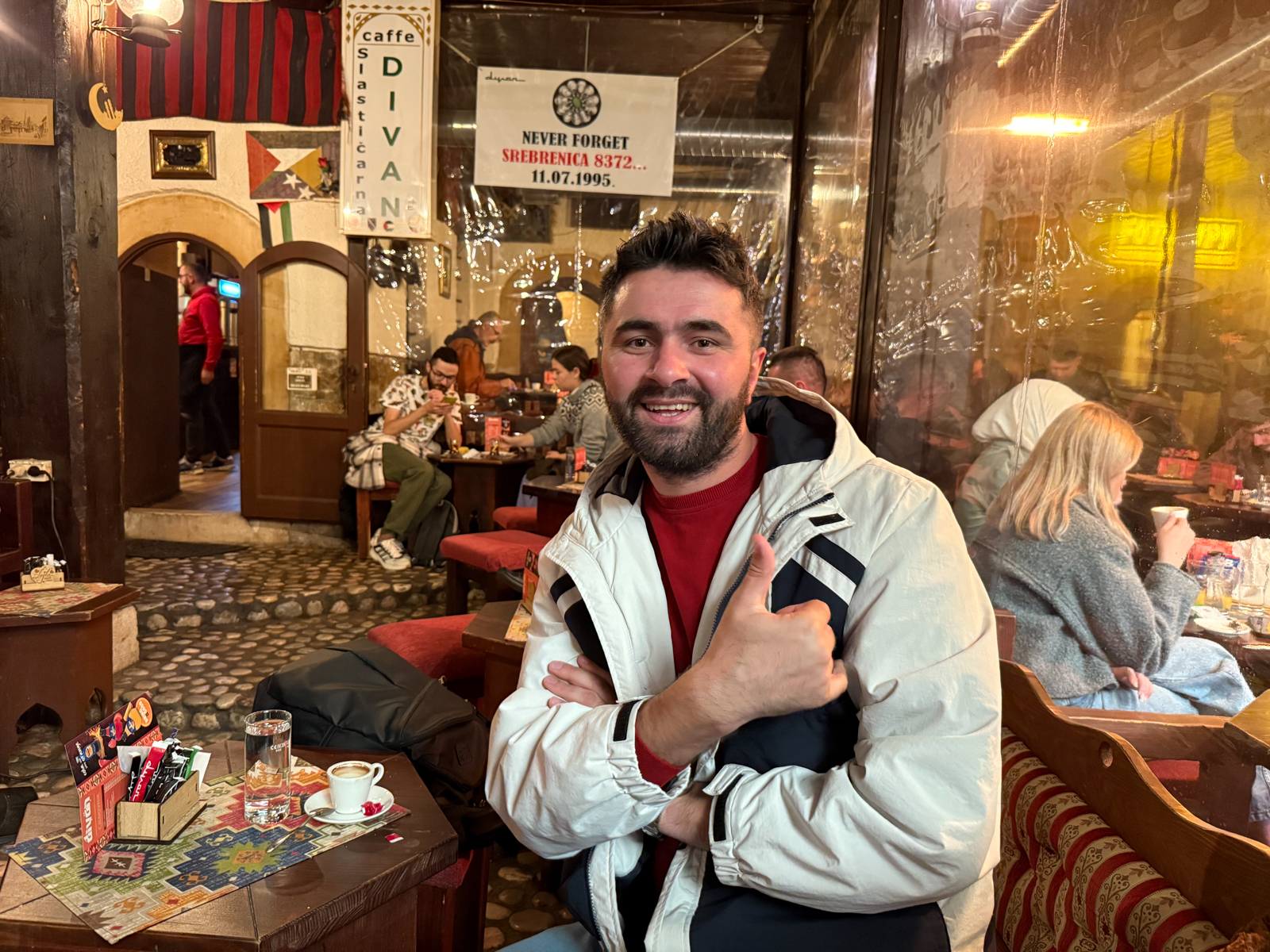
Of course, Sarajevo is famous for many things beside the war. In the 1980s, the Winter Olympics were held here. And the assassination of the Austro-Hungarian Archduke in Sarajevo started World War One. But we were especially interested in how people live here today. We stopped by for Bosnian coffee at the very Muslim Caffee Divan and met a remarkable young man who spoke great English and worked as a tour guide. I photographed him under a sign that said, “Never Forget Srebrenica.” It will be the young people like him that bear the burden of rebuilding Sarajevo.

We then visited the depressingly named Museum of Crimes Against Humanity and Genocide 1992 – 1995. It was really tough going seeing first-hand the awfulness of the Bosnian war. But this gut-wrenching experience also gave us a better understanding of how a once delightfully diverse region fell into tribal genocide. We stumbled out of the Museum vowing not to let our delightfully diverse United States fall into the same Nationalist homicidal trap.


We stayed in the old city of Sarajevo and wandered the streets for hours impressed by the richness of the cultural mix but still wondering how it all blew apart.


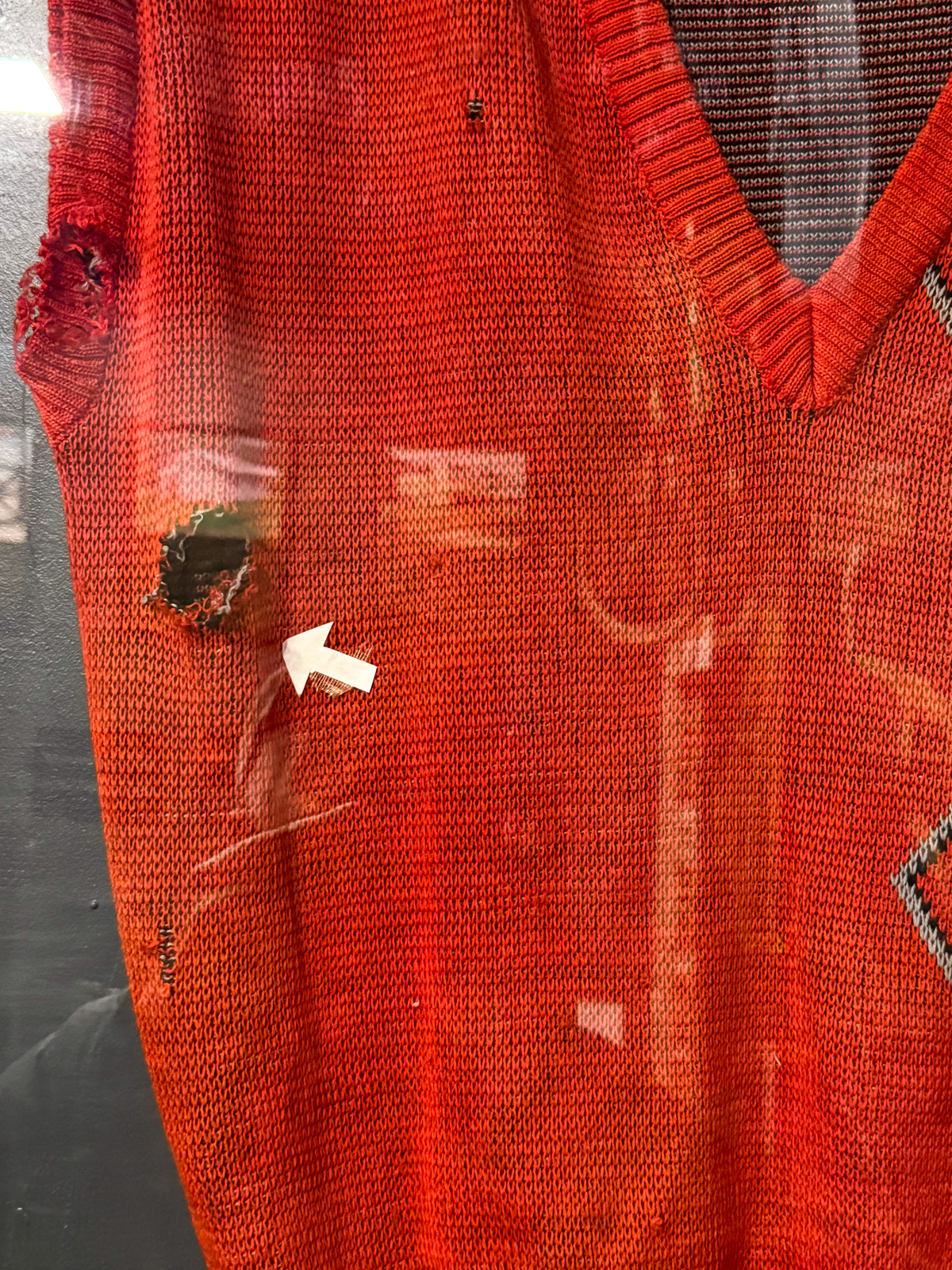
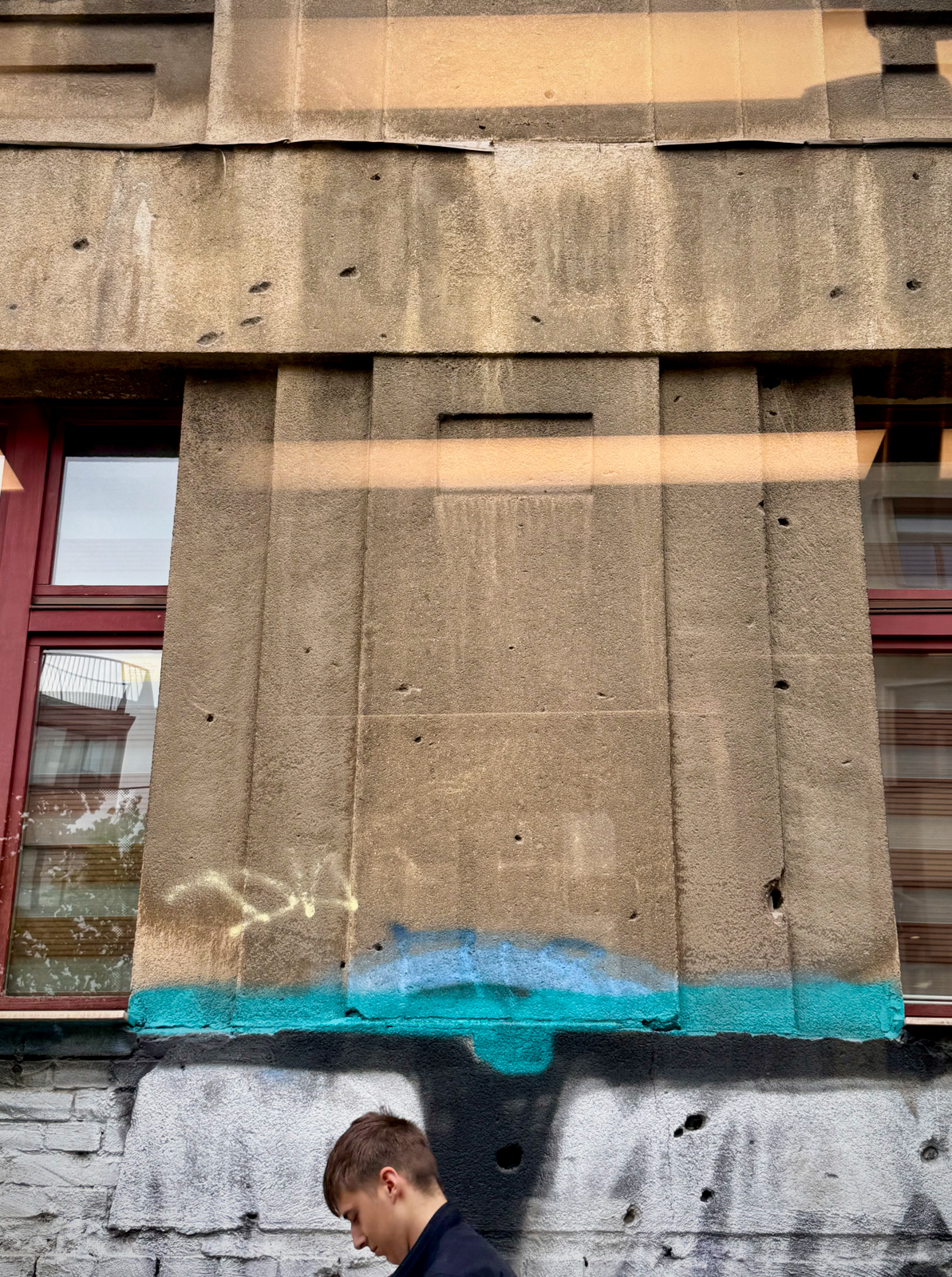
The next day we visited the Library of the National Museum of Bosnia and Herzegovina. Since its founding in 1888, the museum library had grown into a large collection and it preserved one of the region’s greatest artistic treasures, the Sarajevo Haggadah. It was also violently attacked during the war but was not destroyed like the National Library. The staff of the library rescued most of their 200,000-volume collection while dodging bullets and artillery that averaged over 400 shells a day. The Director of the library was killed by a grenade during this rescue effort. Bullet holes were still visible even 30 years later. I photographed a book with bullet still in it and a door that had a clean bullet hole all the way through it. Again, the burden of healing this city and nation rests in the generation of the two young librarians who gave us a wonderful tour around this battered institution.



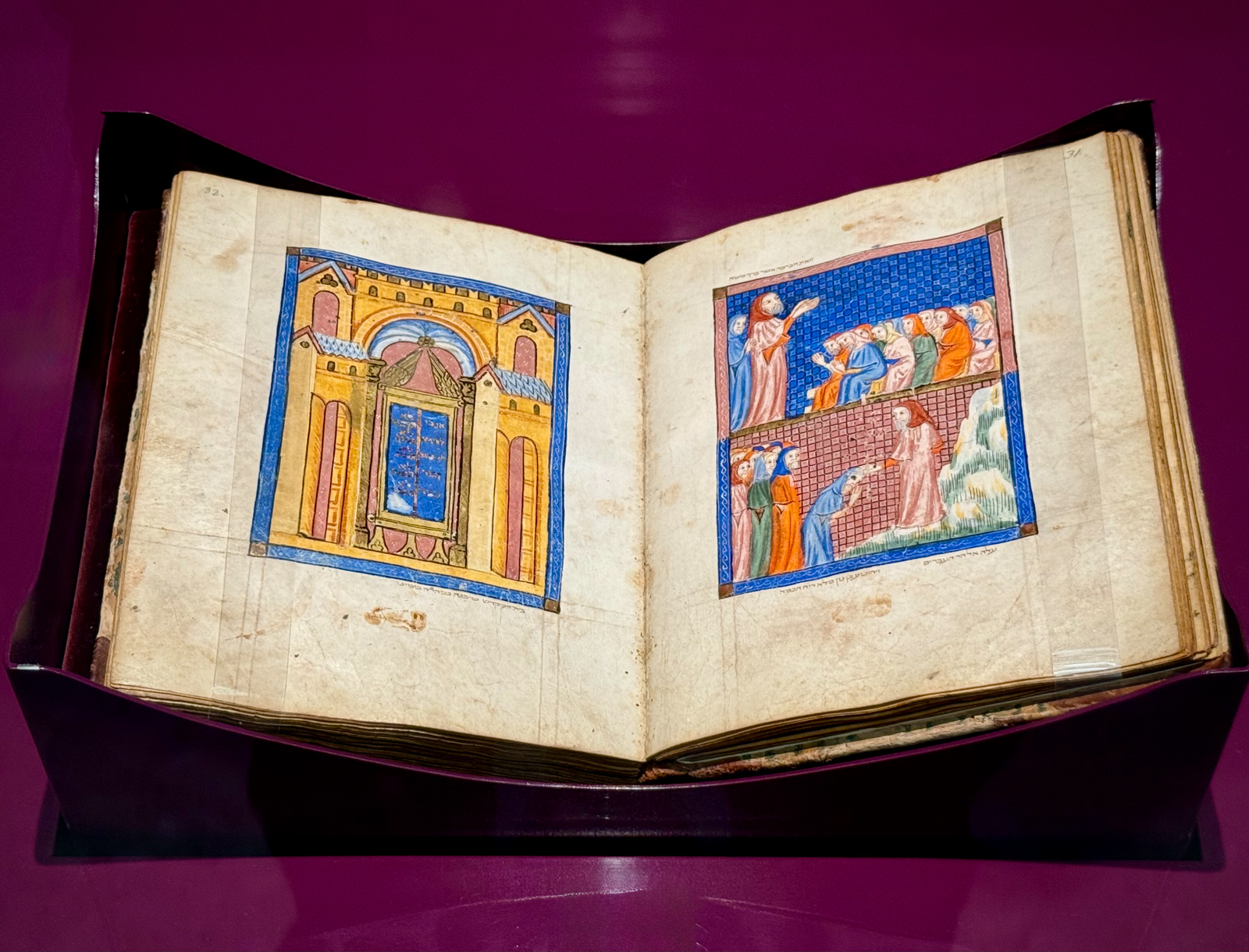
I first learned about the Sarajevo Haggadah while reading the historical novel People of the Book by Geraldine Brooks. The Sarajevo Haggadah is one of the oldest surviving Jewish illuminated texts and the real historical survival of the manuscript is nothing short of a miracle. It has become a symbol of the multicultural strength and resilience of the Sarajevo and the nation. It is now part of UNESCO’s Memory of the World Register. I was able to photograph the actual, priceless manuscript which our guide explained is only shown rarely and is usually replaced by a facsimile.

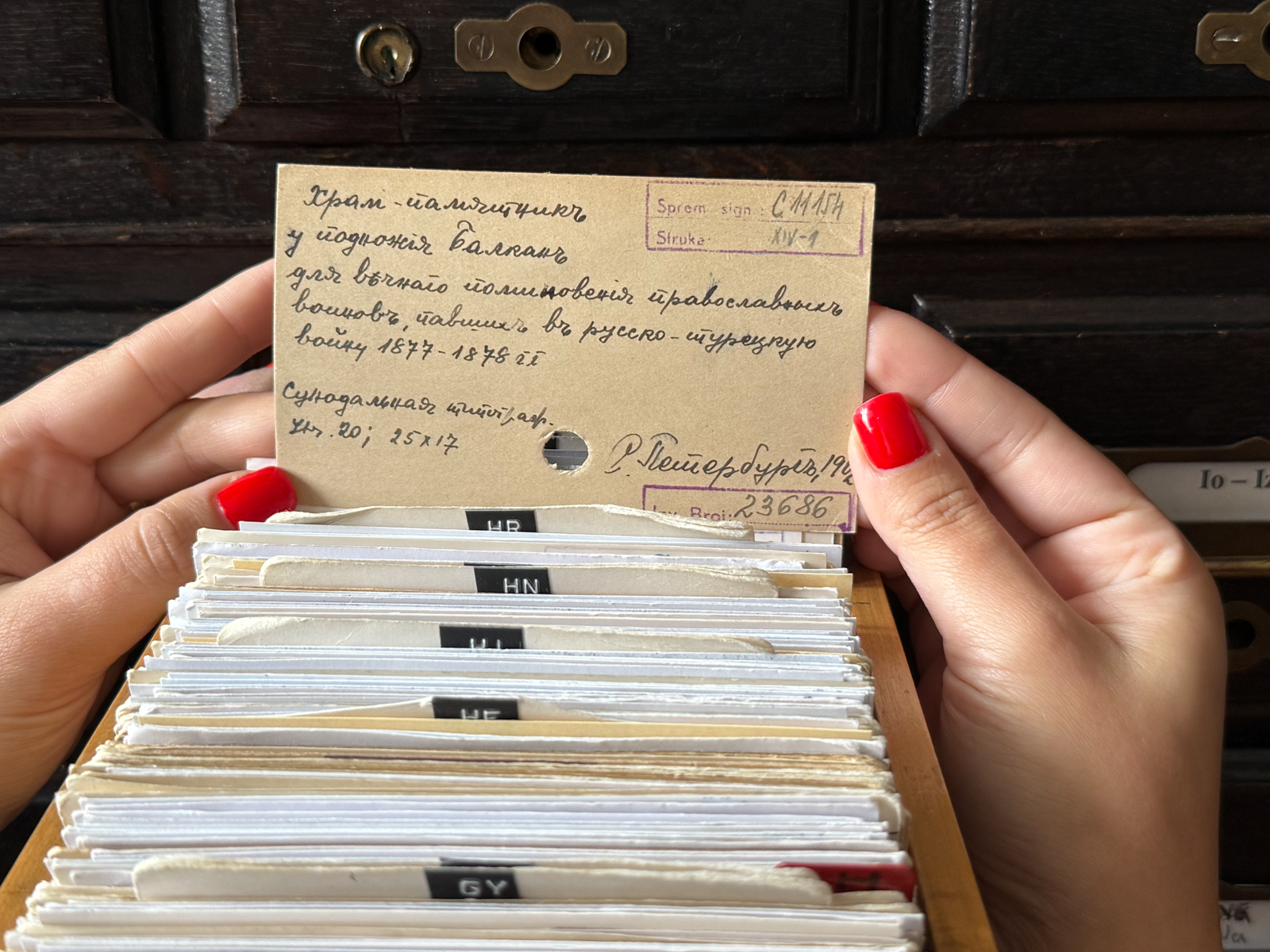
We walked across the street and went back to the bullet-riddled National and University Library of Bosnia and Herzegovina. At the Conservation and Special Collections department, we visited part of their crumbling storage area, and I photographed some of the war-damaged books in their collection. The proof of the unspeakable violence of this genocidal war was here in the burned and damaged buildings and books of the National and University Library.
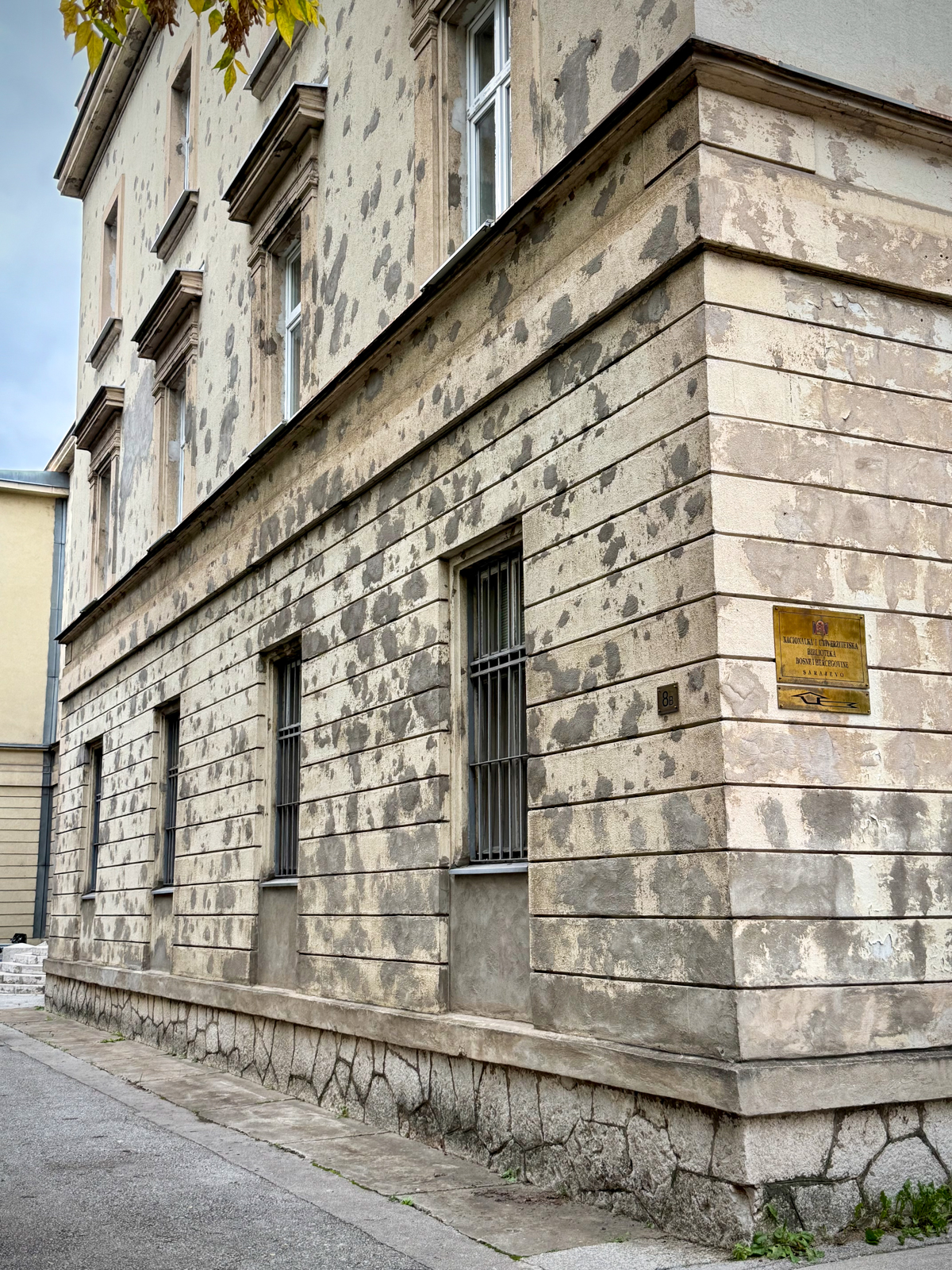


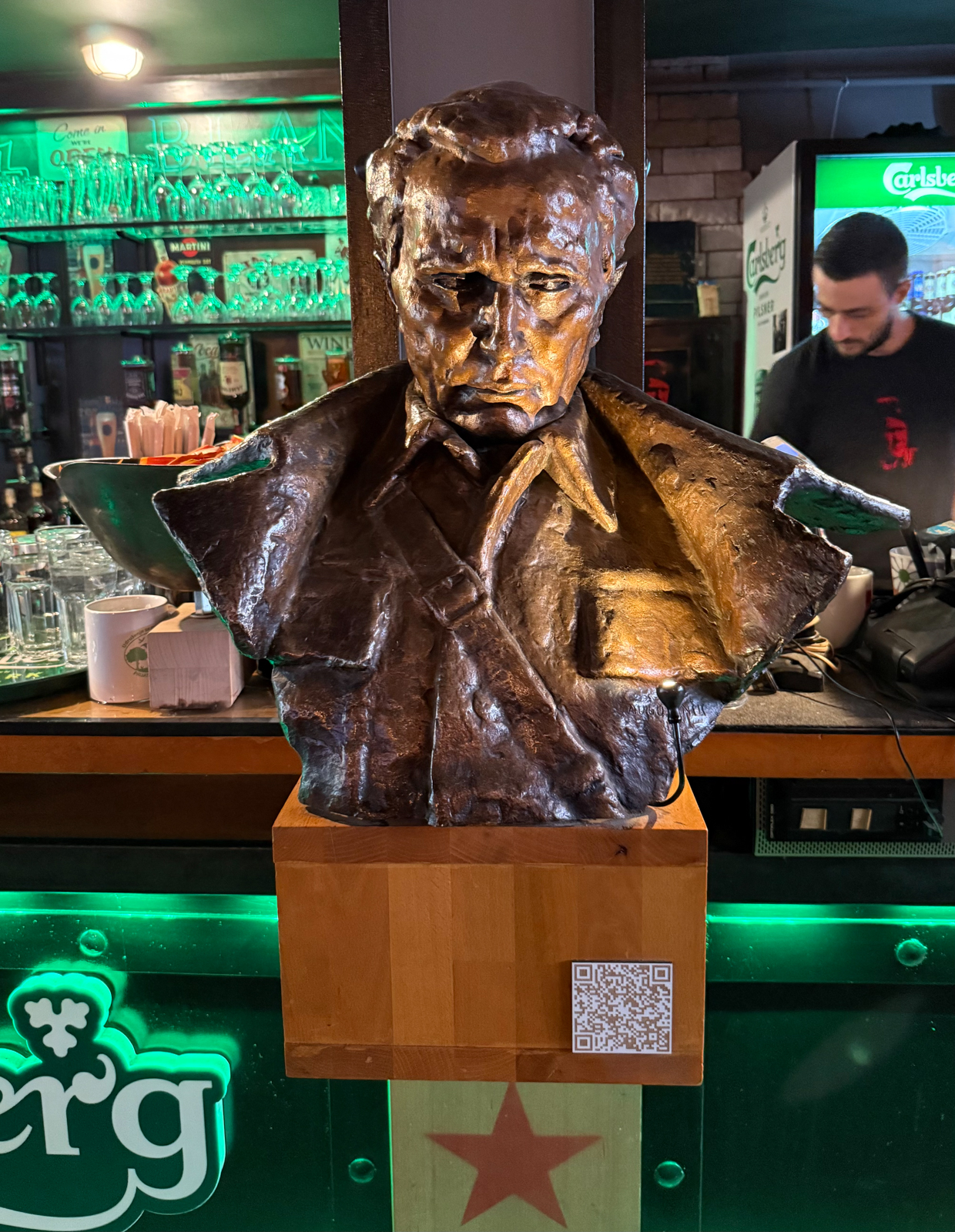
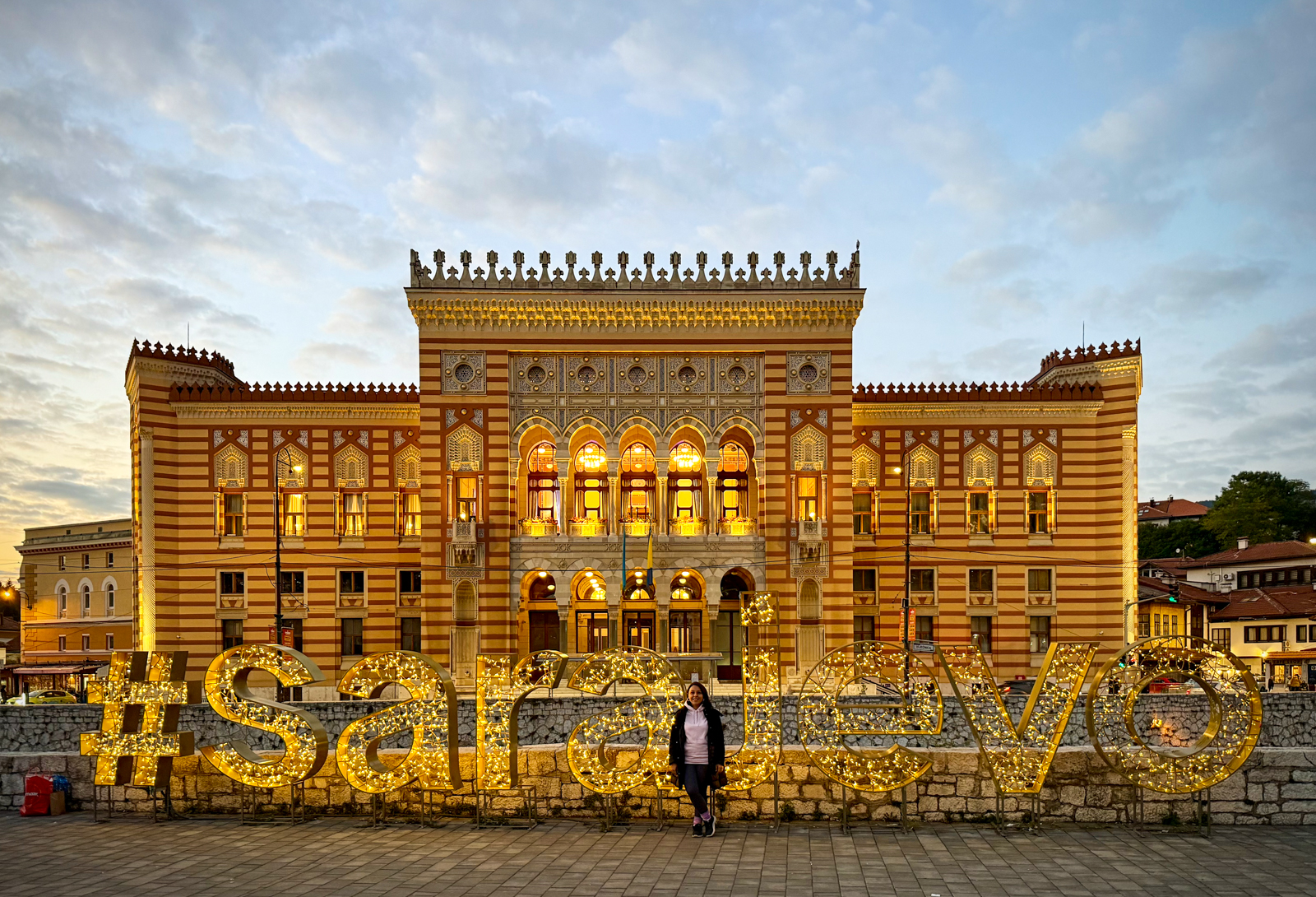
It was a relief to go back to wandering the mysterious streets of Sarajevo. We visited a Josip Tito themed bar that whimsically evoked the Yugoslav communist revolutionary and politician that was the leader of Yugoslavia for many years after WWII. Strange they would make this shrine into a hipster bar. The streets were magical, and we even returned to the old National and University Library at sunset to photograph the pseudo-Moorish architecture designed to reflect the 400-year-old cultural legacy of the city’s Ottoman past.



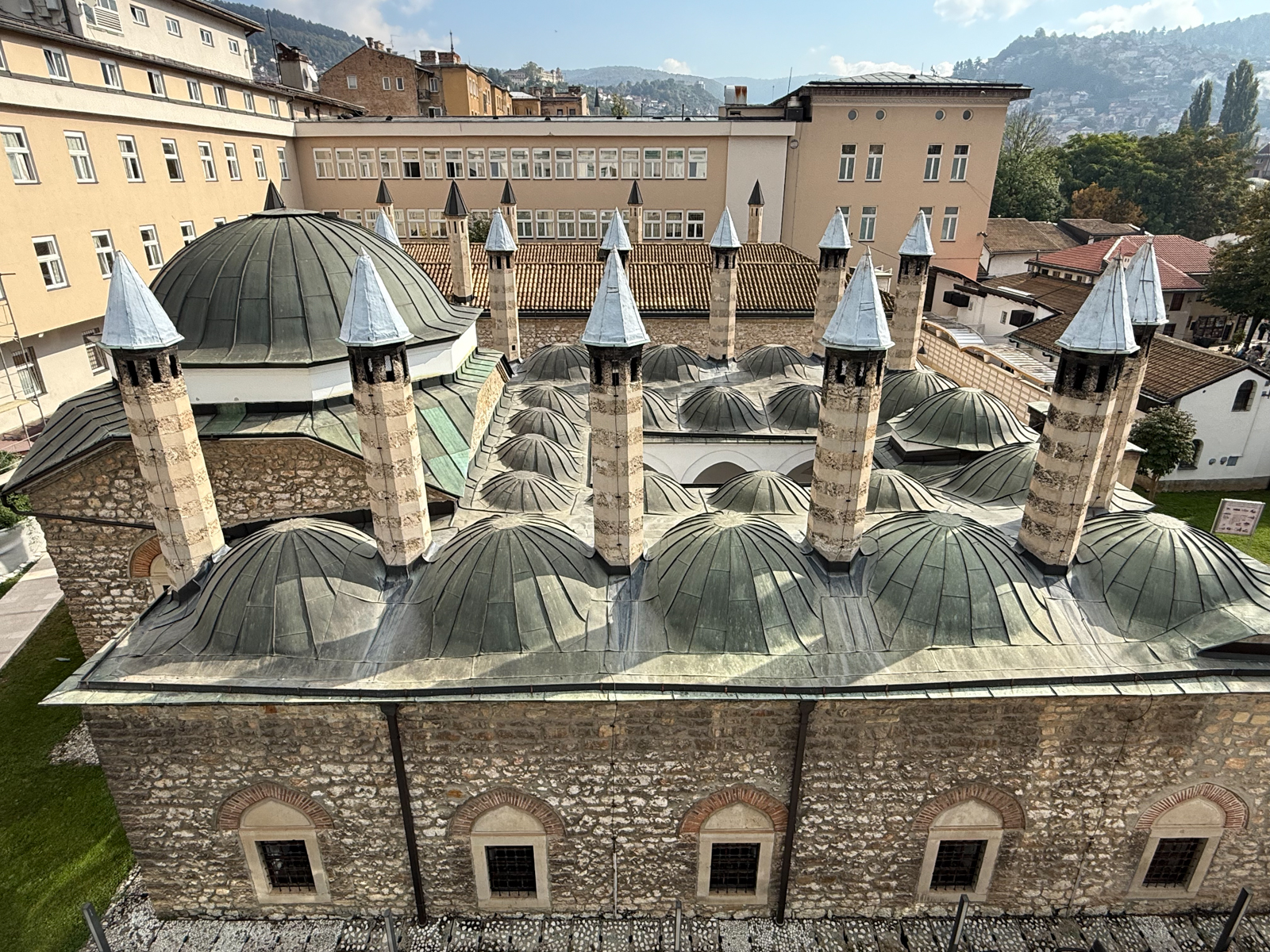
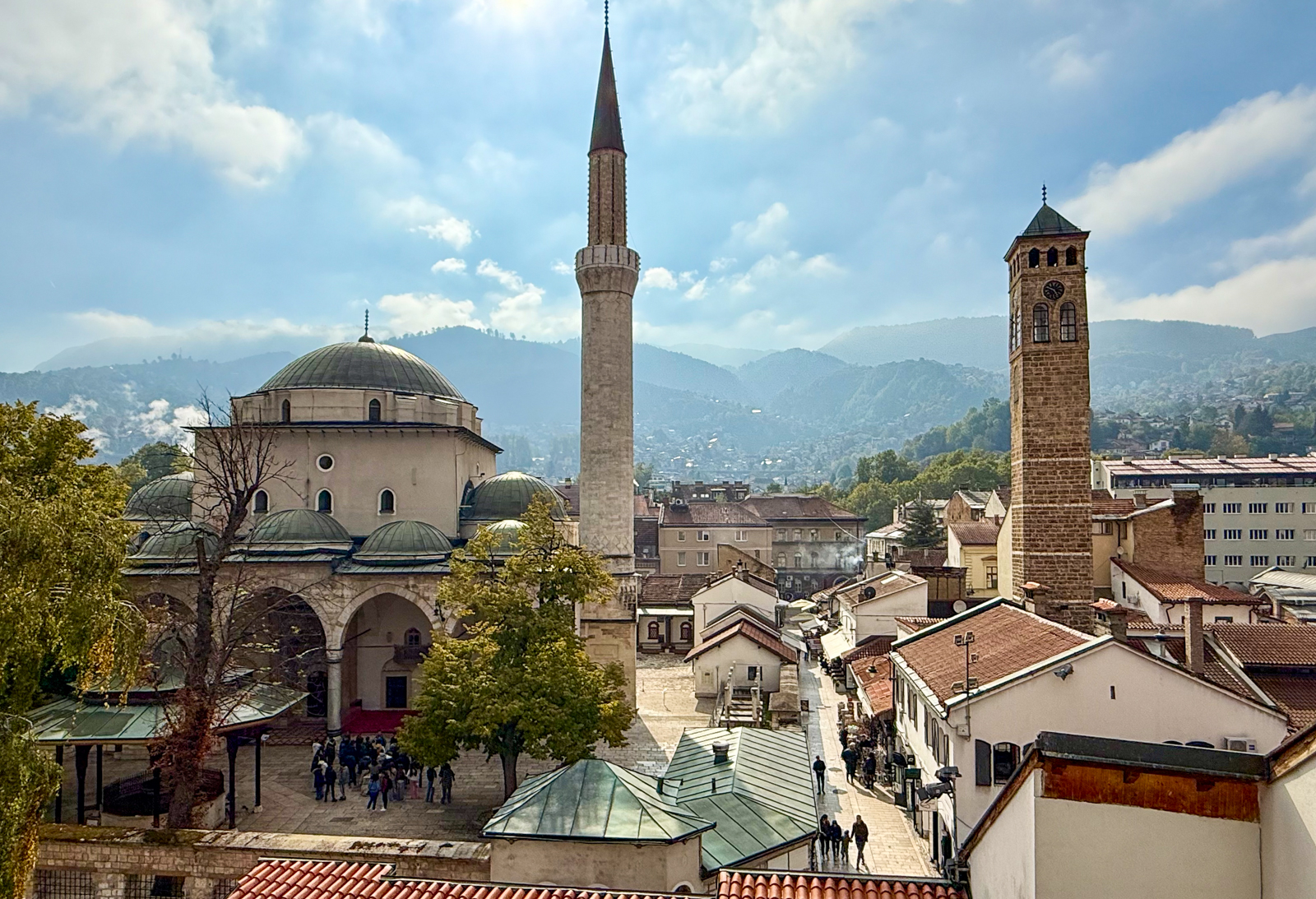
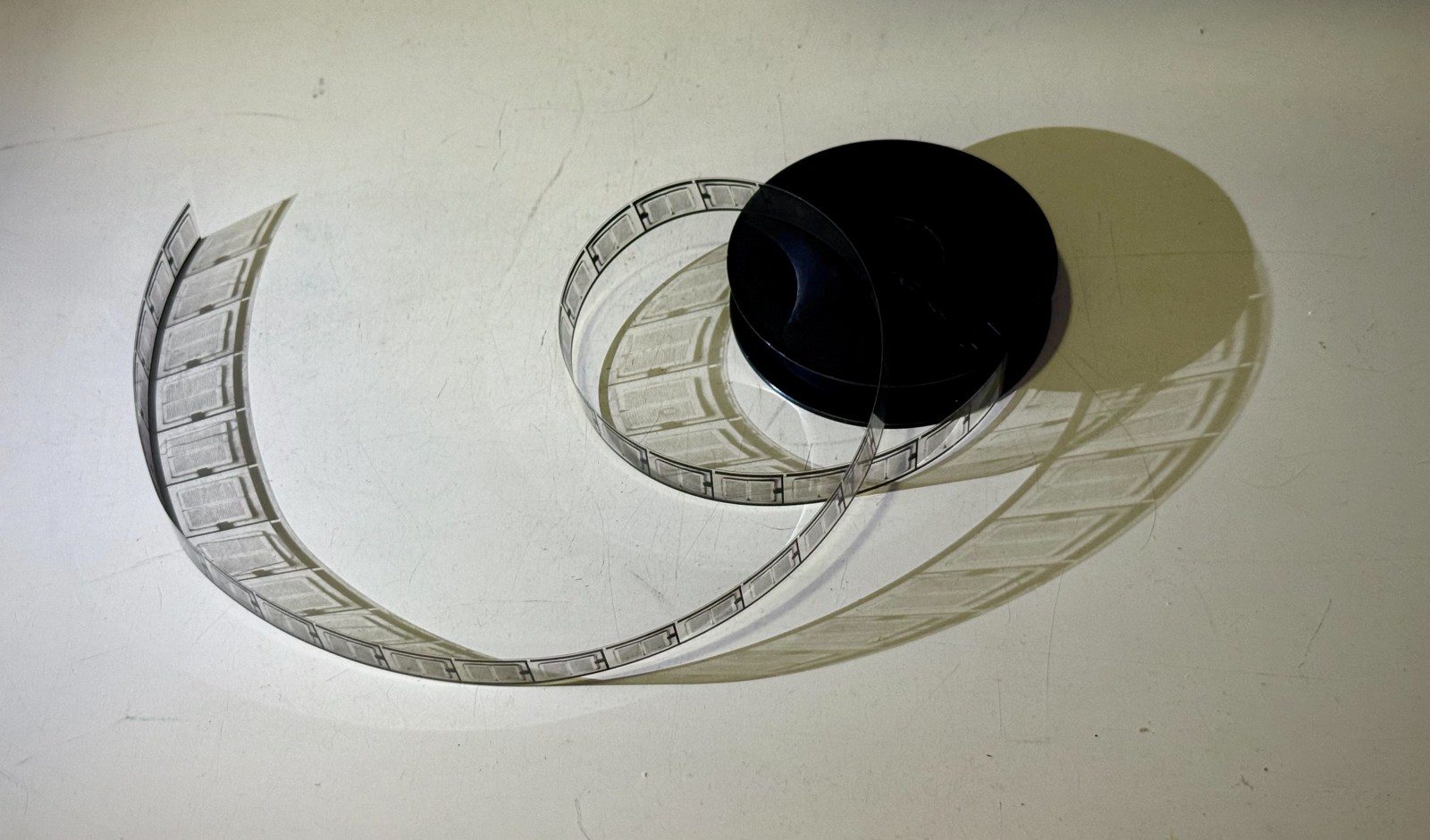
The Balkans had a strong book culture and Sarajevo was one of its hubs. The city had one of the finest collections of Arabic, Turkish and Persian books and manuscripts in the Gazi Husrev-beg Library that was established in the 16th century. It was one of the oldest continuously operating libraries in Europe. The heroic effort by a group of passionate book lovers to save their collection during the Bosnian war and the Siege of Sarajevo is wonderfully documented in the film “The Love of Books: A Sarajevo Story.” I first became aware of this very special place through this film. We were very lucky to be given an extensive tour of the newly built library (funded by Qatar) by a wonderful Muslim woman who spoke impeccable English. In addition to the wonderful books and objects in the collection, our guide showed the microfilm copies made of the archives while under fire with no running water or electricity. Go figure. This library was a positive expression of hope, reconciliation, and rejuvenation.






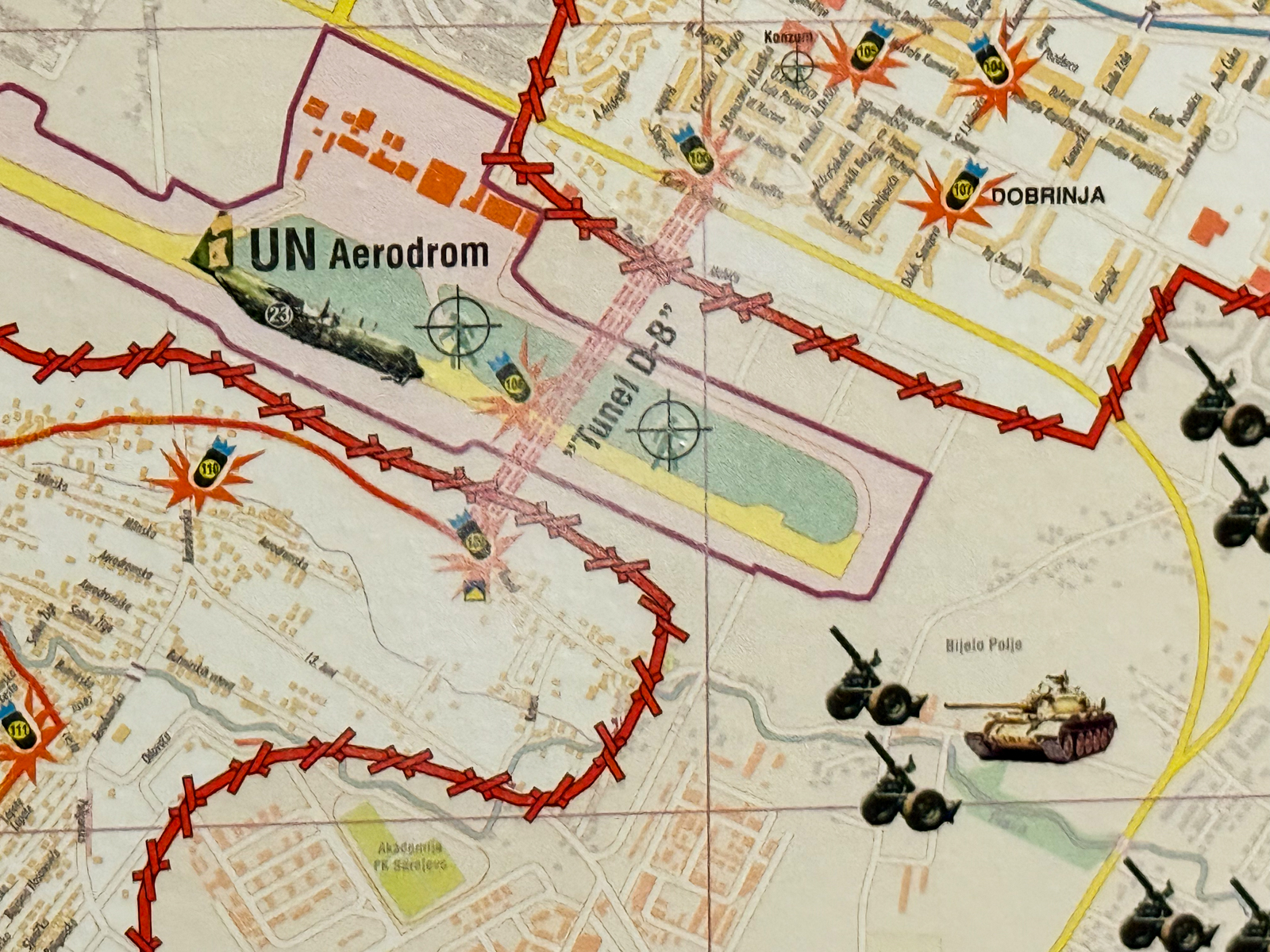
After lunch, we hailed a cab to the Tunnel of Hope Memorial Complex out near the airport. During the war, this secret tunnel was one of the few ways supplies could be carried into Sarajevo and the wounded and dead could be ferried out. It was another example of the resiliency of the people of Sarajevo during a very dark time.


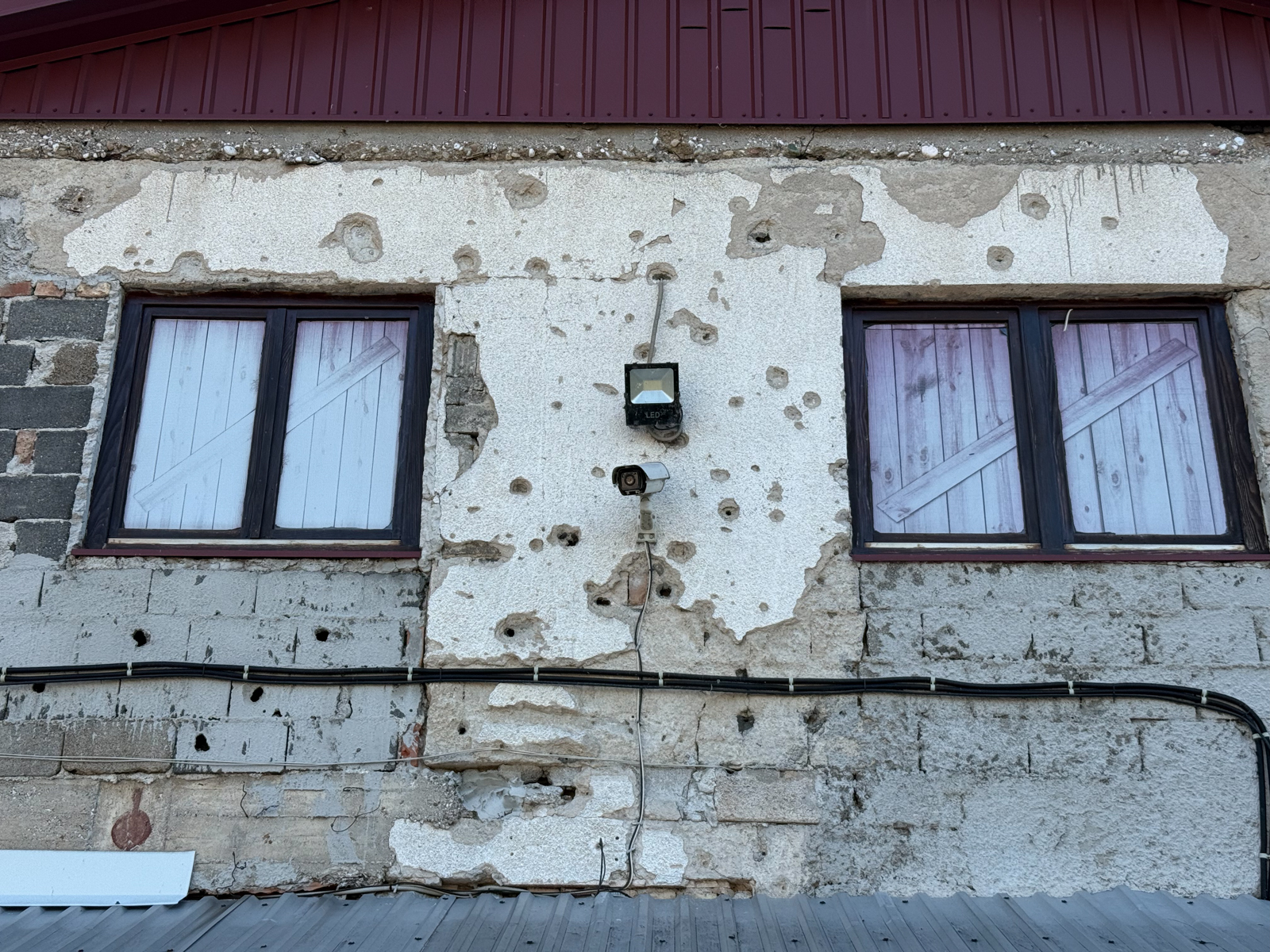

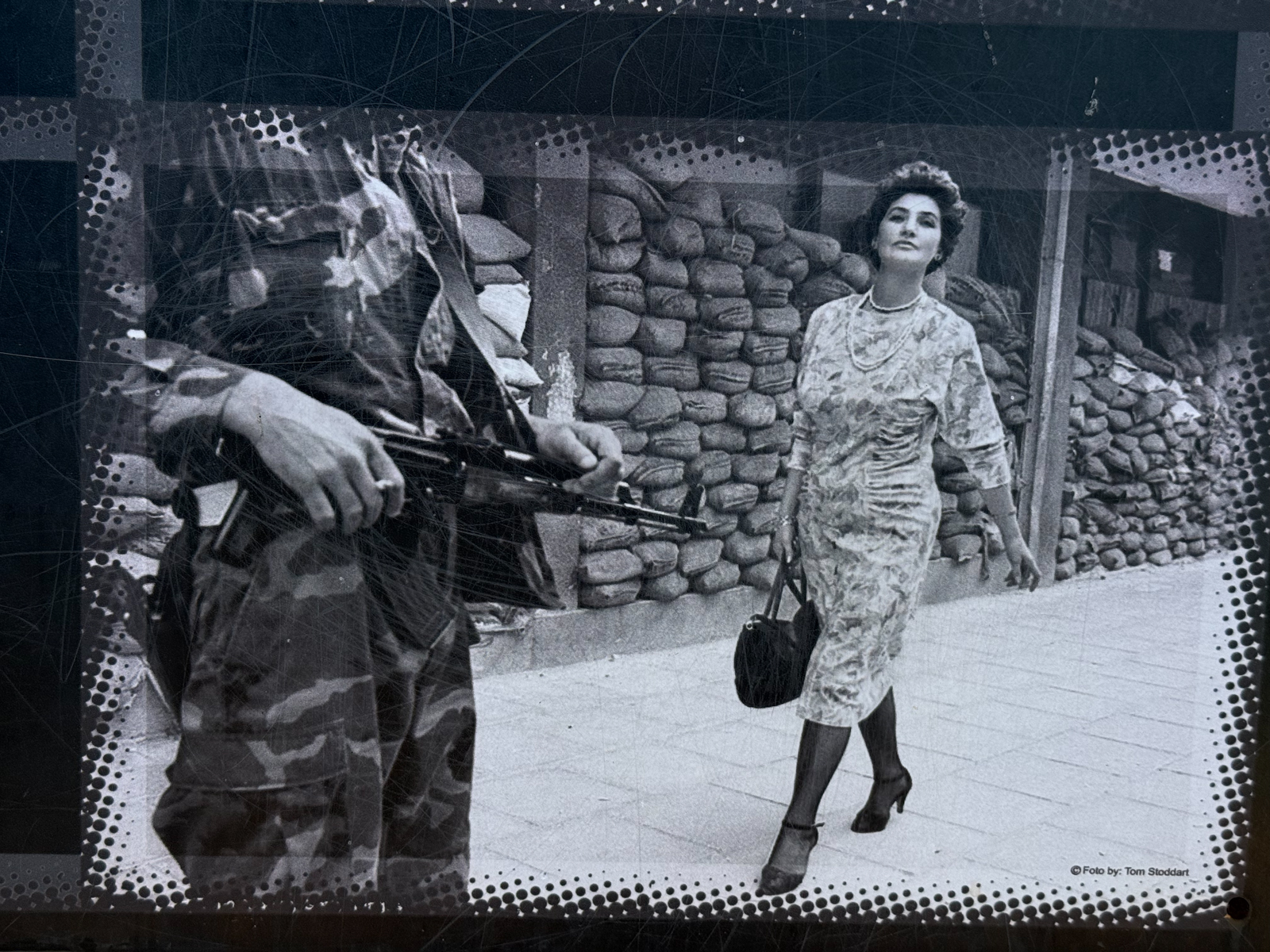
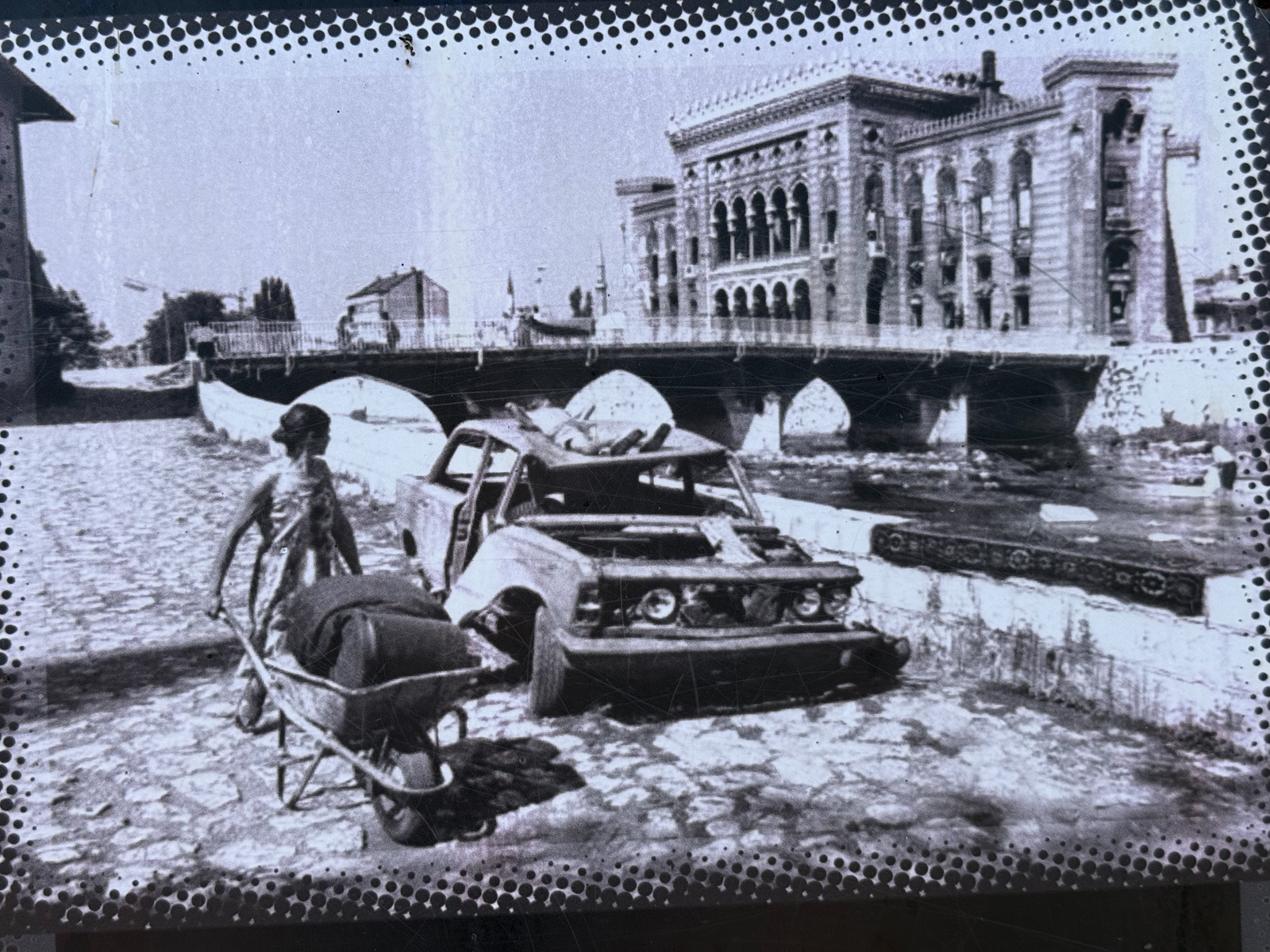
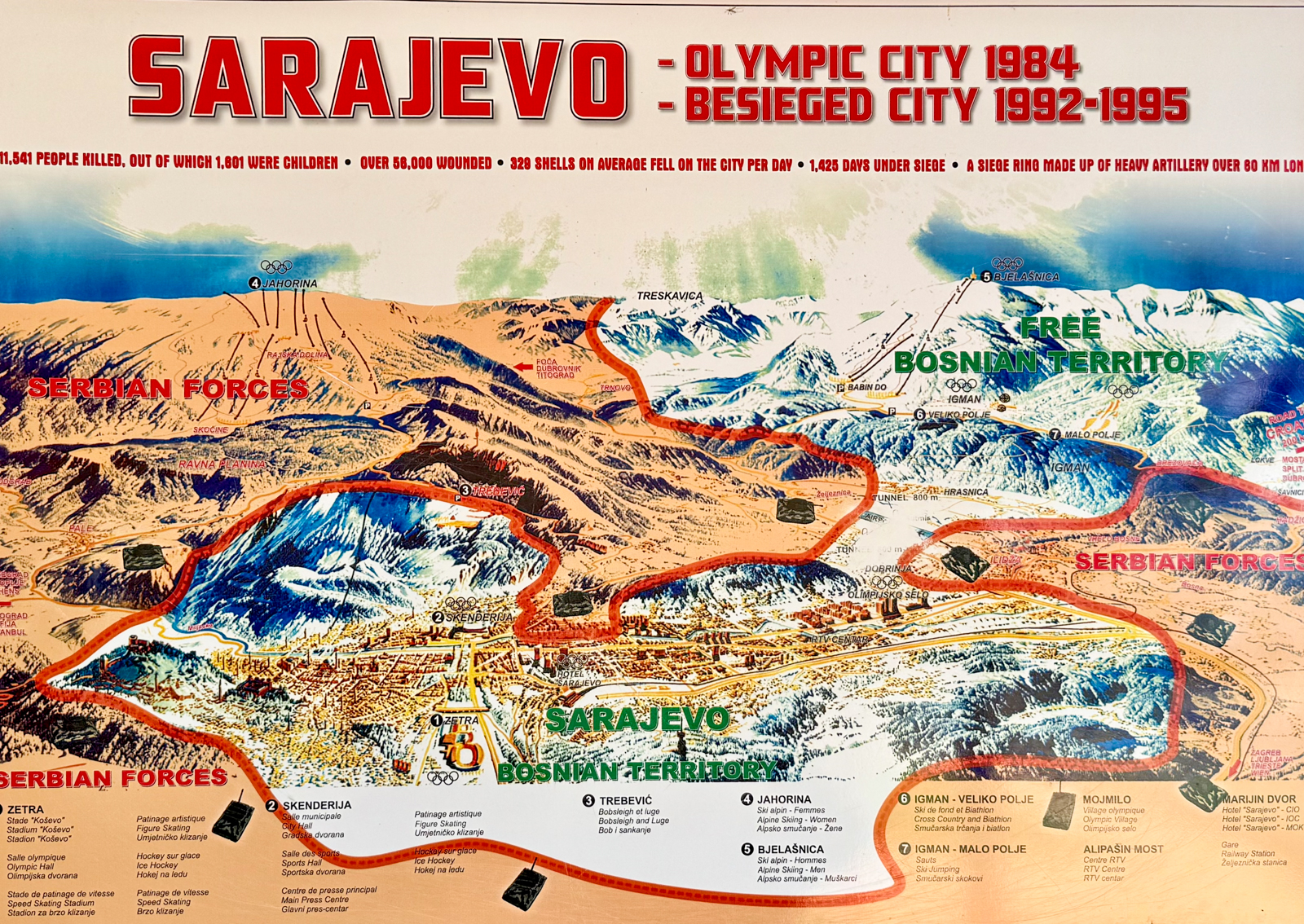

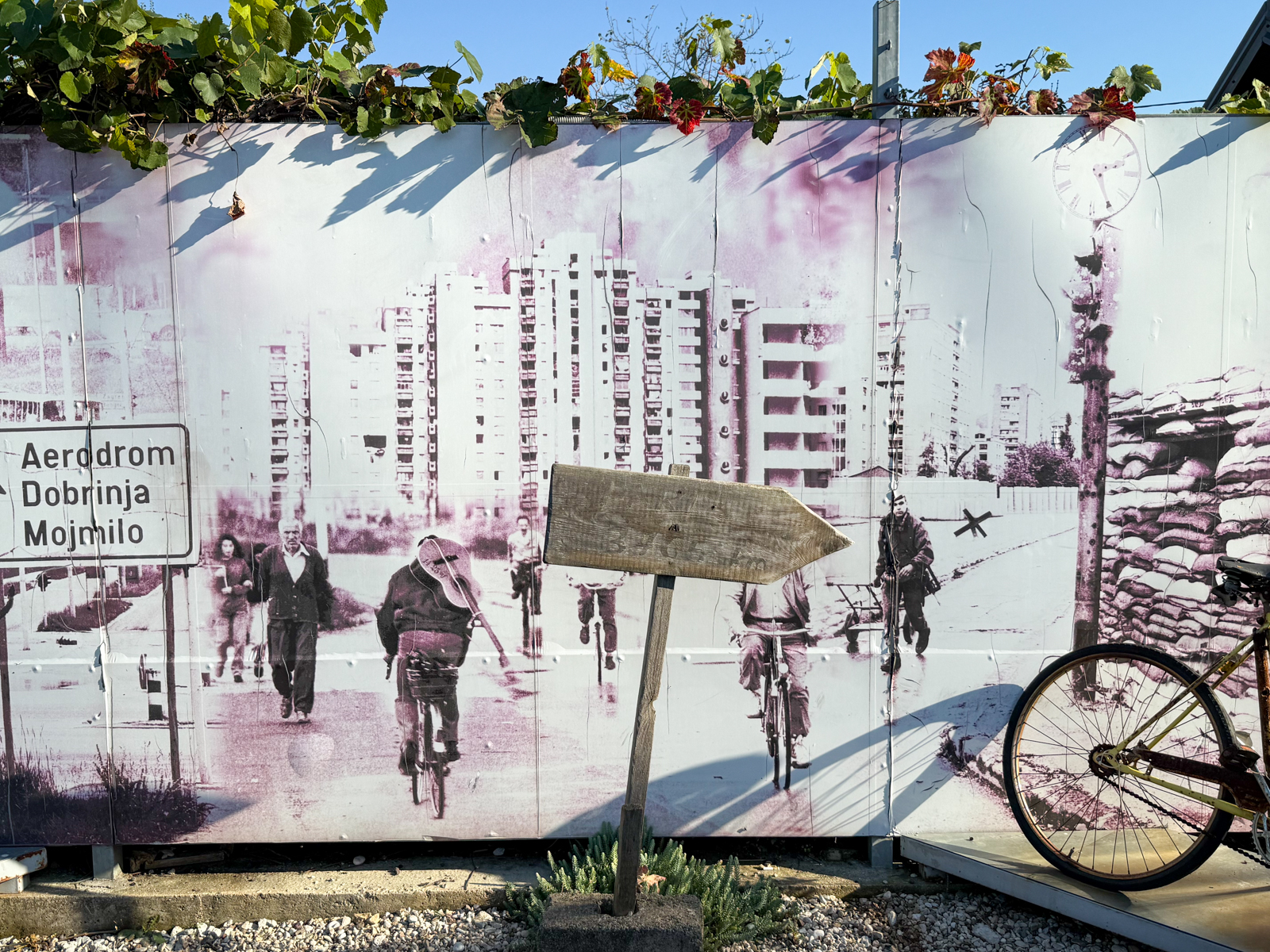
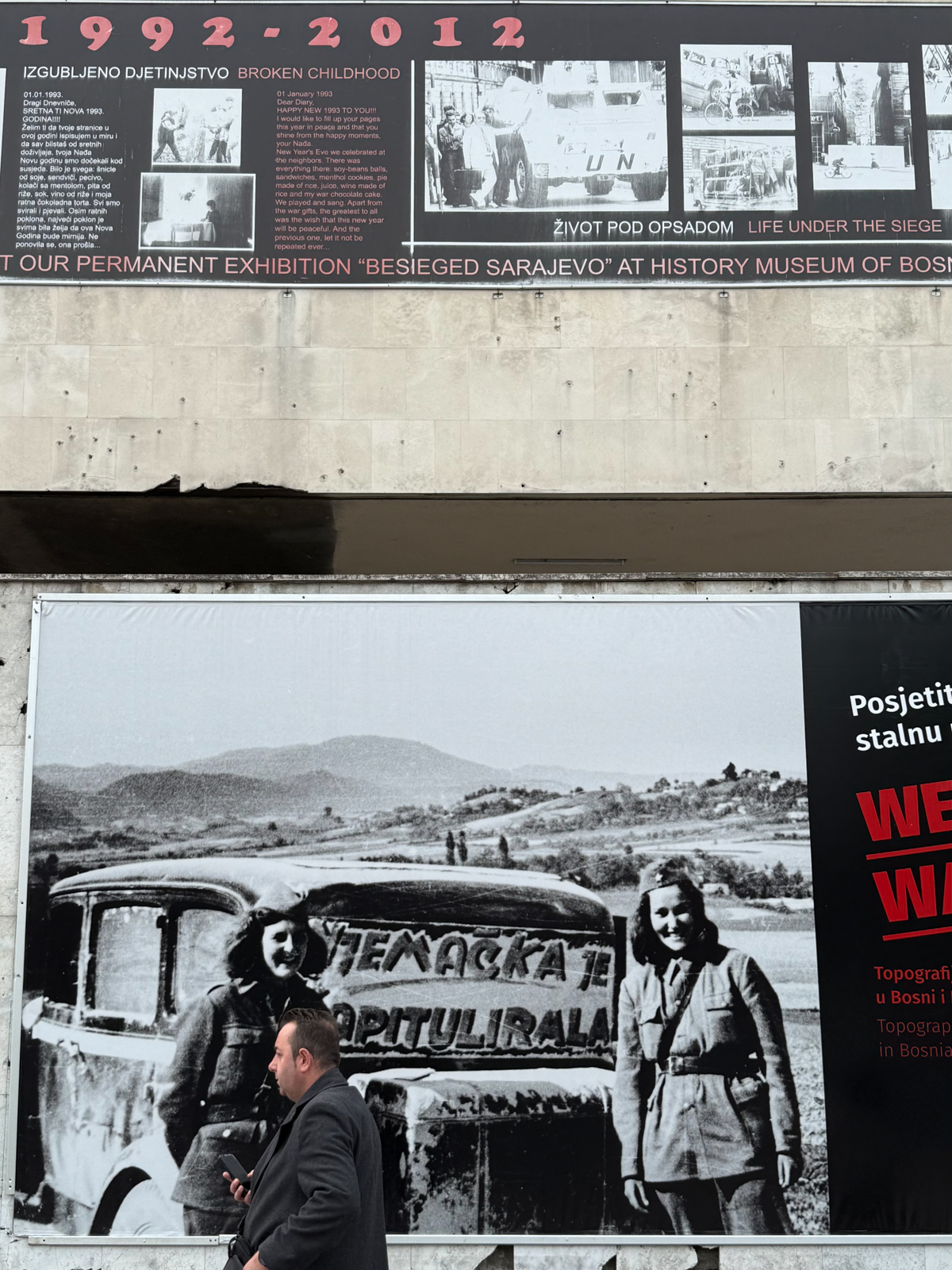
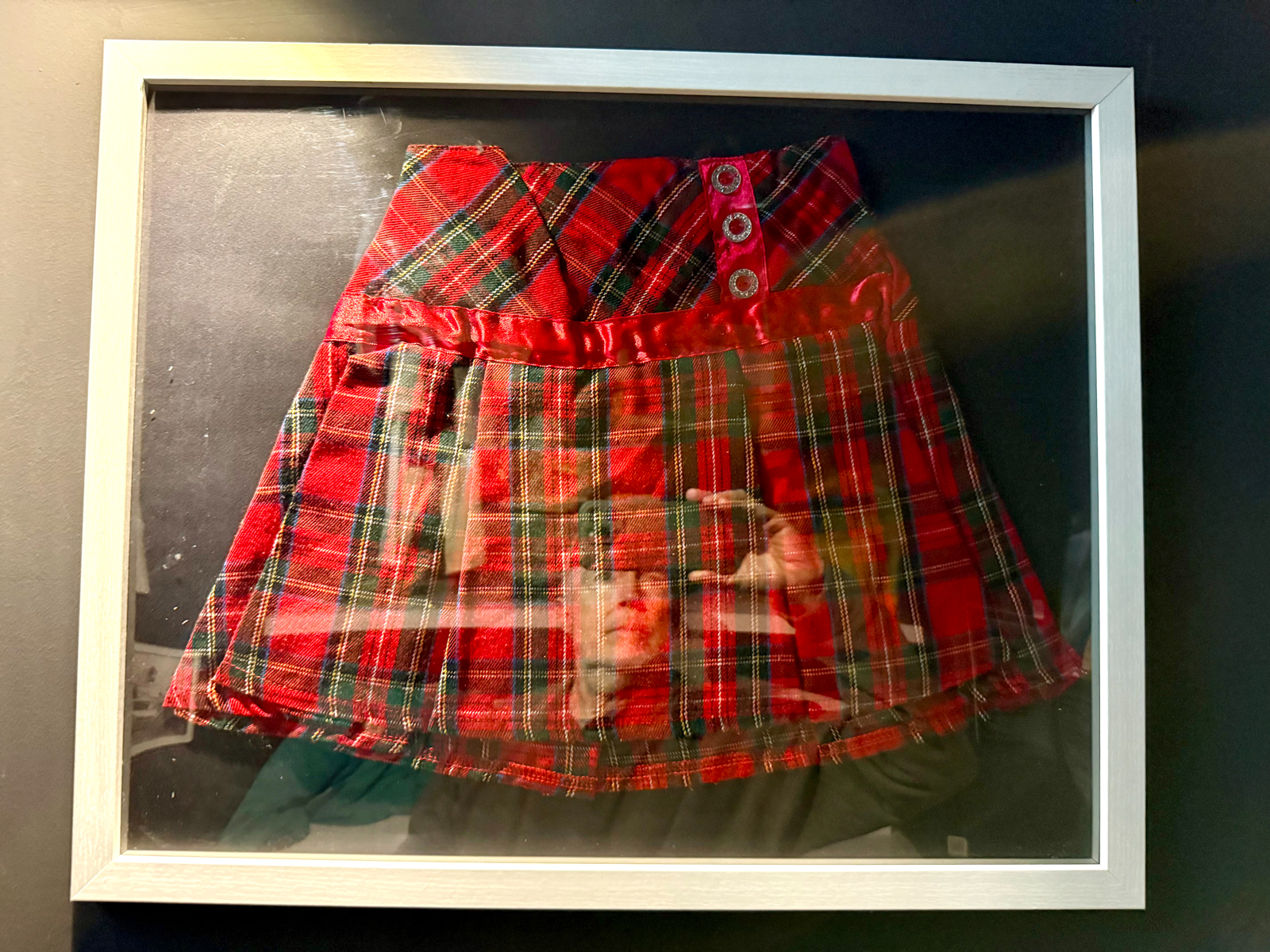
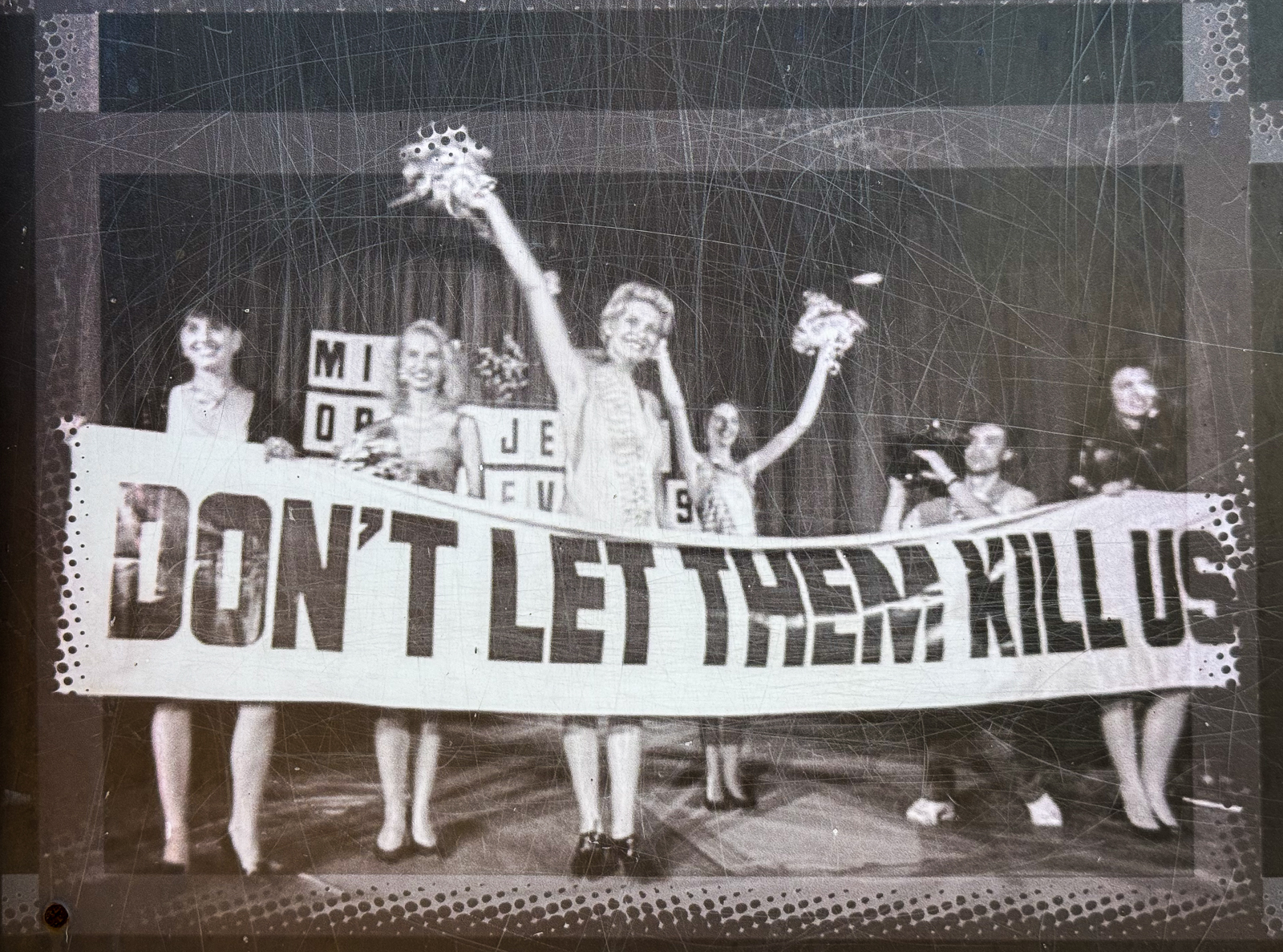
Our last stop was the Siege of Sarajevo Museum. During the three-year siege, I learned that it took one mother burning exactly 13 books to cook one pizza for her family. She hated to burn her books but didn’t want her family to starve. We also learned that during the siege there was even a “Miss Sarajevo” contest to bolster morale and provide some normalcy. The contestants stood under a banner that proclaimed, “Don’t Let Them Kill Us” and we saw the banner displayed in the museum.
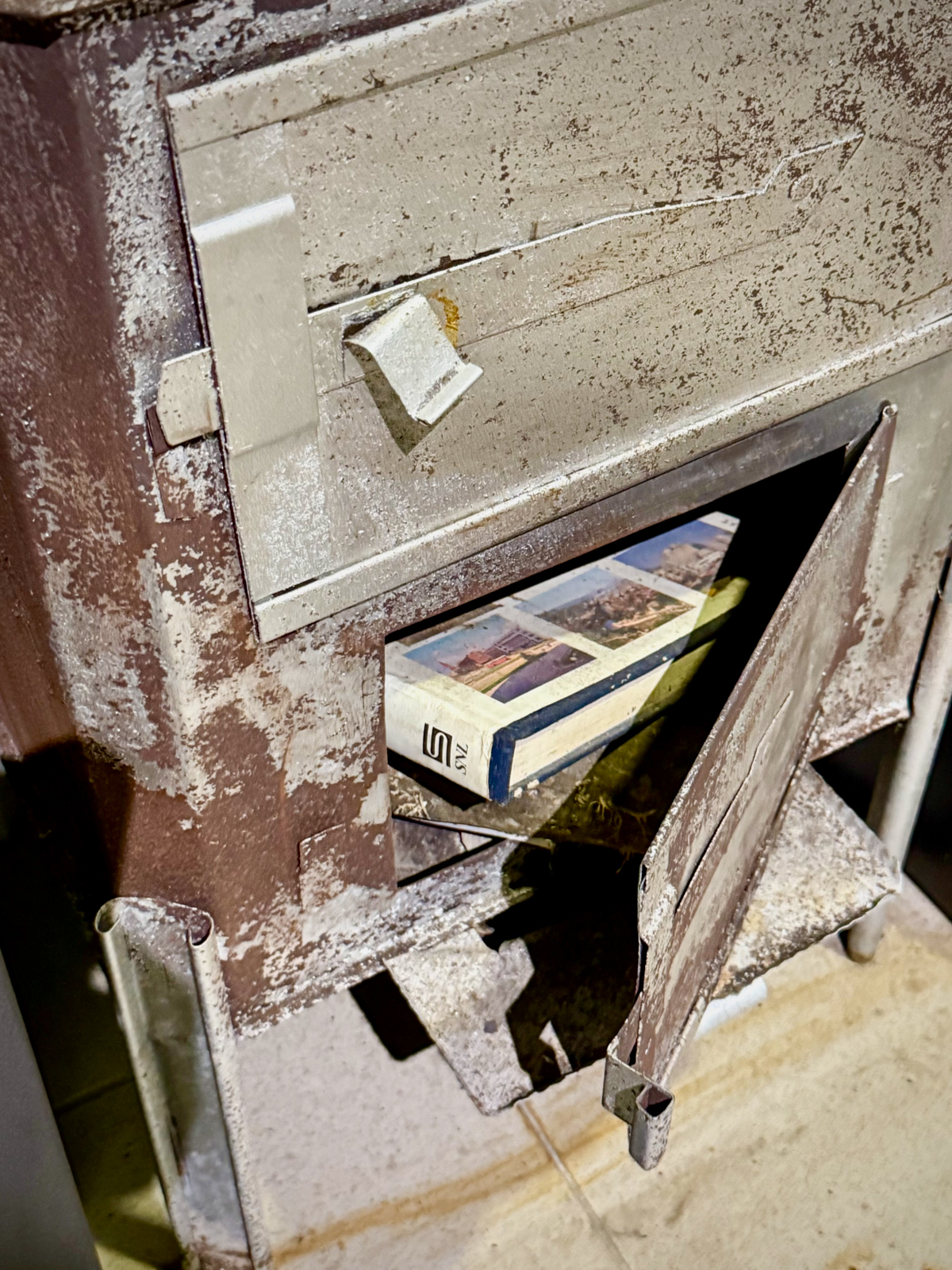
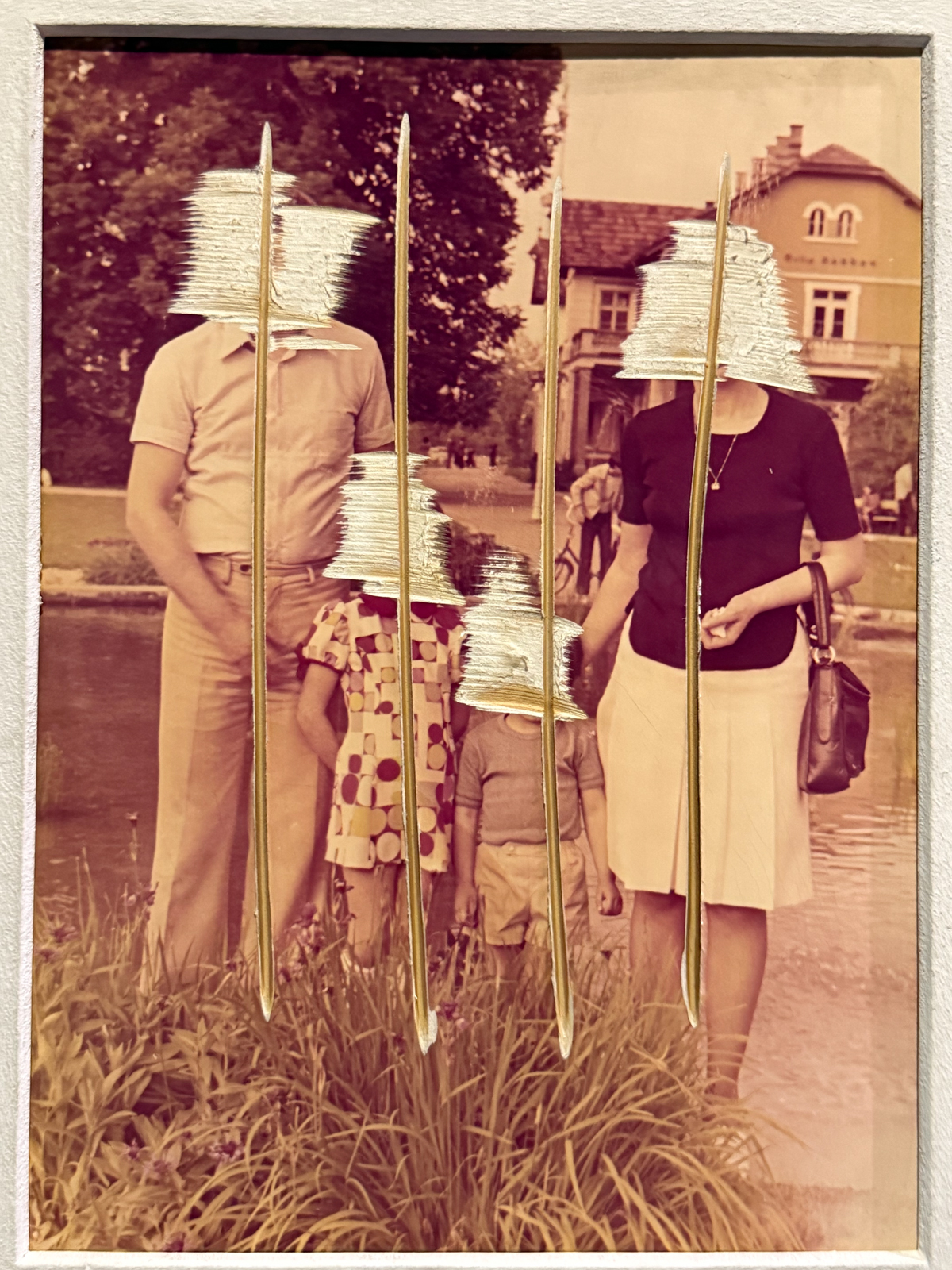



The intensity of our experiences over the last three days is hard to describe. We saw much that showed the best and worst of humanity. Memories of the cruelty of the war fade very slowly. Although the country seems to be healing, the level of mistrust is still high after neighbors began killing neighbors during the conflict. The three libraries we visited were a positive force in moving this nation to a better place.


On our return flight to London, I continued my routine as a medieval scribe jotting down thoughts for my next blog. Somehow, doing that helped alleviate some of the crushing sadness we encountered in the beautiful but haunted city of Sarajevo.

Next stop: London and Oxford
 Library Road Trip
I love this so much! So important. This is one of the best photo impacts.
Thank you and blessings on your continued journey.
Jo Ann Yandle
this has to be one of the most haunting of all I’ve read thus far. As you show how despicable humanity can be, you bring hope. My life has mostly escaped experiencing such horror, yet I feel out country is approaching it. You entire project is the human need and urge to build, honor and remember ourselves in life to infuse the future with knowledge, joy and the possibilities we have. And yet we must never excuse the atrocities. Thank you and Ellen 😢❤️
Thank you so much for sharing this informati
Thanks for this daunting and inspiring tour. How can such cruelty and rejuvenating spirit exist side by side in one place? Not only a cautionary tale for our moment here but, having just seen Selma on PBS last night, an example. C and I of course would have said we knew what happened in Selma, but its portrayal onscreen showed that of course we didn’t. It was clear that you dug into what you saw- some moving photographs. The streets, the rebuilt library, the tunnel, the Haggadah- maybe the war’s detritus followed by the patient, tasty pyramids of pastry summed it up. Post after post tells what a consequential choice the library was as subject for your decade odyssey. You at the point yet of dreaming of sleeping in your own bed?
Soon, Dave
>
Hi Bob and Ellen, Wow, so incredible what you do as well as then the pics and stories. And Sarajevo also seemed incredible…. sad and hopeful. Thanks for sharing your adventures…. We love reading them. Love ❤️❤️😊😊. Tina and Ken
Sent from the all new AOL app for iOS