
8/2/16 – We flew from Kiev to Minsk, Belarus to Moscow on Belavia Airlines. I wondered whether or not the national airlines of Belarus would be up to snuff. But it turned out to be fine and it gave me faith that the global airlines business must operate under pretty high standards, even under the longest running dictatorship and most corrupt regime in Europe.  Moscow amazed us and it fulfilled one of my lifelong dreams to come here. Our funky apartment was three blocks from Red Square and located in a very fancy, upscale shopping area. We went to Red Square in the evening and got caught in torrential downpour. It only added to the surreal specialness of being there. This will be a fond, life-long memory.


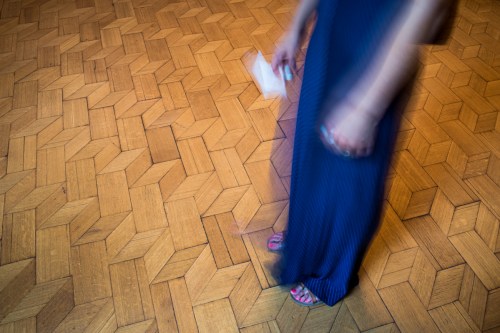
8/3/16 – The Russian State/Lenin Library is the main library in Moscow and the national library of Russia. In the morning we walked over to it and I photographed the severe, Soviet-era exterior. While I was doing that Ellen wandered into the library and basically charmed her way into getting us an appointment to photograph inside the library this Friday. Amazing! 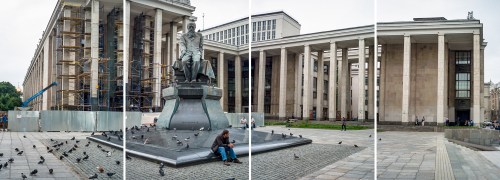 We then met our friend Acia who I’ve been in touch with for several months. She is the sister of one of my Stanford students and I met her last Spring at Stanford. I told her we were coming to Moscow in the Summer and she did a huge amount of work arranging visits to some of the libraries of Moscow. We all went to the Russian State Youth Library which was housed in the Nosov Mansion. It is a music library and I made a great photo of a young guy practicing on an electric piano.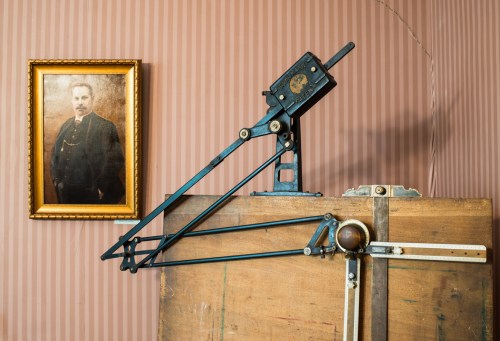

 We ended the day at the Chekov Library which is well run but struggles on its very tight budget. Chekov used to live in this building and I make my last image of the day of a room filled with books and a very large photograph of Chekov.
8/4/16 – We met the librarian Maria at the Nekrasov Library at noon. We spent the next few hours going on a tour of this new and attractive library. One of their collections included an amazing display of graphic arts labels, especially for chocolate bars and calendars. It included ones from pre-Soviet and Soviet times and was a fascinating history of early 20th century fantasies. 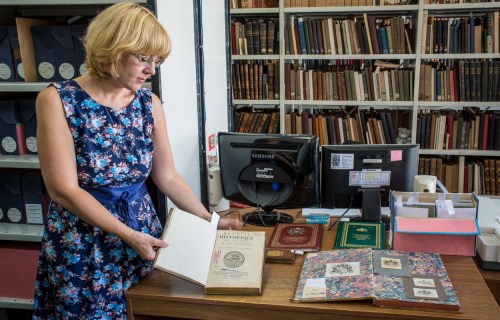

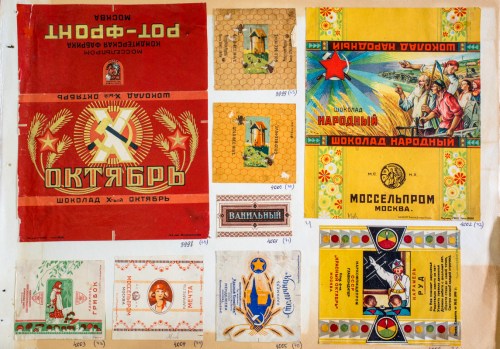
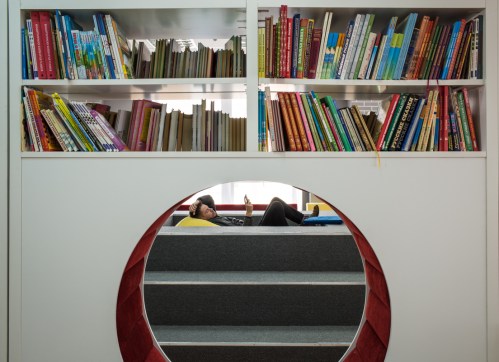
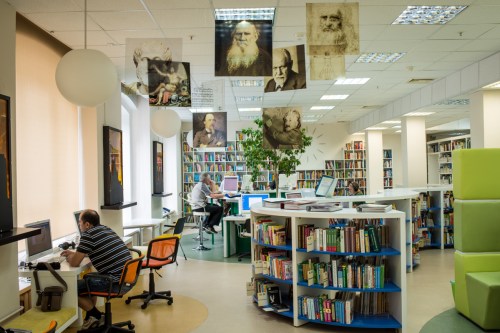
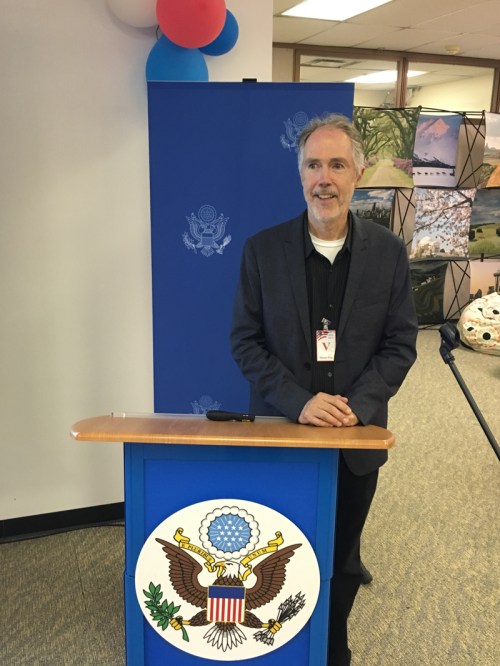
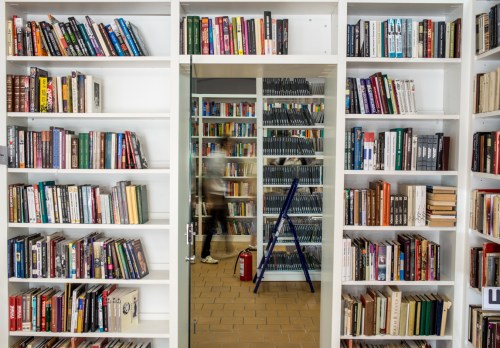 At noon I gave a lecture again on my American Public Library project to a small group of librarians while Maria translated. Maria then guided us by street and subway to the American Embassy. I gave my last lecture of the trip there to another room full of mostly young Russians. It was one of the highlights of the trip and one of the great honors of my life. Before the lecture, our American Embassy contact Magia impressed us with her sharp analysis of Russian-American relations and also her great fear of a Donald Trump presidency. Like Ukraine, this is one of the front lines of a new Cold War between Russia and the West. Interestingly (and somewhat weirdly) my lecture felt like a small part of a “soft power” effort in that conflict.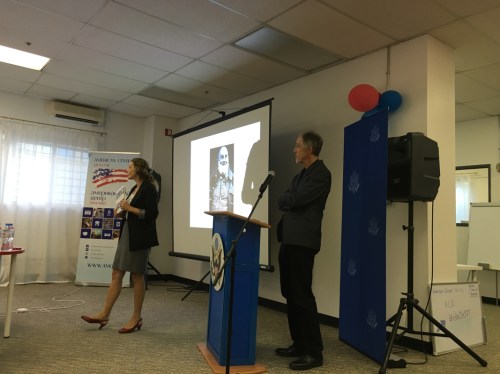
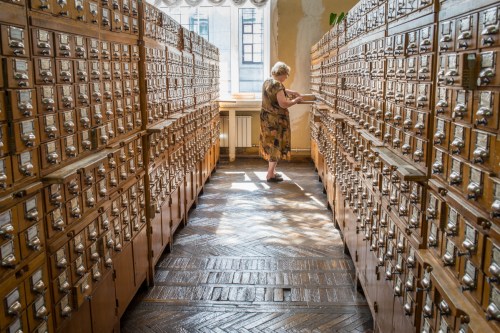
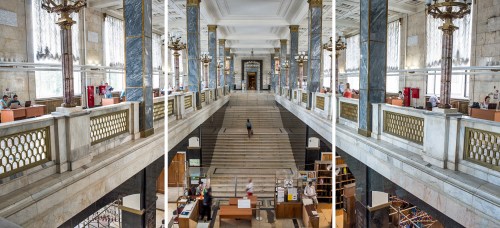
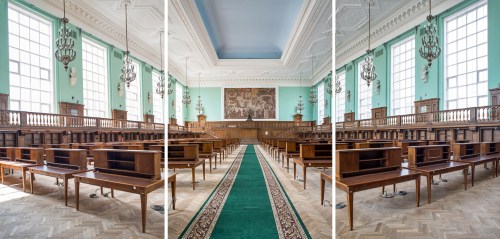
8/5/16 – We spent several hours being escorted around the Russian State/Lenin Library by a young librarian named Dacia. We spent a good amount of time in the Book Museum which consisted of the highlights of their collections. It was a truly remarkable collection and I made the most of every minute I had there. We also photographed several large reading rooms. The grandest one by far was the main reading room which was not being used because it was under construction. It was a magnificent room and being empty gave it an ethereal quality that made for what I hope are some great photos. Looking down on the empty room was a giant mural painting of Lenin which also added to the strange quality. The librarian said they don’t know when the construction will be done because they have run out of funds. I finished by photographing the Grand Staircase and several of the guards. Thus concluded the photography for the 2016 Library Road Trip to Europe. A quick count showed I had photographed about 82 libraries throughout the trip.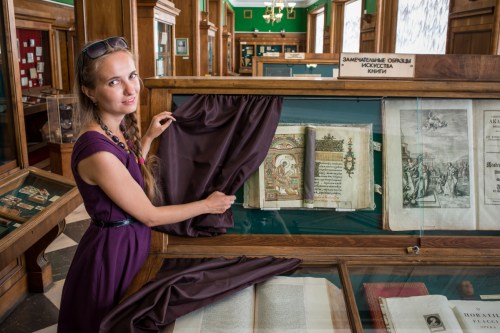


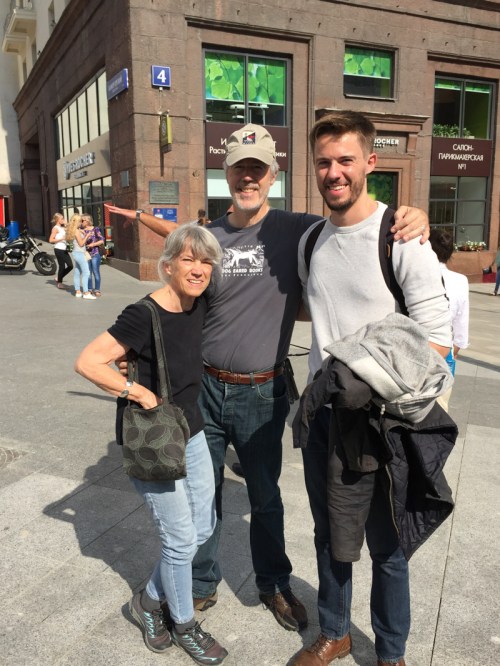
8/6/16 – We had a farewell coffee with our friend Dacia and gave her a copy of The Public Library book.  Walker and I played a quick game of ping pong under a statue of Lenin.
  Then we had a sad farewell to Walker as he took off for Finland , Belgium, Ireland and finally the US.
  Ellen and I collapsed into a short lived nap in our apartment which was interrupted by a loud rock concert outside our window and incessant construction noise. Later we had a wonderful dinner in an outdoor cafe on our street.
  We then did our final preparations for the big trip home. We will miss Moscow!


8/7/16 – We never slept this night. At midnight we took an hour long taxi ride to the airport. We tried to sleep a little at the airport but at 3:30 began the check-in and boarding process. 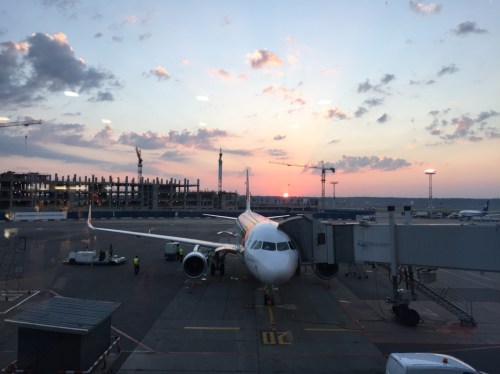 After a 5 1/2 hour flight we were in Lisbon. We waited another 5 1/2 hours in a semi-conscience state in the Lisbon airport.
 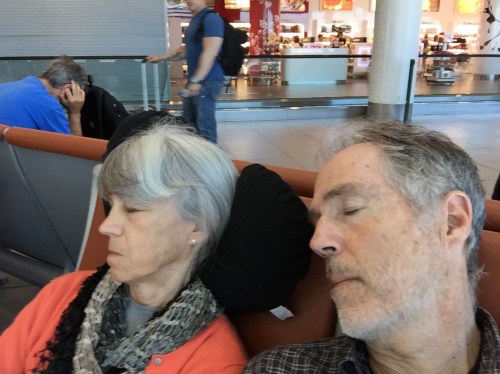 Finally, after a 7 hour flight we arrive in Boston and I want to kiss the first American flag I see. We’re so glad to be home!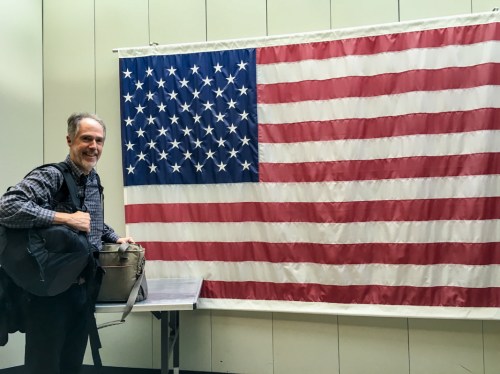


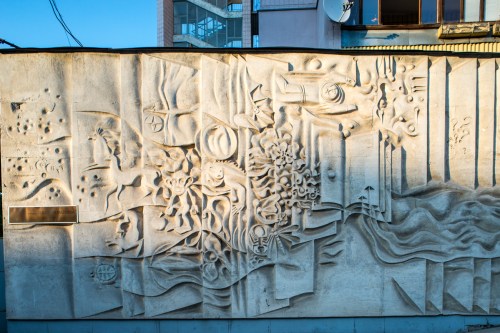
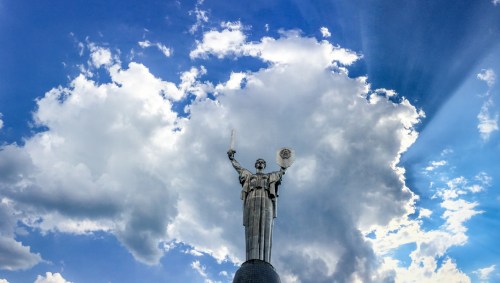 In the early evening Ellen and I walked from our apartment to a small branch library several blocks away that Walker had seen earlier. I only took the digital camera because,of the distance. It turned out to be an old, Soviet-era library with giant new apartments being built by oligarchs rising in the background. The light was perfect and the little details of monkeys and cosmonauts floating in space were enchanting.


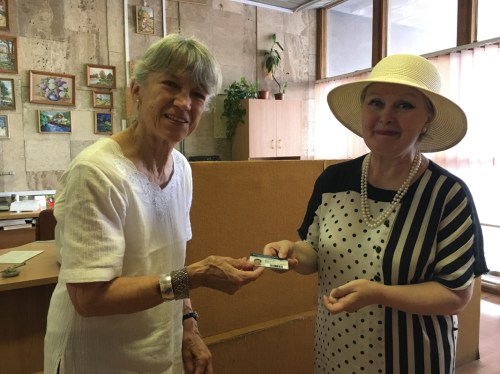
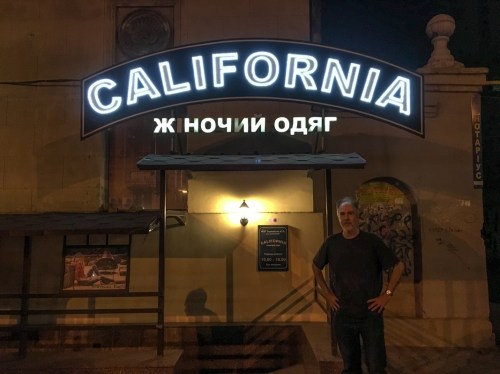
 I decided to go back to our neighborhood branch library that I had photographed yesterday with my digital camera. I had brought both digital and film cameras as a experiment. It turned out that it was difficult to shoot both, especially on the second half of the trip. Many times we were rushed, or librarians were breathing down our necks, or the lighting was bad. Often, it was just easier and faster to only shoot digital. I was determined to go back to this fascinating neighborhood library and use some of the large amount of film that still had left. As I was happily photographing this same library in the same beautiful light a young, drunk Ukrainian guy came up to my face and started talking to me in an insistent way. I had two cameras, a large backpack and my tripod strapped around my shoulders while I was changing film and felt pretty vulnerable. When I backed up he followed closely in my face. He was missing one eye and his face was full of scars and scratches. I guessed he might have been a veteran from the war but he seemed pretty whacked out and dangerous now. I noticed a middle aged guy carrying groceries walking by so I jumped in back of him and he proceeded to have some kind of serious talk with this nutter in Ukrainian. We all eventually went our separate ways but I noticed the crazy guy putting the moves on other hapless people walking by the library. I was happy to get out of there in one piece.

 After we settle into our strange hotel we eventually make our way over to the Soviet era Central City Library. I gave a lecture here to an airless, warm room that is packed with mostly young people. They seemed genuinely interested in American public libraries and ask lots of good questions at the end. One guy even gave me a bullet which he says is a “souvenir from the Donbas front”.


 We then did a short visit to the Science Library and then on to the New Library which was 30 years old. Inside was a young man giving a computer lesson to three older women. He was what is called an “internally displaced person” coming from war zone in the East. He taught himself English from computer games and Facebook. This neighborhood is a poor part of Dnirpo and contains many families displaced by the war or the Russian take over of the Crimea. It is also where many veterans and their families live.


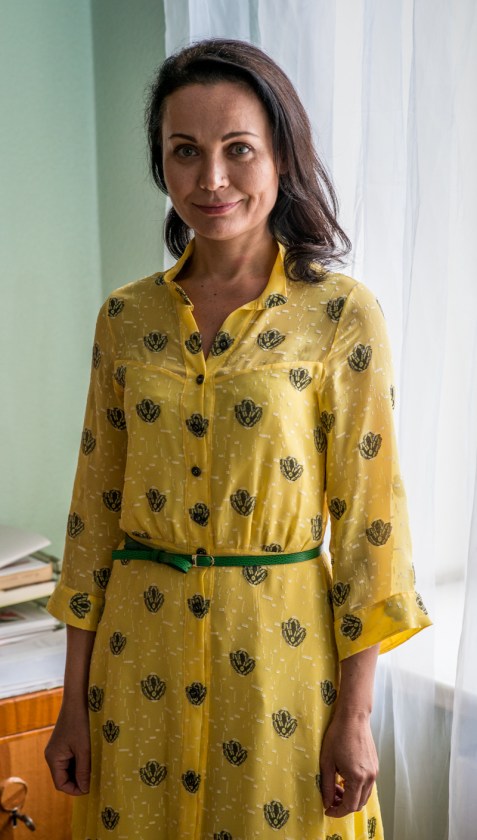 The wonderful head of the library is Magda and she was a force of nature. She proceeds to take us on a tour of every aspect of this large four story library. This includes the art therapy area for returning and wounded vets from the war, art therapy area for children affected by the war, local arts and crafts, the music library, an IDPs photo exhibit, and a historical display on a famous Ukrainian woman writer who collaborated with the Nazis during WW II and wrote anti-Semitic articles.




 The second branch library was located in the center of the reconstructed Old Town. This area is a major tourist trap but the warm evening, the street musicians and the beautiful light all made it a delightful experience. I even incorporated the ice cream gobbling hoards of tourists into my photo of the branch library.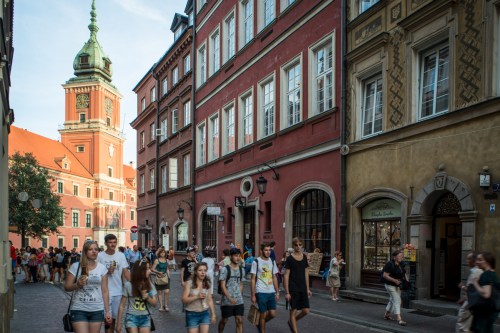
 I then went to the Main Library of Warsaw to give my lecture. This was co-sponsored by the American Embassy and the capacity audience included several members from the Embassy including the American Ambassador. He brought along with him a young woman who worked for the White House in Washington as a program auditor for Embassies. As I was about to give my talk Walker told me “No pressure Dad!” I will be giving several more talks on this trip and it was nice to see this one go over so well. The Ambassador even wanted to consider having an exhibit in the new American Spaces facility on our Stockton Literacy project.
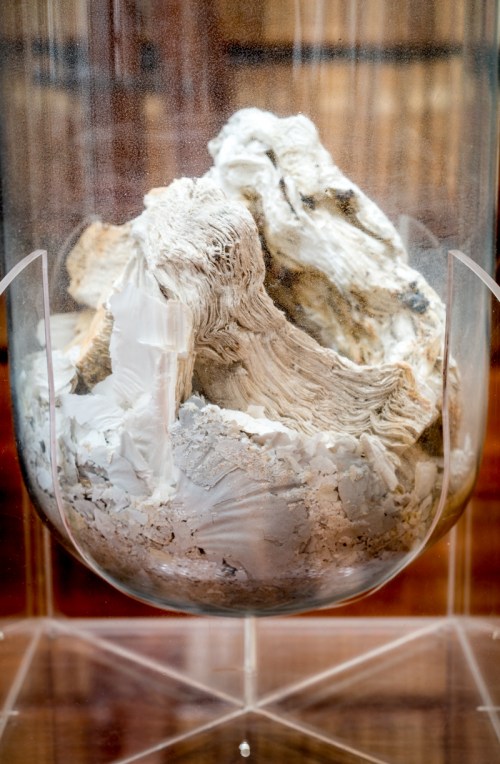
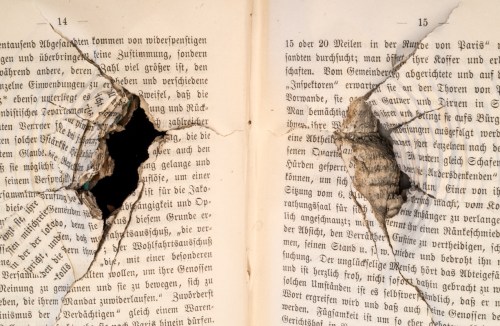
 We then ran off to the Narodowa Library which is a separate part of the National Library. Here I photographed another example of bibliocide showing a book partially destroyed during the war and now housed in a display case.
  Finally, we dashed off to the Warsaw University Library where we were given a tour and I photographed their impressive modern library in one of the best universities in Poland.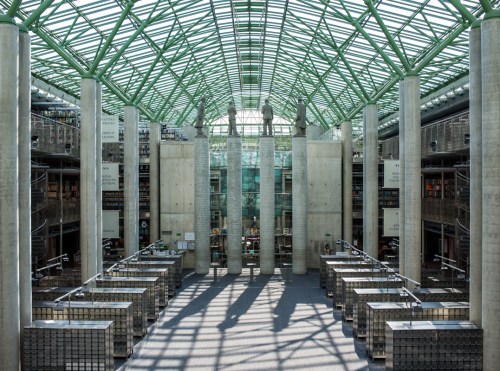
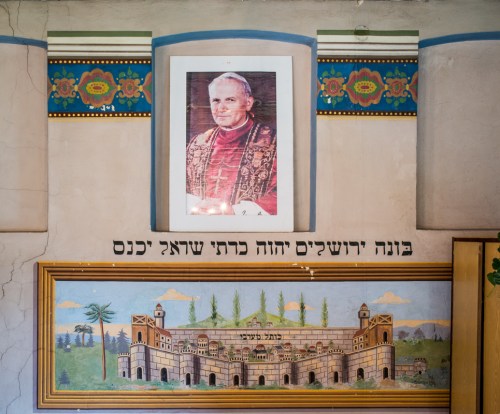

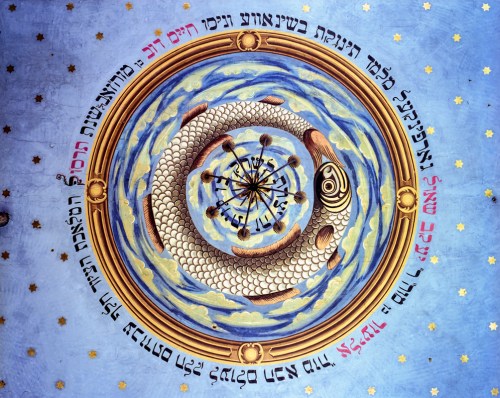


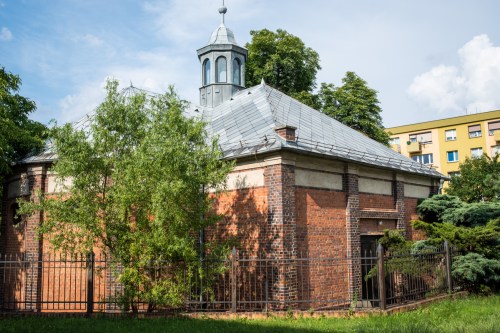
 We traveled on to the small town of Strzyźów which also had a former synagogue which was now a library. Unlike our last library this one appeared to be rebuilt and appeared to be new. In restoring this building they had left remnants of the former synagogue. Ellen read in the guest book notes from people visiting from all over the world who were Jewish, or had families from here or just were interested in Holocaust history.

 and Tarnogrod. Jason had suggested Tarnogrod and it turned out to be almost as interesting as the one yesterday in Niebylec. The building was large and was definitely the original synagogue. Inside were haunting reminders of its original purpose with relevant exhibits on its Jewish past.
 It worked well as a library but also honored its Jewish and partisan fighter past during WW II. We began to realize that we were unwittingly following a pre-existing route of Jewish history in this area. Ellen even found a map of the route which included many of the places we were visiting in this region. We ended the day in the beautiful town of Zamość. Jason had said this town had a deep history which we discovered was also a dark history. Like many towns here all the Jews were killed during the war. The beautiful synagogue was briefly turned into a library after the Holocaust but later became a community center. It is now used by everyone but is occasionally still used by the small Jewish community as a place of prayer and remembrance.
 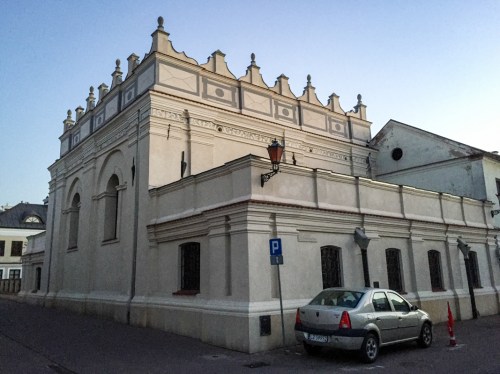 We had dinner off the beautiful town square while a kick-ass blues band played to a mostly empty outdoor square. We walked through the streets at dusk soaking up the history and impressions of this beautiful place with its troubled past. Again, the burden of the past felt close in Zamość.


 Surprisingly, our route through beautiful Polish country that eventually took us into the Czech Republic. The area reminded us of the movie Grand Budapest Hotel which wasn’t surprising since it was filmed nearby. The only library I photographed in the Czech Republic was in the little village of Broumov. This country has some of the highest percentage of libraries per capita in the world because of a law requiring every town and village, no matter the size, to have a library. Of course, it didn’t include funding and many of the Czech libraries have recently have consolidated or closed. Back in Poland I finished photographing libraries in the small towns of Otmuchów and Nysa. We ended the day in what we thought was going to be in an post-industrial hell hole. Instead, Katowice was a delight.


 Clouds and rain have been our constant companion on the trip. We drive through the part of Poland that still has a large German population. One area was still bi-lingual with the road and town signs in Polish and German. In the small village of Wadowice we visit the home town of Pope John Paul II. Across the street from his childhood home was the public library. I photograph it under an umbrella in the pouring rain.

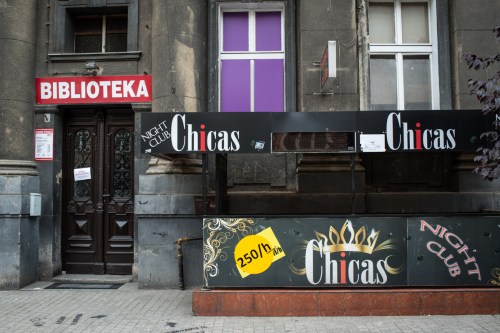 Both were closed but I wondered about this weird juxtaposition. Probably the most difficult place for us to visit on this whole trip was the town of Oświęcim which in German was called Auschwitz. I was interested in seeing what a library would look like in a place that was the center of one of the largest crimes against humanity in the history of the world. Because it was Sunday it was closed. The library was very modern and the front was shaped like an open book facing the community. Across the street were multi-colored apartment blocks that were either from the Soviet era or were built after the end of communism. Next to the library was an extensive photo exhibition on panels documenting a recent March of the Living of young people and concentration camp survivors commemorating the liberation of the death camps such as Auschwitz. The best photo I made was when I was able to combine all three subjects showing the unspeakable Holocaust, the Soviet or post-Soviet reconstruction and the library. It shows the layers of recent history in this complex place.
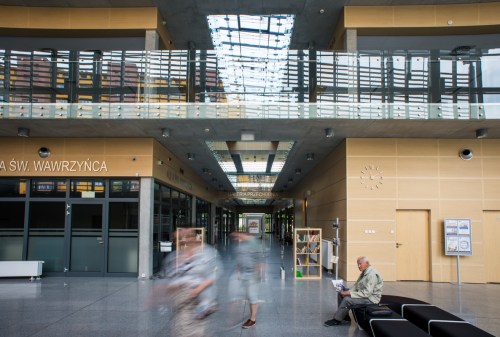
 We were happy to leave Oświęcim and head to the beautiful city of Kraków. This city was a gem that had not been destroyed during the war. Although overrun with tourists it possessed a great dignity and charm. We had tea in an amazing Jewish, hipster tea shop in the old Jewish Quarter. I finished the day photographing the Kraków library and Mediateka. The Mediateka was an old brick building with a separate glass facade and roof with beautiful flowing grass at the entrance. Looking through the glass walls we saw beautiful old Polish buildings. It served as a beautiful juxtaposition of the old and new Poland.














 Library Road Trip